 Ferndale Siding
 Why Fairhaven Homes Wear Out Siding Faster Than Homeowners Expect
Homes in the Fairhaven area near Ferndale sit close enough to open water and marine air that siding takes a different kind of beating than it would twenty or thirty miles inland. Salt-laden air corrodes fasteners, softens paint films, and works into any gap in the exterior envelope. Add Whatcom County's long stretch of driving rain each fall and winter, plus a moss season that can run from October well into spring on shaded north and west walls, and you have a climate that punishes anything less than a properly built siding system.
Most siding failures we see in this area aren't dramatic. They're slow: a hairline gap at a butt joint that lets water track behind the panel, a section of trim that stayed damp long enough for rot to set in, or moss holding moisture against the wall long after the rain has stopped. None of that shows up as an emergency until the sheathing underneath is already compromised. Siding replacement done right in Fairhaven has to account for all of this from day one, not patch around it later.
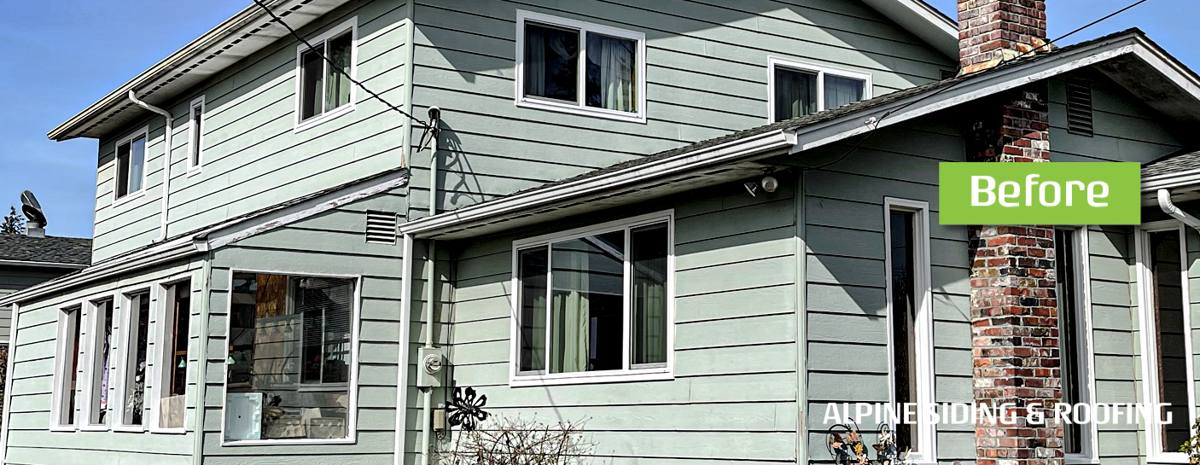
What a Correct Siding Replacement Actually Involves
Replacing siding is not simply pulling off old material and nailing up new panels. A correct tear-off-to-finish job in a wet, salt-exposed area like this addresses everything the old siding was hiding, not just what's visible from the driveway.
Full Tear-Off and Sheathing Inspection
Once the old siding is off, the sheathing underneath tells the real story. We check for soft spots, delamination, and rot around windows, doors, and anywhere trim previously sat tight against the wall. Any compromised sheathing gets replaced before a single new panel goes up — covering damaged sheathing with new siding just seals the problem inside the wall.
Moisture Management Behind the Siding
A weather-resistive barrier (house wrap) goes on correctly lapped, shingle-style, so water sheds downward and out rather than pooling at seams. In a climate with this much sustained rain, we also pay close attention to creating a drainage path behind the siding so any moisture that does get past the cladding has somewhere to go instead of sitting against the wall assembly.
Flashing Details That Get Skipped on Rush Jobs
Window and door flashing, kick-out flashing at roof-to-wall intersections, and proper flashing above trim boards are the details that separate a siding job that lasts twenty-plus years from one that starts failing in five. These are also the details that are invisible once the job is finished, which is exactly why corner-cutting crews skip them and homeowners don't find out until there's a moisture problem.
Why We Install Only James Hardie Fiber Cement
We install James Hardie siding exclusively. We don't offer vinyl, LP SmartSide, primed spruce, cedar, or other fiber cement brands, and that's a deliberate standard, not a sales preference.
Vinyl siding is affordable and low-maintenance in mild climates, but it expands and contracts significantly with temperature swings, can warp or crack under impact in colder snaps, and offers essentially no fire resistance. Wood siding — cedar or primed spruce — has real visual appeal, but in a climate this wet it demands ongoing repainting, caulking, and moisture vigilance to avoid rot, and that maintenance burden only grows as a house ages. Engineered wood products like LP SmartSide perform reasonably when installation and maintenance are perfect, but they're still wood-based and vulnerable to sustained moisture exposure if a seal ever fails, which is a real risk in a region with as much annual rainfall as Whatcom County sees.
James Hardie fiber cement is non-combustible, doesn't rot, and holds its factory-applied ColorPlus finish far longer than field-applied paint on wood or vinyl's baked-in color. Hardie also engineers specific product lines by climate zone — the HZ5 line is built for regions with freeze-thaw cycles and sustained moisture, which describes this part of Washington well. Combined with a strong transferable warranty when installed to Hardie's specifications, it's the product we're willing to put our name behind on every wall we close up.
Our Process for a Fairhaven-Area Siding Replacement
The steps below are the same ones we'd walk any homeowner through before work starts, so there are no surprises once tear-off begins.
1. On-Site Assessment
We walk the exterior, check the condition of existing siding and trim, look for signs of moisture intrusion at penetrations, and get a clear read on what's underneath before quoting the job.
2. Scope and Product Selection
We talk through Hardie plank profiles, exposure widths, trim options, and color, factoring in sun exposure and how much of the home faces prevailing weather.
3. Tear-Off and Structural Repair
Old siding comes off, sheathing gets inspected and repaired as needed, and any rotted framing or trim is addressed before house wrap goes back on.
4. Weather Barrier and Flashing Installation
House wrap, window and door flashing, and any needed drainage plane components go in per manufacturer specification — not shortcuts based on what's fastest.
5. Hardie Installation to Spec
Fastener spacing, gapping, caulking at joints, and clearance from grade and roof lines all follow James Hardie's published installation guidelines, which is also what keeps the manufacturer's warranty intact.
6. Final Walkthrough and Cleanup
We walk the finished exterior with the homeowner, confirm trim and caulking details, and clear the site of old material and debris.
What Drives the Cost of a Siding Replacement
Every home is different, but the factors below are what actually move the price on a siding replacement project in this area. We can give firm numbers only after seeing the specific home, but this is the honest breakdown of what matters.
| Cost Factor | What Drives It | Why It Matters Locally |
|---|---|---|
| Home size and wall complexity | Total square footage, number of stories, dormers, and cut-ins | More seams and corners mean more flashing and trim detail work |
| Existing siding removal | Type of old material and whether hazardous materials testing is needed | Older homes in Whatcom County may have layers or underlying materials worth checking before tear-off |
| Sheathing and framing repair | Amount of rot or moisture damage found once old siding is removed | Coastal humidity and long rainy seasons increase odds of hidden moisture damage |
| Trim and accessory work | Corner boards, window and door trim, fascia integration | Proper trim detailing is what keeps water from tracking behind the new siding |
| Siding profile and finish | Plank width, texture, and ColorPlus color selection | Product choice affects material cost but not long-term durability if installed correctly |
Signs Your Siding Needs Replacing, Not Just Patching
Some siding problems are legitimately repairable. Others are signs the whole system has reached the end of its useful life. Watch for these:
- Soft or spongy spots when you press on the siding, especially near the bottom courses or under windows
- Visible cracking, buckling, or warping across multiple sections rather than one isolated spot
- Persistent moss or algae growth that returns within weeks of cleaning, especially on north- and west-facing walls
- Peeling or bubbling paint that keeps recurring in the same spots year after year
- Rising interior heating costs with no other explanation, which can point to a compromised exterior envelope
- Visible daylight or gaps at trim and corner boards
- Rot or staining at the base of the wall where siding meets the foundation
If you're seeing more than one or two of these, it's worth having someone look at what's happening behind the siding, not just at the surface.
Why Hiring a Crew That Already Works This Area Matters
Siding installation is not identical everywhere. A crew that primarily works in drier inland climates may be excellent at their trade and still underestimate what a coastal, high-moisture, moss-prone environment like the Fairhaven area demands — the drainage gap that matters more here than it would fifty miles east, the flashing detail that's optional in a dry climate and non-negotiable in this one, the fastener corrosion resistance that becomes a real factor with sustained salt air exposure.
A crew that already does this work regularly in and around Ferndale isn't guessing at how the local climate behaves. We know what moss season does to a north wall, how driving rain off the water finds the weak points in a wall assembly, and which installation shortcuts show up as problems two winters later instead of two weeks later. That local pattern recognition is worth as much as the material itself.
Caring for Your Siding After Installation
James Hardie siding is genuinely low-maintenance compared to wood or vinyl, but "low-maintenance" isn't "no-maintenance," particularly in a climate with a real moss season. A yearly rinse to clear moss, pollen, and debris buildup — done gently, without a pressure washer aimed directly at seams or trim — keeps the ColorPlus finish looking sharp and prevents organic growth from holding moisture against the wall long-term. Checking caulking at trim joints every year or two and addressing any gaps early is a small task that prevents much larger repairs down the road.
Get a Straightforward Look at Your Siding
If your Fairhaven-area home has siding that's showing its age, or you're just not sure whether what you're seeing is cosmetic or structural, we're happy to take a look. We'll give you a straight answer about what we find, what a correct replacement would involve, and a clear estimate — no pressure, no upsell. Use the form below to request a free estimate.