 Ferndale Siding
 Why Lynden's Climate Is Harder on Siding Than It Looks
Lynden doesn't get hurricanes or hailstorms, but Whatcom County wears siding down in a slower, quieter way. Long stretches of driving rain off the Pacific push moisture sideways into wall assemblies, not just down. The Nooksack River valley traps fog and humidity for days at a time, especially in the shoulder seasons. And the marine air that moves through this part of Washington carries a faint salt content that, combined with constant dampness, accelerates corrosion on fasteners, trim, and anything with exposed metal. Add tree cover and low winter sun angles that keep north-facing walls shaded and wet for months, and you get one of the more punishing environments in the Lower 48 for exterior wall coverings.
None of this is dramatic. That's the problem. Siding failure here rarely shows up as a single storm event — it shows up as slow moisture intrusion behind a poorly flashed window, or moss quietly holding water against a wall for a whole winter, or a fastener that rusts and lets a plank shift just enough to open a gap. By the time a homeowner notices, the damage is often already behind the surface.
What This Means for a Siding Choice
A siding product for a Lynden home needs to do three things well: resist moisture absorption, hold paint and caulk lines without failing early, and tolerate years of damp, shaded conditions without rotting, warping, or feeding mold and moss growth. That's the lens we use for every material decision on this type of project — not just for the siding panel itself, but for the fasteners, flashing, and house wrap behind it.
Why We Only Install James Hardie Fiber Cement Here
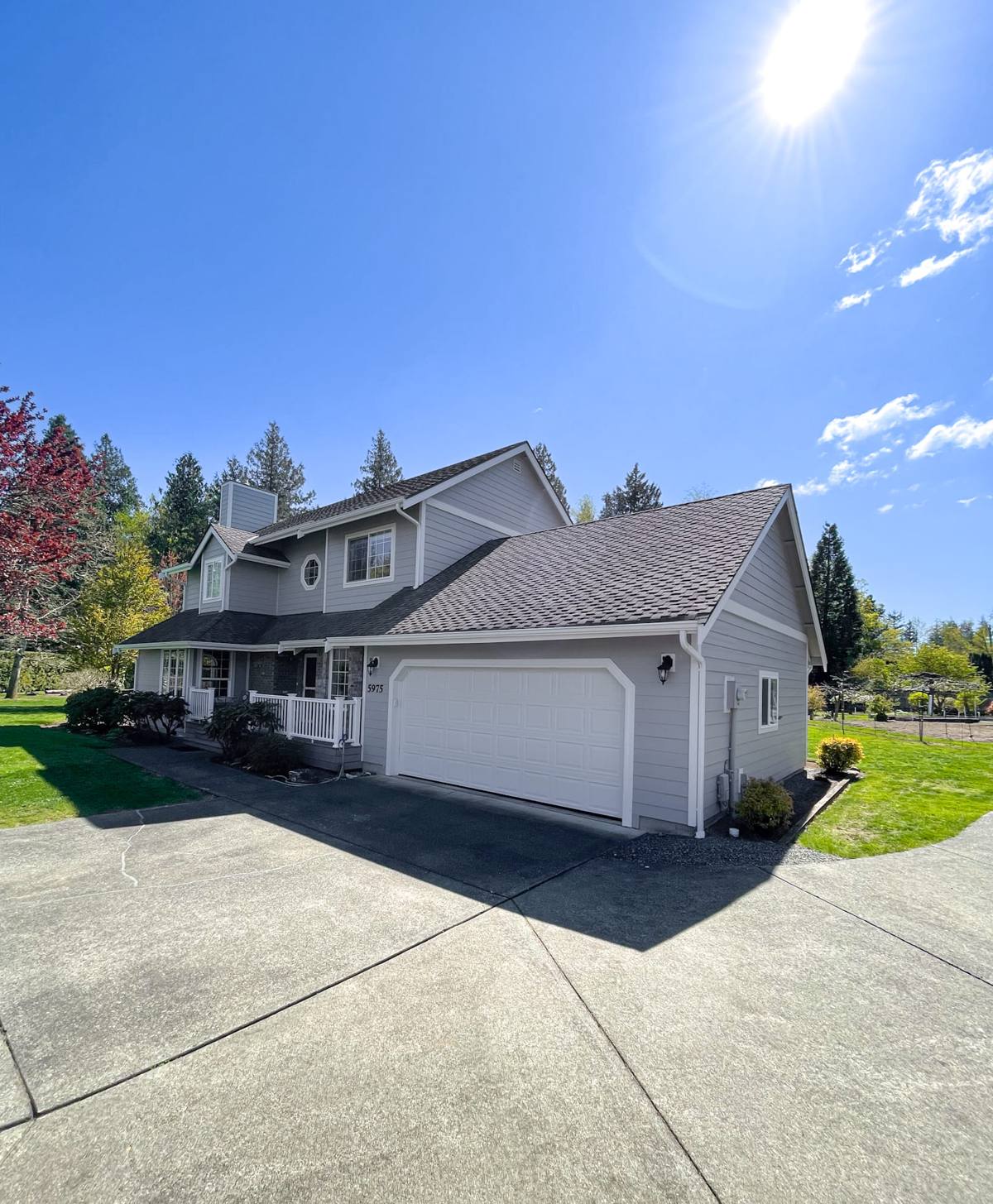
We install James Hardie fiber cement siding exclusively — not vinyl, not engineered wood, not primed cedar or spruce. That's a deliberate standard, not a brand preference for its own sake. Fiber cement is dimensionally stable in the kind of wet-dry cycling that defines a Whatcom County winter and spring: it doesn't absorb and release moisture the way wood-based products do, so it holds paint film and caulk joints far longer. It's also non-combustible, which matters in a region where wildfire smoke seasons have become a normal part of summer, even if the fire risk itself is lower here than east of the Cascades.
Hardie's HZ5 product line, engineered specifically for cooler, wetter climate zones, is what we spec for Lynden and the rest of our Ferndale service area. It's built to the moisture and freeze-thaw conditions of the Pacific Northwest rather than a generic national spec. Combined with Hardie's ColorPlus factory finish — baked-on color that doesn't rely on job-site paint quality — you get a wall surface that's doing the right things from day one, not just on a data sheet.
What a Correct Fiber Cement Installation Actually Involves
Fiber cement is only as good as the installation behind it. Most of the siding problems we get called out to look at in this area — on any brand — trace back to installation shortcuts, not the material itself. A correct job includes:
- A drainable weather-resistant barrier installed with proper lapping, sealed at penetrations, before any siding goes up
- Rainscreen furring or a drainage gap where the wall assembly calls for it, so bulk water has somewhere to go besides sitting against the panel
- Correct fastener type, spacing, and depth per Hardie's published installation instructions — not generic nailing patterns
- Butt joints, corners, and trim sealed with a flexible sealant rated for the movement and temperature range of this climate, not just whatever caulk is on the truck
- Proper clearance at grade, decks, and roof lines so siding never sits in standing water or constant splash-back
- Flashing integrated at every window, door, and horizontal trim transition — the single most common failure point we see on older homes
Skipping any one of these doesn't usually cause an immediate problem. It causes a five-to-ten-year problem, which is worse, because by then the damage is hidden behind the wall and the cost to fix it has grown.
Common Mistakes We See on Existing Homes
| Installation Shortcut | What It Leads To in This Climate |
|---|---|
| No rainscreen gap on a shaded wall | Trapped moisture, moss growth, slow sheathing rot |
| Face-nailing without following Hardie's fastener spec | Panel cracking, nail popping, water entry at fastener heads |
| Missing or poorly lapped window flashing | Hidden water intrusion around openings, often not visible until interior damage shows |
| Caulk used in place of proper flashing | Short-term seal that fails within a few years as caulk dries and cracks |
| Siding installed tight to grade or a deck surface | Constant wicking, paint failure, and premature bottom-edge rot |
How Our Process Works for a Lynden Project
1. On-Site Assessment
We walk the property in person, looking at wall orientation, shade patterns, existing drainage, and any signs of past moisture problems — not just the condition of the current siding. North- and west-facing walls under tree cover get flagged early, since those are usually where moss and slow drying are already an issue.
2. Tear-Off and Wall Inspection
Old siding comes off in sections so we can inspect the sheathing and framing underneath before covering anything back up. This is the point where hidden rot or past water damage gets caught — and dealt with — instead of sealed in behind new siding.
3. Weather Barrier and Drainage Detailing
We install a new drainable house wrap and, where the wall assembly calls for it, a rainscreen gap, before any Hardie product goes up. This step matters more in Lynden's damp, shaded lots than it does in drier parts of the state.
4. Hardie Installation to Manufacturer Spec
Panels, fasteners, flashing, and joint treatment all follow Hardie's published installation guide, not a generalized approach. This is also what keeps the manufacturer's warranty intact — installation errors are the most common reason a fiber cement warranty gets denied.
5. Final Walkthrough and Warranty Registration
We register the completed job with James Hardie and walk the property with the homeowner before calling it done, covering basic care and what to watch for over the coming seasons.
Why a Crew That Already Works This Area Matters
A crew based in Ferndale and working regularly in Lynden isn't guessing at what this climate does to a wall — we've seen it directly, repeatedly, on homes with similar exposure, tree cover, and drainage conditions. That familiarity shows up in small decisions: where to add extra flashing even when it's not strictly required, which walls need a drainage gap versus which don't, how much clearance to leave at grade given how wet these lots get in winter. Those are judgment calls that come from local repetition, not from a general contractor working from a national install manual with no feel for the specific place.
It also matters for accountability. A crew that works this area consistently is easy to reach if a question comes up two or five years after installation, and has a direct relationship with the manufacturer for warranty support — not a one-time subcontractor relationship that's hard to track down later.
Cost Factors for a Lynden Fiber Cement Project
Every home is different, and we don't quote a job without seeing it, but the main cost drivers on a typical Lynden project are consistent:
| Factor | Why It Affects Cost |
|---|---|
| Condition of existing sheathing | Rot or moisture damage found during tear-off requires repair before new siding goes on |
| Wall complexity | Dormers, multiple gables, and cut-in trim take more labor per square foot than flat wall runs |
| Rainscreen/drainage upgrade | Adding a proper drainage gap on shaded or previously moisture-affected walls adds material and labor |
| Siding profile and finish | Lap width, shingle-style panels, and specialty ColorPlus finishes vary in material cost |
| Trim and accessory scope | Fascia, soffit, and trim board replacement alongside the siding changes overall project size |
Maintaining Fiber Cement Siding in a Damp, Shaded Climate
Hardie siding is low-maintenance compared to wood-based alternatives, but "low-maintenance" isn't "no-maintenance" in a climate like this one. A short annual routine goes a long way:
- Rinse siding once or twice a year to clear pollen, dust, and early moss growth before it takes hold
- Keep gutters clear so overflow doesn't run down and sit against wall sections
- Trim back vegetation and tree limbs that keep a wall section shaded and damp longer than the rest of the house
- Check caulk lines at trim and window edges every year or two, since even good sealant has a service life
- Watch for moss or algae staining on north-facing walls specifically — it's the earliest visible sign of a wall that isn't drying out between rain events
None of this requires special products or a professional visit every year — it's the kind of upkeep that keeps a correctly installed system performing the way it's designed to for decades.
Get a Straight Answer for Your Lynden Home
If you're weighing a siding replacement or want a second opinion on an existing installation, we're happy to take a look. We'll tell you honestly what your walls need — not just what's easiest to sell — and give you a clear, no-pressure estimate based on your home's actual condition and exposure. Reach out using the form below to get started.