 Ferndale Siding
 James Hardie Siding, Installed for Bellingham's Specific Climate
Bellingham sits on the water, and that changes what a siding job actually needs to accomplish. This isn't a generic "pick a color and nail it up" install. Homes here face a steady flow of salt-tinged marine air off Bellingham Bay, rain that comes in sideways as often as it falls straight, and a moss and mildew season that can run most of the calendar year on shaded or north-facing walls. We install James Hardie fiber cement siding exclusively, and in Bellingham specifically, that choice comes from watching what actually survives this exposure and what quietly fails behind a coat of fresh paint.
This page focuses on one thing: what a James Hardie siding job for a Bellingham home should actually involve, from product selection through the details that separate an install that lasts decades from one that starts showing trouble in five years.
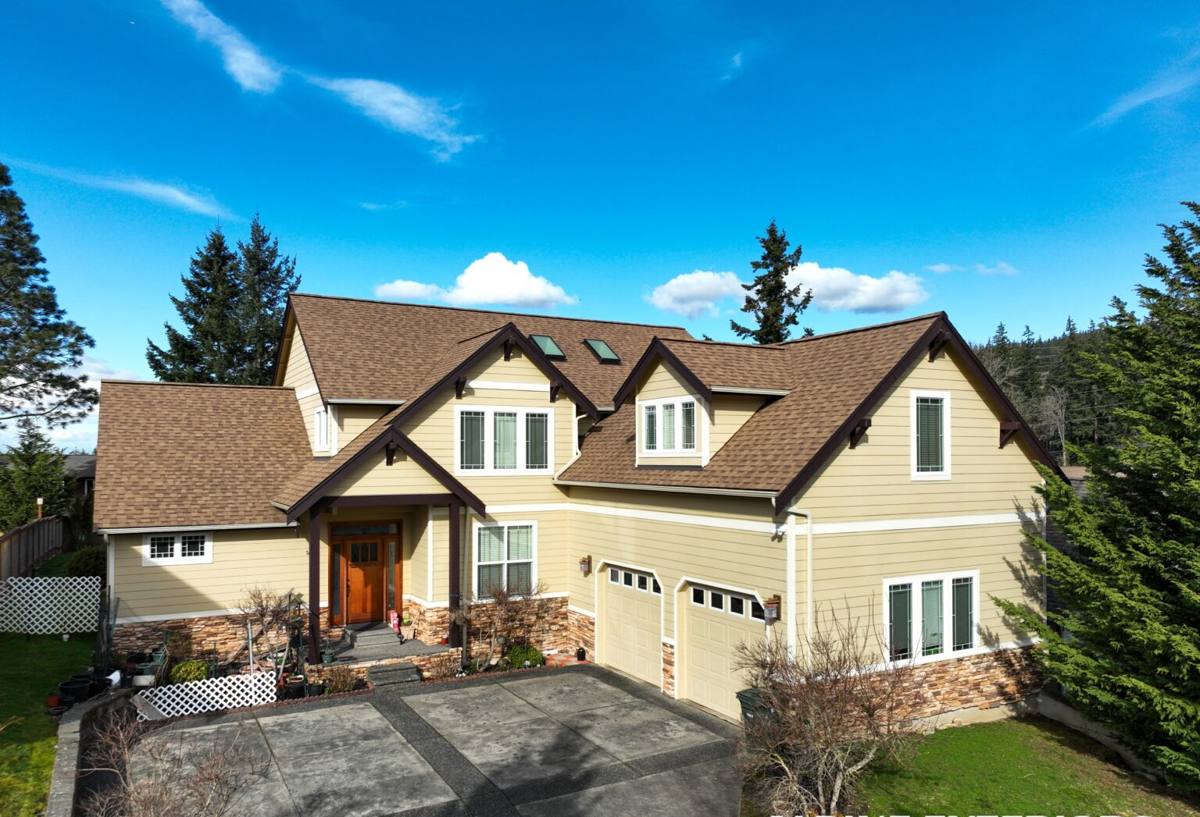
What Bellingham's Climate Actually Does to a Wall Assembly
Bay Air and Salt Exposure
Homes closer to the water take in a more or less continuous flow of salt-laden, moisture-heavy air, not just the occasional storm gust. That kind of sustained exposure works on fasteners, flashing, and lower-grade finishes slowly and quietly, which is part of why siding trouble in Bellingham often shows up years after the original install rather than in the first winter.
Wind-Driven Rain
Rain pushed sideways by wind off the water finds its way into lap joints, trim seams, and wall penetrations that a purely vertical rainfall model wouldn't account for. A siding system that performs fine in a calmer, drier region can still let water in here specifically because of the angle the rain is arriving from.
A Long Moss and Mildew Season
Mild temperatures, tree cover, and consistent dampness add up to extended moss and mildew growth on shaded walls across Bellingham, particularly on hillside lots with mature trees. Any material with even slight porosity, or one that holds moisture against the substrate instead of shedding it, becomes a growth surface over time.
Why James Hardie, and Not a Cheaper Alternative
We don't offer a menu of siding brands. We install James Hardie fiber cement because it's what we've consistently seen hold up on tear-offs and repair calls in this specific climate, and we don't install LP SmartSide, vinyl, Cemplank, Allura, primed spruce, or cedar. Those are legitimate products elsewhere, but the trade-offs they carry — moisture sensitivity at cut edges, warping and cracking under sun and cold, or an ongoing maintenance schedule that's easy to let slip — line up badly with Bellingham's specific combination of salt air and sustained wet weather.
- Non-combustible core: fiber cement doesn't feed a fire the way wood-based siding products can.
- Factory-applied ColorPlus finish: the color coat is cured under controlled factory conditions rather than brushed on-site, resisting fade and moisture intrusion far longer than field-applied paint.
- Climate-engineered HZ5 formulation: built for regions with heavy sustained moisture and freeze-thaw cycling, which fits coastal Whatcom County better than a one-size-fits-all national spec.
- Dimensional stability: fiber cement doesn't swell, cup, or warp the way engineered wood can after repeated wet-season moisture cycles.
- Strong transferable warranty: a real backstop for homeowners, provided the installation follows spec — which is the part that's on us, not the manufacturer.
The James Hardie Product Lines We Work With
Hardie isn't a single product — it's a system of lap siding, panels, shingle profiles, and trim, and picking the right combination for a Bellingham home depends on the house's style, its exposure, and how much detail work the elevations demand.
| Product | Typical Use | Notes for Bellingham Homes |
|---|---|---|
| HardiePlank lap siding | Primary field siding on most homes | The most common choice locally; horizontal reveal sheds wind-driven rain well when lapped and fastened to spec |
| HardiePanel vertical siding | Modern builds, gable accents | Clean vertical lines; needs careful joint and flashing detail since there are fewer horizontal laps to shed water |
| HardieShingle | Craftsman and cottage-style homes | Common on Bellingham's older hillside housing stock; shadow-line profile hides minor surface staining better than a flat lap |
| HardieTrim | Corners, window and door casing, fascia | Matched fiber cement trim avoids the mismatched moisture behavior you get pairing fiber cement field siding with wood trim |
| HZ5 substrate | Underlying board formulation, all product lines | Engineered for cold, wet climate zones — this is the formulation we specify for every Bellingham job |
Most Bellingham homes end up on HardiePlank as the primary field material, with HardieShingle or a HardiePanel accent used selectively on gables, dormers, or entry features rather than the whole house — a detail that adds curb interest without adding unnecessary joint lines for water to find.
What a Correct Installation Actually Requires
Buying the right material is only half the job. A James Hardie system performs the way it's engineered to only when the installation gets several things right at once, and none of them are visible once the job is finished — which is exactly why they matter.
Fastening and Clearances
Hardie specifies fastener type, spacing, and placement for a reason: get it wrong and you create stress points or gaps that let water track behind the board. Clearance from grade, roofline, and decks also has to be correct, or the siding sits in a moisture zone it wasn't designed for.
House Wrap and Flashing as One System
Siding, house wrap, and flashing aren't separate steps done in sequence — they have to work together as a single water-management system, with each layer overlapping the one below it correctly. In a climate with this much wind-driven rain, a flashing detail that's slightly out of sequence at a window head or a wall penetration is often exactly where a future leak starts.
Joints, Laps, and Caulking
Every lap, corner, and butt joint is a place water can enter if it's not sealed and shingled correctly. Rushed or corner-cut installation is one of the most common reasons a good product develops a bad reputation on a specific house, which is why we treat install detail with the same seriousness as the material choice itself.
Our Process for a Bellingham Siding Job
- On-site assessment: we walk the property, check the existing wall assembly where possible, and look at exposure — bay-facing, shaded, tree cover — before recommending anything.
- Tear-off vs. overlay decision: tear-off exposes hidden moisture damage that's common under decades-old siding in this climate; we'll tell you honestly if that's what your house needs.
- Product and color selection: matching HardiePlank, Panel, or Shingle profiles and ColorPlus finish to the home's style and exposure.
- Substrate repair, if needed: any rot or moisture damage found during tear-off gets addressed before new siding goes on top of it.
- Installation to spec: correct fastening, flashing, house wrap integration, and joint detail throughout, not just on the visible elevations.
- Final walkthrough: reviewing the finished work with you before we consider the job done.
Repair vs. Full Replacement
Not every siding issue on a Bellingham home means a full tear-off. Isolated impact damage, a section that failed around a window, or trim that's come loose can often be repaired and matched into existing Hardie siding without redoing the whole house. But when moisture has been tracking behind the wall assembly for a while, or the existing siding is an older product that's simply reached the end of its service life, a patch usually just postpones a bigger job. We'll tell you plainly which situation you're actually looking at rather than defaulting to the bigger scope.
Signs a Bellingham Home Needs Siding Attention
- Moss or dark staining that returns quickly after cleaning, especially on shaded or bay-facing walls
- Soft or spongy siding near the base of the wall or around window and door trim
- Peeling paint, bubbling, or visible warping on siding boards
- Cracked, chipped, or missing sections after wind events
- Visible gaps at seams, corners, or trim joints where water can track in
- A musty smell near exterior walls, which can point to trapped moisture behind the siding
Why a Crew That Already Works Bellingham Matters
A crew that installs Hardie siding across this part of Whatcom County regularly sees how bay air, wind-driven rain, and moss actually behave on real houses over a full year, not just how the product performs on a spec sheet. That translates into practical decisions on install day: which wall orientations stay wet longest, where extra flashing attention pays off, and which details are worth the extra time so you're not fielding a callback two winters later. Bellingham's mix of hillside terrain, older housing stock, and direct bay exposure isn't identical from block to block, and a crew with real hands-on experience here accounts for that instead of applying the same generic approach to every job.
If you're planning a James Hardie install, repair, or want an honest look at what your current siding is actually doing behind the surface, we're glad to walk the property with you. Reach out using the form below to schedule a free, no-pressure estimate.