 Ferndale Siding
 Blaine's Coastal Climate Is Hard on Siding
Blaine sits close to the water, right up against the Whatcom County coastline near the international border, and that location shapes what a house needs from its exterior. Homes here deal with a combination that inland neighborhoods rarely see all at once: salt-laden air rolling in off the water, wind-driven rain that gets pushed sideways into wall assemblies, and a moss season that can stretch for the better part of the year in a climate this wet and mild. Siding that works fine in a dry inland town can fail early here, and the failure usually isn't dramatic — it's slow. Paint chalks out faster, seams swell, moss creeps up from the bottom edge of a wall, and by the time a homeowner notices soft spots or peeling, moisture has often been working behind the surface for a while.
That's the backdrop for every siding decision we make on a Blaine home. It's also why we don't treat siding as a one-size-fits-all product — a coastal Whatcom County property needs a system engineered for exactly these conditions, installed by a crew that understands how they interact.
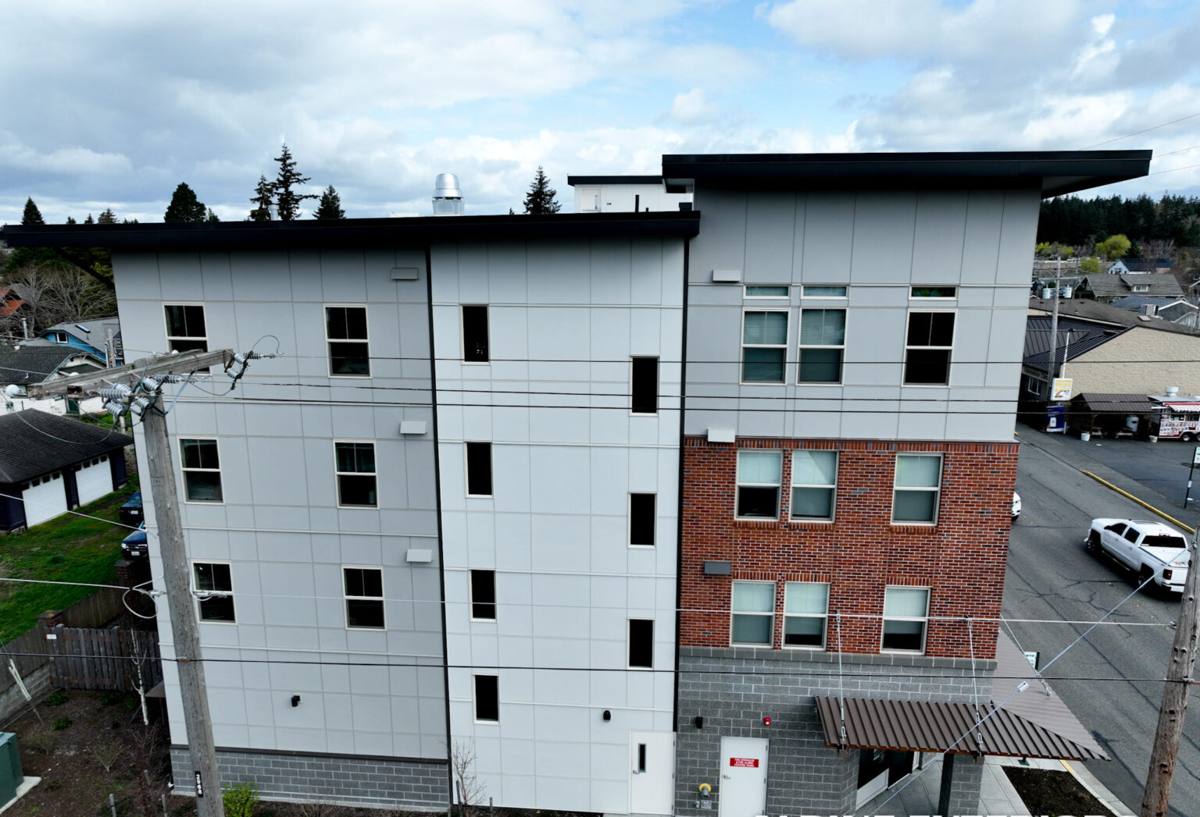
What Blaine Homes Need From Their Siding
Salt Air and Coastal Exposure
Airborne salt is corrosive and it's persistent — it settles on siding, trim, and fasteners day after day, not just during storms. Over years, that steady exposure accelerates the breakdown of paint films and can corrode lower-grade metal fasteners and flashing. Siding material and hardware both need to be chosen with that in mind, not just picked for upfront cost.
Wind-Driven Rain
Rain that falls straight down is manageable for almost any siding product. Rain that gets driven sideways by coastal wind is a different problem — it tests every seam, joint, and penetration in the wall. A siding job that looks fine on a calm day can leak during a windstorm if the water-resistive barrier, flashing, and lap details weren't built correctly the first time.
A Long Moss Season
Cool, damp, and shaded conditions for much of the year make moss and algae growth a near-constant issue on north-facing and shaded walls. Moss holds moisture against the siding surface, which is exactly the kind of prolonged dampness that wood-based products struggle with and that even durable materials need to be detailed to shed rather than trap.
Why We Install Only James Hardie Fiber Cement
We standardized on James Hardie siding and don't install vinyl, LP SmartSide, Cemplank, Allura, primed spruce, or cedar. That's a deliberate call, not a lack of options. James Hardie fiber cement is engineered specifically for the demands a climate like this one creates: it's non-combustible, it holds its shape and paint line far better than wood-based or engineered wood siding in sustained moisture, and it comes with a factory-applied ColorPlus finish that's baked on under controlled conditions rather than painted on site — which matters a great deal when the local weather works against paint adhesion for much of the year.
James Hardie also makes climate-specific product lines, including their HZ5 formulation engineered for wetter, harsher climates like the Pacific Northwest, which is what we spec for most Blaine projects. Combined with a strong transferable warranty and a track record of holding up when installed correctly, it's the product we're willing to put our name behind on homes that face salt air, driving rain, and moss every year.
What a Correct James Hardie Installation Involves
James Hardie siding is only as good as the installation behind it. The material can handle this climate — but only if the assembly underneath it is built to manage water, not just resist it on the surface.
Water-Resistive Barrier and Flashing
Every correct installation starts with a continuous water-resistive barrier, properly lapped and taped, with flashing integrated at every window, door, deck ledger, and penetration. This is the layer that actually keeps wind-driven rain out of the wall cavity if any moisture gets past the siding itself — and it's the layer that's invisible once the job is done, which is exactly why it has to be right the first time.
Fastening, Clearances, and Caulking
James Hardie publishes specific fastening patterns, nailing zones, and clearance requirements — including keeping the bottom edge of the siding a set distance above grade, decks, and roof lines so it isn't sitting in standing water or splashback. Corrosion-resistant fasteners matter here more than in a drier inland town, given the salt exposure. Caulking and sealant need to be used at the right joints — not everywhere, since sealing every seam on fiber cement can actually trap moisture rather than release it.
Ventilation and Drainage
A drainage plane behind the siding lets any incidental moisture drain and evaporate instead of sitting against the wall sheathing. This is especially important on shaded, moss-prone walls where the siding surface stays damp longer between dry stretches.
Our Process for Blaine Siding Projects
Assessment
We start by walking the exterior and identifying the conditions specific to that property — sun and shade patterns, wind exposure, existing moisture damage, and how the current siding and trim have held up. This tells us where extra attention to flashing and drainage will matter most.
Prep and Tear-Off
Old siding comes off, and we inspect the sheathing underneath for rot or damage before anything new goes up. Any compromised sheathing gets addressed before the water-resistive barrier is installed — covering up a problem area is how a siding job fails early.
Installation
Barrier, flashing, and James Hardie panels or lap siding go on to manufacturer specification, with fastening and clearances set for this climate specifically. We keep an eye on lap alignment and reveal consistency throughout, not just at the end.
Final Walkthrough
We walk the finished job with the homeowner, checking details up close — corners, trim, penetrations — and go over basic care and what to watch for going forward.
Comparing Siding Materials for Blaine's Climate
Here's how the major siding categories generally stack up against the specific conditions Blaine homes face — salt air, wind-driven rain, and extended moss exposure.
| Material | Salt Air Durability | Moisture & Moss Resistance | Maintenance | Typical Lifespan |
|---|---|---|---|---|
| James Hardie fiber cement | Strong — non-combustible, factory finish resists chalking and corrosion issues | Strong when installed to spec with proper drainage detailing | Low — periodic washing, minimal repainting | Multiple decades with correct install and upkeep |
| Vinyl | Can become brittle and fade faster under salt and UV exposure | Moderate — but seams and trapped moisture behind panels can be an issue | Low, but limited repair options if damaged | Variable; shorter in harsh coastal exposure |
| Wood/cedar | Vulnerable to accelerated weathering near salt air | Weak — absorbs moisture, prone to rot and moss growth | High — regular sealing, staining, and moss treatment | Shorter without intensive upkeep |
| LP SmartSide (engineered wood) | Moderate — coating and edge sealing are critical | Sensitive to sustained moisture if edges or seams aren't maintained | Moderate to high — edge sealing and monitoring needed | Shorter than fiber cement in wet climates if maintenance lapses |
The pattern that matters most for Blaine: materials that absorb or trap moisture struggle here, because the climate rarely gives siding a long dry stretch to fully recover between wet periods.
What Affects the Cost of a James Hardie Project in Blaine
- Home size and the total square footage of siding being replaced
- Condition of the existing sheathing and whether repairs are needed before new siding goes on
- Siding profile chosen — lap siding, panel siding, or a mix with trim and accent details
- Amount of trim, corner, and window/door detail work involved
- ColorPlus color selection and any custom trim coordination
- Site access and how much tear-off and disposal is required
We provide a written estimate after walking the property, so the number reflects the actual condition of the home rather than a generic per-square-foot guess.
Signs Your Siding Needs Attention
- Persistent moss or algae streaking that comes back quickly after cleaning
- Paint that's chalking, peeling, or fading unevenly, especially on walls facing prevailing wind and rain
- Soft or spongy spots when pressed, which can indicate moisture behind the surface
- Visible gaps, warping, or separation at seams and corners
- Rising energy bills that may point to a compromised weather barrier
- Siding sitting too close to grade, decking, or roof lines with little to no clearance
Why Hire a Crew That Already Works in Blaine
Installation details that are optional in a mild, dry climate are not optional here. A crew that regularly works coastal Whatcom County properties already knows to plan fastening and flashing around salt exposure, to detail drainage on shaded walls where moss takes hold fastest, and to sequence a tear-off around the region's rain patterns instead of leaving a wall open and exposed. That local pattern recognition is the difference between a siding job that looks right on installation day and one that actually holds up through a decade of Blaine winters.
If your Blaine home is due for new siding, we're happy to walk the property, look at what your walls are dealing with, and put together a straightforward, no-pressure estimate for a James Hardie installation built for this exact climate. Use the form below to get started.