 Ferndale Siding
 Windows Built for Kendall's Conditions, Not Just Any Climate
Kendall sits in a part of Whatcom County where the weather doesn't do anything halfway. Homes here deal with long stretches of driving rain, heavy tree cover that keeps siding and window frames shaded and damp for days at a time, and the kind of moisture-laden marine air that moves inland across the county and settles into low-lying, forested areas. That combination is hard on windows in ways that a dry-climate installer never has to think about. Frames that would be fine in a drier region start showing rot at the corners. Glass seals fail early. Moss and algae take hold on sills and tracks that never fully dry out between storms.
A custom window job in Kendall isn't just about picking a style and a size. It's about choosing materials, flashing details, and installation methods that account for a long wet season and a shorter, milder dry stretch to recover in. When we quote a window job here, we're thinking about how that window will perform in year eight and year fifteen, not just how it looks the day it's installed.
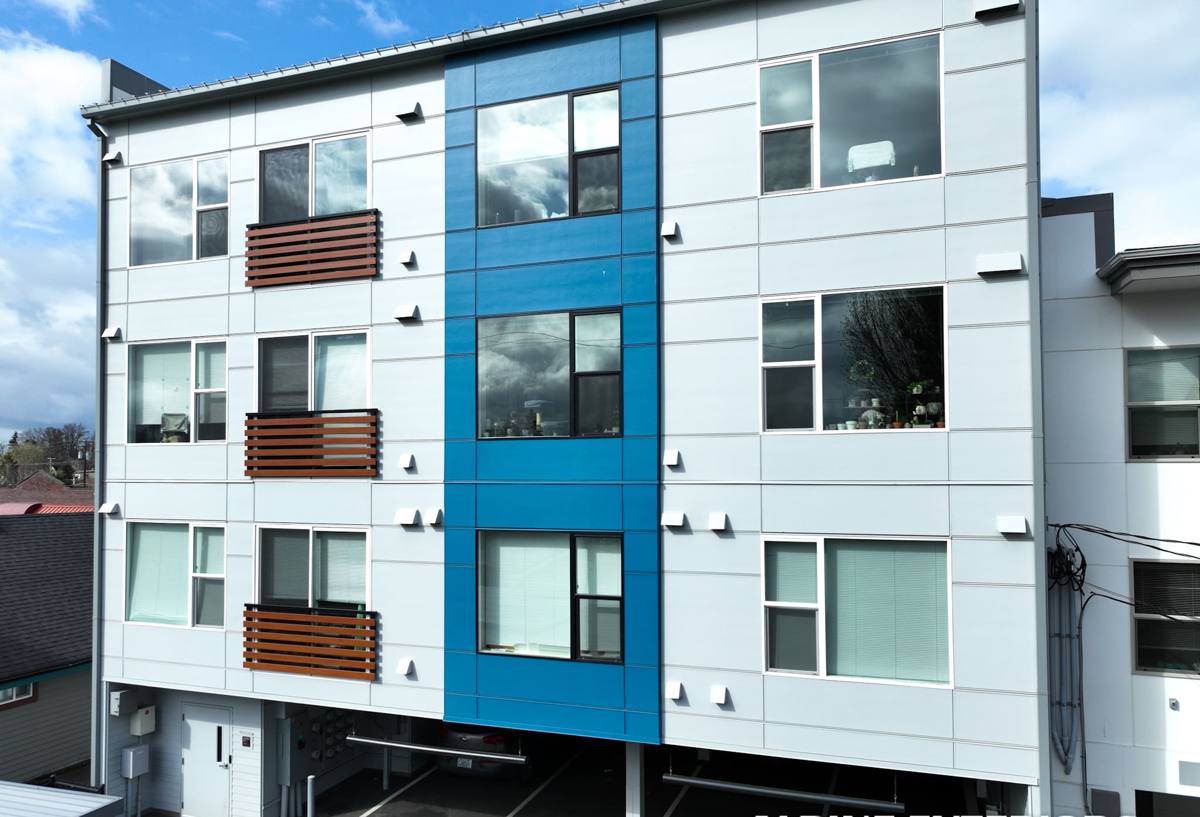
What "Custom" Actually Means for a Kendall Home
Custom windows aren't a luxury upsell — for a lot of older or unusually built homes in this area, they're the only way to get a proper fit. Older farmhouses, additions built at odd angles, and homes with settled or slightly out-of-square openings all need windows measured and built to the actual opening, not forced into a stock size with extra trim to hide the gaps.
Where custom sizing matters most
- Older homes where openings have shifted slightly over decades of settling
- Additions or remodels where the rough opening doesn't match modern stock sizes
- Homes with unique architectural features — bay windows, arched tops, oversized picture windows
- Replacing failed aluminum-frame windows from past decades, which often used non-standard dimensions
- Matching window lines across a home where some units were previously replaced piecemeal
Custom-built also means we can spec the glass package, frame material, and hardware specifically for a shaded, damp lot versus a more open, sun-exposed one — something a one-size-fits-all stock window can't offer.
What a Correct Installation Involves
Most window failures we get called out to inspect aren't the window's fault — they're an installation problem. Water finds its way behind the frame because flashing was skipped or done out of order, and a few years later there's rot in the framing that nobody sees until the interior sill starts to feel soft.
The details that actually prevent water damage
A correct install follows a specific sequence, and skipping steps is where problems start:
- Remove the old window and inspect the rough opening for hidden rot or moisture damage before anything new goes in
- Repair or replace any damaged framing — never install a new window over compromised wood
- Install a proper drainage plane and flashing tape so any water that gets behind the siding sheds outward, not into the wall cavity
- Set the window level, plumb, and square, then shim and fasten according to the manufacturer's specifications
- Seal and flash the exterior correctly — sill pan first, side flashing next, head flashing last, so each layer overlaps the one below it like shingles
- Insulate the gap between the frame and the rough opening without overpacking it, which can bow the frame
- Finish interior and exterior trim, then test operation and seal
In a climate that gets as much sustained rain as Whatcom County, that order matters more than it would somewhere dry. Get the sill pan or flashing sequence wrong and you won't see the consequences for a year or two — by then it's a framing repair, not a window swap.
Material and Glass Choices That Hold Up Locally
There's no single "best" window material — it depends on the home, the budget, and how exposed that particular wall is to weather. Here's how the common options actually perform in a damp, tree-shaded setting like Kendall.
| Frame Material | How It Handles Local Moisture | Maintenance |
|---|---|---|
| Vinyl | Won't rot; handles constant damp well | Low — occasional cleaning |
| Fiberglass | Very stable in temperature and moisture swings; resists warping | Low |
| Wood | Classic look but needs consistent upkeep in a wet climate | High — regular painting/sealing |
| Wood-clad (wood interior, composite exterior) | Exterior handles rain well; interior keeps traditional look | Moderate |
| Aluminum | Prone to condensation and cold transfer in our winters | Moderate, but thermal performance suffers |
For glass, double-pane with a Low-E coating is the standard baseline for this climate — it cuts heat loss and reduces condensation on the interior glass during cold, damp mornings. Triple-pane is worth discussing for north-facing rooms or homes tucked deep in tree cover where the house rarely gets direct sun to help dry out condensation. Argon gas fill between panes is a low-cost upgrade that improves insulation value and is worth including on most replacement jobs.
Why we're selective about certain products
We won't install every product on the market, and it's not because a product is "bad" in some general sense — it's about matching the product to this climate. Some frame styles and glazing systems are more sensitive to installation error or require more precise flashing detail to perform well in sustained wet weather. Our standard is to use materials and methods we can stand behind for the long haul in Whatcom County conditions, even if that means steering a homeowner away from an option that would work fine in a drier part of the state.
Common Problems We Find in Kendall Window Replacements
When we're called out to look at failing windows in this area, a handful of issues show up again and again:
- Moss and algae buildup on sills and in tracks that stay damp under tree canopy
- Fogged or clouded double-pane glass, meaning the seal has failed and the insulating gas has escaped
- Soft or spongy sill wood from years of water intrusion behind poorly flashed trim
- Older aluminum-frame windows with heavy interior condensation and cold-to-the-touch frames in winter
- Swollen or sticking wood sashes that no longer open or close smoothly after repeated wet-dry cycles
- Gaps around trim where caulking has failed, letting wind-driven rain track behind the siding
Any one of these is a sign the window — or its original installation — has reached the end of its useful life, and patch repairs are usually a short-term fix at best.
Our Process, Start to Finish
We keep the process straightforward because homeowners shouldn't have to guess what's happening at each stage:
- Free on-site estimate — we look at every opening in question, check for hidden moisture or framing damage, and talk through material and glass options for your specific exposure.
- Written quote — clear pricing per window, with any framing repair called out separately so there are no surprises once work starts.
- Precise measurement and ordering — custom units are built to the actual opening, not a stock size.
- Removal and inspection — old windows come out carefully, and we inspect framing before anything new goes in.
- Installation — proper flashing sequence, air sealing, and insulation, following the steps above.
- Final walkthrough — we test every window with you before we consider the job done.
What Custom Windows Cost, and What Drives That Cost
Every home is different, so exact pricing depends on the site visit — but the main cost drivers are consistent across most Kendall jobs:
| Cost Factor | Why It Matters |
|---|---|
| Number and size of openings | Larger and more numerous windows increase material and labor |
| Frame material chosen | Vinyl is typically the most economical; fiberglass and wood-clad cost more upfront |
| Glass package | Triple-pane and specialty coatings add cost but improve comfort and efficiency |
| Hidden framing repair | Rot found behind old windows adds labor before new units go in |
| Access and site conditions | Steep lots, second-story work, or tight tree clearance can affect labor time |
| Custom shapes or sizes | Non-standard geometry (arches, bays, oversized units) costs more than standard rectangular units |
We'd rather walk a property and give an honest number than throw out a broad range that doesn't reflect your actual home.
Why Local Experience in This Area Matters
A crew that regularly works Whatcom County properties already knows what to expect before the estimate walkthrough even starts — how tree-shaded lots hold moisture longer, how older Kendall-area homes were typically framed, and which flashing details actually hold up through a full wet season rather than just looking right on installation day. That familiarity shows up in fewer surprises mid-project and fewer callbacks after the fact.
It also means scheduling around real conditions here — driving rain doesn't pause for a job in progress, so sequencing removal and installation to minimize exposed openings is something a locally experienced crew plans for automatically.
Simple Maintenance That Extends the Life of Your Windows
Even a correctly installed, well-built window benefits from basic upkeep in this climate. A short seasonal routine goes a long way:
- Clear moss and debris from sills and tracks a couple of times a year, especially on shaded elevations
- Check exterior caulking annually and re-seal any cracked or peeling sections before the wet season sets in
- Operate every window at least once each season so hardware and weatherstripping don't seize up
- Look for interior condensation buildup, which can signal a ventilation issue or, on older units, a failing seal
- Keep gutters and downspouts clear so overflow doesn't run down and pool at window heads
If you're noticing any of the issues covered above, or you're planning ahead for a remodel, we're happy to walk your property and give you a straight answer on what your windows actually need. Reach out for a free, no-pressure estimate using the form below.