 Ferndale Siding
 Kendall Decks Age Differently Than You'd Expect
Kendall sits up in the Whatcom County foothills, away from the open coastline but deep in tree cover along the Nooksack drainage. That changes what actually wears out a deck here. Instead of constant wind-driven salt exposure like you'd see closer to the water around Ferndale and Bellingham Bay, Kendall decks fight a different battle: heavy shade from surrounding timber, ground moisture that never fully evaporates, and a rainy season that can stretch from October well into May. The result is the same end problem — soft wood, rusted hardware, slick moss — but the repair priorities are not identical to a deck out near the coast, and a contractor who doesn't know the difference will often fix the wrong thing first.
We work decks across this stretch of Whatcom County regularly, from the more marine-influenced areas near Ferndale to inland communities like Kendall where shade and standing moisture do most of the damage. Knowing which failure mode you're dealing with is the difference between a repair that lasts and one you're redoing in three years.
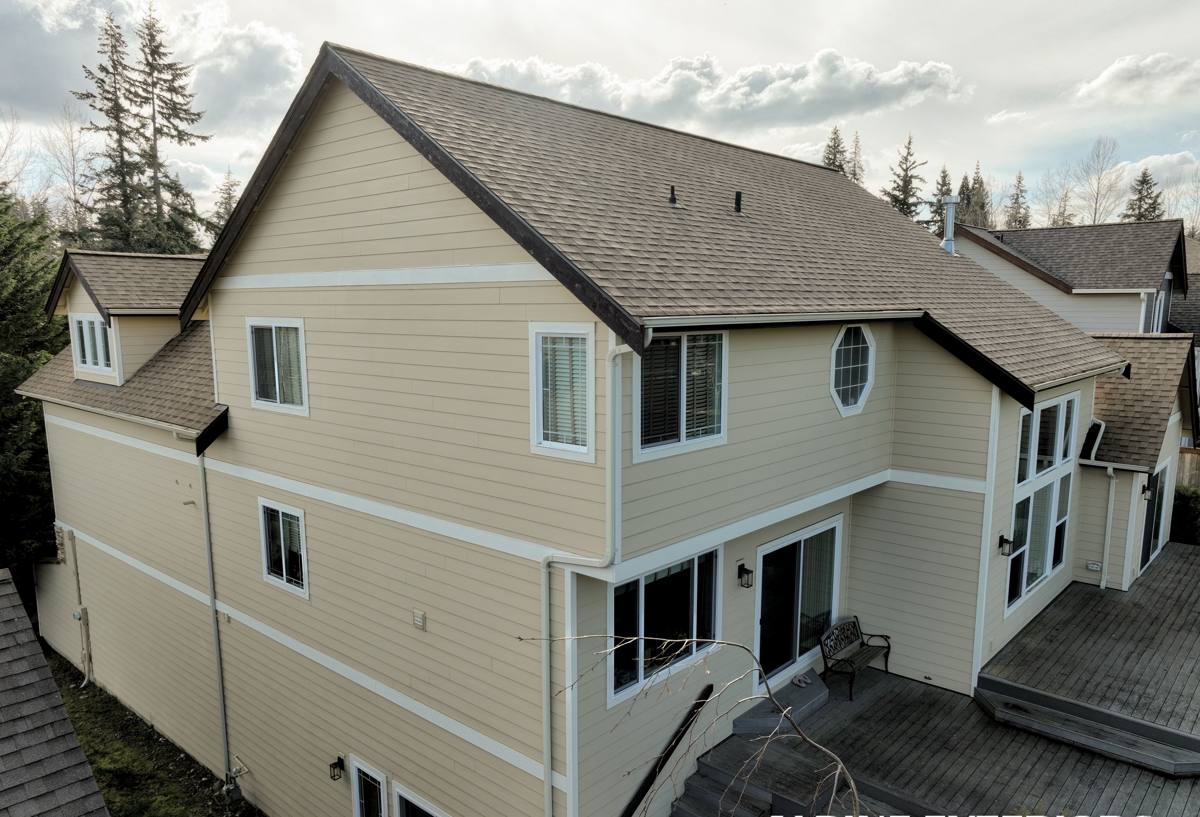
What Constant Moisture and Shade Do to a Deck Over Time
Ledger boards and rim joists rot from the inside out
The ledger board — where the deck attaches to the house — is the single most important structural piece on most decks, and it's also the one homeowners can see the least. In a shaded, damp lot like a lot of Kendall properties, water that gets behind the ledger flashing (or was never properly flashed to begin with) can rot that connection for years before anyone notices a problem. By the time you see sagging or a soft spot near the house wall, the damage is usually well established.
Fasteners corrode quietly
Standard galvanized nails and screws lose their coating faster in wood that stays wet for long stretches. Once the zinc coating is compromised, the steel underneath starts rusting, and rusted fasteners lose grip strength long before they look obviously bad. Loose railings and slightly bouncy stair stringers are often a fastener problem more than a wood problem.
Moss isn't just cosmetic
A long moss season does two things to decking: it holds moisture directly against the wood fibers, accelerating rot underneath a surface that still looks fine, and it turns boards into a slip hazard the moment they're damp — which up here is most of the year. Pressure washing moss off without addressing what's feeding it (shade, poor drainage, lack of airflow under the deck) just means it comes back within a season.
Signs Your Kendall Deck Needs Repair Now
Most deck failures give warning signs well before anything becomes dangerous. Here's what we tell homeowners to check for, ideally each spring after the wettest months have passed:
- Soft or spongy spots when you press a screwdriver into the decking or ledger area
- Railings or posts that flex or wiggle more than they used to
- Green or black staining that doesn't fully pressure-wash away
- Gaps opening up between deck boards or around joist hangers
- Stairs that feel bouncy or make new creaking sounds
- Rust streaks running down from screw heads or metal connectors
- Standing water that takes more than a day to drain off the surface
- Any visible daylight or separation where the deck meets the house
None of these individually mean the whole deck needs to be torn out. But left alone through another wet Whatcom County winter, most of them get worse, not better.
What a Correct Deck Repair Actually Involves
Structure comes first, always
Before anything cosmetic happens, we check the ledger connection, joists, beams, and post footings. This is the part that's invisible once the decking goes back down, so it's also the part most tempting to skip. We don't patch over a compromised structural connection with new boards on top — that just hides a real problem under a nice-looking surface.
Flashing and drainage get fixed, not just the symptom
If a ledger board rotted because water was getting behind it, replacing the wood without correcting the flashing means you'll be back in the same spot in a few years. Proper flashing directs water away from the house-to-deck connection instead of letting it pool and soak in — it's inexpensive relative to the rest of the job and it's the single biggest factor in how long a repair actually lasts in a wet climate.
Fastener replacement matches the exposure
Where we're pulling old fasteners, we replace them with hardware rated for the moisture conditions on that particular deck — not just whatever matches on the shelf. A shaded, damp deck gets treated like the higher-exposure job it actually is, even if it's technically further from open water than a coastal property.
Decking and railing repair matches material to use
Whether we're replacing a few boards or resurfacing the whole deck, we match fastening methods and board spacing to allow airflow underneath. Tight, non-ventilated repairs trap moisture and just move the rot problem a few years down the road.
Repair or Replace? How We Actually Decide
Not every deck problem calls for a full rebuild, and not every deck is worth patching. The honest answer depends on a handful of factors:
| Factor | Leans Toward Repair | Leans Toward Replacement |
|---|---|---|
| Structural framing (joists, beams, posts) | Solid, no rot at connections | Soft or rotted at multiple joist/ledger points |
| Age of the deck | Under 15-20 years, built to a reasonable standard | Original construction is old, undersized, or non-standard framing |
| Extent of damage | Isolated boards, one section, or a single connection point | Damage spread across the surface and substructure |
| Footings and post bases | Set correctly, no movement or rot | Undersized, rotted, or sitting directly in soil contact |
| Budget priority | Extend usable life a decade or more affordably | Want a longer-term reset and possibly a layout change |
Our estimate always states plainly which category your deck falls into and why — not the option that's easiest to sell.
Our Process for a Kendall Deck Repair
- On-site inspection. We check framing, footings, fasteners, flashing, and surface material by hand, not just a walk-around look.
- Written scope and estimate. You get a clear list of what's being repaired, what's being replaced, and a real cost range — no vague allowances.
- Structural repair first. Ledger, joists, beams, and footings get addressed before any surface work begins.
- Flashing and drainage correction. We fix the water path, not just the symptom of water damage.
- Decking, railing, and stair repair. Matched materials and proper fastening, with airflow in mind.
- Final walkthrough. We show you what was done and what to watch for going forward, especially heading into the next wet season.
Materials: Honest Trade-Offs for This Climate
For repair work in a damp, shaded setting like Kendall, we lean toward materials and hardware rated for sustained moisture exposure rather than whatever is cheapest at face value. That usually means corrosion-resistant fasteners over standard galvanized in high-moisture zones, and decking choices selected for how they actually perform wet rather than how they look on a showroom sample. Composite decking can reduce some of the surface maintenance that comes with a long moss season, but it isn't a substitute for sound framing underneath — a composite deck built on a rotted structure is still a rotted structure. Pressure-treated lumber, properly fastened and flashed, remains a solid and cost-effective choice for structural repairs when it's installed with this climate in mind rather than a drier one.
We don't push a single product as a cure-all. The right call depends on your existing structure, your budget, and how much surface maintenance you're willing to do each year.
Why It Matters That We Already Work in Kendall
A contractor who mostly works drier, more open lots can misdiagnose a shaded, moisture-heavy property like the ones common in Kendall — treating a drainage and airflow problem as if new boards alone will fix it. We've worked enough decks across this part of Whatcom County, from properties closer to Ferndale to the more forested lots further inland, to know that the same complaint ("the deck feels soft" or "it's always got moss on it") can have different root causes depending on sun exposure, tree cover, and how the original deck was built. That local pattern recognition is what keeps a repair from turning into a repeat repair two years later.
If your deck has soft spots, loose railings, or a moss problem that keeps coming back, we're happy to come take a look. The estimate is free, there's no pressure to sign anything on the spot, and you'll get a straight answer on whether you need a repair or something more.