 Ferndale Siding
 Siding Repair Built for Kendall's Climate
Kendall sits inland from the Salish Sea, tucked against the foothills that climb toward Mt. Baker, and that geography shapes what happens to a house's siding here. You don't get the direct salt spray of a waterfront property, but Whatcom County's marine-influenced weather still pushes moist Pacific air up the valley, and it collects here under tree cover and against hillsides in ways that are just as hard on exterior materials. Add in the long, wet shoulder seasons and the shade from mature evergreen stands that many Kendall properties sit under, and you get a recipe for slow, persistent moisture exposure that outlasts a typical siding repair done without local knowledge.
We've repaired siding on homes throughout this stretch of the county, and the failure patterns repeat: moss and algae holding moisture against a wall for months at a time, driving rain finding its way behind poorly lapped trim, and older siding materials that were never designed to handle sustained dampness in the first place. A repair that doesn't account for those specific conditions tends to fail again within a few years — sometimes in the exact same spot.
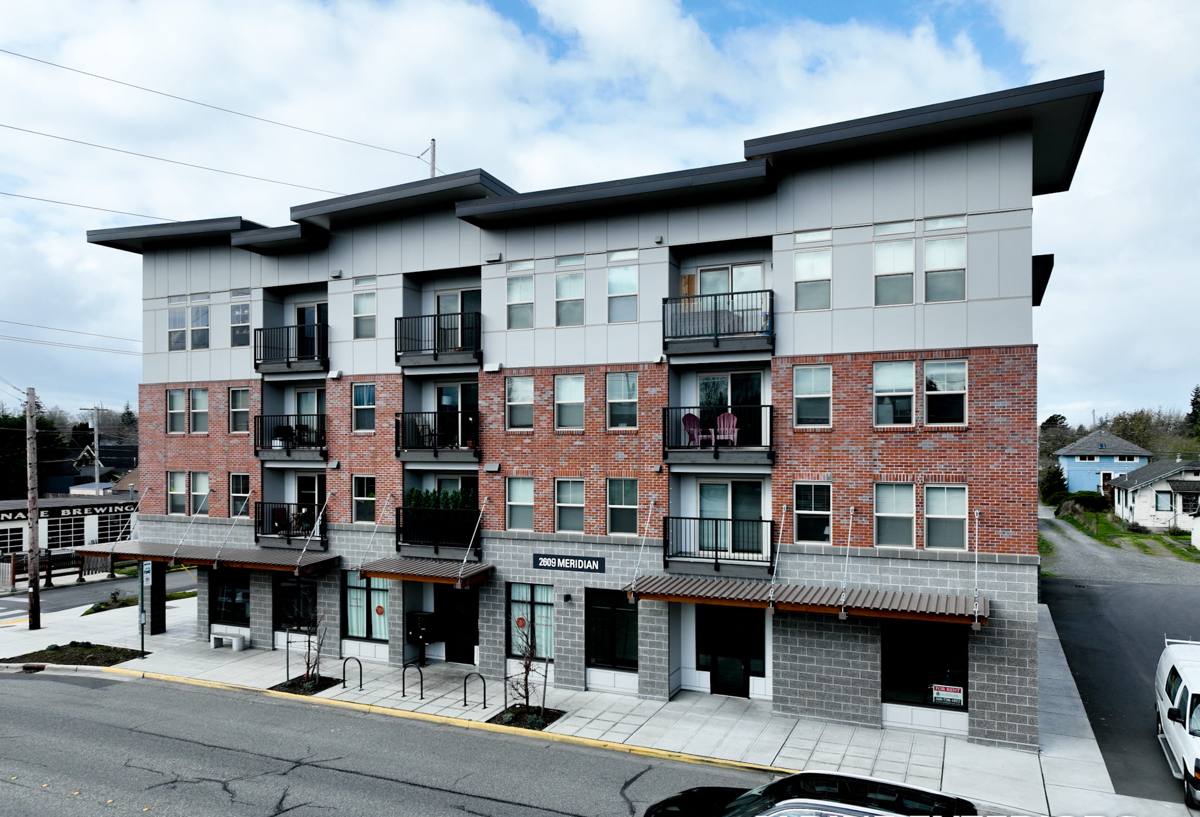
What Kendall's Climate Does to Siding
Moss and Algae Season Runs Long
In tree-shaded and north-facing sections of a home, moss and algae can establish themselves almost year-round in this part of Whatcom County. Left alone, they hold water against the siding surface long after a storm has passed. For wood-based products, that constant dampness is what triggers rot underneath a surface that can still look intact from a few feet away.
Driving Rain Finds the Weak Points
Wind-driven rain off the foothills doesn't fall straight down — it gets pushed sideways into laps, seams, and trim joints. Any siding installation with marginal flashing, caulking used as a substitute for proper flashing, or butt joints that weren't sealed correctly will eventually let water in. Once it's behind the siding, it stays wet far longer than the exterior surface does, because that space doesn't get sun or airflow.
Temperature Swings and Freeze-Thaw Cycling
Kendall sees more temperature variation through the seasons than areas closer to the water, including cold snaps that can bring freezing temperatures to already-saturated siding. Water trapped in a damaged panel that freezes and expands will crack, split, or delaminate the material further, turning a minor issue into a larger repair if it's not caught early.
Signs a Kendall Home Needs Siding Repair
- Soft or spongy spots when you press on the siding, especially near the bottom courses or below windows
- Visible moss, algae, or dark staining that keeps returning after cleaning
- Paint that's bubbling, peeling, or failing faster than it should in one particular area
- Gaps opening up at seams, corners, or where siding meets trim, windows, or doors
- Warping, cupping, or buckling panels, particularly on shaded or north-facing walls
- A musty smell near an exterior wall or visible interior staining on the same wall
- Siding that flexes or feels hollow, which often means the substrate underneath has already started to break down
Any one of these on its own might be minor. Two or more in the same area, especially combined with visible moisture staining, usually means water has already gotten past the surface and into the wall assembly.
What a Correct Repair Actually Involves
A siding repair that's done right isn't just about swapping out the damaged pieces you can see. It starts with figuring out how water got in and whether it's still getting in, because replacing a rotted section without fixing the entry point just buys you a few more years before the same repair is needed again.
Our Repair Process
- Diagnose the source, not just the symptom. We look at flashing, caulking, siding laps, and the surrounding trim to find where moisture is actually entering, not just where the damage shows up.
- Open up the affected area. Damaged siding and, where necessary, the underlying sheathing or house wrap get removed so we can see the actual extent of the problem before we quote or start work.
- Check for structural or moisture damage behind the siding. If sheathing or framing has been compromised, that gets addressed before any new siding goes back on — patching over a wet or rotted substrate is how repairs fail early.
- Correct the water management detailing. Flashing, weather-resistant barrier, and drainage planes get repaired or upgraded so the same failure doesn't happen again in the same spot.
- Install matching or upgraded siding. Where the original material is a poor long-term fit for the location — shaded, north-facing, or heavy moss exposure — we'll talk through whether that section makes sense to upgrade to James Hardie fiber cement rather than replace like-for-like.
- Finish and seal correctly. Paint, caulk, and trim work get finished to match the surrounding siding, with attention to the same lap and joint details that caused the original failure.
Why We Only Repair With, and Recommend, James Hardie Fiber Cement
When a repair calls for replacing a section of siding rather than patching what's there, we use James Hardie fiber cement. It's the only siding product we install on any home, for repairs or full replacements, and there's a straightforward reason for that in a climate like Kendall's: fiber cement doesn't rot, and it doesn't feed mold, moss, or algae the way wood-based products can. In a spot that stays shaded and damp for long stretches of the year, that difference matters more than it does in a drier climate.
James Hardie's HZ5 product line is engineered specifically for climates like the Pacific Northwest's, with an emphasis on moisture and freeze-thaw performance. The ColorPlus factory finish is baked on under controlled conditions, which holds up better against the region's UV and moisture cycling than field-applied paint, and it comes with its own finish warranty separate from the product warranty. For a repair section that needs to blend into surrounding older siding, we can often match close enough that the repair isn't obvious, while giving that section a materially better moisture profile than what was there before.
We won't install vinyl, LP SmartSide, primed spruce, cedar, or other fiber cement brands like Cemplank or Allura, even for a small repair. That's a standard we hold across every job, not just full re-sides, because a mismatched or lower-performing patch in a high-moisture area is exactly the kind of repair that comes back.
How Fiber Cement Repair Sections Compare
| Material | Moisture & Rot Resistance | Moss/Algae Feeding | Typical Repair Longevity |
|---|---|---|---|
| James Hardie fiber cement | Excellent — cement-based, does not rot | Does not feed growth; surface treatment can still be needed | Long-term, matches product warranty |
| Cedar or primed wood | Poor to moderate without diligent maintenance | Organic material, more prone to hosting growth | Shorter, especially in shaded/damp spots |
| Vinyl | Doesn't rot, but traps moisture behind it if installed poorly | Low, but growth can build on the surface | Moderate, warps under heat and impact |
| LP SmartSide | Engineered wood strand, treated but still wood-based | Lower than raw cedar, still organic | Moderate, installation-sensitive |
What Drives the Cost of a Siding Repair
Every repair is different, but a few factors consistently move the price up or down, and it's worth understanding them before you get a quote.
| Factor | Why It Matters |
|---|---|
| Extent of hidden damage | Rotted sheathing or framing behind the siding adds labor and material beyond the visible repair |
| Access and wall height | Second-story or hard-to-reach sections need staging or lift access |
| Matching existing siding | Discontinued profiles or colors can mean a wider repair area to keep the look consistent |
| Underlying cause | A repair tied to a flashing or drainage problem takes more work than a straightforward panel swap |
| Number of separate repair areas | Multiple smaller repair zones around a home add setup time versus one contiguous area |
We give straightforward, itemized quotes so you know what you're paying for — the repair itself, any substrate work, and any upgrade to fiber cement if that's the right call for the area.
Why Hire a Crew That Already Works in Kendall
Siding repair isn't just a materials question — it's a diagnosis question, and getting the diagnosis right depends on having seen this specific climate do this specific damage before. A crew unfamiliar with how moisture behaves under tree cover in the Whatcom County foothills might replace the visible damage and miss that the real problem is a flashing detail two feet away, or that the shaded side of the house needs a different moisture strategy than the sun-exposed side.
We work throughout Ferndale and the surrounding Whatcom County communities, including Kendall, and we bring that pattern recognition to every repair estimate: where water tends to enter on homes like yours, which sections are worth upgrading to fiber cement versus patching in kind, and how to detail the repair so it holds up through the next several wet seasons rather than needing attention again in a year or two.
Get a Straightforward Siding Repair Estimate
If you're seeing soft spots, persistent moss, peeling paint, or any of the other warning signs on your Kendall home, it's worth having someone take a real look before the damage spreads further into the wall assembly. We offer free, no-pressure estimates — we'll tell you honestly what we find, what it'll take to fix it right, and whether a section makes sense to upgrade to James Hardie fiber cement while we're already in there. Fill out the form below to get started.