 Ferndale Siding
 Board & Batten on an Island Exposure
Lummi Island sits out in the marine weather that the rest of Whatcom County only gets a taste of. Homes here face wind-driven rain off Rosario Strait and Hale Passage, salt-laden air that never fully clears, and a wet season that runs long enough to keep north- and west-facing walls damp for weeks at a stretch. Board and batten siding — with its bold vertical lines and deep shadow reveals — is a popular choice for island and waterfront homes because it reads as substantial and modern without looking out of place next to older cedar-sided cottages. But the same profile that makes it visually striking also makes it less forgiving of a sloppy install than a standard lap pattern. Every seam, every batten, and every fastener line is a potential water path if the details aren't right.
We install James Hardie fiber cement exclusively, including for board and batten profiles. This page walks through what that means specifically for a Lummi Island property, why the island's climate changes how we detail the job, and what to expect if you're comparing quotes.
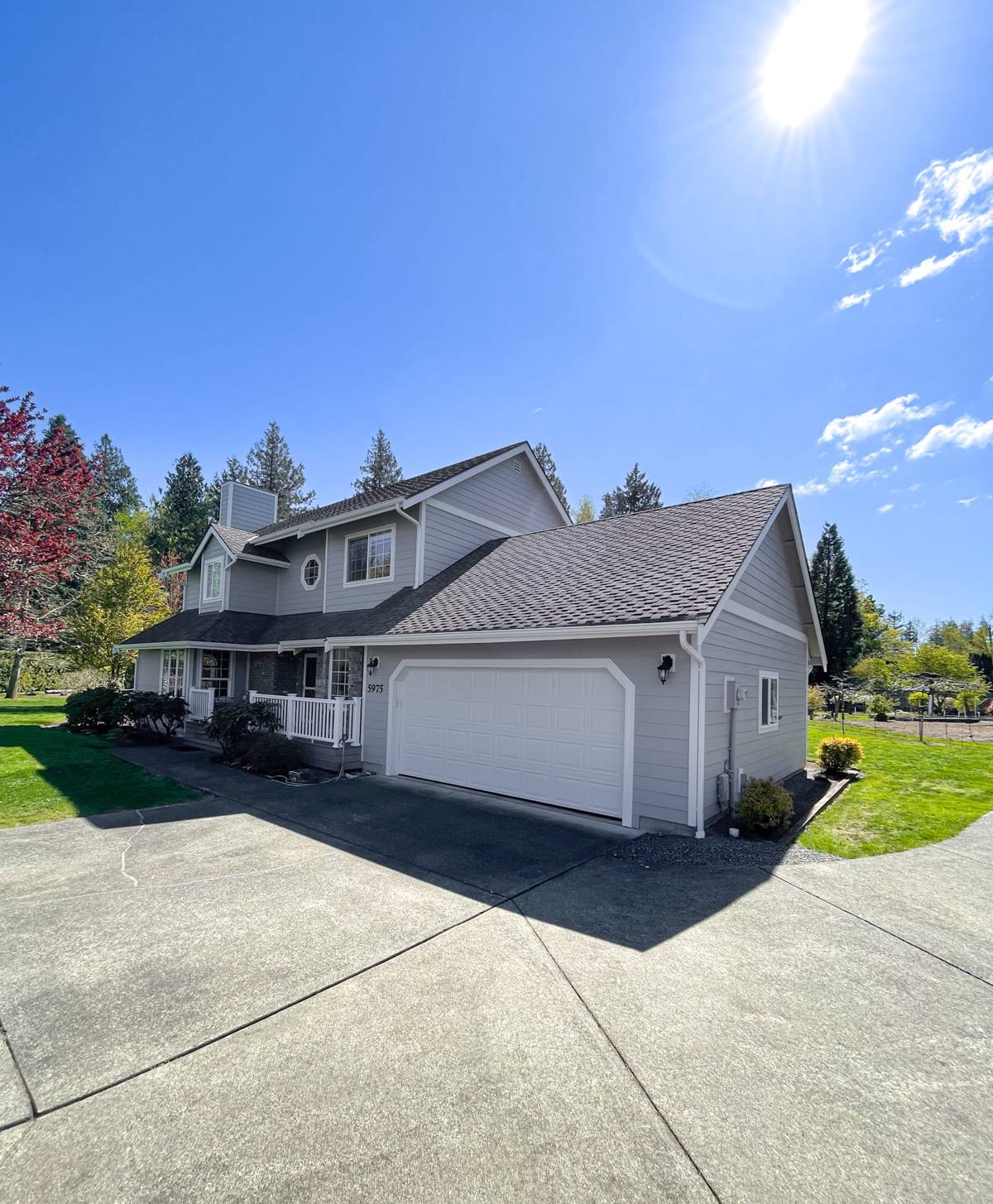
What Salt Air, Driving Rain, and Moss Actually Do to Siding
These three factors don't act alone — they compound each other, and board and batten siding is exposed to all three at once because of its vertical joints and exposed batten faces.
Salt Air
Airborne salt from the surrounding water accelerates corrosion on any exposed metal — fasteners, flashing, trim caps — and it slowly breaks down lesser paint films and coatings faster than the same product would fail inland. Fiber cement itself doesn't corrode, but the hardware holding it up will if it's the wrong grade or improperly covered.
Driving Rain
Wind off the water doesn't let rain fall straight down — it drives it sideways into vertical joints and batten edges. On a board and batten wall, that means the narrow gaps between boards, and the battens covering them, take a direct hit every storm. If the water-resistive barrier and flashing details behind the siding aren't continuous, that moisture finds a way in.
Moss and Prolonged Dampness
Whatcom County's wet season keeps shaded and north-facing walls damp for extended stretches, and moss takes hold anywhere organic debris and moisture linger — at grade, under trim, along horizontal battens. Moss holds moisture against the material longer than open air would, which is hard on paint films, caulk joints, and any wood-based product in particular.
Why We Only Install James Hardie for This Application
Board and batten is one of the profiles where the choice of base material matters most, because the batten strips themselves are usually the first thing to fail on lower-grade products. We don't install LP SmartSide, vinyl, cedar, or primed spruce board and batten, and on an island exposure like this the reasoning is straightforward:
- Non-combustible, moisture-stable material. Fiber cement doesn't swell, cup, or rot the way wood-based battens and boards can when they stay damp for weeks at a time.
- Factory-applied ColorPlus finish. Rather than relying on field-applied paint (which is the weak point on most board and batten jobs, especially on cut edges and battens), Hardie's baked-on finish is applied and cured under controlled conditions and holds color and adhesion longer in salt-air exposure than most site-applied coatings.
- HZ5/HZ10 engineering for wet, coastal climates. Hardie's HardieZone system is engineered specifically for regions like ours, where moisture cycling — not just total rainfall — is the stress the material has to withstand.
- A warranty structure that transfers with the home. On an island where resale often means a very specific buyer pool, a transferable manufacturer warranty is a real asset at closing, not just paperwork.
None of this means other products are junk — LP SmartSide and cedar both have real advocates and legitimate use cases. It means that after years of installing and repairing siding in this exact climate, we standardized on the one system that holds up consistently in high-moisture, salt-exposed conditions without asking the homeowner to stay on top of a heavy maintenance schedule.
What a Correct Board & Batten Install Actually Involves
Board and batten looks simple from the street — vertical boards, battens over the seams — but the assembly behind it is doing all the real work. Skipping steps here is exactly how a good-looking wall turns into a moisture problem two winters later.
Behind the Siding
A continuous, properly lapped weather-resistive barrier goes on first, with flashing integrated at every window, door, and penetration — not caulked over as an afterthought. On a wall that's going to take direct, wind-driven rain, this drainage plane is what actually keeps water out; the siding itself is the second line of defense, not the first.
Fastening and Spacing
Boards and battens need to be fastened according to Hardie's published spacing and edge-distance requirements, with room left for the material to expand and contract seasonally. Battens that are nailed too tight, or boards installed without the specified gap, are a common cause of buckling and cracked caulk lines down the road.
Fastener Selection
Given the salt air, fastener corrosion resistance isn't optional — we use hardware rated for coastal exposure, and we make sure fastener heads are properly set and sealed rather than left proud or overdriven, both of which create entry points for water.
Trim and Transitions
Where board and batten meets a window, corner, roofline, or the foundation, the transition detail matters more than on flat panel siding, because these are the spots where the vertical joints terminate. Correct kick-out flashing at rooflines and proper clearance at grade are two of the most commonly skipped details on lower-bid jobs.
Quick Quality Checklist
- Continuous weather-resistive barrier with properly lapped and taped seams
- Integrated flashing at every window, door, and roof-to-wall transition
- Battens and boards fastened per Hardie's spacing specs, not "snugged up" by eye
- Coastal-rated, corrosion-resistant fasteners throughout
- Minimum clearance maintained between siding bottom edge and grade or hard surfaces
- Kick-out flashing installed at roofline-to-wall intersections
- Factory ColorPlus finish specified rather than field-painted boards
Cost Factors on a Board & Batten Project
Board and batten typically runs somewhat higher than a standard lap install because of the extra material (the battens themselves) and the additional labor to fasten and detail two layers instead of one. Actual numbers depend heavily on the specifics of your home, so treat the table below as a guide to what moves the price, not a quote.
| Factor | Why It Affects Cost |
|---|---|
| Wall height and complexity | Multi-story walls and steep or cut-up rooflines take longer to flash and fasten correctly |
| Existing siding removal | Tear-off and disposal of old material, plus any sheathing repair found underneath |
| Batten spacing and reveal size | Tighter batten spacing means more material and more fastening labor per square foot |
| Window and trim count | Each opening adds flashing and cut-in detail work around the board and batten pattern |
| Ferry logistics for materials and crew | Island access adds coordination and scheduling time that a mainland job doesn't require |
| Color and finish selection | Factory ColorPlus finishes vary by line and color; primed-for-paint options cost less upfront but add painting labor |
Working an Island Job the Right Way
Reaching Lummi Island means a ferry crossing, and that changes how a siding project has to be scheduled compared to a job on the mainland side of Ferndale. Material deliveries, crew transport, and dumpster or debris hauling all have to be planned around ferry timing rather than just driven over on demand. A crew that hasn't worked the island before tends to underestimate this — leading to delays, partial crews, or trips wasted because a load wasn't ready when the ferry was. We plan island jobs with that logistics reality built in from the estimate stage, not discovered mid-project.
We also stage materials and cuts efficiently before the crossing, since running back for a forgotten item isn't a quick trip. That planning discipline matters just as much as the installation skill itself when it comes to keeping an island project on schedule.
Maintaining Board & Batten Siding in a Marine Climate
Correctly installed Hardie board and batten is low-maintenance, but "low" isn't "none" — especially in this exposure. A short annual routine keeps it performing as designed:
- Rinse salt residue and organic debris off the siding, particularly on walls facing the water, once or twice a year
- Keep gutters clear so overflow doesn't run down and pool behind battens
- Trim back vegetation and clear debris that traps moisture against lower courses
- Inspect caulk joints at trim and penetrations annually and re-caulk any that have opened up
- Watch for moss establishing on shaded battens and remove it before it spreads
Why Hire a Crew That Already Works Lummi Island
Board and batten siding fails, when it fails, at the details — a fastener that shouldn't have corroded as fast as it did, a flashing lap that was an inch short, a batten spaced too tight for the material to move. Those are exactly the mistakes that show up sooner in a coastal, high-moisture exposure like this one than they would on a sheltered inland wall. Hiring a crew that already understands Whatcom County's marine climate, has planned around island ferry logistics before, and installs one siding system consistently rather than juggling several product lines means fewer surprises during the job and fewer callbacks after it.
If you're weighing board and batten for a Lummi Island home, we're happy to walk the property, talk through what the specific exposure on your walls calls for, and give you a straightforward, no-pressure estimate. Use the form below to get started.