 Ferndale Siding
 Why Lummi Island Windows Take More Than a Standard Install
Lummi Island sits out in the salt air coming off Rosario Strait and the Georgia Strait, and that changes what a window has to survive compared to a house a few miles inland in Ferndale proper. Salt-laden moisture works into anything metal, driving rain finds any gap in the flashing detail, and the shaded, damp stretches of the year keep moss and algae established on sills, trim, and cladding longer than most homeowners expect. A window package that performs fine in a dry inland yard can fail early out here — not because the product is bad, but because the site conditions weren't accounted for in the material choice or the install.
We've worked on homes across Whatcom County long enough to know Lummi Island isn't just "coastal" in a generic sense. It's a barrier-island exposure with wind-driven rain coming off open water, and a ferry-dependent supply chain that means a poorly planned job can leave a house open to the weather for days if materials or crew get stuck on the mainland side. Custom window work here needs a contractor who plans for that reality, not one learning it on your house.
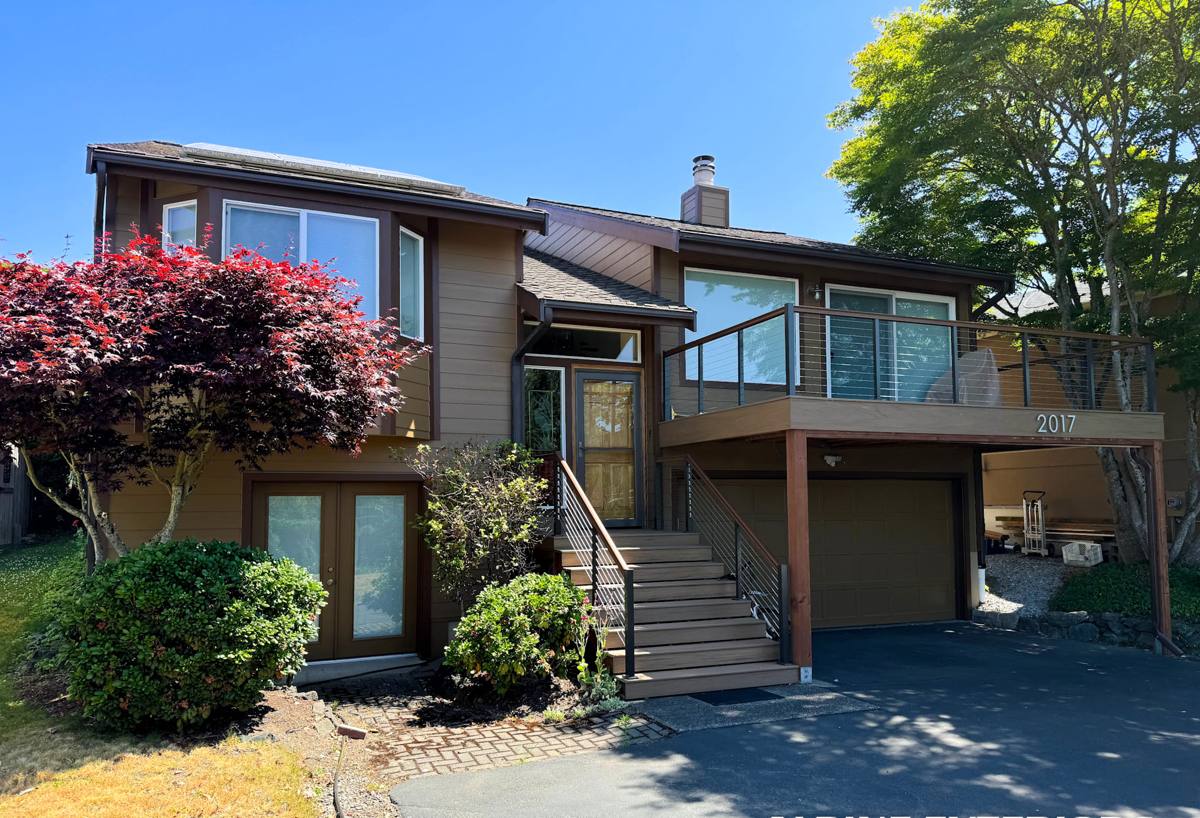
What Salt Air Actually Does to a Window Over Time
Salt air is corrosive to exposed metal — window hardware, screen frames, and especially lower-grade cladding fasteners. On Lummi Island homes we've looked at, the earliest failures usually aren't in the glass or the frame body, they're in the small hardware: locks, hinges, balance systems, and screen clips that were never rated for a marine-adjacent environment. Once that hardware starts to pit or seize, homeowners force windows open and closed, which stresses the seals and accelerates failure everywhere else.
The fix isn't complicated, it's just often skipped: spec corrosion-resistant hardware up front, use cladding and trim fasteners rated for coastal exposure, and choose frame materials that don't rely on paint or finish alone to resist salt. It costs a little more at time of purchase and saves a full hardware replacement cycle five to eight years down the road.
Where We See Salt Damage First
- Window locks and cranks that stiffen, pit, or stop latching cleanly
- Aluminum or low-grade steel screen frames corroding at the corners
- Cladding fasteners bleeding rust streaks down the frame face
- Weatherstripping that hardens and cracks faster near west- and south-facing exposures
Driving Rain and the Flashing Detail That Actually Matters
Whatcom County gets plenty of straight-down rain, but Lummi Island's open-water exposure means a fair amount of it comes in sideways, driven by wind off the strait. A window can be perfectly good and still leak if the flashing and sealant detail around it wasn't built for wind-driven rain specifically. This is the single biggest source of hidden damage we find in coastal window replacements — not the window unit itself, but water getting behind the trim and into the wall assembly through a flashing gap that looked fine on install day.
Correct flashing on a Lummi Island home means a continuous water-resistive barrier tie-in, proper head flashing with an end dam, sill pan flashing that sheds water back outward instead of trapping it, and sealant joints sized and placed for movement, not just gap-filling. Skipping any one of these doesn't show up immediately — it shows up as soft trim, stained drywall, or mold behind the wall two or three winters later.
Moss Season and Long-Term Window Health
The long moss season here isn't just a roof and siding problem — it affects windows too. Shaded elevations and north- or east-facing walls stay damp longer, and moss and algae growth on sills, trim boards, and the lower edges of window casings holds moisture against the wood or composite longer than an open, sun-exposed wall would. Over time that constant dampness softens trim, degrades paint and caulk faster, and creates a foothold for rot at the sill — one of the most expensive spots to repair because it often means pulling the window to fix the framing underneath.
Material choice and drainage detail both matter here. A sill designed to shed water quickly, trim material that tolerates sustained moisture without swelling, and a finish schedule that doesn't need annual recoating all reduce how much of a foothold moss and rot get. We also talk homeowners through realistic exterior maintenance — a once- or twice-a-year rinse-down of sills and lower trim goes a long way on a shaded Lummi Island elevation.
Choosing the Right Window Material for This Exposure
There's no single "best" window material for every house — it depends on exposure, budget, and how much maintenance a homeowner actually wants to do. For Lummi Island specifically, we weigh corrosion resistance, moisture tolerance, and long-term maintenance burden more heavily than we would for a sheltered inland lot.
| Material | Salt/Moisture Behavior | Maintenance | Typical Fit |
|---|---|---|---|
| Vinyl | Doesn't corrode; hardware quality is what matters most | Low — occasional cleaning | Budget-conscious replacements, good general coastal performer |
| Fiberglass | Excellent — dimensionally stable, resists moisture-driven warping | Low | Higher exposure walls, long-term durability priority |
| Wood-clad | Good if cladding and flashing are correct; interior wood still needs protection | Moderate — finish upkeep on any exposed wood | Homes prioritizing interior wood look with exterior protection |
| Aluminum-frame | Weaker without marine-grade coatings; prone to corrosion here | Higher — coating maintenance | Generally not our first recommendation for this exposure |
We don't push one brand or material on every job. What we do insist on, regardless of material, is hardware and fasteners rated for coastal exposure and a flashing detail built for wind-driven rain — those two things affect longevity more than the frame material alone.
How We Handle a Lummi Island Custom Window Project
1. On-Site Assessment
We look at existing window condition, sill and trim moisture damage, current flashing detail (where visible), and the specific exposure of each elevation — a south wall facing open water gets a different recommendation than a sheltered north wall.
2. Honest Material and Scope Recommendation
We walk through material trade-offs in plain terms — what costs less up front versus what costs less over ten years — and size the scope to the actual condition of the framing, not just the visible window.
3. Logistics Planning for Island Access
Because Lummi Island work depends on the ferry, we plan material staging and crew scheduling around ferry timing so a house isn't left with open wall or window cavities overnight or through a weather window. This is a scheduling discipline mainland jobs don't require, and it's one of the reasons hiring a crew that's done island work before matters.
4. Correct Installation
Proper sill pan flashing, head flashing with end dams, correctly sequenced water-resistive barrier integration, and sealant detailing built for wind-driven rain — every step gets done in order, not shortcut to save a day.
5. Final Walkthrough
We check operation, hardware function, and sealant lines with the homeowner before calling the job done, and explain what maintenance (if any) the specific material and finish will need going forward.
Why It Matters That We Already Work on Lummi Island
A contractor who's never worked the island learns its logistics on your job — ferry schedules, tide-dependent staging if materials come by barge or small boat, and the reality that a forgotten tool or material means a lost day, not a quick supply run. We've built our scheduling and material-ordering process around that reality, which keeps island jobs moving at close to the same pace as mainland Ferndale work, instead of stretching out over unplanned delays.
We also know the exposure patterns specific to the island — which elevations catch the worst of the driving rain, which sides stay shaded and mossy longest, and how that should change the material and flashing decisions on a given house. That's not something you can fully judge from a set of photos; it comes from having done the work here before.
Signs Your Current Windows Are Already Struggling
- Locks or cranks that feel stiff, gritty, or don't fully latch
- Visible rust streaking below hardware or fasteners
- Soft or spongy trim at the sill, especially on shaded elevations
- Moss or dark staining building up on sills and lower casing
- Drafts or condensation between panes that weren't there a few years ago
- Paint or finish failing faster on one elevation than the others
Any one of these on its own isn't an emergency, but they're worth having looked at before they turn into a framing repair instead of a window replacement.
Getting Started
If you're weighing a custom window project on Lummi Island — whether it's a full-house replacement or targeted work on the elevations taking the worst of the weather — we're glad to come take a look and give you a straight assessment of what your home actually needs. We'll put together a free, no-pressure estimate based on your home's specific exposure, not a generic package. There's a request form below to get that started.