 Ferndale Siding
 Roof Repair Built for Lummi Island's Marine Climate
Lummi Island sits out in Whatcom County's marine weather in a way that most inland neighborhoods don't. The roofs here take a different kind of beating than a roof twenty minutes inland in Ferndale or Bellingham. Salt-laden air off the water, wind-driven rain that gets pushed sideways into fascia and vents, and a moss season that runs longer than almost anywhere else in the Pacific Northwest all combine to shorten the working life of roofing materials and hardware. Repairing a roof out here isn't just patching a hole — it's understanding why that hole formed in the first place and fixing the conditions that caused it, not just the symptom.
We work roofs across Ferndale and the surrounding Whatcom County communities regularly, and Lummi Island jobs get planned differently from the start. Materials, fastener choices, and scheduling all account for the island's exposure and access before a crew ever shows up.
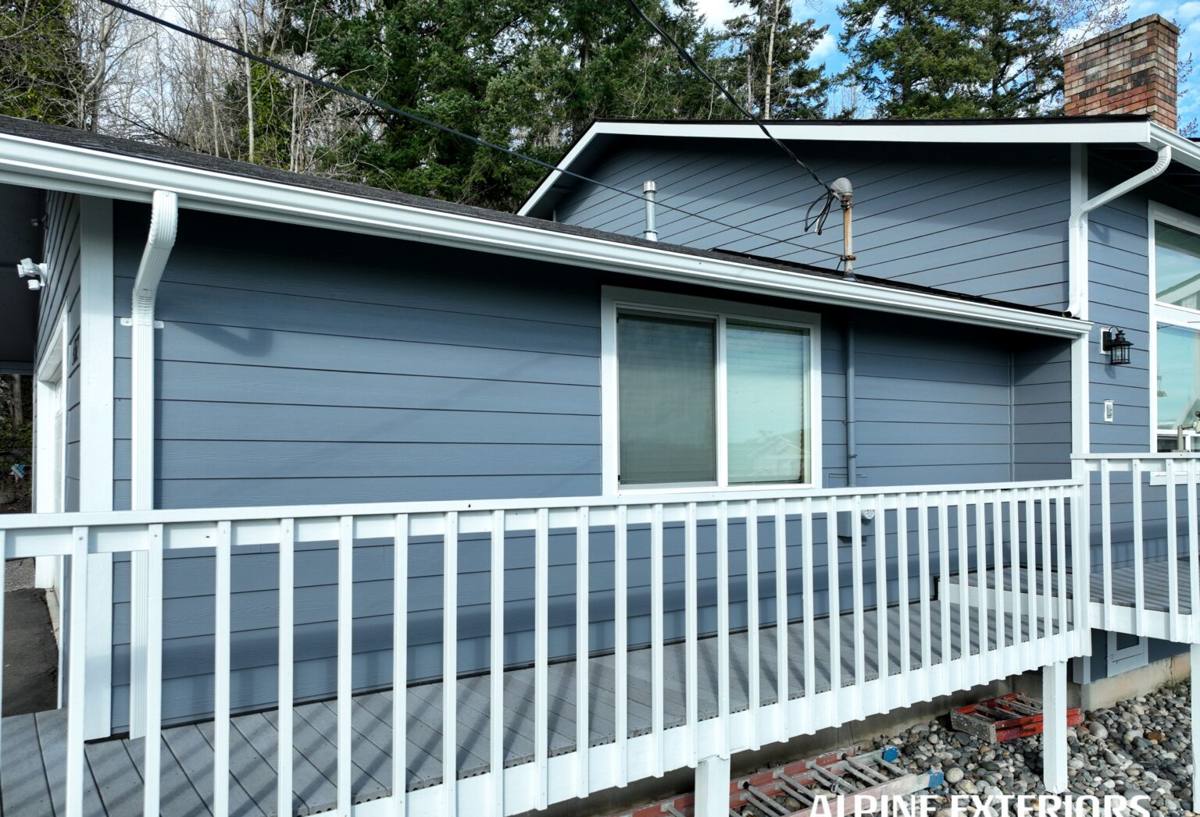
What Salt Air and Driving Rain Do to a Lummi Island Roof
Salt air is corrosive, and it doesn't take a direct oceanfront lot to feel the effect — homes set back from the water still get a steady dose of salt-carrying moisture on breezy days. Over time that accelerates corrosion on exposed metal: nail heads, flashing seams, valley metal, and vent boots all rust or degrade faster here than they would in a drier, inland location. Once a fastener or flashing seam starts to corrode, it stops sealing the way it was designed to, and water finds its way in long before a homeowner sees a stain on the ceiling.
Driving rain adds a second layer of stress. Wind off the water doesn't just fall on a roof — it drives horizontally into eaves, ridge caps, and anywhere two roof planes meet. Underlayment and flashing details that would be adequate in a calmer inland setting can get overwhelmed here, especially at:
- Valleys where two roof slopes meet and water volume concentrates
- Roof-to-wall transitions and step flashing along dormers or additions
- Chimney and skylight flashing
- Vent boots and pipe penetrations
- Eaves and rake edges exposed to prevailing wind
A repair that doesn't account for wind-driven rain at these points tends to fail again within a season or two, which is why we look at wind exposure and roof geometry together before deciding on a fix.
Moss: The Slow Damage Nobody Notices Until It's a Leak
Whatcom County's damp, mild winters are good moss-growing conditions almost anywhere, but Lummi Island's persistent humidity and shaded, tree-covered lots push the moss season even longer. Moss doesn't just look bad — it holds moisture directly against the roofing surface, works its way under shingle tabs and shake courses, and lifts material as it grows. On composition shingles that means accelerated granule loss and premature aging. On cedar shake or shingle roofs, trapped moisture speeds up rot in the wood itself.
By the time moss is visibly thick on a roof, it's usually already done damage underneath that isn't visible from the ground. Part of a proper repair on a moss-affected roof is removing growth correctly — not pressure-washing it off, which can strip granules and drive water under shingles — and addressing the moisture and shade conditions that let it take hold in the first place, where that's practical.
Signs Your Lummi Island Roof Needs Repair Now
Some problems are obvious. Others show up as small clues that are easy to write off until they become a bigger job. Homeowners on the island should take these seriously:
- Water stains on interior ceilings or upper walls, even faint ones
- Granules collecting in gutters or at the base of downspouts
- Curling, cracked, or missing shingles, especially on the wind-exposed side of the house
- Rusted or lifted flashing around chimneys, vents, and skylights
- Thick moss or dark streaking across roof planes
- Soft or spongy spots when walking the roof (a sign of rotted decking)
- Daylight visible through the roof deck from inside the attic
Any one of these is worth a look. On a roof exposed to the island's salt air and rain, small issues tend to progress faster than they would elsewhere, so catching them early saves real money.
What a Correct Roof Repair Actually Involves
Not all roof repairs are equal, and the difference usually isn't visible once the work is done — it's in what's underneath. A quick surface patch might stop a leak for a season. A correct repair addresses the underlayment, flashing, and decking condition so the fix holds through the next few winters of driving rain.
| Repair Approach | What It Includes | Typical Result |
|---|---|---|
| Surface patch | Sealant or a single replacement shingle over the visible damage | Short-term stop to an active leak; often fails again within a season, especially near flashing |
| Targeted proper repair | Removal of affected shingles/shake, inspection and repair of underlayment and decking, correct flashing replacement, matched material reinstalled | Durable fix that addresses the actual entry point, not just the symptom |
| Flashing-focused repair | Replacement of corroded or improperly lapped flashing at valleys, walls, chimneys, or vents | Resolves recurring leaks at roof transitions, a common failure point in wind-driven rain |
| Moss remediation with repair | Careful moss removal, inspection for underlying granule loss or wood rot, spot repair as needed | Stops ongoing moisture damage and extends the life of the existing roof |
We diagnose before we quote. That means getting on the roof (or using a camera where access is limited) to trace a leak back to its actual source rather than assuming the nearest visible damage is the cause. On more than one island job we've found the real entry point several feet from where the ceiling stain showed up, because water traveled along a rafter or decking seam before dropping.
Materials That Hold Up Out Here
Where repair materials are our choice, we lean toward corrosion-resistant flashing and fasteners rather than standard-grade hardware, given the salt exposure. It costs a little more up front and pays for itself by not needing to be redone in a few years. We'll walk homeowners through the trade-offs on their specific roof rather than defaulting to whatever is cheapest to stock.
Our Roof Repair Process
- Inspection and diagnosis. We identify the actual source of the leak or damage, not just the visible symptom, including a look at flashing, decking, and ventilation.
- Honest scope and estimate. We explain what needs to be done and why, and what the options are if there's more than one reasonable approach.
- Repair. Affected materials are removed, the deck and underlayment are inspected and repaired as needed, and new material is installed and properly flashed and sealed.
- Cleanup and check. Debris and old material are hauled off, and we confirm the repair matches the surrounding roof as closely as possible.
Why Hire a Crew That Already Works Lummi Island
Access and logistics are part of the job on the island in a way they aren't for most Whatcom County addresses. Scheduling has to account for ferry timing, and a crew unfamiliar with that reality can turn a one-day repair into a multi-day headache through poor planning. We build ferry logistics into our scheduling from the start so a repair crew, materials, and equipment all arrive together and the job gets done in the fewest trips possible.
Beyond logistics, familiarity with the island's specific exposure matters. A contractor who mostly works sheltered inland roofs may not think to specify corrosion-resistant fasteners or to check wind-driven rain paths at every valley and transition. Those are habits that come from doing the work here repeatedly, not from a general roofing checklist.
Cost Factors for Lummi Island Roof Repairs
Every roof and every leak is different, so we don't quote sight unseen. But the factors that typically move a repair estimate up or down are consistent:
| Factor | Why It Matters |
|---|---|
| Extent of hidden decking damage | Rot found once shingles are pulled back adds material and labor beyond the original visible issue |
| Roof pitch and access | Steeper or harder-to-access roofs take more time and safety equipment |
| Flashing complexity | Chimneys, skylights, and multiple valleys mean more detail work than a simple field repair |
| Material match | Matching existing shingle or shake color and profile can affect material sourcing and cost |
| Moss and debris removal | Heavy moss buildup adds cleanup time before the repair itself can begin |
Questions Worth Asking Any Roofer Before You Hire
- Will you get on the roof to diagnose the actual leak source, or estimate from the ground?
- What will you check at flashing points and valleys, not just the damaged shingle?
- What fasteners and flashing material do you use given the salt air exposure?
- How do you handle scheduling and ferry logistics for the job?
- Is the estimate itemized, or a single lump-sum guess?
If you're dealing with a leak, visible moss, or you just want an honest read on your roof's condition before winter storms roll in, we're glad to take a look. Fill out the form below for a free, no-pressure estimate — we'll tell you what we actually find, not just what's easiest to sell.