 Ferndale Siding
 Storm Damage Roofing on an Island Community
Lummi Island sits out in the water, and that changes what a roof deals with compared to a house a few miles inland in Ferndale or Bellingham. Wind off the Strait of Georgia and Hale Passage doesn't just blow — it drives rain sideways into laps and flashing that were never designed to take water from that angle. Add in salt-laden air working on every exposed metal fastener and vent, plus a moss season that runs long thanks to shade, humidity, and mild winters, and you get a roof that ages differently than one on the mainland. Storm damage repair out here isn't just "patch the leak." It's understanding how wind, salt, and moss set the stage for damage long before a storm ever hits, and repairing the roof so the next storm doesn't undo the work.
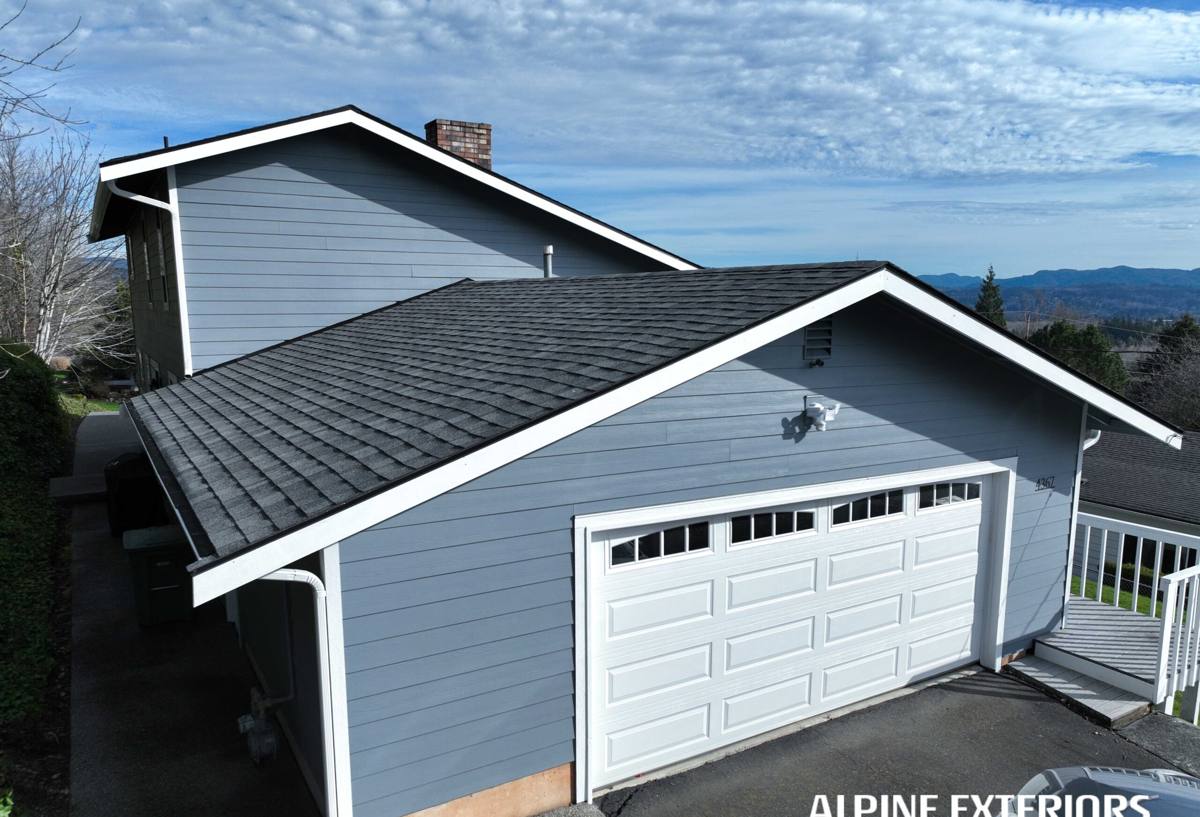
How Wind, Salt Air, and Moss Combine to Damage Roofs
Wind-Driven Rain
Most roofing systems are built to shed water moving straight down. On an exposed island roof, wind regularly pushes rain sideways and even slightly upward under shingle tabs, along ridge caps, and around any penetration — vent pipes, chimneys, skylights. A roof that would be fine in a calm, straight-down rain can leak in the exact same storm if the wind angle is wrong for how it was originally flashed or sealed.
Salt Air and Corrosion
Airborne salt accelerates corrosion on exposed metal — nail heads, flashing seams, gutter fasteners, and any galvanized hardware that isn't fully protected. Corrosion doesn't show up as a dramatic failure; it shows up as a slow loosening of fasteners and thinning of metal at the exact places that are supposed to keep water out. A flashing detail that would last decades a few miles inland can start failing years earlier this close to open water.
Moss and Trapped Moisture
Shaded, north-facing, and heavily treed sections of roof on Lummi Island tend to hold moisture longer, which is exactly what moss needs. Moss doesn't just sit on top of shingles — it works its rhizoids under the shingle edge and holds water against the roofing material and the fasteners underneath. Over a wet fall and winter, that trapped moisture is a slow, steady form of damage that often gets blamed entirely on "the storm" when the storm really just finished off what months of moss growth had already weakened.
Signs Your Roof Has Storm Damage
Storm damage isn't always obvious from the ground. Some of it is, some of it isn't, and the damage you can't see is usually the kind that turns into a bigger repair if it sits through another wet season. After any significant wind or rain event, it's worth checking for:
- Shingles that are lifted, cracked, creased, or missing entirely, especially on the side of the roof that faces the prevailing wind
- Granules collecting in gutters or at downspout outlets — a sign of shingle surface wear from wind abrasion
- Bent, lifted, or separated flashing around chimneys, skylights, vents, and roof-to-wall transitions
- Water stains or new discoloration on interior ceilings, especially near exterior walls or below valleys
- Sagging or soft-feeling sections of roof deck, which can indicate water has been getting in for a while
- Debris, branches, or heavy moss buildup concentrated in valleys and against the roof-wall intersections
- Gutters pulled away from the fascia or full of shingle fragments after a wind event
What a Correct Storm Damage Repair Involves
Emergency Tarping and Stabilization
If a storm has opened up the roof deck, the first priority is stopping active water intrusion — not scheduling a full repair three weeks out. A proper emergency response means a secure tarp job that actually survives the next round of wind, not a quick cover that tears loose in the next gust and leaves the house exposed again.
Full Damage Assessment
Once the roof is stable, the real work is figuring out the full extent of the damage, not just what's visible from the ground or from inside the attic. That means getting on the roof, checking every flashing detail, every penetration, and the condition of the decking underneath damaged shingles. A repair that only addresses the visible hole and ignores softened decking or compromised flashing nearby is a repair that fails again in the next storm.
Matching Materials and Proper Flashing Repair
Repairs need to match the existing roofing material closely enough that the patched section performs the same as the rest of the roof — not just look similar. Flashing gets rebuilt to shed wind-driven rain, not just rain falling straight down, and any corroded fasteners or metal found during the repair get replaced rather than reused. On an island roof, cutting corners on flashing detail is the single most common reason a "fixed" roof leaks again in the very next storm.
Repair or Replace — What Actually Drives That Decision
Not every storm-damaged roof needs to be replaced, and not every roof that looks rough from the ground needs full replacement either. The honest answer depends on a handful of specific factors, not the age of the roof alone.
| Factor | Leans Toward Repair | Leans Toward Replacement |
|---|---|---|
| Extent of damage | Isolated to one section, slope, or detail | Damage scattered across multiple slopes or large areas |
| Roof age | Well within its expected service life | Already near or past the end of its typical lifespan |
| Decking condition | Solid, dry decking under the damaged area | Soft, delaminated, or water-stained decking found during inspection |
| Moss/moisture history | Minimal moss, roof has been maintained | Long-term moss buildup with signs of underlying material breakdown |
| Material availability | Matching shingle or material still obtainable | Discontinued material that can't be reasonably matched |
We'll walk you through which side of that table your roof falls on, in plain terms, before any work starts — including telling you when a repair is genuinely the right call rather than pushing a full replacement that isn't needed yet.
Our Process for Lummi Island Storm Repairs
Scheduling Around the Ferry
Getting a crew and materials to and from Lummi Island means working around ferry schedules, which is simply part of how work gets done out here. We plan our storm response and material deliveries with that in mind, so a job isn't held up because a load of shingles or flashing missed a sailing. For active leaks, we prioritize getting a crew and a proper tarp over within the ferry's operating hours rather than leaving a homeowner waiting on the next available slot.
Documentation for Insurance
Most storm damage repairs involve an insurance claim. We document damage with clear photos and a written scope of work before repairs begin, which gives you something solid to work with when you're talking to your adjuster. We're not a public adjuster and we don't negotiate your claim for you, but we'll give you an honest, detailed account of what we found and what it will take to fix it correctly.
The Repair Itself
Once material and scope are confirmed, we do the tear-out of damaged material, inspect and repair the decking as needed, rebuild flashing details to handle wind-driven rain, and install matching roofing material with attention to how it will hold up to salt air and continued moss exposure — not just how it looks on the day the job wraps up.
Why Working With a Crew That Already Handles Island Jobs Matters
A roofing crew that mostly works inland neighborhoods isn't necessarily prepared for what an island roof actually needs. Fastener corrosion from salt air, flashing details that have to handle rain coming in sideways, and moss that's had a long, mild season to work into shingle edges are all things you learn by seeing them repeatedly on this kind of exposure — not by reading a spec sheet. A crew that's used to the ferry schedule, used to island logistics, and used to what Whatcom County's marine climate does to a roof over time is going to make fewer assumptions and catch more of the real problem the first time.
That familiarity also matters for response time. Storm damage doesn't wait for a convenient sailing, and a crew that already builds island logistics into how it plans work is going to get a tarp on your roof faster than one that's figuring it out for the first time in the middle of a wind event.
Get an Honest Look at Your Roof
If your Lummi Island home has visible storm damage, a suspected leak, or you just want a straight answer on what a recent windstorm did to your roof, we're glad to come take a look. The estimate is free, there's no pressure to sign anything on the spot, and you'll get a clear explanation of what we find and what it would take to fix it right — use the form below to get started.