 Ferndale Siding
 Building New on the Lummi Peninsula Means Building for Salt Air and Rain
New construction in the Lummi Nation area is a different job than a replacement window project anywhere else in Whatcom County. Homes here sit close to saltwater, exposed to onshore wind, driving rain off the Strait, and a moss season that stretches from fall through spring. Window openings that aren't detailed correctly at the framing stage don't just leak eventually — around here, they leak sooner, and the salt in the air accelerates corrosion on hardware and fasteners that would last decades further inland. When we frame windows into a new build in this area, we treat the coastal exposure as the starting assumption, not an afterthought.
This page covers new-construction window installation specifically — windows going into a house during framing, before siding and trim close up the opening — for homes being built in and around Lummi Nation. If your project is a window replacement in an existing Ferndale-area home, that's a different scope with different considerations; this page is about doing it right the first time, while the wall is still open.
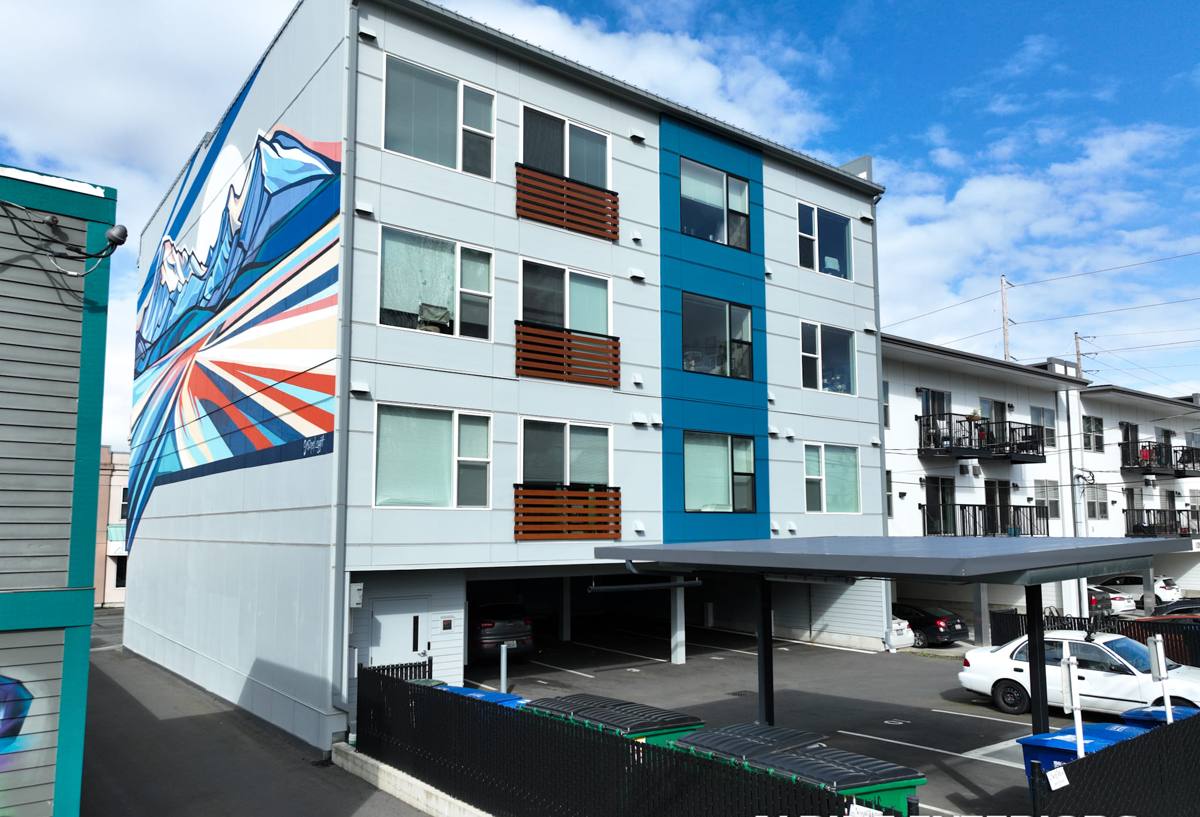
New Construction vs. Replacement: Why the Distinction Matters
New-construction windows have a nailing fin (sometimes called a flange) that gets integrated directly into the wall's weather-resistive barrier and flashing system before siding goes on. Replacement windows, by contrast, are built to fit into an existing opening without disturbing the siding around it. Trying to use replacement-style windows in new construction — or vice versa — creates weak points in the water management system. In a marine climate with sustained wind-driven rain, those weak points show up as interior staining, rot, or mold years before they would in a drier region.
Because we're framing into open walls on a new build, we get one real chance to get the flashing sequence right. There's no siding to cut into later, no drywall to open up after the fact. That's an advantage — but only if the crew doing the install understands what a coastal Whatcom County wall assembly actually needs.
What "Correct" Looks Like at the Rough Opening
A properly installed new-construction window in this climate involves several layers working together, not just the window unit itself:
- A sloped sill pan at the bottom of the rough opening, so any water that gets past the window drains back out instead of pooling on the framing
- Self-adhered flashing tape integrated in the correct shingle-lap order — sill first, then jambs, then head — so water always sheds downward and outward
- Proper lap of the window's nailing fin over the weather-resistive barrier below it and under the barrier above it
- Backer rod and quality sealant at the exterior trim line, sized for the gap rather than overfilled
- Shimming and fastening that keeps the frame square and doesn't rack it out of plumb, which affects both operation and the seal around the sash
- Interior air sealing with low-expansion foam or backer rod, so conditioned air isn't leaking out around the frame
Skip or rush any one of these steps and the window itself can be top-quality and still fail early. This is the part of the job that doesn't show once the trim and siding go on, which is exactly why it matters who's doing it.
Window Materials and Glass for This Climate
For new construction near saltwater, we steer conversations toward hardware and finishes that hold up to salt exposure and constant moisture cycling, and glass packages suited to a region with a long overcast, wet season and strong low-angle winter sun off the water.
| Option | Coastal/Salt-Air Performance | Trade-Offs |
|---|---|---|
| Vinyl (quality, welded-corner) | Good — won't corrode, low maintenance | Limited color/finish options; can expand/contract with temperature swings |
| Fiberglass | Very good — dimensionally stable, resists moisture and salt corrosion well | Higher upfront cost than vinyl |
| Wood-clad | Fair to good depending on cladding and detailing; interior wood needs protection from humidity | Higher maintenance burden in a wet climate; cladding seams are a moisture entry point if not detailed carefully |
| Aluminum | Poor without marine-grade coatings; prone to corrosion and condensation near saltwater | We generally steer new builds here away from uncoated aluminum for this reason |
On glass, we typically spec low-E coatings with argon fill as a baseline for new construction in Whatcom County — it helps with both winter heat retention and reducing solar gain on the (fewer, but real) sunny days. For homes with more direct wind or water exposure, impact-rated or heavier-gauge glass packages are worth discussing, along with hardware finishes rated for coastal/marine use rather than standard interior-grade hardware, which corrodes faster this close to the water.
How We Handle a New-Construction Job Here
- Plan review and rough opening check — we confirm window sizes and rough opening dimensions against the actual units ordered before framing locks in, catching mismatches early.
- Sill pan and flashing sequence — sloped sill pan, then flashing tape in proper shingle-lap order, integrated with the wall's weather-resistive barrier as it's being installed, not patched in afterward.
- Set and shim — window is set plumb, level, and square, fastened per manufacturer spec, and checked for smooth operation before anything is sealed up.
- Exterior seal and trim — backer rod and sealant at the trim line, sized and tooled correctly rather than caulked over as a catch-all.
- Interior air seal — low-expansion foam or backer rod around the frame to close the air gap without bowing the jambs.
- Final inspection — every unit checked for operation, seal integrity, and squareness before we sign off, so nothing gets covered by siding or interior trim with an open question mark.
We coordinate this sequence with whoever is framing and siding the house, since window flashing has to happen in the right order relative to the house wrap and siding installation — it's not a step that can be done in isolation after the fact.
What Drives Cost on a New-Construction Window Package
| Factor | Why It Matters |
|---|---|
| Number and size of openings | More glass and larger units mean more material and labor, plus larger structural headers |
| Material choice | Vinyl, fiberglass, and wood-clad carry different unit costs and different long-term maintenance costs |
| Glass package | Low-E coatings, argon fill, and impact-rated glass add cost but also add performance where wind and rain exposure is higher |
| Exposure of the wall | Walls facing prevailing wind and rain off the water may warrant heavier flashing details and better-rated hardware |
| Site access and timing | Coordinating install around framing and weather windows affects scheduling and can affect cost on tighter timelines |
We don't quote a per-window number blind — every new build has a different mix of sizes, exposures, and finish expectations, which is why we walk the plans and the site before pricing.
Why a Crew That Already Works This Area Matters
Lummi Nation new-construction projects come with site-specific realities that a crew unfamiliar with this stretch of Whatcom County can miss: which wall orientations catch the worst of the wind-driven rain, how much salt exposure a given site actually sees, and what flashing details hold up versus what looks fine on day one and fails in year three. A crew that's worked multiple builds in this specific area has already seen which details matter here and which corners genuinely can't be cut — not because a manufacturer's install guide says so in general, but because we've seen what this climate does to the ones that were cut.
That local experience also means fewer surprises during permitting and inspection, since Whatcom County and local code requirements around flashing and moisture management are well known to us going in, rather than something we're looking up mid-project.
Living With the Windows After Install: Moss Season and Salt Exposure
Even a correctly installed window needs some homeowner attention in this climate. Moss and algae growth on exterior trim and sills is common through the wet months, and salt residue can accumulate on glass and hardware near the water. None of this reflects a bad installation — it's just what this environment does to any exterior surface. A simple seasonal routine keeps things in good shape:
- Rinse exterior glass, frames, and sills periodically to clear salt residue, especially after storms with onshore wind
- Keep gutters and downspouts clear so roof runoff isn't sheeting down over window heads
- Check and clean weep holes on the exterior sill track so water can drain properly, particularly heading into the wet season
- Look for moss or algae buildup on sills and trim and clean it off before it holds moisture against the wood or finish
- Operate each window through its full range at least a couple of times a year so hardware doesn't seize from disuse
None of this is difficult, but skipping it in a climate this wet and salty tends to catch up with a house faster than homeowners expect.
Coordinating With Your Builder or General Contractor
Most new-construction window jobs here involve us working alongside a builder or GC rather than running the whole project. We're glad to coordinate directly with your framing and siding crews to make sure the flashing sequence lines up correctly between trades — this is one of the most common places for water problems to start on a new build, when window flashing and house wrap installation aren't sequenced by people talking to each other. If you're still finalizing window selections or specs, we can also weigh in early, before the rough openings are framed, so the sizes and details are locked in correctly from the start.
If you're building new near Lummi Nation and want a crew that already knows this stretch of coastline, we're happy to look at your plans and walk the site. Reach out for a free, no-pressure estimate — there's a form below to get started.