 Ferndale Siding
 Roof Repair Built for Lummi Nation's Marine Climate
Homes around Lummi Nation sit close to the water, and that proximity shapes everything about how a roof ages here. Salt-laden air moves in off the bay, rain comes in sideways more often than it falls straight down, and the shade from mature evergreens keeps roof surfaces damp long after a storm has passed. A roof repair done for a home in a dry inland neighborhood doesn't automatically hold up under those conditions. We repair roofs in this specific stretch of Whatcom County regularly, and the approach we take reflects what actually fails out here — not a generic checklist.
This page covers roof repair specifically, not full replacement. Most roofs don't need to be torn off — they need the right section addressed correctly, with materials and techniques suited to a marine environment, before a small leak becomes a structural problem.
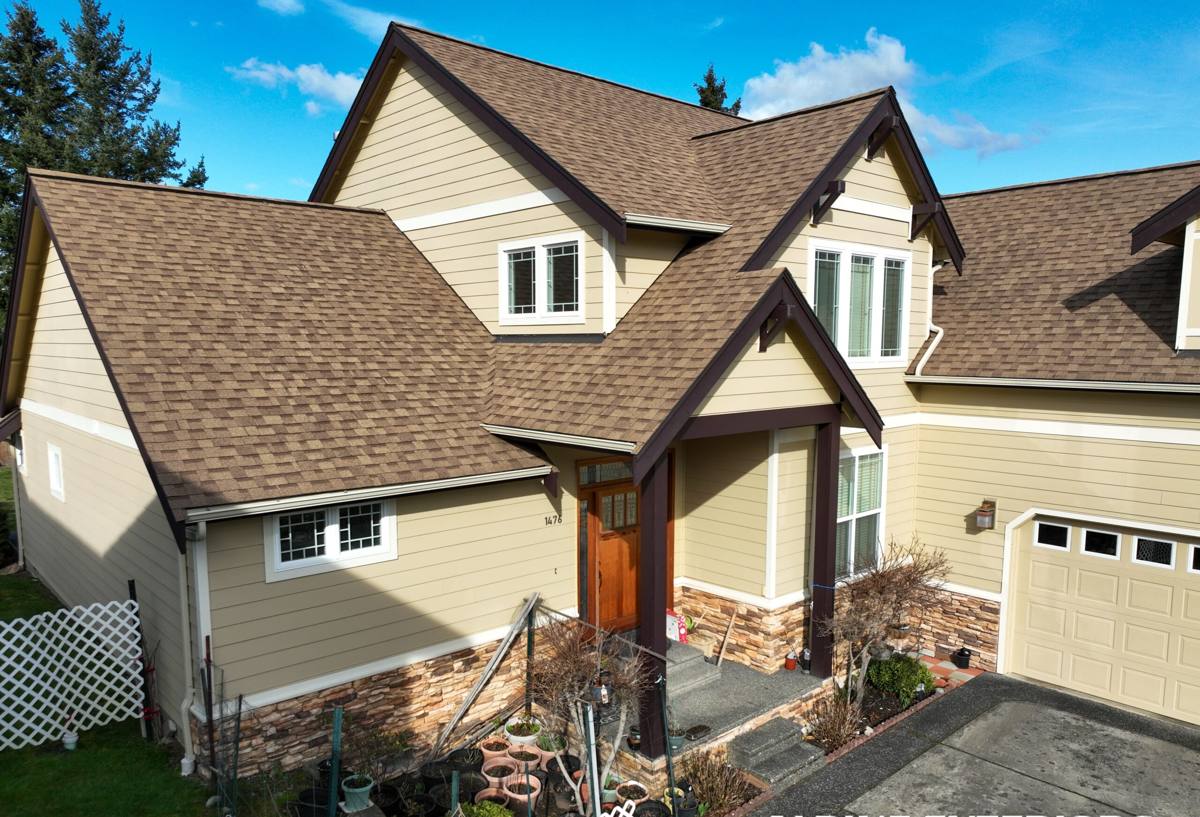
What Salt Air, Rain, and Moss Do to a Roof Over Time
Salt Air and Metal Fatigue
Airborne salt accelerates corrosion on anything metal — flashing, fasteners, gutter hardware, and metal roof panels themselves. Galvanized fasteners that would last decades in a drier inland climate can start rusting years earlier this close to the water. Once a fastener corrodes, it loosens, and a loose fastener is how water finds its way under shingles or panels that are otherwise sound.
Driving Rain and Wind-Driven Water
Whatcom County gets a lot of rain, but the bigger issue for roofs near Lummi Nation is wind direction. Storms coming off the water push rain sideways and upward under eaves, ridge caps, and anywhere flashing has the slightest gap. A roof can be watertight in a straight-down rain and still leak badly in a wind-driven storm, because the underlayment and flashing details were never built to handle water moving against gravity.
Moss, Shade, and Slow Roof Decay
Long moss season is one of the defining facts of roofing in this region. Shaded, north-facing slopes and anything under tree cover stay damp for extended stretches, which is exactly what moss needs to establish. Moss doesn't just look bad — its root structure lifts shingle edges and traps moisture directly against the roofing material, and on wood shake it holds water against the wood itself. Left alone, it shortens the usable life of a roof by years.
Signs Your Roof Needs Repair, Not Just a Look
Most homeowners call us after they've already seen a warning sign. Here's what we tell people to watch for before it turns into interior damage:
- Water stains on ceilings or upper walls, especially after a windy storm rather than a calm rain
- Granules collecting in gutters or at downspout outlets on asphalt composition roofs
- Visible moss or dark streaking concentrated on shaded or north-facing slopes
- Curling, cupping, or missing shingles, particularly near ridges and roof edges
- Rust staining running down from flashing around chimneys, vents, or skylights
- Soft or spongy spots underfoot when walking a low-slope section
- Daylight visible through the roof deck from inside an attic or crawl space
- Gutters pulling away from the fascia, which often points to rot underneath
Any one of these on its own might be minor. Two or three together, especially in the same area of the roof, usually means water has been getting in for a while.
Repair or Replace? How We Make That Call
Not every problem roof needs a full replacement, and we don't push replacement when a targeted repair will genuinely hold. The honest answer depends on a few specific factors:
| Factor | Favors Repair | Favors Replacement |
|---|---|---|
| Roof age | Under 15 years, or newer material with isolated damage | Near or past the material's expected lifespan |
| Extent of damage | Localized to one slope, valley, or penetration | Spread across multiple slopes or the whole roof |
| Deck condition | Solid sheathing under the damaged area | Soft, rotted, or delaminated decking found during inspection |
| Underlayment | Still intact beneath the surface material | Failed or missing, allowing repeated leaks in new spots |
| Moss/algae history | Recent, surface-level growth | Long-term growth that's degraded shingle mat or wood shakes |
We look at all of these during an on-roof inspection before recommending anything. If the deck and underlayment are sound, a well-executed repair can add many more years of service without the cost of a full tear-off.
What a Correct Roof Repair Actually Involves
A repair that's done right on a home near Lummi Nation goes beyond swapping out a few damaged shingles. The steps that actually determine whether the repair lasts are usually the ones a homeowner never sees once the roof is closed back up:
- Locate the actual entry point, which is often several feet from where the stain shows up inside
- Remove damaged material back to solid, dry decking — not just the visibly cracked or missing pieces
- Check the sheathing underneath for soft spots or rot and replace any compromised decking
- Rebuild flashing details at valleys, penetrations, and edges rather than caulking over old flashing
- Install or repair underlayment with attention to wind-driven water resistance, not just standard lap coverage
- Match new shingles, panels, or shakes to the existing roof as closely as the material allows
- Clear moss, debris, and organic buildup from surrounding areas so the repair isn't undermined again in a season or two
Skipping the decking check or the flashing rebuild is the most common shortcut that leads to a "repaired" roof leaking again within a year or two — especially in a climate where wind-driven rain finds every remaining weak point.
Our Process From Call to Finished Repair
We keep this straightforward because most people calling about a roof repair are already dealing with enough stress:
- Inspection: We get on the roof, not just in the attic, to see the actual condition of shingles, flashing, and the roof deck.
- Honest assessment: We tell you what's actually wrong, what caused it, and whether repair or replacement makes sense — with reasoning, not a sales pitch.
- Written estimate: A clear scope of work and price before anything starts, so there are no surprises mid-project.
- The repair itself: Done with attention to the details — flashing, underlayment, deck condition — that determine whether it holds.
- Cleanup and walkthrough: We clear debris and walk you through what was done and what to watch for going forward.
Roofing Materials We Work With in This Climate
The right repair material depends on what's already on your roof and how that material performs in a salt-air, high-moisture environment:
| Material | Performance Near Lummi Nation | Maintenance Notes |
|---|---|---|
| Asphalt composition | Reliable and cost-effective; moss and granule loss are the main long-term issues | Periodic moss treatment and gutter clearing extend service life |
| Metal roofing/panels | Sheds wind-driven rain well; corrosion resistance depends heavily on fastener and coating quality | Marine-grade fasteners and coatings matter more here than inland |
| Cedar shake | Traditional look, but holds moisture in shaded, damp conditions unless well ventilated | Needs more frequent moss removal and inspection than other materials |
We'll tell you honestly if a material is a poor fit for a shaded, damp section of your roof rather than just repairing it the way it was originally installed. Sometimes the right repair includes a small material change on one problem slope, even if the rest of the roof stays as-is.
Why a Crew That Already Works Lummi Nation Matters
Roofing crews that mainly work drier, inland parts of Whatcom County don't always account for how much worse wind-driven rain and salt exposure are this close to the water. We work in this area regularly, which means a few practical advantages for homeowners here:
We already know which flashing and fastener choices hold up and which ones fail early in salt air, so we're not guessing or learning on your roof. We're familiar with the moss and shade patterns specific to lots near the water and tree lines, so we can flag problem areas before they become leaks. And because we're local, response time for an active leak or storm damage is measured in a short drive, not a long one — which matters when water is actively getting into your home.
Maintaining Your Roof Between Repairs
A repair holds longer when it's not fighting the same conditions that caused the original damage. A few habits make a real difference in this climate:
- Clear gutters and downspouts at least twice a year — more often under heavy tree cover
- Treat or remove moss before it spreads across a slope, not after
- Trim back branches that keep sections of the roof shaded and damp
- Have flashing around chimneys, vents, and skylights checked every year or two
- Walk the attic or crawl space after major windstorms to catch new stains early
- Address small leaks immediately rather than waiting for warmer, drier weather
None of this replaces a professional inspection, but it buys time and reduces how often repairs are needed in the first place.
If you're dealing with a leak, storm damage, or a roof that's showing its age near Lummi Nation, we're glad to take a look. Fill out the form below for a free, no-pressure estimate — we'll tell you honestly what your roof needs and what it doesn't.