 Ferndale Siding
 Homes near Lummi Nation sit close enough to the water that siding takes a different kind of beating than it does further inland in Whatcom County. Salt-laden air moves off the bay and settles on exterior walls, driving rain comes in sideways off the water during winter storms, and the shaded, moisture-heavy tree cover common in this part of the county keeps moss and algae established on siding almost year-round. If your siding is failing, it's usually one of these three forces at work, sometimes all three at once.
We repair siding for homeowners in and around Lummi Nation regularly, and the patterns we see here are consistent enough that we can usually tell what's going on before we even get up on a ladder. This page walks through what local homes actually need from a siding repair, what a correct repair involves, and how we approach the job.
Why Siding Fails Faster Near Lummi Nation
Whatcom County's marine climate is harder on siding than the general Pacific Northwest average, and homes closer to the water get the worst of it. A few specific mechanisms drive most of the repair calls we get in this area:
Salt Air and Corrosion
Airborne salt doesn't just affect metal — it accelerates the breakdown of paint films and caulking, and it can work its way into seams and fastener heads faster than in areas further from the shoreline. Once salt exposure has degraded a caulk joint or a painted surface, water intrusion follows close behind. Any exposed fasteners, flashing, or trim on a home near Lummi Nation should be checked more often than the standard inland recommendation.
Driving Rain
Storms coming off the water don't fall straight down — wind-driven rain hits siding at an angle and gets forced into laps, seams, and butt joints that would stay dry in a calmer rain event. Over time, this repeatedly wets the same weak points: unsealed joints, nail heads that have backed out slightly, and corners where trim meets siding. Water that gets behind the siding and can't escape is the single biggest cause of rot and structural damage we find during repairs.
A Long Moss Season
Between the humidity, the shade from mature trees common in this area, and a wet season that runs long, moss and algae get a real foothold on north-facing and shaded walls. Moss holds moisture directly against the siding surface for extended periods. On wood-based products, that's a direct path to rot. Even on more moisture-resistant materials, sustained moss growth traps grime and organic matter that breaks down caulking and finishes faster than it would on a dry, sun-exposed wall.
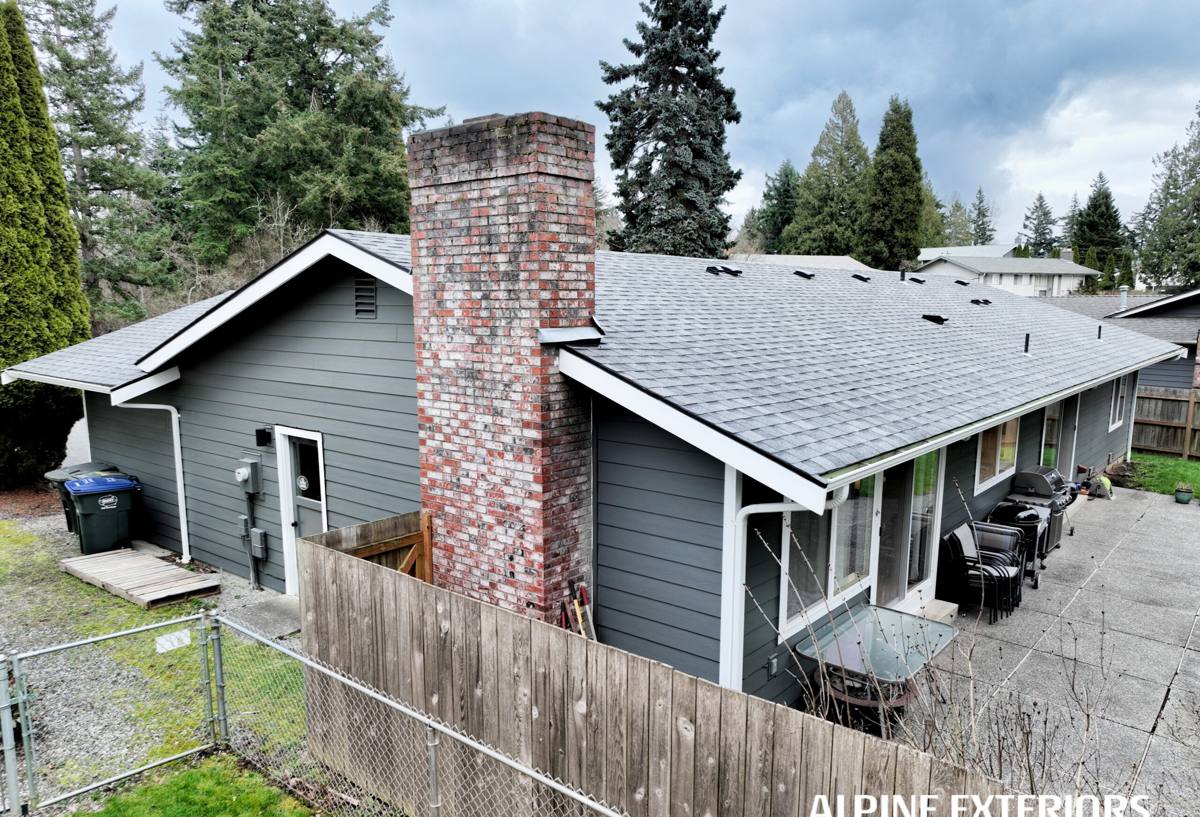
What a Correct Siding Repair Involves
A siding repair that just patches the visible damage and ignores the cause tends to fail again within a couple of seasons. We treat every repair call near Lummi Nation as two jobs in one: fix what's broken, and figure out why it broke.
Step One: Find the Real Extent of the Damage
Visible damage — a cracked board, a stained panel, a soft spot — is usually smaller than the actual problem underneath. We pull the affected siding (and sometimes a course or two around it) to check the water-resistive barrier, the sheathing, and any framing that may have been exposed to moisture. Repairing the surface without checking what's behind it means there's a real chance we're covering up active rot.
Step Two: Repair or Replace the Substrate
If the sheathing or framing has soft, rotted, or delaminated sections, that gets addressed before any new siding goes back on. This is the part of a repair that's easy to skip and expensive to skip wrong — siding installed over compromised substrate will fail again, usually faster the second time.
Step Three: Correct the Water Management
Most repair calls trace back to a flashing, caulking, or house-wrap detail that didn't shed water correctly. We re-flash and re-seal properly rather than just caulking over the symptom. Given how much wind-driven rain this area sees, water management details matter more here than in a lot of inland neighborhoods.
Step Four: Match and Install New Material
For patch repairs, matching the existing siding profile, reveal, and finish matters for both appearance and performance — mismatched laps and gaps are new entry points for water. Where the surrounding material is old, brittle, or a product prone to the same failure that caused the original damage, we'll tell you honestly whether a patch repair makes sense or whether that section (or wall) is a better candidate for replacement.
Repair vs. Replace: How We Help You Decide
Not every damaged section needs to come down to a full re-side, and we're not going to sell a replacement job when a targeted repair will hold. The table below covers the general factors we weigh.
| Factor | Favors Repair | Favors Replacement |
|---|---|---|
| Extent of damage | Isolated to one or two sections | Spread across multiple walls or elevations |
| Substrate condition | Sheathing and framing are sound | Rot has spread into structural framing |
| Siding material | Durable material still performing elsewhere on the home | Original material is failing broadly (warping, delaminating, chronic moisture issues) |
| Age of siding | Well within expected service life | Nearing or past the end of its practical lifespan |
| Root cause | Isolated flashing or caulk failure, now correctable | Systemic water management issue affecting the whole exterior |
We'll always give you the honest read on which side of that line your home falls on, with our reasoning, not just a number.
Why We Repair With James Hardie Fiber Cement
When a repair calls for new siding material — whether it's a patched section or a full wall — we use James Hardie fiber cement, and only James Hardie. We don't install vinyl, LP SmartSide, or primed wood siding, and given what we see in salt-air, high-moisture repair calls, that's not a marketing position — it's a practical one.
Fiber cement is non-combustible and doesn't absorb and hold water the way wood-based siding does, which matters directly for the moss and driving-rain conditions common near Lummi Nation. James Hardie's ColorPlus factory finish is also baked on and warranted against fading and peeling, which holds up better under sustained salt-air and UV exposure than field-applied paint. For repair work specifically, being able to match into an existing Hardie installation — or use a repair as the starting point for a longer-term move away from a failure-prone material — gives homeowners a straightforward upgrade path instead of just patching the same problem back onto the wall.
Our Process for Lummi Nation Siding Repairs
- Inspection and diagnosis — we assess the damaged area, check surrounding sections for early-stage issues, and identify the root cause, not just the visible symptom.
- Honest scope recommendation — we tell you plainly whether this is a repair, a partial replacement, or something bigger, and why.
- Substrate check and correction — any compromised sheathing or framing gets addressed before new siding goes on.
- Water management correction — flashing, house wrap, and sealant details get fixed properly, not just covered.
- Material matching or upgrade — we match existing siding where that's the right call, or talk through a James Hardie upgrade where it isn't.
- Final walkthrough — we show you what we found, what we fixed, and what to keep an eye on going forward.
Signs You Should Get a Siding Repair Looked At
Homeowners near Lummi Nation should treat any of the following as reasons to get an inspection sooner rather than later — in this climate, small issues don't stay small for long.
- Soft or spongy spots when you press on the siding
- Persistent moss or algae buildup that keeps returning after cleaning
- Visible cracking, warping, or buckling in one or more boards
- Peeling or bubbling paint, especially on north-facing or shaded walls
- Dark staining or streaking beneath seams, joints, or trim
- Caulk that has pulled away, cracked, or gone brittle at joints and corners
- Any musty smell or visible staining on interior walls near an exterior corner
Maintenance Between Repairs
A good repair buys you time, but it's not a substitute for periodic upkeep, especially this close to the water. A yearly check of caulking and flashing, prompt moss removal on shaded walls, and keeping gutters and downspouts clear so water isn't pooling against the foundation or lower siding courses all go a long way toward preventing the next repair call. If you're not sure what to look for, that's a normal thing to ask us during any visit — we'll point out what's worth watching.
Why Local Experience Matters for This Repair
A siding repair crew that mostly works dry, inland neighborhoods can miss the specific failure patterns that show up near Lummi Nation. Salt-accelerated caulk failure, wind-driven rain intrusion at specific wall orientations, and chronic shaded-wall moss aren't universal siding problems — they're regional ones, and diagnosing them correctly the first time saves you from paying for a repair that doesn't actually address the cause. We work this part of Whatcom County regularly, and that familiarity shows up in faster, more accurate diagnosis and repairs that hold.
If you're dealing with damaged, aging, or failing siding near Lummi Nation, we're happy to take a look and give you a straight answer on what it needs. Reach out for a free, no-pressure estimate — there's a form below to get started.