 Ferndale Siding
 Why Siding Choice Matters More in Lynden Than It Does Inland
Homes in and around Lynden sit in a stretch of Whatcom County that takes weather seriously. You're close enough to the Salish Sea to catch salt-laden air on a regular basis, far enough north and west to get driving, wind-blown rain off the water, and shaded and damp enough through the fall and winter to grow moss on almost any exterior surface that holds moisture. None of that is unusual for western Washington. What's unusual is how much it adds up over the life of a house — and how much that accumulation depends on what material is nailed to the wall.
Siding here isn't just a cosmetic layer. It's the first line of defense against a climate that rarely gives a house a dry season to recover in. Products that perform fine in Spokane or Boise often struggle in Whatcom County, because the stress isn't one hard freeze or one hot summer — it's months of sustained dampness, repeated wetting and drying cycles, and salt air working on fasteners and finishes year-round.
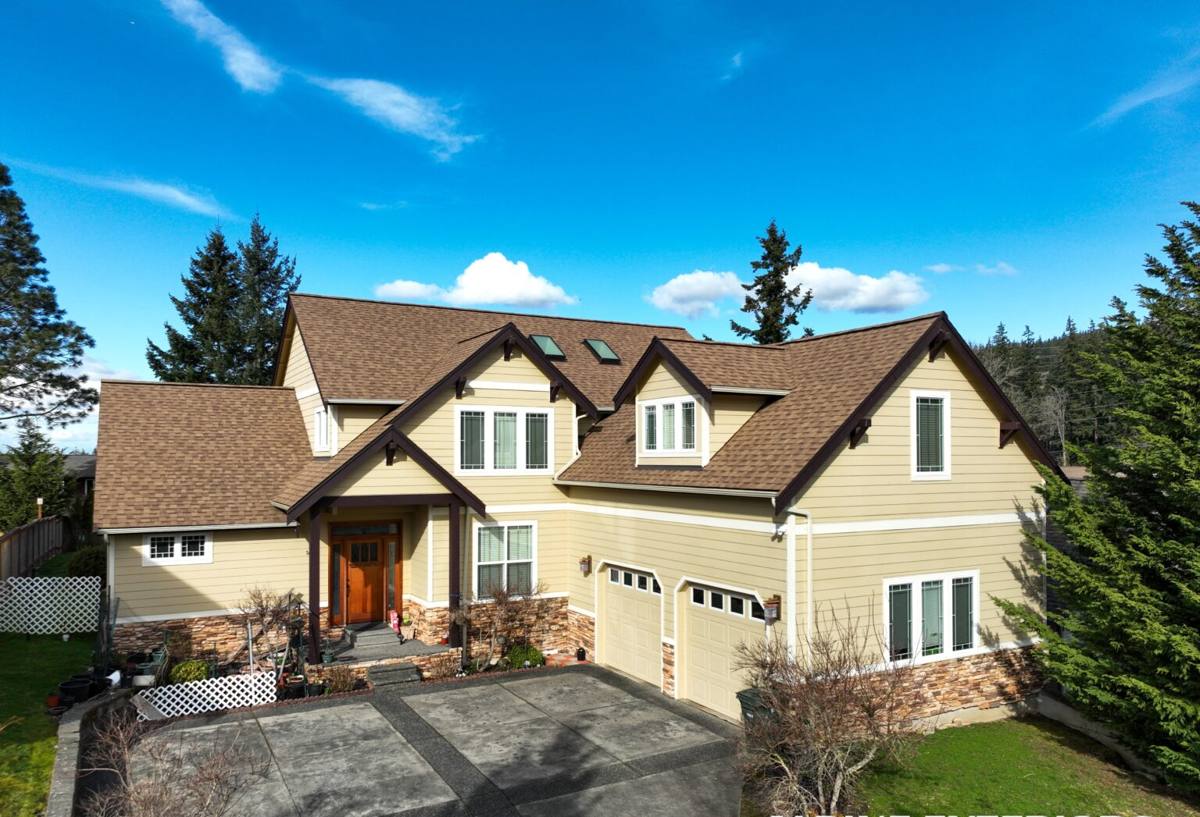
What Lynden Homes Actually Need From Their Siding
Salt Air
Salt-laden coastal air accelerates corrosion on fasteners, flashing, and any metal trim that isn't properly rated or protected. It also degrades cheaper paints and coatings faster than inland exposure would, leading to premature fading, chalking, and clear-coat breakdown.
Driving Rain
Wind-driven rain doesn't just fall on siding — it pushes against it, testing every seam, joint, and penetration. A siding system with weak water-shedding details, or one that traps moisture behind it instead of letting it escape, will show problems in the form of staining, swelling, or rot well before it reaches the age most homeowners expect from an exterior.
Moss and Sustained Moisture
Whatcom County's long, wet, low-sun stretch from fall through spring is close to ideal moss-growing weather. Siding that stays damp longer, or that has a surface texture and composition organic matter can grip, will host moss and algae growth faster and need more frequent cleaning to avoid staining and surface degradation.
Why We Install Only James Hardie Fiber Cement
We don't install vinyl, LP SmartSide, cedar, primed spruce, or the composite panel products some competitors use. That's a deliberate standard, not a marketing line. Fiber cement is non-combustible, dimensionally stable in wet-dry cycling, and — when it's James Hardie specifically — engineered in a version built for exactly the climate Lynden sits in.
James Hardie's HZ5 product line is engineered for regions with sustained moisture exposure, including the Pacific Northwest. The factory-applied ColorPlus finish is baked on under controlled conditions rather than field-applied, which matters a great deal in a climate where site-applied paint rarely gets the drying window it needs between rain events. That finish also carries its own separate warranty against fading and peeling — something field-painted materials simply can't offer, because there's no factory process behind the coating to back.
We're not going to tell you every other siding product is worthless — some of them work fine in the right conditions. What we will say is that after years of installing and repairing siding in Whatcom County's specific mix of salt air, wind-driven rain, and moss season, we stopped installing products that ask homeowners to fight that climate instead of shed it. James Hardie is what we're willing to warranty our labor against.
What a Correct James Hardie Install Actually Involves
The material is only half the equation. A huge share of siding failures we get called out to inspect — on any brand — trace back to installation shortcuts, not the product itself. In a climate like Lynden's, those shortcuts show up faster.
- Correct rain-screen or drainage plane behind the siding, so incidental moisture can drain and dry instead of sitting against the wall sheathing
- Manufacturer-specified fastener spacing and type — corrosion-resistant fasteners matter more here than almost anywhere inland
- Proper flashing at every window, door, and roofline intersection, lapped correctly so water is directed out and down, never trapped
- Correct gapping and caulking at butt joints and trim, following James Hardie's published clearance requirements rather than "close enough"
- Ground clearance and clearance from roof lines, decks, and grade, so the bottom courses aren't sitting in a perpetually damp zone
- Field-cut edges primed or sealed per spec, since factory-finished edges are the only ones protected out of the box
Skip any one of these on a house exposed to Whatcom County's rain and salt air, and you're not looking at a decades-long finish — you're looking at localized rot, staining, or coating failure within a handful of years, often hidden behind trim until it's already spread.
James Hardie Product Lines: What Fits a Lynden Home
James Hardie makes several siding profiles, and the right one depends on the home's style and exposure. Here's how the common options compare for this specific climate.
| Product | Best Use | Notes for Lynden's Climate |
|---|---|---|
| HardiePlank Lap Siding | Traditional lap-siding look, most common residential choice | Widest color and texture range; performs well on wind-exposed elevations when installed with correct overlap |
| HardiePanel Vertical Siding | Modern or accent applications, gable ends | Fewer horizontal joints means fewer potential water-entry points on high-exposure walls |
| HardieShingle | Craftsman or cottage-style accents | More surface texture can hold moss longer if not periodically rinsed |
| HardieTrim | Corners, window and door casing, fascia | Should always be paired with proper flashing — trim is where most water intrusion actually starts |
Our Process for a Lynden Job
Assessment
We start by looking at the specific exposure of the house — which walls take the most wind-driven rain, where moss is already establishing, where existing trim or flashing shows signs of wear. That assessment drives product selection and detailing, not a one-size-fits-all spec.
Prep and Moisture Check
Before any siding comes off, we check the sheathing underneath for existing moisture damage. In a climate this wet, it's common to find soft or stained sheathing behind old siding, especially around old flashing failures. That gets addressed before new siding goes on — covering it up doesn't fix it.
Installation to Spec
We follow James Hardie's published installation instructions and local code requirements exactly — fastener schedule, clearances, flashing details, and joint treatment. This is also what keeps the manufacturer's product warranty valid; installed incorrectly, that warranty can be compromised regardless of how good the material is.
Final Inspection
We walk the finished exterior looking specifically at the details that fail first in this climate: flashing laps, caulk lines, ground clearance, and trim joints.
Maintenance: What Lynden Homeowners Should Expect
James Hardie siding is low-maintenance compared to wood or vinyl, but "low-maintenance" doesn't mean "no maintenance," especially with a real moss season to contend with.
- Periodic soft-wash rinsing to keep moss and algae from establishing on north-facing or shaded walls
- Annual visual check of caulking at trim and penetrations — caulk is the one component that ages faster than the siding itself
- Keeping gutters and downspouts clear so runoff isn't sheeting down a wall section repeatedly
- Trimming back vegetation and maintaining clearance from grade so airflow behind lower courses isn't blocked
None of this is heavy work, but skipping it in a climate this consistently wet shortens the life of even a well-installed system.
Why Local Experience in This Area Matters
A crew that mostly works drier climates will make different assumptions about flashing, drainage planes, and joint sealing than one that works Whatcom County siding year-round. We see the same failure patterns repeatedly on this side of the state — moss-driven staining, flashing shortcuts that only show up after a few wet winters, fastener corrosion on jobs where the wrong hardware was used near the water. Working in Lynden and Ferndale regularly means we're detailing against the actual conditions the house will face, not a generic install spec written for a different region.
Cost Factors to Expect
| Factor | Why It Affects Price |
|---|---|
| Product line and profile | Panel, plank, and shingle products have different material and labor costs |
| Existing sheathing condition | Moisture damage found during tear-off adds repair scope before new siding goes on |
| Home size and wall complexity | More corners, trim, and penetrations mean more detailing labor |
| Access and site conditions | Multi-story sections or tight lot access affect scaffolding and staging time |
| Color and finish selection | ColorPlus factory finishes are priced differently than primed-for-paint options |
We won't quote a number without seeing the house — condition of the existing exterior varies too much to estimate blind — but these are the variables that actually move the price, not vague labor markups.
If you're weighing a siding replacement on a Lynden or Ferndale home, we're happy to take a look and walk you through what your specific house needs. There's no cost and no pressure for a free estimate — just a straight assessment from a crew that installs one product because we trust it in this climate.