 Ferndale Siding
 Storm Damage in Lynden: What Whatcom County Weather Actually Does to a Roof
Lynden sits inland from Bellingham Bay, but that doesn't mean it's sheltered from the weather that defines this corner of Washington. Winter and early spring bring long stretches of wind-driven rain off the Pacific, and Whatcom County's storm systems don't need to be dramatic to cause real damage — they just need to be persistent. Weeks of saturated air, sideways rain, and gusty fronts wear on a roof in ways a single big storm never would.
The broader region's salt-laden marine air, carried inland on strong westerly winds, accelerates corrosion on exposed metal flashing, fasteners, and gutter hardware even miles from the water. Combine that with Lynden's tree cover and the shaded, slow-drying roof sections common on local homes, and you get a long moss season that runs from fall through spring. Moss isn't just cosmetic — it holds moisture against shingles and lifts roofing material at the edges, which is exactly where wind gets underneath it during a storm.
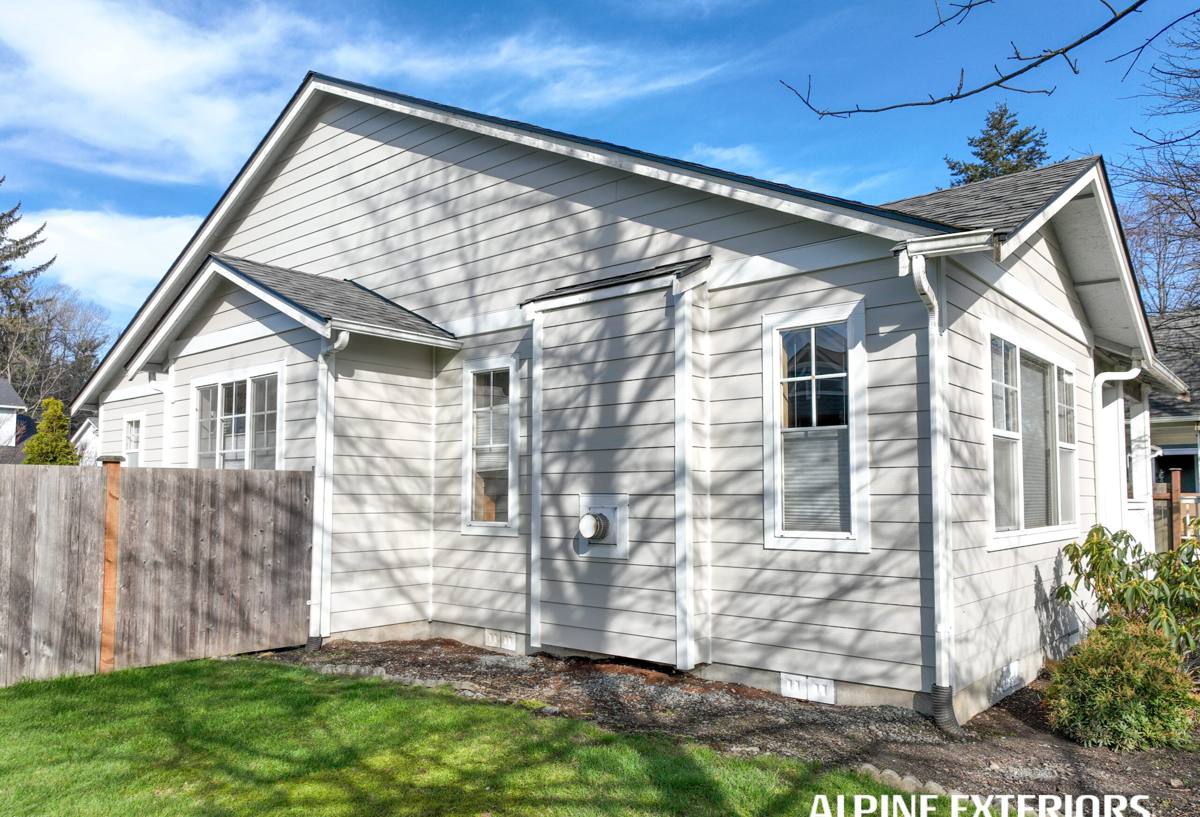
Signs Your Lynden Roof Has Storm Damage
Storm damage is rarely as obvious as a missing shingle in the yard. Most of what we find during a post-storm inspection is subtler, and it's the kind of thing that gets worse if it sits through another wet season unaddressed.
- Granules collecting in gutters or at downspout outlets after heavy rain
- Shingles that look curled, cupped, or lifted at the edges rather than flat
- Soft spots or slight sagging when walked on, especially near valleys
- Flashing around chimneys, vents, or skylights that's bent, separated, or rusted
- Water stains on interior ceilings or in the attic, even faint or old-looking ones
- Moss buildup thick enough to hide the shingle surface underneath
- Debris — branches, needles, or larger limbs — still lodged in valleys or against the roofline
Any one of these on its own might not be urgent. Several together, especially after a named windstorm or a week of heavy rain, is a reason to get a roof looked at before the next system moves through.
What a Correct Storm Damage Repair Actually Involves
It starts with diagnosis, not patching
A repair that just covers the visible damage without finding how water is actually moving under the roofing material is a repair that fails again in the next storm. Wind and rain damage in this climate is often worse where you can't see it — under a ridge cap, behind a chimney cricket, or along a valley where two roof planes meet. We trace water paths before we replace materials, because putting new shingles over a flashing problem just delays the next leak.
Matching materials and technique to the exposure
A roof's storm history matters more than its age when we're deciding how to repair it. A section that faces the prevailing wind and takes the brunt of driving rain needs different attention than a sheltered slope — heavier fastening patterns, closer attention to underlayment overlap, and flashing details that account for wind-driven water rather than just gravity drainage.
Our Process for Lynden Storm Repair Calls
- Inspection and documentation: We walk the roof (weather permitting) and check the attic from inside, photographing anything relevant to the damage and its cause.
- Honest scope conversation: We explain what's damaged, what's just weathered, and what can wait — not everything that looks rough after a storm needs immediate work.
- Written estimate: A clear breakdown of materials, labor, and timeline before any work starts.
- Repair or replacement: Matching existing materials where possible, and being upfront when an exact match isn't available.
- Final check: We confirm drainage, flashing, and fastening are correct before we consider the job done — not just that it looks finished from the ground.
Repair vs. Replace: What Actually Drives the Decision
Homeowners often ask whether storm damage means a full roof replacement or a targeted repair. The honest answer depends on a few factors, not just the size of the damaged area.
| Factor | Favors Repair | Favors Replacement |
|---|---|---|
| Age of existing roof | Under roughly 10-12 years, in otherwise good condition | Near or past its expected service life |
| Extent of damage | Isolated to one slope or a small area | Spread across multiple slopes or repeated failures |
| Underlying decking | Solid, no rot found during inspection | Soft, delaminated, or water-stained decking |
| Material availability | Matching shingle or material still obtainable | Discontinued color or profile, mismatch would be visible |
| Moss and moisture history | First significant issue, isolated cause | Chronic moss and repeated leak history in multiple areas |
We'll tell you plainly which side of this table your roof falls on. There's no benefit to us in recommending a full replacement when a repair will hold — and no benefit to you in patching a roof that's going to need replacing within a year or two anyway.
Materials and Techniques Suited to Storm-Prone Roofs
Our standard for storm repair work in this area leans toward materials and details that hold up to repeated wetting and drying cycles, not just materials that look right on installation day.
- Underlayment: We use synthetic or high-quality underlayment with proper overlap in valleys and eaves, where wind-driven rain is most likely to work its way upward under the roof surface.
- Flashing: Corrosion-resistant metal flashing, properly lapped and sealed, rather than relying on caulk or sealant as the primary water barrier — sealant degrades faster than metal and shouldn't be doing the structural work.
- Fastening: Correct nail placement and count matter more in wind-exposed areas than most homeowners realize; under-fastened shingles are one of the most common causes of storm blow-off we see.
- Ventilation: Proper attic ventilation reduces the moisture buildup that feeds moss growth and speeds up shingle deterioration from underneath.
We don't push a specific brand as the only acceptable option. Our standard is about installation quality and moisture management — a well-installed mid-range shingle roof will outperform a premium product installed with shortcuts, every time.
Insurance and Storm Claims: What Homeowners Should Know
Not every bit of roof wear qualifies as insurable storm damage, and insurers distinguish between sudden damage from a specific weather event and gradual deterioration from age or lack of maintenance. That distinction matters for how a claim is handled.
We provide clear, dated documentation and photos of what we find, which is what an adjuster needs to evaluate a claim — but we don't inflate a scope of work to chase a bigger payout, and we won't tell you something is storm-caused if it's really just an older roof reaching the end of its service life. That kind of honesty protects you if the claim gets a second look.
Why a Local Ferndale Crew Matters for Lynden Storm Calls
Storm damage repair is time-sensitive work. A tarped roof or an open flashing gap doesn't wait well for a crew driving in from out of the area, and Whatcom County's weather doesn't give long windows between systems in the wetter months. Being based in Ferndale means we can respond to a Lynden storm call quickly, and it means we're working under the same conditions your roof faces every season — not guessing at how the local climate behaves from a spec sheet.
We also know that Lynden's mix of open farmland and tree-lined residential streets creates different wind and shade patterns block to block, which affects everything from moss growth to how hard a roof gets hit in a windstorm. That kind of local, on-the-ground familiarity shapes how we inspect and repair, not just how fast we can show up.
A Post-Storm Roof Checklist for Lynden Homeowners
After any significant wind or rain event, a quick check can catch problems before they become interior damage.
- Walk the yard and check for granules, shingle pieces, or flashing on the ground
- Look at gutters for sagging, separation, or heavy debris buildup
- Check ceilings and attic spaces for new stains, damp spots, or musty odor
- Note any visible moss growth that's expanded since the last check
- Look for daylight or gaps around chimney and vent flashing from the attic side, if safely accessible
- Call for a professional inspection if anything looks off rather than waiting for a leak to show up indoors
If your roof took a hit in a recent storm, or you just want a professional set of eyes on it before the next system rolls through, we're happy to come out and give you a straight, no-pressure estimate. Use the form below to get a time on the calendar.