 Ferndale Siding
 Marietta Sits Right Where This Climate Gets Serious About Siding
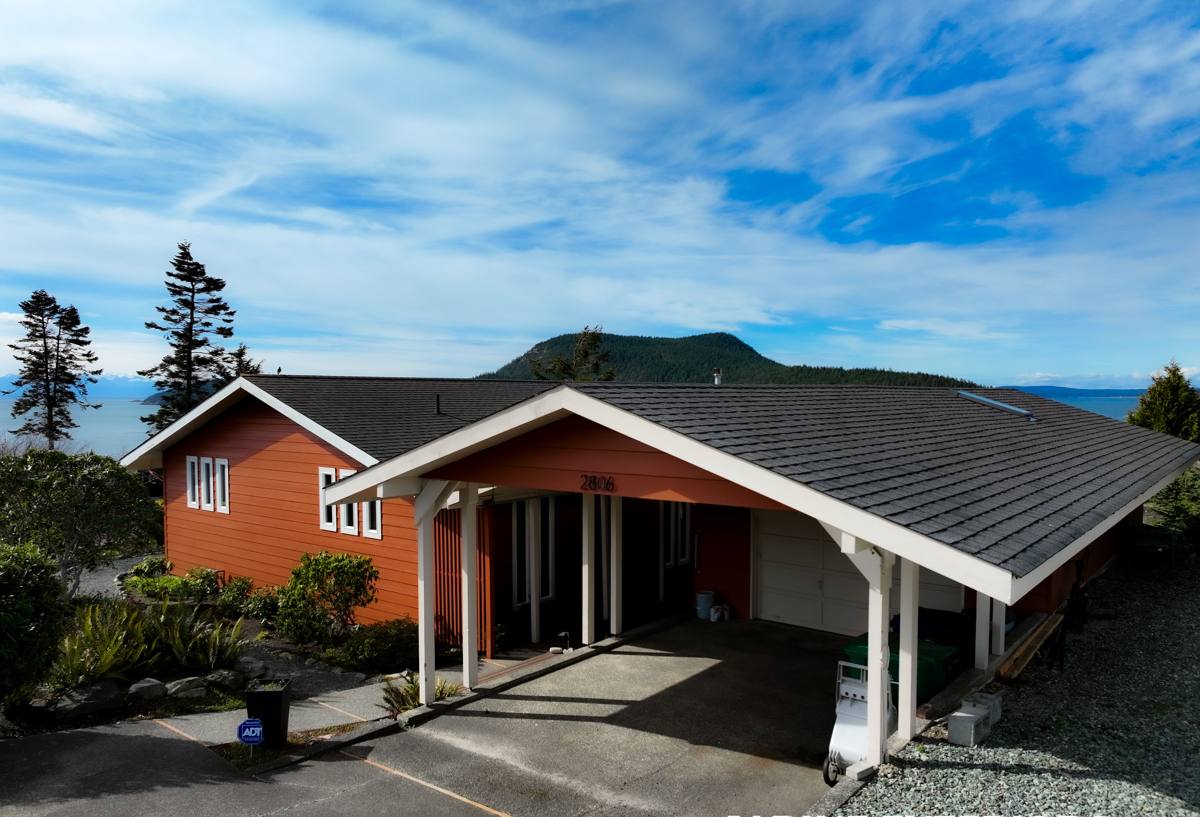
Marietta is one of those close-in communities where Ferndale's exterior climate stops being a general Whatcom County talking point and becomes something you deal with every wet season. Homes here sit near enough to the water that salt-tinged air moves through the neighborhood on a regular basis, rain comes in sideways more often than it falls straight down, and shaded or north-facing walls stay damp long enough to grow moss for a good chunk of the year. None of that is unusual for this part of western Washington, but it means the siding on a Marietta home is doing real, sustained work, not just sitting there looking finished.
We install James Hardie fiber cement siding exclusively, and Marietta is a neighborhood we already work in regularly. This page is specifically about what a James Hardie project looks like for a Marietta home — what the climate demands, what correct installation actually involves, and how our process runs from first call to final walkthrough.
What Marietta's Climate Asks of a Siding System
Salt Air and Corrosion
Proximity to the water means Marietta homes take on more salt-laden air than you'd find further inland in Whatcom County. Salt doesn't just dull a finish over time — it accelerates corrosion in fasteners, flashing, and any exposed metal trim, and it can break down lower-grade coatings faster than a drier, inland climate would. A siding system needs a finish and a hardware plan that account for that from the start, not a standard inland spec applied without adjustment.
Wind-Driven Rain
Rain in this part of the county rarely falls straight down. It gets pushed sideways by wind off the water, which means it hits lap joints, trim edges, and butt seams at an angle instead of just running down a flat wall. That's a harder load on a siding system than annual rainfall totals suggest, and it's the reason water management details — not just the siding material itself — end up mattering as much as the boards.
A Long Moss Season
Shaded walls, mature tree cover, and the general dampness of a Pacific Northwest fall through spring give moss and algae plenty of time to establish themselves on exterior surfaces. It shows up worse on some materials and finishes than others, and it's a maintenance reality every Marietta homeowner deals with regardless of what's on their walls — the question is how well the siding underneath holds up while you're washing it off.
Why We Install James Hardie in Marietta Specifically
We install James Hardie fiber cement exclusively — not vinyl, not LP SmartSide, not primed spruce or cedar — and that standard applies everywhere we work, but it matters in a particularly direct way in a place like Marietta. Fiber cement is non-combustible and dimensionally stable in a way that holds up better against sustained moisture cycling than wood-based or wood-composite products. For the Pacific Northwest, we install Hardie's HZ5 product line, which is engineered specifically for colder, wetter climate zones rather than a general national spec — the board formulation accounts for the freeze-thaw and moisture cycling this region actually sees.
Color and finish matter here too. Most Hardie siding we install carries ColorPlus Technology, a factory-applied finish cured under controlled conditions rather than painted on site. That matters directly for salt exposure and driving rain: a factory finish resists fading and chipping in ways field-applied paint struggles to match once it's dealing with real jobsite weather, wind-blown debris, and the kind of intermittent drying windows Marietta gets for a good part of the year.
What a Correct Installation Actually Involves
The siding material is only part of the equation. A huge share of whether a Hardie install performs well in a place like Marietta comes down to details most homeowners never see once the job is finished. This is where a lot of the real quality gap between a rushed install and a correct one shows up.
Water Management Behind the Boards
Correct installation starts with a drainage plane and weather-resistant barrier behind the siding, installed so that any moisture that does get past the surface has somewhere to go rather than sitting against the wall sheathing. Flashing at windows, doors, and every horizontal trim transition needs to be integrated with that drainage plane, not just caulked over the top of it. Caulk is a backup, not a strategy — on a home taking wind-driven rain regularly, relying on sealant alone instead of proper flashing and drainage is one of the more common ways siding jobs fail early.
Fastening and Clearance
James Hardie specifies exact fastener types, spacing, and penetration depth, and those specs exist for a reason — under- or over-driven nails, wrong fastener material, or incorrect spacing all create failure points, especially in a corrosive salt-air environment where the wrong hardware degrades faster. Proper clearance from grade, roof lines, decks, and other transitions is also part of the spec, giving water somewhere to shed instead of wicking up into the bottom edge of the siding.
Joints, Corners, and Trim
Butt joints, inside and outside corners, and trim-to-siding transitions are where wind-driven rain finds its way in if they're not detailed correctly. Factory-primed or ColorPlus-matched trim, properly caulked and flashed joints, and correct overlap at horizontal laps all matter more here than they would in a calmer, drier climate, because the water is coming from more directions than straight down.
James Hardie Compared to Other Siding Options for This Climate
Homeowners in Marietta often ask why we don't offer other common siding materials as options. The table below lays out how the alternatives typically perform against the specific stresses this area sees — salt air, wind-driven rain, and a long moss season — compared to Hardie fiber cement.
| Material | How It Handles This Climate | Why We Don't Install It Here |
|---|---|---|
| Vinyl Siding | Doesn't rot, but can warp or crack in temperature swings and its seams give wind-driven rain more entry points over time | Lower long-term durability and a less substantial appearance than fiber cement |
| LP SmartSide (Engineered Wood) | Wood-strand core is more moisture-sensitive than fiber cement, which matters in a climate with this much sustained dampness | Higher long-term moisture risk if any edge or seal is compromised |
| Primed Spruce / Cedar | Natural wood needs consistent repainting and sealing to resist moss, mildew, and moisture intrusion | High ongoing maintenance burden in a climate that doesn't give paint film much of a break |
| James Hardie Fiber Cement | Non-combustible, dimensionally stable, factory-finished, engineered HZ5 formulation for this climate zone | What we install — matches what Marietta's climate actually demands |
None of this is a claim that the alternatives are junk products — they have real uses and reasonable price points in the right application. It's an honest statement of why, after years of installs and repairs across Whatcom County, we standardized on one material rather than offering several.
What Drives Cost on a Marietta Siding Project
Every home is different, so we don't quote pricing sight-unseen, but a few factors consistently move the number on a Marietta project more than others.
| Factor | Why It Matters |
|---|---|
| Existing siding removal | Tear-off of old material, and any sheathing repair it uncovers, adds labor and sometimes material cost |
| Home size and wall complexity | More corners, dormers, and trim transitions mean more labor-intensive detail work |
| Product line and profile | HardiePlank lap, HardiePanel, and HardieShingle carry different material and install costs |
| Trim and accent scope | Full trim replacement versus reusing sound existing trim changes both cost and long-term performance |
| Access and site conditions | Tight lots, landscaping, or difficult roof lines can add setup and scaffolding time |
How Our Process Works for a Marietta Home
Assessment and Estimate
We walk the property, look at existing siding condition, note any moisture or rot issues already present, and talk through product line, profile, and color before putting together a written estimate. This is also when we flag anything specific to the lot — shaded walls prone to moss, exposure to prevailing wind and rain direction, or areas closer to the water that see more salt exposure.
Preparation and Tear-Off
Existing siding comes off, and we inspect the sheathing underneath for any moisture damage before anything new goes up. This step matters more than it sounds like it should — covering up a compromised wall with brand-new siding just hides the problem instead of fixing it, and it's a mistake we won't make on a client's home.
Installation to Spec
Drainage plane, flashing, and weather-resistant barrier go in first, followed by the Hardie boards fastened and spaced to manufacturer specification, with attention to every joint, corner, and trim detail described above. This is the stage where the climate-specific details actually get built into the wall, not just specified on paper.
Final Walkthrough
We walk the finished job with the homeowner, check that everything matches what was quoted, and go over basic care so the siding performs the way it's supposed to for the long haul.
Why a Crew That Already Works Marietta Matters
A contractor who already works this neighborhood has seen how the local exposure plays out on real homes — which walls take the worst of the wind-driven rain, which lots hold onto moss longest, and how salt air affects hardware choices over a few years rather than in a showroom. That's different from a crew working from a generic regional spec without local install history to draw on. It also means faster, more accurate estimates, because we're not guessing at conditions we've never seen up close in this specific area.
Permitting and code requirements are handled the same way for every Whatcom County project we take on, and being familiar with how that process runs for Ferndale-area jobs keeps a project moving instead of stalling on paperwork.
Caring for James Hardie Siding in Marietta
A correctly installed Hardie exterior is low-maintenance, not no-maintenance. A few habits go a long way toward keeping it performing well through the wet seasons:
- Rinse the exterior gently once or twice a year to keep salt residue and organic buildup from accumulating, especially on walls facing the water
- Keep gutters clear so overflow doesn't run down the siding face repeatedly during heavy rain
- Trim back vegetation and tree cover that keeps specific wall sections shaded and damp longer than necessary
- Watch caulked joints at trim and window transitions and have them touched up if they start to crack or pull away
- Address any moss or algae buildup early with a gentle wash rather than pressure-washing directly into joints and laps
- Have any impact damage or chipped finish looked at promptly rather than left to weather further
A Practical Checklist for Marietta Homeowners
Before committing to a siding project, it's worth confirming a few things regardless of which contractor you choose:
- Ask whether the crew is a certified James Hardie installer, not just familiar with the product
- Confirm they're licensed and bonded to work in Washington and will pull the required local permit
- Ask specifically how they handle flashing and drainage at windows, doors, and horizontal trim — not just what siding line they use
- Get the fastener and clearance spec in writing, not just verbally described
- Ask how they'll handle sheathing repair if tear-off reveals existing moisture damage
- Request to see how they've handled similar homes in this specific area, not just a general portfolio
If you're weighing a siding replacement or new install for a Marietta home, we're happy to walk the property, look at what your walls are currently dealing with, and put together a free, no-pressure estimate.