 Ferndale Siding
 Roof Repair for Marietta Homes, Not a Generic Fix
Marietta sits close to the water on the edge of Ferndale, and that location shapes how roofs age here. Homes just a few miles inland in Whatcom County deal with plenty of rain, but Marietta roofs also take on salt-laden air off Bellingham Bay, near-constant humidity, and long stretches of shade from mature evergreens that keep moss and moisture working on the roof deck year-round. A roof repair that works fine in a drier part of the state can fail fast out here if it doesn't account for that combination. We work on Marietta roofs regularly, and our repairs are built around what actually wears these roofs down, not a one-size-fits-all patch.
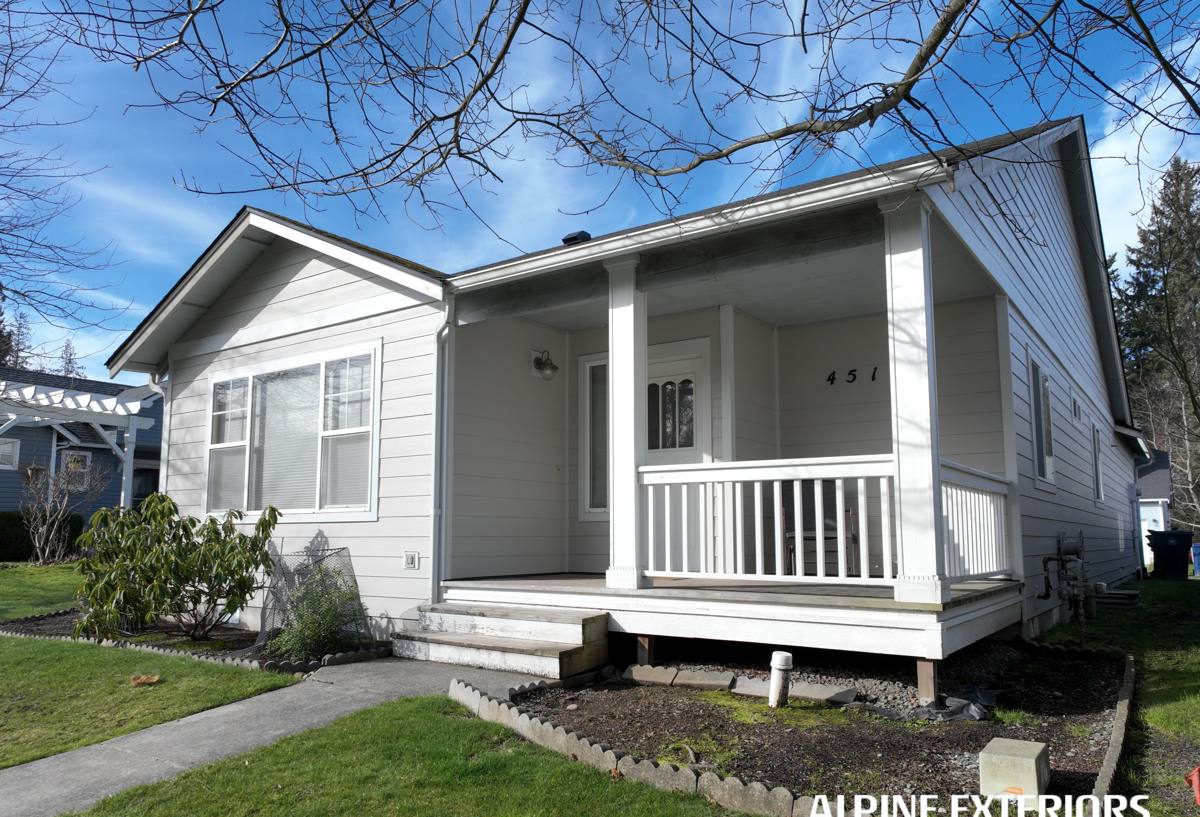
What Marietta's Climate Does to a Roof
Salt Air and Metal Fatigue
Salt air speeds up corrosion on any exposed metal — flashing, fasteners, gutter hardware, and vent caps. On roofs closer to the shoreline, we see galvanized fasteners and older flashing corrode faster than the manufacturer's rated lifespan would suggest. A repair that reuses corroded fasteners or thin flashing is a repair that's already on borrowed time.
Driving Rain and Wind-Driven Water
Storms off the Strait of Georgia and Bellingham Bay don't just drop rain straight down — wind pushes it sideways, up under shingle tabs, and into any gap in flashing or underlayment. This is why so many "small" leaks in Marietta start at edges, valleys, and penetrations rather than in the open field of the roof. A repair has to address the water's actual path, not just the spot where it showed up inside the house.
Moss, Shade, and a Long Wet Season
Whatcom County's wet season runs long, and shaded, tree-covered lots around Marietta stay damp well after the rest of the roof has dried out. That moisture holds moss, and moss holds more moisture against the shingle surface and roof deck than most homeowners realize. Left untreated, it lifts shingle edges, traps water against the decking, and turns a minor leak point into rot underneath.
Signs a Marietta Roof Needs Repair, Not Just Watching
- Water stains on ceilings or upper walls, especially after a windy rainstorm rather than a calm one
- Moss buildup along the north-facing slope or shaded valleys that hasn't been cleared in a season or more
- Shingles that look cupped, lifted at the tabs, or granules collecting in gutters
- Rusted or visibly corroded flashing around chimneys, skylights, or roof-wall junctions
- Soft spots underfoot in the attic decking, or daylight visible around vent pipes and stacks
- Gutters or downspouts overflowing during storms even when they were clear going in
Any one of these on its own might be minor. Two or more together, especially near the coast, usually means water has already found a way past the surface layer.
What a Correct Roof Repair Actually Involves
Diagnosis Before Patching
The most common mistake in roof repair isn't bad materials — it's fixing the visible symptom instead of the actual entry point. Water travels along rafters and decking before it ever shows up as a stain, so the spot on your ceiling is rarely directly under the leak. We trace the path from the interior damage back to the roof surface before we touch anything, including checking attic ventilation, insulation, and decking condition along the way.
Matching Materials, Not Just Covering the Hole
A patch that doesn't match the surrounding shingle profile, color, or age creates a new weak seam and looks obviously mismatched. Where an exact match isn't available — which happens with older roofs — we explain the honest trade-off up front rather than installing something that will stand out or perform differently in weather.
Flashing and Underlayment Get the Same Attention as Shingles
Most of the leaks we trace in Marietta come from flashing, not shingle failure. Step flashing at wall intersections, counter-flashing at chimneys, and valley metal all take direct hits from wind-driven rain. A proper repair replaces compromised flashing and underlayment in the repair zone, not just the shingles sitting on top of it — reusing old flashing under new shingles is a shortcut that shows up as a callback within a season or two.
Ventilation Gets Checked, Even for a Small Repair
Poor attic ventilation traps moisture that condenses on the underside of the decking, which can look identical to a roof leak from the outside. We check ridge and soffit ventilation as part of any repair diagnosis so we're not treating a ventilation problem as a roofing one.
Common Repair Types We Handle Around Marietta
| Repair Type | Typical Cause in This Area | What the Fix Involves |
|---|---|---|
| Flashing repair or replacement | Salt-air corrosion, wind-driven rain at wall/roof joints | Remove and replace flashing, reseal, verify against the underlayment |
| Shingle patch or section replacement | Wind lift, granule loss, moss lifting shingle tabs | Remove damaged shingles, inspect decking, install matched shingles |
| Decking repair | Long-term moisture from moss or a slow leak | Cut out soft or rotted decking, replace, re-cover with underlayment and shingles |
| Valley repair | Concentrated water flow overwhelming aged valley metal | Replace valley flashing and adjacent shingles, confirm proper water shedding |
| Vent and penetration reseal | Cracked pipe boots, corroded vent caps | Replace boots and caps, reseal to current flashing standards |
| Moss remediation and preventive treatment | Shaded, damp lots common around Marietta | Safe moss removal, zinc or copper strip installation to slow regrowth |
Repair vs. Replacement — How We Help You Decide
| Factor | Leans Toward Repair | Leans Toward Replacement |
|---|---|---|
| Age of roof | Under roughly 15 years, or well-maintained older roof | Near or past the material's rated lifespan |
| Extent of damage | Isolated to one section, flashing point, or penetration | Multiple areas failing or spreading moss/moisture damage |
| Decking condition | Solid, no widespread soft spots | Rot or soft decking found in more than one area |
| Shingle availability | Reasonable match still available | Discontinued profile with no close match |
| History of repairs | First or second repair on this roof | Repeated repairs to the same or nearby areas |
We don't default to recommending replacement just because it's the bigger job. If a solid repair will genuinely hold up through Marietta's weather for years, we'll tell you that. If the roof is past the point where repair makes financial sense, we'll explain exactly why, in plain terms, so you're deciding with real information instead of a sales pitch.
Our Process, From Call to Finished Repair
- Initial conversation — you describe what you're seeing (stains, drafts, visible damage) and roughly when it started
- On-site inspection — we walk the roof and attic, trace the leak path, and check flashing, decking, and ventilation, not just the obvious spot
- Written estimate — a clear explanation of what's failing, what we recommend, and why, with a straightforward price range
- Scheduled repair — we work around Whatcom County weather windows so the repair area isn't left exposed during a storm cycle
- Completed repair walkthrough — we show you what was fixed and flag anything worth watching, like aging flashing nearby that isn't failing yet but is worth tracking
Why a Crew That Already Works Marietta Matters
Roofing crews that mostly work drier, inland areas sometimes underestimate how aggressively coastal conditions attack fasteners, flashing, and shaded roof sections. A crew that regularly works Marietta and the surrounding Ferndale area already knows which failure points show up most on homes near the water, which shingle and flashing choices hold up to the salt air and moss cycle, and how local permitting and inspection expectations work in Whatcom County. That local pattern recognition is the difference between a repair that's guessing and one that's targeted.
Maintenance Between Repairs
A repair holds up longer when it's not fighting the same conditions that caused the original problem. A few habits make a real difference on Marietta roofs specifically:
- Keep gutters clear before the fall storm season, since overflow backs water up under roof edges
- Trim back branches that keep a section of roof shaded and damp longer than the rest
- Have moss addressed before it spreads across a full slope, not after
- Walk the attic once a year with a flashlight to catch early water staining before it reaches the ceiling
- Ask us to check flashing condition at the same time as any gutter or exterior work, since it's easy to overlook
If you're seeing signs of a leak, moss buildup, or aging flashing on a Marietta roof, we're glad to take a look and give you a straightforward, no-pressure estimate — just fill out the form below.