 Ferndale Siding
 Metal Roofing in Blaine: A Different Climate Problem Than Most of the Country
Blaine sits right up against the water in Whatcom County, and that changes what a roof has to deal with compared to almost anywhere inland. Salt-laden air off the coast, wind-driven rain that gets pushed sideways under poorly flashed edges, and a wet season that runs long enough to grow moss on almost anything that holds moisture — all of that adds up to a roofing environment that punishes shortcuts. A metal roof that's designed and installed correctly can handle it for decades. One that isn't will show corrosion, streaking, and leaks years before it should.
We work throughout the Ferndale area, and Blaine is part of our regular service territory. That matters more with metal roofing than with most exterior work, because so much of whether a metal roof performs well over time comes down to details that are specific to this coastline — not generic installation steps pulled from a manual written for a dry climate.
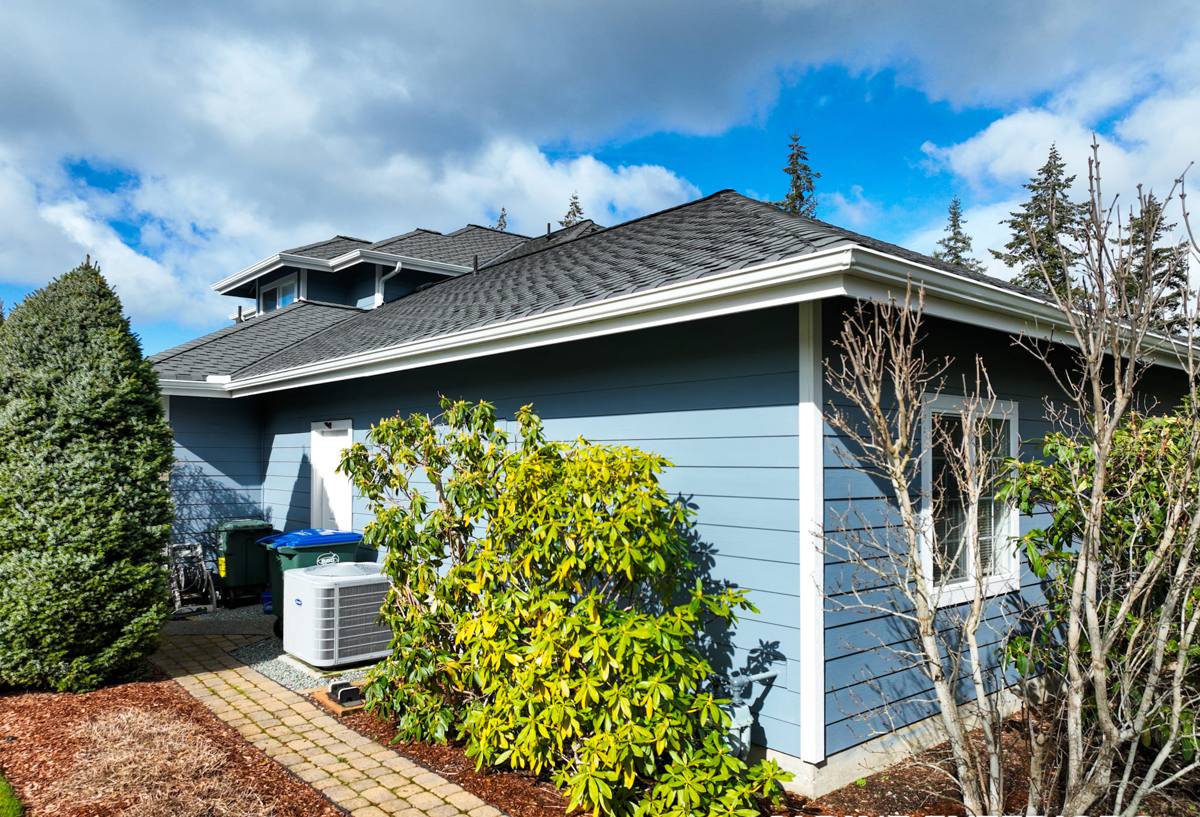
What Salt Air, Rain, and Moss Actually Do to a Roof
Salt Air and Metal Fatigue
Airborne salt is corrosive to exposed metal, and it doesn't need to be a stormy day for it to do damage — it's present in the air on ordinary days too, especially closer to the water. Fasteners, flashing, and panel edges are where this shows up first, because those are the spots where a coating can be thin, scratched during handling, or cut through during installation. Once bare metal is exposed at a cut edge or a fastener head, corrosion has a starting point.
Driving Rain and Wind-Driven Water
Rain that falls straight down is easy to shed. Rain that's being pushed sideways by coastal wind is a different problem — it can work its way under panel laps, around penetrations, and behind flashing that wasn't lapped in the right direction. A roof detail that would be fine in a calmer inland setting can leak in Blaine simply because the wind loading and rain angle are more aggressive.
Moss and Trapped Moisture
Whatcom County's long wet season gives moss plenty of time to establish itself, especially on north-facing slopes and anywhere debris collects. Moss itself doesn't rot metal, but it holds moisture against the roof surface and traps organic debris in valleys and around penetrations. That trapped moisture is what accelerates coating breakdown and creates conditions for corrosion to start, particularly at fastener penetrations.
Choosing the Right Metal Roofing System for a Blaine Property
Not all metal roofing is built the same, and the differences matter more here than they would somewhere drier and further from salt water. The table below is a general comparison — actual product lines and coating systems vary by manufacturer, so we go over the specific options and warranty terms for your roof during the estimate.
| System Type | Coastal / Salt-Air Performance | Installation Considerations | General Lifespan Range |
|---|---|---|---|
| Standing seam steel (concealed fasteners) | Strong — no exposed fastener heads for salt and moisture to attack | Requires trained installers; panel seams must be correctly formed and lapped for the local wind and rain direction | Several decades with proper coating and maintenance |
| Exposed-fastener metal panels | Adequate if fasteners and gaskets are inspected and maintained; the weak point long-term | Lower material cost, but fastener quality and torque matter more in salt air | Shorter than standing seam if fasteners aren't maintained |
| Stone-coated steel panels | Good — coating adds a protective layer over the steel substrate | Heavier system; flashing details still critical at penetrations and edges | Long-term, dependent on coating integrity |
| Aluminum panel systems | Very good — aluminum doesn't rust the way steel can, a real advantage this close to salt water | Softer material, needs careful handling to avoid denting during install | Long-term with minimal corrosion risk |
For a property in Blaine, we generally steer homeowners toward systems with either concealed fasteners or corrosion-resistant substrates, simply because it reduces the number of vulnerable points exposed to salt air over the life of the roof. That's a professional judgment call based on trade-offs — coating type, fastener exposure, and how forgiving the system is to maintain — not a claim that other systems are unusable.
What a Correct Metal Roof Installation Actually Involves
Underlayment and Deck Prep
Metal roofing depends on a sound deck and the right underlayment underneath it. In a wet coastal climate, we don't cut corners on underlayment — it's the backup layer that protects the structure if wind-driven rain ever gets past the panels themselves, which is a realistic scenario here even with a well-installed roof.
Flashing Direction and Overlap
Every flashing lap has to be installed so that water is shed downhill and away from the seam, in the direction the prevailing wind and rain actually travel on that specific roof. This is one of the most common places we see problems on roofs we're called to repair — flashing that was installed by the book for a calmer climate, but not accounting for how hard the wind pushes rain sideways near the water.
Fastener Selection and Placement
Fasteners need to be corrosion-resistant, properly gasketed, and driven to the correct torque — overdriven fasteners crush the gasket and create a leak path, underdriven ones back out over time. In salt air, fastener quality isn't a place to save money.
Ventilation
Metal roofs need proper attic and roof ventilation to manage condensation on the underside of the panels. Get this wrong and you can end up with moisture problems from the inside of the roof assembly, even though the roof itself is shedding rain perfectly on the outside.
Where We See Metal Roofs Fail Early Near the Water
- Exposed fastener heads with worn or missing gaskets, left unaddressed for years
- Flashing laps installed in the wrong direction for the prevailing wind and rain
- Cut panel edges left with exposed bare metal instead of being sealed or capped
- Debris and moss buildup in valleys that traps moisture against the panel surface
- Mismatched metals in contact with each other, which can accelerate corrosion at the contact point
- Under-ventilated attics causing condensation damage that has nothing to do with the exterior weather
None of these are exotic problems. They're ordinary installation and maintenance issues that matter more here than in a drier, calmer climate — which is exactly why the installer's attention to detail counts for more on a Blaine roof than it would somewhere inland.
Our Process for a Blaine Metal Roofing Project
1. On-Site Evaluation
We look at your existing roof structure, current condition, ventilation, and exposure — a roof close to the water and open to wind gets evaluated differently than one that's more sheltered, even within the same general area.
2. System Recommendation
We walk through panel and coating options suited to salt air and driving rain, explain the honest trade-offs between them, and give you a straight recommendation rather than just upselling the most expensive system.
3. Tear-Off and Deck Assessment
If we're replacing an existing roof, we check the deck for moisture damage before anything new goes down. Covering up a compromised deck is how small problems turn into structural ones.
4. Installation
Underlayment, flashing, fasteners, and panels installed to standards suited for this coastline — not generic minimums. Flashing laps and fastener spacing are set with the local wind and rain exposure in mind.
5. Final Walkthrough
We go over the finished roof with you, explain what maintenance it needs and roughly how often, and make sure you know how to spot early warning signs before they become leaks.
Maintenance That Actually Extends the Life of a Coastal Metal Roof
A correctly installed metal roof still needs periodic attention in this climate. This isn't a long list, but it's one worth actually doing:
- Clear debris and moss from valleys and low-slope areas at least once a year
- Have fasteners on exposed-fastener systems checked periodically for gasket wear or backing out
- Rinse accumulated salt residue off the roof surface where it's practical to do so
- Inspect flashing at chimneys, vents, and wall intersections after major windstorms
- Trim back overhanging branches that keep sections of the roof shaded and damp
- Address moss growth early rather than letting it establish and trap moisture
Why It Matters That We Already Work in Blaine
Roofing details that hold up fine forty miles inland don't always hold up on a property exposed to Whatcom County's coastal weather. A crew that regularly works Blaine and the surrounding Ferndale area already knows which flashing approaches actually shed wind-driven rain here, which fastener and coating combinations hold up against salt air over time, and how aggressively moss needs to be managed on a north-facing slope this close to the water. That's not something you get from a crew that installs metal roofs occasionally in a dozen different climates — it comes from doing this work repeatedly in this specific environment.
If you're weighing a metal roof for a home in Blaine, or want a second opinion on flashing or fastener issues on an existing metal roof, we're happy to take a look. Reach out for a free, no-pressure estimate using the form below.