 Ferndale Siding
 Building New in Kendall? The Windows Are a Structural Decision, Not a Showroom Pick
If you're framing a new home or outbuilding out toward Kendall, the windows going into those rough openings are one of the few parts of the build that has to get everything right the first time. Once siding, trim, and interior finish go on, a poorly flashed window opening becomes a hidden problem instead of a visible one — and out here, hidden moisture problems don't stay small for long. New-construction window installation isn't about picking a style from a catalog. It's about how the window integrates with the water-resistive barrier, the framing, and the siding system around it, before any of that is buried.
Kendall sits in the quieter, more forested country outside Ferndale, where lots tend to be larger, tree cover is heavier, and homes see a different exposure pattern than a tight in-town lot. That changes what "correct" looks like for a window install, and it's worth understanding before the crew shows up with a truckload of units.
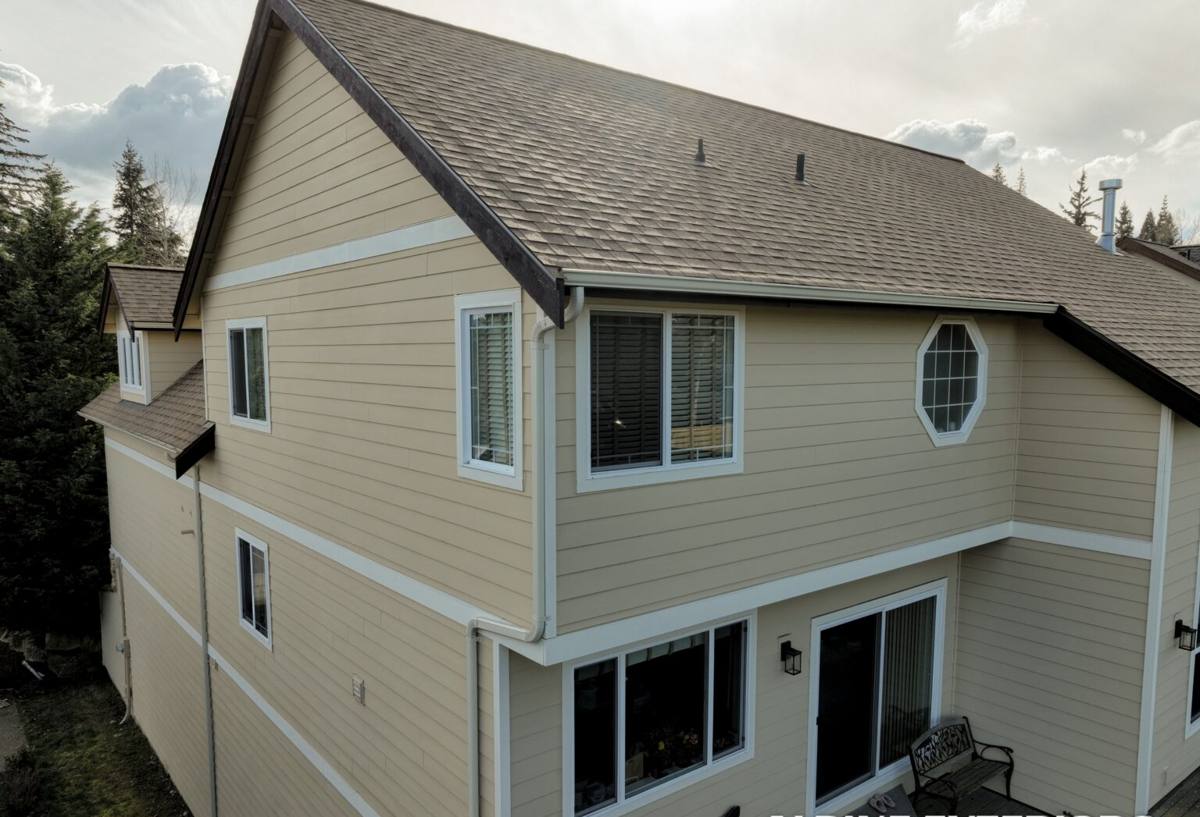
What Kendall's Climate Demands From New-Construction Windows
Driving rain and wind-driven moisture
Whatcom County gets more than its share of sideways rain — storms that don't just fall straight down but get pushed horizontally against a wall by wind. A window that's caulked in but not properly flashed will hold up fine in a light drizzle and fail during the exact storm pattern this region sees every fall and winter. New-construction installation gives you the chance to build in real drainage — sill pans, properly lapped flashing tape, and a drainage plane behind the siding — instead of relying on sealant alone.
The long moss season and shaded lots
Heavier tree cover around many Kendall properties means shade, slower drying times after a storm, and a longer moss and algae season than you'd see on an open, sun-exposed lot closer to town. Moisture that lingers around a window head or sill because sunlight and airflow can't reach it will eventually find its way into end grain, trim seams, or a marginal caulk joint. Good flashing design accounts for this by directing water away and down, not just relying on evaporation.
Marine air across the region
From the salt air along the Whatcom County coastline to the driving rain and long moss season that reach inland communities like Kendall, this is a region where moisture-laden air is a year-round design factor, not an occasional nuisance. It affects fastener choice, flashing material, and how much margin for error a window installation can afford to have.
New-Construction vs. Replacement Windows: Why the Installation Method Is Different
We get asked why a "new-construction" window install looks so different from swapping out an old window in an existing wall. The honest answer is that they're solving different problems, and treating them the same is how leaks happen.
| Factor | New-Construction Window | Replacement/Insert Window |
|---|---|---|
| Frame type | Nailing fin, fastened directly to sheathing | Flangeless, fits inside existing frame |
| Access to sheathing/WRB | Full access before siding goes on | Limited — existing siding stays in place |
| Flashing approach | Sill pan, jamb flashing, head flashing integrated into open wall | Relies on existing opening's original flashing plus sealant |
| Best suited for | New builds, additions, full wall re-sides | Existing homes where wall isn't being opened up |
| Long-term risk if done wrong | Hidden failure inside a new wall assembly | Failure usually shows sooner, easier to catch |
Because a new build gives full access to the sheathing and the water-resistive barrier before siding closes everything up, there's no excuse for a shortcut flashing job. This is the one point in a home's life where the wall is completely open — it's the cheapest and easiest time to get it right, and the most expensive time to get it wrong.
What a Correct New-Construction Window Installation Involves
Sill pan flashing first
Every rough opening should get a sloped or back-dammed sill pan before the window ever sets in place. This is what catches any water that gets past the window itself — whether from wind-driven rain or a future seal failure — and directs it back outside instead of into the framing.
Correct flashing sequence
Flashing tape and building paper or house wrap need to be layered in the right order — jamb flashing over the sill pan, the window's nailing fin over the jambs, then head flashing over the fin, with the water-resistive barrier lapped over the head flashing last. Done out of order, water gets directed into the wall instead of away from it. This "shingle-lap" logic is simple in concept but easy to rush on a busy job site.
Fastening and shimming
The nailing fin needs to be fastened per the manufacturer's schedule — not just tacked at the corners — and the unit needs to be shimmed square and plumb in the opening so it operates correctly and doesn't stress the frame or the seal over time. A window that's slightly racked in the opening will bind, wear its hardware faster, and open gaps at the corners years before it should.
- Rough opening checked for square, level, and correct size before the window arrives
- Sill pan flashing installed with a back dam or slope to the exterior
- Jamb flashing lapped over the sill pan on both sides
- Window set, shimmed plumb and square, fastened per manufacturer spec
- Head flashing installed over the top nailing fin
- Water-resistive barrier lapped over the head flashing, sealed and taped
- Interior gaps insulated (not overpacked) and air-sealed before trim goes on
- Exterior trim or casing installed to shed water away from the flashing, not into it
Choosing the Right Window Specs for a Kendall Build
Washington's energy code sets minimum performance requirements for new construction, and the right glazing and frame choice depends on the home's orientation, how much shade the lot has, and the builder's overall energy plan. A few practical considerations that come up often on builds out this way:
- U-factor matters more on a shaded, tree-covered lot than a sun-exposed one, since you're not getting passive solar gain to offset heat loss.
- Frame material — vinyl, fiberglass, and wood-clad all perform differently in sustained wet conditions. We'll talk through the maintenance trade-offs honestly rather than push one option.
- Operable styles like casements tend to seal tighter against wind-driven rain than sliders, which matters more on exposed elevations.
- Glazing packages should match the home's actual heating approach — it's wasted money to over-spec glass the rest of the envelope can't take advantage of.
We'll go over these choices as part of the estimate rather than assume a single "best" answer, because the right spec depends on the specific build.
Coordinating With Your Builder and Timeline
New-construction window installation doesn't happen in isolation — it has to be sequenced correctly with framing, the water-resistive barrier or house wrap, and whoever is installing siding. On builds where we're brought in as the window and siding trade, we coordinate directly with the general contractor or framing crew so windows go in at the right point: openings framed and squared, WRB installed, and the crew ready to close up behind us without a gap in the schedule.
Where we're not doing the siding ourselves, we still document the flashing work clearly so the following trade knows exactly what's been done and how it laps, rather than leaving it to guesswork.
Our Process for New-Construction Window Installs in Kendall
- Plan review: we look at window schedules, rough opening sizes, and elevations before anything is ordered.
- Site walk: we confirm openings are framed square and to size, and flag anything that needs correcting before install day.
- Flashing and sill pan installation: done to manufacturer instructions and current best practice for wind-driven rain exposure.
- Window setting: shimmed, squared, and fastened per spec — not just "close enough."
- Head flashing and WRB integration: lapped correctly so water sheds outward at every layer.
- Walkthrough: we review the finished openings with the homeowner or builder before siding closes everything up.
Why Hire a Crew That Already Works in Kendall
A crew that regularly works new construction around Ferndale and out toward Kendall already knows what the local inspectors look for, how the area's rainfall and shaded lots change the flashing details, and where corners tend to get cut on a busy build schedule. That familiarity matters more on a new build than almost any other job type, because the mistakes made during window installation are the ones nobody sees again until there's a problem — often years later, and often expensive to trace back to its source. We'd rather get it right the first time than get called back to open up a finished wall.
Cost Factors for New-Construction Window Installation
| Factor | Why It Affects Cost |
|---|---|
| Number and size of openings | More openings and larger units mean more flashing detail work and labor time |
| Frame material and glazing package | Vinyl, fiberglass, and wood-clad units carry different material costs |
| Wall height and access | Multi-story openings or difficult access add labor time |
| Coordination with other trades | Working directly with a framing or siding crew can streamline scheduling versus standalone visits |
| Site exposure | Highly exposed elevations may warrant upgraded flashing details, which adds some labor |
We'll walk the plans or the site with you and give a straightforward number — no inflated add-ons, no guessing.
If you're planning a new build or addition in Kendall and want the window openings done right the first time, we're happy to take a look at your plans and walk the site with you. Reach out for a free, no-pressure estimate using the form below.