 Ferndale Siding
 Building New on Lummi Island: What Your Windows Are Actually Up Against
Lummi Island sits out in the salt air, and that changes the math on new-construction windows more than most builders account for at the framing stage. This isn't a general Whatcom County window job — it's an island job, with wind-driven rain off the water, salt-laden air that accelerates corrosion on hardware and fasteners, and a long wet, mossy season that keeps exterior surfaces damp for months at a stretch. New construction is the one point in a home's life where you get to solve for all of that before drywall goes up, before siding is set, and before a single flashing decision becomes permanent. Get it right here and the windows perform for decades with minimal fuss. Get it wrong and you're chasing leaks, fogged glass, and corroded hardware inside of ten years.
We work new-construction window installs across Ferndale and the surrounding Whatcom County waterfront, and Lummi Island jobs get their own approach — not because the window units themselves are different, but because the installation details that matter change with proximity to salt water and exposure to weather off the Strait.
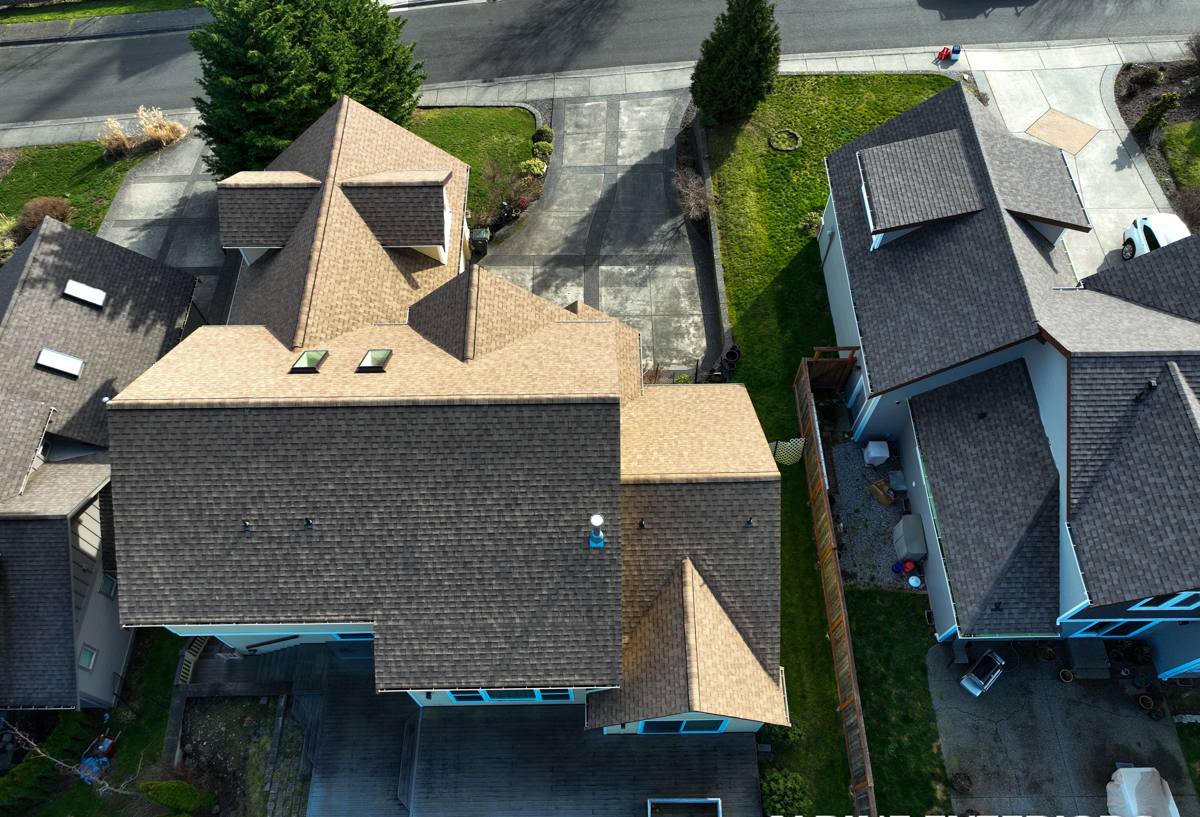
Why Salt Air and Driving Rain Change the Installation Plan
Two conditions drive almost every decision on a Lummi Island new-construction window job: salt exposure and wind-driven moisture. Neither is dramatic on its own, but together, over years, they punish anything installed with shortcuts.
Salt Air and Hardware Corrosion
Salt in the air settles on everything — window frames, hinges, locks, screws, flashing. Standard fasteners and hardware that would last decades inland can start corroding within a few years this close to the water. That's why material choice for fasteners, flashing tape, and hardware finish matters as much as the window brand itself. We spec corrosion-resistant fastening and flashing systems on island and near-shoreline builds as a matter of course, not as an upsell.
Wind-Driven Rain and Water Intrusion
Rain that comes in sideways off the water finds every gap a calmer climate would never expose. On a new build, that means the window opening's rough framing, the flashing sequence, and the sealant details all have to assume water WILL hit the wall at an angle and under pressure — not just fall straight down. A window that's watertight in a still rain can still leak under wind-driven conditions if the flashing isn't shingled correctly or the sill pan isn't sloped and sealed properly.
Moss Season and Sustained Moisture
Whatcom County's long wet season means exterior surfaces around window openings can stay damp for extended stretches, which is exactly the environment moss and mildew favor. On new construction, this affects material choices at the trim and sill level and reinforces why proper drainage planes and back-caulking are non-negotiable — trapped moisture behind trim or cladding is what actually causes rot, not the rain itself.
What a Correct New-Construction Window Install Involves
New construction gives you an advantage over a retrofit: the wall is open, so the window opening, the water-resistive barrier, and the flashing can all be built as one integrated system instead of worked around. Here's what that looks like done right:
- Rough opening sized and squared to the window manufacturer's exact specifications, with attention to Lummi Island's exposure category for wind load
- Sill pan flashing installed and sloped to shed any water that gets past the window back out, not into the wall cavity
- Water-resistive barrier integrated with the flashing in proper shingle-lap order — every layer overlapping the one below it, so water always sheds downward and outward
- Corrosion-resistant fasteners and flashing tape specified for coastal exposure
- Window set plumb, level, and square, with shims placed at load-bearing points per manufacturer instruction
- Insulation and air-sealing around the frame — not just caulk, but a proper low-expansion foam or backer rod and sealant system that won't compress out over time
- Exterior trim and cladding tied back into the drainage plane so nothing traps water against the window frame
- Interior and exterior sealant beads inspected for full, unbroken coverage before trim covers the evidence
Every one of those steps is inspectable while the wall is still open. Once siding and interior finish go on, you're trusting what's behind them — which is why we document each stage with photos before it's covered.
Choosing Window Products for an Island Build
We install a range of quality window lines and don't push a single manufacturer on every job — the right product depends on your home's design, budget, and exposure. For Lummi Island specifically, a few product characteristics matter more than they would on an inland Ferndale build.
| Factor | Why it matters on Lummi Island |
|---|---|
| Frame material corrosion resistance | Salt air accelerates corrosion on lower-grade hardware and fasteners; frame and hardware finish should be rated for coastal or marine-adjacent exposure |
| Weatherstripping and seal quality | Wind-driven rain tests seals harder than still rain; better compression seals resist water intrusion under pressure |
| Glass and gas-fill performance | Consistent damp, cooler conditions make seal failure (fogging between panes) more noticeable and more common with lower-tier insulated glass units |
| Cladding or finish durability | Vinyl, fiberglass, and clad-wood each handle salt exposure and UV differently — we'll walk you through the honest trade-offs for your specific elevation and exposure |
| Warranty structure | Coastal exposure can void or limit some manufacturer warranties if installation specs aren't followed exactly — correct install protects your coverage |
We're upfront when a particular product isn't a good fit for a high-exposure island wall — not because the product is bad, but because its maintenance burden or moisture tolerance doesn't match the site. That's a standard we hold on every build, island or not.
Our Process for New-Construction Window Installs
1. Site and Plan Review
Before we order a single window, we review the build plans, the home's orientation relative to prevailing wind and rain, and its exposure category. A wall facing open water gets treated differently than a wall tucked behind other structures or tree line, even on the same lot.
2. Product Selection Walkthrough
We go through window options with you in plain terms — what each product costs, what it's good at, and what it demands in upkeep given Lummi Island's climate. No pressure toward a particular brand; the goal is the right window for your wall, not the highest-margin sale.
3. Framing and Flashing Coordination
On new construction we coordinate directly with the general contractor or framing crew so rough openings are sized correctly the first time and the flashing sequence is planned before the water-resistive barrier goes up. Rework at this stage is cheap; rework after siding is not.
4. Installation
Each window is set, flashed, sealed, and insulated following the checklist above. We don't skip steps to save time on a wall that's about to get covered.
5. Documentation and Walkthrough
We photograph flashing and sealant details before they're covered, and walk you through what was done and why — so you have a record of what's behind your siding, not just a finished window you have to trust blindly.
Why an Island-Experienced Crew Matters
Lummi Island isn't accessed the same way as a mainland Ferndale lot — ferry scheduling affects delivery timing, material staging, and crew logistics. A crew that hasn't planned around that will either pad your timeline unnecessarily or scramble mid-project. We already account for ferry logistics when we schedule island work, so your build stays on track instead of waiting on a missed load of materials.
More importantly, a crew that regularly works Whatcom County's shoreline and island properties has already seen how salt air and driving rain treat window installations over time — which fastener finishes hold up, which flashing details actually shed wind-driven water, and which shortcuts show up as a callback three winters later. That experience gets built into the install the first time, not learned on your house.
Maintenance: What to Expect After Installation
Even a correctly installed window needs some seasonal attention on Lummi Island. Here's what we recommend building into your routine:
- Rinse salt residue off exterior frames and glass periodically, especially after storms with onshore wind
- Check exterior caulking annually for cracking or separation, particularly after the first year as the home settles
- Keep gutters and drainage clear near window heads so runoff doesn't concentrate against the frame
- Watch for moss or algae buildup on sills and trim during the wet season and clean it before it holds moisture against the surface
- Operate hardware (locks, cranks, sliders) periodically even in rooms you don't use often, so salt-air stiffness doesn't set in unnoticed
None of this is heavy maintenance — it's the same kind of upkeep any coastal Whatcom County home needs, and a correctly installed window makes it easier, not harder.
Cost Factors for New-Construction Window Installs
Pricing depends on window count, size, product tier, and site access, so we won't quote a number without seeing the plans. What we can tell you is what tends to move the price on an island build specifically:
| Factor | Impact on cost |
|---|---|
| Number and size of window openings | Largest single driver of overall material and labor cost |
| Product tier and frame material | Coastal-rated hardware and higher-performance glass cost more upfront, less in repairs |
| Site access and ferry logistics | Material staging and delivery timing on Lummi Island can affect scheduling more than direct labor cost |
| Flashing and framing complexity | Custom shapes, large expanses of glass, or unusual wall assemblies add labor time |
| Coordination with GC/framing schedule | Well-coordinated timing keeps costs predictable; last-minute changes after framing add cost |
We'll walk through actual numbers once we've seen your plans and can talk through product options that fit your budget honestly.
Get a Free, No-Pressure Estimate
If you're planning a new build on Lummi Island and want window installation done by a crew that already understands island logistics and coastal exposure, reach out for a free estimate. We'll review your plans, walk you through product options in plain terms, and give you a straight answer on what the job involves — no pressure, no upsell. Use the form below to get started.