 Ferndale Siding
 Getting Windows Right Before the Siding Ever Goes On
New-construction window installation is a different job than swapping out an old window in a finished wall. There's no existing trim to hide mistakes behind, no old flashing to fall back on if the new flashing gets skipped. What goes into the rough opening now — the pan flashing, the housewrap laps, the sealant joints — is what the wall is going to live with for the next 30 to 40 years. In a Sudden Valley new build, that first pass matters even more than usual, because the wall assembly is going to spend its life absorbing Whatcom County's wet-weather cycle before a single board of siding ever gets nailed up.
We work new-construction window openings as part of the exterior envelope, not as a standalone task. The window, the weather-resistive barrier, and the siding all have to work as one connected system, and that only happens if the crew doing the windows understands how the siding is going in behind them.
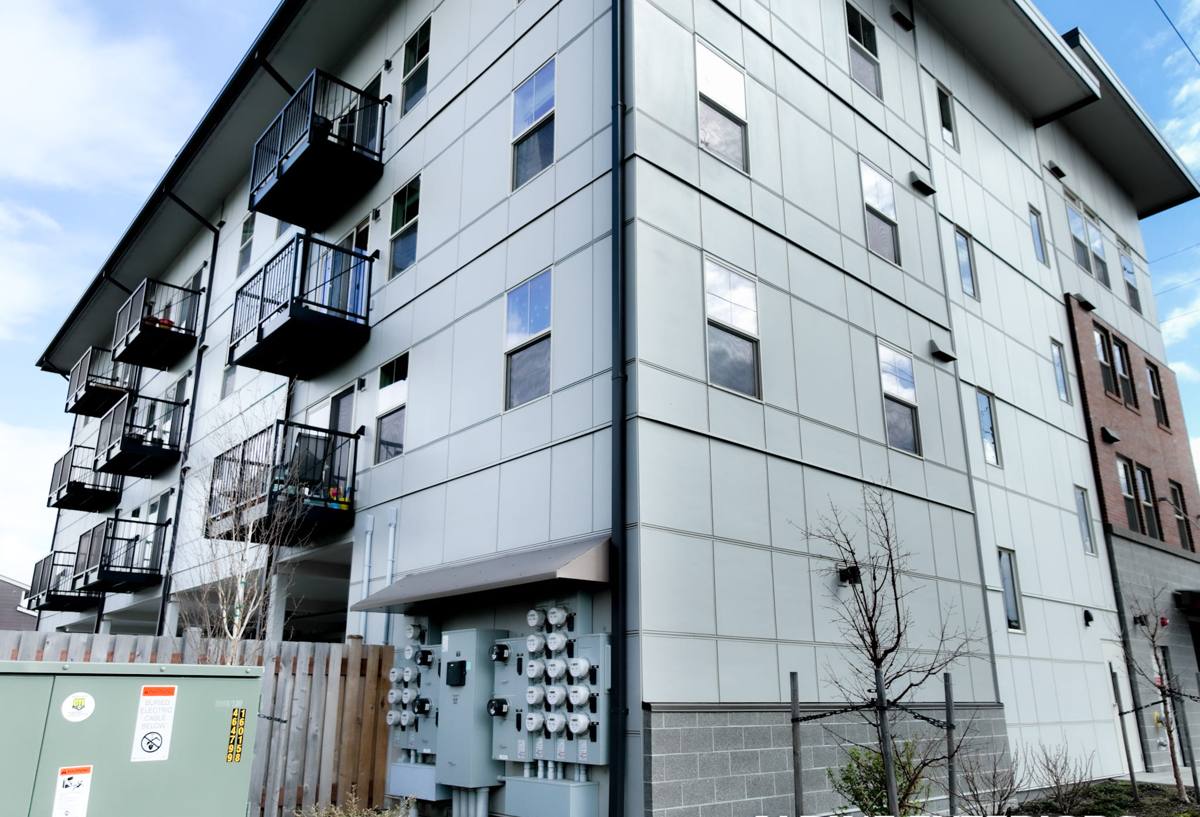
What Sudden Valley's Climate Demands From New Windows
Whatcom County sits under a marine climate that pushes damp, salt-tinged air off the Salish Sea and drives rain sideways across the county for months at a stretch. That weather reaches inland communities too, and Sudden Valley adds its own wrinkle on top of it: heavy tree canopy around Lake Whatcom keeps siding, trim, and window sills shaded and slow to dry out even after the rain stops. That combination — wind-driven moisture plus long dry-out times — is exactly the setup that turns a small flashing mistake into a rot problem a few years down the road.
Wind-Driven Rain and Flashing
Rain in this region rarely falls straight down. It gets pushed at window heads and jambs at an angle, which means flashing details that would be fine in a drier climate aren't enough here. Every horizontal surface at a new-construction opening needs to shed water outward, not just sit there and hope caulk holds.
Moss, Shade, and Trapped Moisture
A long moss season isn't just a roof problem. Shaded window sills and trim in a wooded lot hold moisture longer, and moss and algae will colonize any surface that stays damp. That's manageable with the right sill pan, the right slope, and the right materials — it's a real problem when a window was installed without a drainage path and water has nowhere to go but into the wall.
Choosing the Right Window for a New Build Here
Material choice matters more in a shaded, wet lot than it does on an open, sunny site. We look at moisture tolerance and maintenance burden as much as upfront cost when we're talking through options with a builder or homeowner.
| Window Frame Material | Moisture Tolerance | Maintenance | Typical Fit |
|---|---|---|---|
| Vinyl | Good — won't rot, some frames can distort with extreme temperature swings | Low — occasional cleaning | Budget-conscious new builds, rental or spec homes |
| Fiberglass | Very good — dimensionally stable, holds paint and finishes well | Low to moderate | Shaded or exposed lots where long-term stability matters |
| Wood-clad | Depends entirely on the cladding and installation — the wood core is the weak point if water gets behind the clad shell | Higher — finish and seals need periodic attention | Homeowners who want a specific interior wood look and are willing to maintain it |
We don't push one brand or one material as the answer for every job. What we do push is matching the window to the site — a shaded, wet lot near the lake is not the place to cut corners on frame material just to save a few dollars per unit.
Meeting Washington State Energy Code
New construction has to meet Washington's energy code requirements for window performance, and those U-factor limits have gotten stricter with each code cycle. Your builder or permit paperwork will spell out the exact number for your project, but our standard is to meet or beat that minimum, not just scrape by on the lowest-cost unit that technically qualifies.
What a Correct New-Construction Install Actually Involves
A window opening that's flashed correctly looks almost boring — there's nothing dramatic about it. That's the point. Water management should be invisible because it's working.
The Flashing Sequence, Step by Step
- Rough opening is checked for square, level, and correct size before the window ever shows up on site.
- A sloped sill pan goes in first, so any water that gets past the window has a path back out, not into the framing.
- Housewrap or weather-resistive barrier is lapped correctly at the jambs and integrated with the sill pan — sequence matters here, not just materials.
- The window is set, shimmed level and plumb, and fastened through the nailing fin per the manufacturer's instructions.
- Jamb and head flashing go on over the fin, lapped so water always sheds downward and outward, never trapped behind a seam.
- Sealant is used where it belongs — at specific joints — not smeared everywhere as a substitute for proper flashing.
Skip step two or reverse the lap order on step three, and the window can look perfect from inside the house while quietly feeding water into the wall cavity for years.
How Window Install Fits Into the Siding Timeline
On a new build, windows typically go in after the weather-resistive barrier is up and before siding starts. That handoff point is where a lot of problems get baked into a house — if the window crew and the siding crew aren't coordinating, flashing laps get done in the wrong order, or the siding starts before the window flashing has had its final inspection.
We treat that handoff as part of the job, not a gap between two separate contractors. When we're doing new-construction window work, we're thinking about how the siding is going to land against that opening before the window is even set.
Our Process for New-Construction Window Installs in Sudden Valley
Rough Opening Review
Before any window arrives, we walk the openings against the plans and the actual framing. Framing tolerances aren't always perfect, and it's cheaper to catch a sizing or squareness issue before the window shows up than after.
Install and Inspection
Each window goes in following the flashing sequence above, checked for level, plumb, and square, and confirmed operable before we move to the next opening. We don't consider a window "done" until it's been checked, not just set.
Envelope Integration
Once windows are in, we confirm the weather-resistive barrier and flashing tie together cleanly across the whole wall — no gaps at transitions, no shortcuts where two trades' work meets — before siding starts.
Common Mistakes We Watch For
Most window problems on new builds trace back to a handful of repeatable issues. We check for these on every job, whether we set the window ourselves or we're picking up the siding work behind another installer.
- No sill pan flashing, or a sill pan that isn't sloped to drain
- Housewrap laps done in the wrong order, directing water behind the barrier instead of over it
- Fasteners driven through the frame instead of the nailing fin, which can distort the frame and void warranty coverage
- Sealant used as a substitute for flashing instead of a supplement to it
- Rough openings that were never checked for square before the window was forced into place
- Siding started before window flashing was fully lapped and inspected
Cost Factors for New-Construction Windows
Pricing on a new build depends on more than the window unit itself. Homeowners planning a Sudden Valley build should expect these factors to move the number:
| Factor | Why It Affects Cost |
|---|---|
| Frame material | Vinyl, fiberglass, and wood-clad carry different unit costs and different long-term maintenance costs |
| Number and size of openings | More glass and larger units mean more material and more labor per opening |
| Energy performance package | Higher-performance glass and coatings needed to meet or beat code cost more per unit |
| Site access and lot terrain | Sloped, wooded lots common around Lake Whatcom can add labor time for staging and material handling |
| Coordination with other trades | Tightly scheduled work with framers and siding crews reduces rework versus windows installed in isolation |
Why a Crew That Already Works Sudden Valley Matters
A contractor who's worked new construction elsewhere in the county but not around Lake Whatcom specifically may not think twice about shade, tree cover, and the slower dry-out times that come with it. That's not a knock on their general skill — it's just a detail that only shows up once you've seen how a shaded, wooded lot behaves differently than an open one over a few wet seasons. We build our flashing and material decisions around what actually happens to a wall assembly here, not around a generic spec sheet.
If you're planning a new build or working with a builder in Sudden Valley, we're happy to walk the plans, talk through window options, and explain exactly how we'll handle the flashing and siding integration — no pressure, no obligation. Use the form below to request a free estimate.