 Ferndale Siding
 Point Roberts Roofs Age Differently Than the Rest of Whatcom County
Point Roberts sits on a peninsula surrounded by water on three sides, which puts homes there in more direct, more constant contact with marine air off the Strait of Georgia and Boundary Bay than most inland Ferndale properties. That exposure, layered on top of the Pacific Northwest's long wet season, means roofs in Point Roberts often show wear years before a similar roof would inland. Salt-laden air, driving rain, and a moss season that can run most of the year all chip away at roofing materials in ways that a generic roofing crew unfamiliar with the area may not fully account for.
A new roof installation here isn't just about swapping old shingles for new ones. It's about building a roof system that's specified and detailed for the specific punishment this location dishes out, and installed by a crew that understands the logistics of getting a job done on a peninsula that's separated from the rest of Whatcom County by an international border.
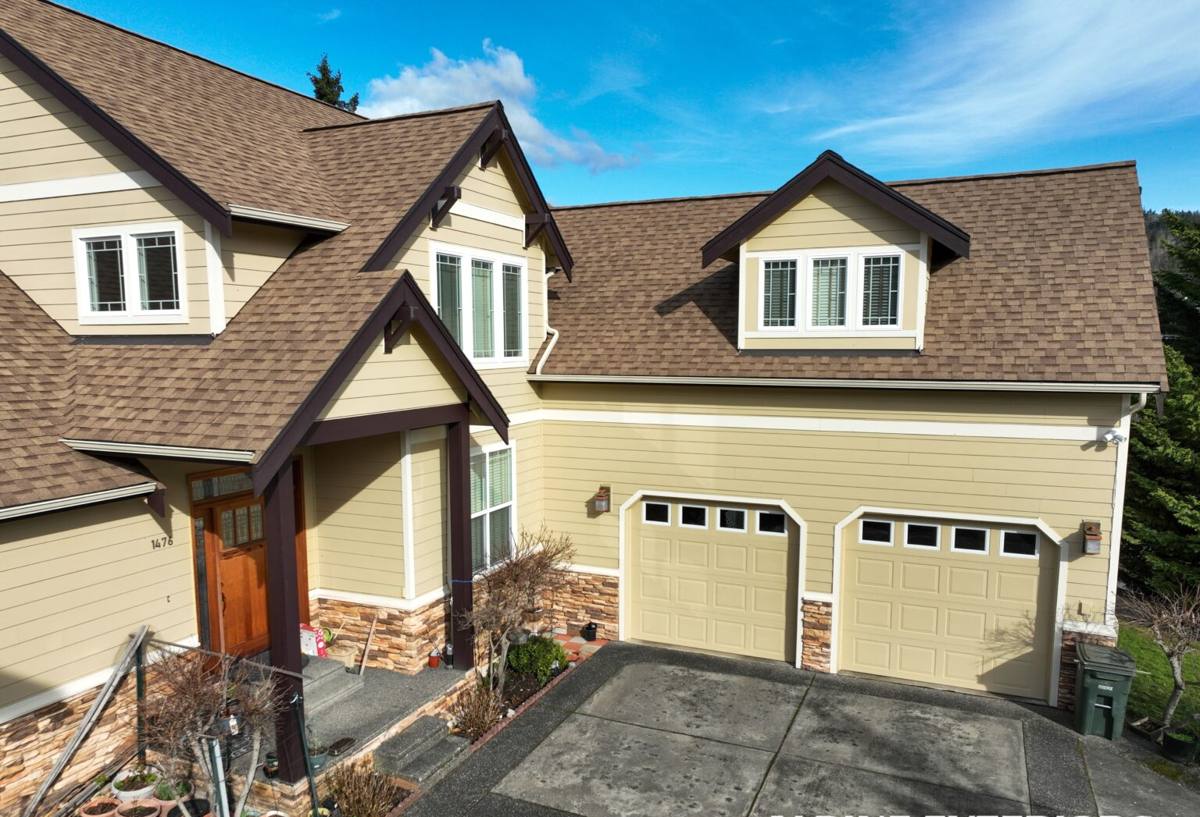
What Salt Air, Driving Rain, and Moss Actually Do to a Roof
Salt Air and Metal Components
Airborne salt accelerates corrosion on anything metal — fasteners, flashing, vents, and drip edge. Standard fasteners can start rusting and weeping stains onto shingles well before the roofing material itself is due for replacement. Once a fastener corrodes, it loses holding power, and that's how roofs start losing shingles in wind events.
Driving Rain and Wind-Driven Water
Open coastal exposure means rain doesn't always fall straight down — wind pushes it sideways and up under laps, eaves, and flashing that would stay dry on a more sheltered inland roof. This is why flashing detail and underlayment choice matter more here than in a typical subdivision reroof.
Moss, Shade, and Trapped Moisture
Between tree cover and the region's damp climate, moss and algae growth is a near-constant battle on Point Roberts roofs. Moss holds moisture against the roof surface, works its way under shingle tabs, and can lift edges over time, giving wind-driven rain an entry point it wouldn't otherwise have.
What a Correct New Roof Installation Actually Involves
A roof that's going to hold up to this environment needs more than a fast layer of new shingles over the old deck. A proper installation includes:
- Full tear-off to bare deck, so the installer can actually see and repair any rot or soft spots before they're covered up
- Deck repair or replacement of any damaged sheathing, not just a patch over it
- Ice-and-water shield membrane at eaves, valleys, and roof penetrations — the areas most vulnerable to wind-driven water
- A quality synthetic underlayment across the full roof deck as a second line of defense against wind-blown rain
- Corrosion-resistant fasteners and flashing rated for coastal or marine-adjacent exposure
- Balanced intake and exhaust ventilation, so moisture from inside the home doesn't get trapped in the attic and work against the roof from underneath
- Properly lapped and sealed flashing at every chimney, vent, skylight, and wall transition
- A ridge cap and edge detail sized and fastened for real wind exposure, not just the manufacturer's minimum
Skip any one of these and you haven't actually solved the problem the old roof had — you've just delayed it.
Roofing Material Options for a Point Roberts Home
There's no single right answer for every home — it depends on your budget, your roof's pitch and complexity, and how much upkeep you want to take on. Here's how the common options compare for this specific environment:
| Material | Typical Lifespan | Coastal / Moss Resistance | Maintenance Needs |
|---|---|---|---|
| Architectural asphalt shingle | 25–30 years | Good, with algae-resistant granules and proper ventilation | Periodic moss/debris removal, gutter care |
| Standing seam metal | 40–50+ years | Very good when properly coated and fastened; sheds moss more easily due to slope and smooth surface | Low; occasional fastener and sealant checks |
| Synthetic/composite shingle | 30–50 years (manufacturer dependent) | Good; resists moisture absorption better than organic-based products | Low to moderate |
Our standard is to steer homeowners away from budget three-tab shingles on this stretch of coastline. They have thinner mat construction, less wind rating, and less algae resistance, which means they simply don't hold up as long against this particular combination of salt, rain, and moss. That's a maintenance and longevity trade-off worth knowing before you buy on price alone.
Our Installation Process
- On-site inspection and estimate — we walk the roof, check the deck condition where accessible, and talk through material options honestly, including trade-offs.
- Material selection and ordering — once you've picked a system, we order materials sized for your roof and confirm delivery timing.
- Scheduling — because Point Roberts is only reachable by crossing the border, we plan crew and material logistics in advance rather than trying to schedule it like a same-day inland job.
- Tear-off and deck prep — old roofing comes off down to the deck, and any damaged sheathing gets replaced before anything new goes down.
- Underlayment, flashing, and ventilation — this is where the real weatherproofing happens, before a single shingle or panel is installed.
- Installation — roofing material, ridge, and edge details go on to manufacturer specification and to the wind exposure this location actually sees.
- Cleanup and walkthrough — job site cleared of debris and nails, and we walk the finished roof with you.
- Paperwork — warranty registration and documentation handed over so you have it on file.
What Drives Cost on a Point Roberts Reroof
| Cost Factor | Why It Matters |
|---|---|
| Roof pitch and complexity | Steeper roofs and more valleys, dormers, or penetrations take more labor and material to detail correctly |
| Material choice | Asphalt shingle, metal, and synthetic products have different material and installation costs |
| Deck condition | Rot or soft sheathing found during tear-off needs to be replaced, which isn't always visible until the old roofing is off |
| Access and logistics | Crew and material scheduling around the border crossing is a real factor unique to this location, not something most contractors have to plan for |
| Number of tear-off layers | Removing multiple layers of old roofing takes more labor than a single-layer tear-off |
| Ventilation upgrades | Adding or correcting intake/exhaust venting protects the new roof but adds some labor and material cost |
We'll never quote a job without seeing the roof first — anyone who gives you a firm number over the phone for a Point Roberts reroof is guessing.
Why Hiring a Crew That Already Works in Point Roberts Matters
Point Roberts is part of Whatcom County, but it's physically separated from the rest of the mainland U.S. by Canadian territory — crews, equipment, and materials all have to cross the border to get there. A contractor who hasn't done that logistics planning before can end up with delayed starts, scheduling surprises, or crews who show up without the right materials because they underestimated what it takes to get a full roofing job onto the peninsula.
Beyond logistics, a crew with actual experience on this stretch of coastline knows what to specify without being told — the fastener grade, the underlayment coverage, the ventilation balance — because they've seen what happens when those details get skipped on a property exposed to this much salt air and rain. That's the difference between a roof that's simply new and a roof that's actually built for where it sits.
Signs Your Roof Needs Full Replacement, Not Another Repair
- Granule loss heavy enough that you can see bare, shiny patches on shingles
- Curling, cupping, or cracked shingles across multiple areas of the roof, not just one spot
- Persistent moss growth that comes back quickly after cleaning
- Soft spots or sagging visible in the roof deck from the attic or from the ground
- Rusted or failing flashing around chimneys, vents, or skylights
- Water stains on interior ceilings or attic sheathing after wind-driven rain
- A roof that's already had one or more patch repairs in the last few years for the same recurring leak
If you're seeing two or more of these, a repair is likely just a short-term delay rather than an actual fix.
After Installation: Keeping a New Roof Performing in This Climate
Even a well-built roof benefits from basic upkeep in this environment. Keep gutters clear so water isn't backing up under the eaves, have moss growth addressed before it spreads rather than after, and get an occasional visual check on flashing and vent boots — these are the first components to show wear from salt and wind exposure, long before the roofing material itself is due for attention.
If you're weighing a new roof for a Point Roberts property, we're happy to take a look and talk through what your specific roof actually needs — no pressure, no upsell, just a straight answer. The form below gets you a free estimate.