 Ferndale Siding
 Roofing in a Marine Environment
Semiahmoo sits close enough to the water that homes here deal with a different set of stresses than a roof five miles inland in Ferndale proper. Salt-laden air corrodes exposed metal faster, driving rain off the Strait finds its way into any weak flashing detail, and the shaded, damp conditions common near the shoreline keep moss and algae growing on roof surfaces for most of the year. None of this means a roof here is doomed to fail early — it means the installation has to account for these conditions from the first nail, not patch around them later.
A roof that was installed correctly for a drier, sunnier climate often doesn't hold up the same way once it's exposed to Whatcom County's coastal weather pattern. That's the gap we see most often when we're called out to look at a Semiahmoo roof that's failing well before its expected lifespan.
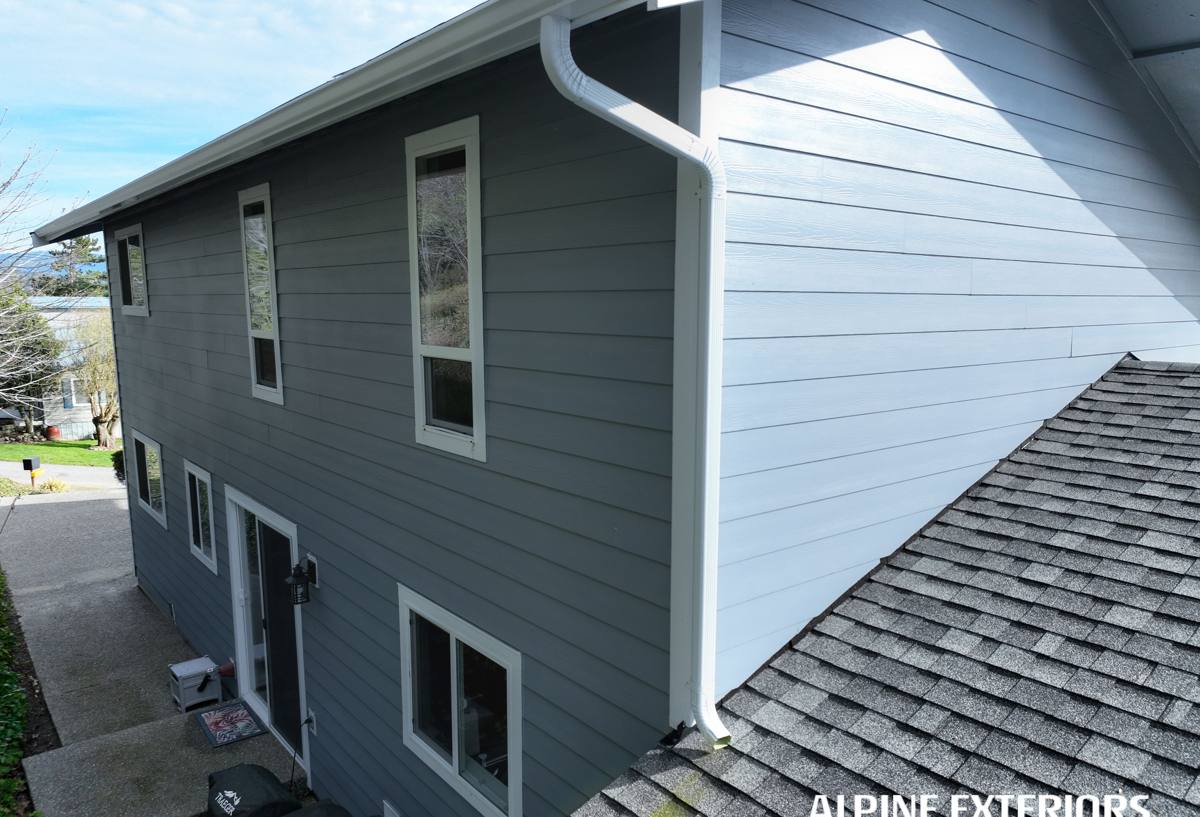
Signs a Semiahmoo Roof Needs Replacement, Not Another Repair
Repairs make sense when the underlying roof system is sound and the problem is isolated. Replacement becomes the honest recommendation once the damage is spread out or the roof has aged past what repairs can fix. Common signs we look for on homes in this area include:
- Granule loss heavy enough that you can see bare, shiny patches on shingles from the ground
- Moss that has worked its way under shingle tabs rather than just sitting on the surface
- Soft or spongy spots in the decking, usually found near valleys, chimneys, or roof edges where water lingers
- Daylight visible through the attic sheathing, or staining on attic rafters after rain
- Curling, cracked, or missing shingles concentrated on the sides of the roof that face prevailing wind and rain
- Rust streaking below any metal flashing, vents, or valleys
If you're seeing two or more of these at once, it's usually a sign the roof system as a whole — not just one shingle or one flashing detail — has reached the end of its service life.
What a Correct Installation Actually Involves
A new roof is more than laying down new shingles over what's already there. On coastal Whatcom County homes, we treat each of the following as non-negotiable, not an upsell:
Full Tear-Off and Decking Inspection
Roofing over old layers traps moisture and hides rot. A full tear-off lets us inspect the decking underneath, replace any boards that have softened from years of moisture intrusion, and confirm the roof deck is actually sound enough to hold fasteners securely — something that matters more in wet climates where deteriorated decking is common but not always visible from above.
Underlayment Built for Wind-Driven Rain
Standard felt underlayment is a minimum, not a standard we aim for. In areas exposed to driving rain off the water, we install synthetic underlayment and self-adhering ice-and-water membrane at the eaves, valleys, and any roof-to-wall transitions — the spots where wind-driven rain is most likely to get pushed backward under the shingles.
Flashing Details
Most roof leaks don't come from the field of the roof — they come from flashing around chimneys, skylights, vent pipes, and sidewalls. We replace flashing as part of every new roof rather than reusing old pieces, since corroded or improperly lapped flashing is one of the most common failure points we find on coastal homes.
Ventilation That Matches the Climate
A roof deck that can't breathe traps moisture from below, which accelerates rot and shortens the life of the new roofing material regardless of how good the shingles are. We check intake (soffit) and exhaust (ridge or roof vents) ventilation as part of every installation and correct imbalances rather than just replacing what was there.
Choosing a Roofing Material for Salt Air and Moss Pressure
There's no single "best" roofing material for every home — the right choice depends on budget, roof pitch, how much shade and moss pressure the roof sees, and how long you plan to stay in the home. Here's how the common options compare for a coastal Whatcom County property:
| Material | Moss / Algae Resistance | Salt Air Durability | Typical Lifespan |
|---|---|---|---|
| Standard asphalt shingles | Moderate — benefits from algae-resistant (AR) granules | Good; fasteners and any exposed metal should be corrosion-resistant | 20–25 years |
| Architectural (laminate) shingles | Better than 3-tab; heavier profile sheds debris more effectively | Good | 25–30 years |
| Metal (standing seam or panel) | Excellent — smooth surface resists moss anchoring | Very good with proper coating; check fastener and flashing metal compatibility | 40–50+ years |
| Composite / synthetic shakes | Good | Good | 30–50 years, product-dependent |
For most Semiahmoo homes we recommend algae-resistant architectural shingles as the balance of cost, appearance, and performance, with metal roofing as the upgrade path for homeowners who want to minimize moss maintenance and get the longest possible service life out of the investment.
A Note on Zinc and Copper Strips
Zinc or copper ridge strips release trace metal ions that inhibit moss growth as rainwater washes over them. On a roof with heavy shade or a north-facing slope — common in this area — they're a low-cost addition that measurably slows moss regrowth between cleanings, though they don't eliminate the need for periodic roof maintenance entirely.
Our Installation Process
- On-site inspection and estimate — we look at the existing roof, attic ventilation, and any problem areas before quoting, not from a photo or a phone call.
- Material selection — we walk through options and cost trade-offs based on your roof's exposure and your budget, without pushing a single "one size fits all" product.
- Scheduling around weather — in a climate with a real rainy season, timing matters; we plan installation windows to keep the roof deck protected throughout the project.
- Tear-off and deck repair — old roofing removed, decking inspected board by board, and any soft or damaged sections replaced.
- Underlayment, flashing, and ventilation installed — the parts of the job that determine whether the roof actually performs in wet, salt-exposed conditions.
- New roofing material installed to manufacturer specifications, including proper nailing pattern and exposure for wind resistance.
- Final walkthrough — cleanup, magnetic sweep for debris, and a review of the completed work with you before we consider the job done.
What Drives the Cost of a New Roof
Every roof is priced individually, but the main factors that move the number up or down are consistent across jobs in this area:
| Factor | Why It Matters |
|---|---|
| Roof size and pitch | Steeper roofs take longer to work safely and require more material for the same footprint |
| Number of existing layers | Removing multiple old layers takes more labor and disposal cost than a single-layer tear-off |
| Decking condition | Rot found during tear-off requires board replacement not visible until the old roofing is off |
| Material choice | Asphalt, architectural, metal, and composite products span a wide cost range |
| Ventilation upgrades | Correcting an under-ventilated attic sometimes requires added vents or soffit work |
| Roof complexity | Valleys, dormers, chimneys, and skylights each add flashing work and labor time |
We give a firm, written estimate after seeing the roof in person — there's no honest way to price a new roof without accounting for what's actually up there.
Why Local Experience in This Area Matters
A crew that regularly works waterfront and near-waterfront properties in Whatcom County already knows which details tend to fail first in this environment — which flashing configurations hold up to driving rain, which fastener types resist salt corrosion, and how much ventilation a shaded, moss-prone roof actually needs. That's different knowledge than what a crew based somewhere dry and inland brings to the job. It also means we're not learning on your roof; we've already seen how these conditions play out on similar homes nearby.
After the Install: Keeping a New Roof Performing
A correctly installed roof still needs basic upkeep in this climate, especially through the long moss season. A simple annual routine goes a long way:
- Clear gutters and downspouts before the fall rains start
- Have moss and debris removed from the roof surface at least once a year, more often on shaded slopes
- Trim back overhanging branches that keep sections of the roof damp and shaded
- Check attic ventilation isn't blocked by insulation or debris
- Have flashing around chimneys, vents, and skylights visually checked after major storms
Staying ahead of moss and moisture is far cheaper than dealing with the damage it causes if it's left alone for years.
If your Semiahmoo home's roof is showing its age or you just want an honest opinion on whether repair or replacement makes more sense, we're happy to take a look. Use the form below to request a free, no-pressure estimate.