 Ferndale Siding
 Custom Windows in Nooksack: Built for an Open, Wet Corner of Whatcom County
Nooksack sits inland along the Nooksack River valley, in the flat agricultural country that stretches east of Ferndale toward the foothills. Homes here don't sit right on open water, but they're still squarely inside the marine weather system that shapes exterior work across Whatcom County: rain that arrives sideways more often than straight down, salt-tinged air that carries further inland than most people expect, and mild, damp conditions that keep moss and mildew active for most of the year. Flat, open valley terrain also means less windbreak than a hillside or a tree-lined lot would offer, so wind-driven rain hits window openings with more force here than it would in a more sheltered setting.
We build and install custom windows for homes throughout the Nooksack valley and the rest of our Whatcom County service area, alongside siding, roofing, and deck work. On custom window projects specifically, we treat exact measurement, correct flashing, and a properly detailed sill as being just as important as the window unit itself. A well-made window installed with sloppy flashing will leak in this climate. A window built to the actual size and shape of the opening, installed with the flashing done right, is what holds up through years of Nooksack's wet seasons.
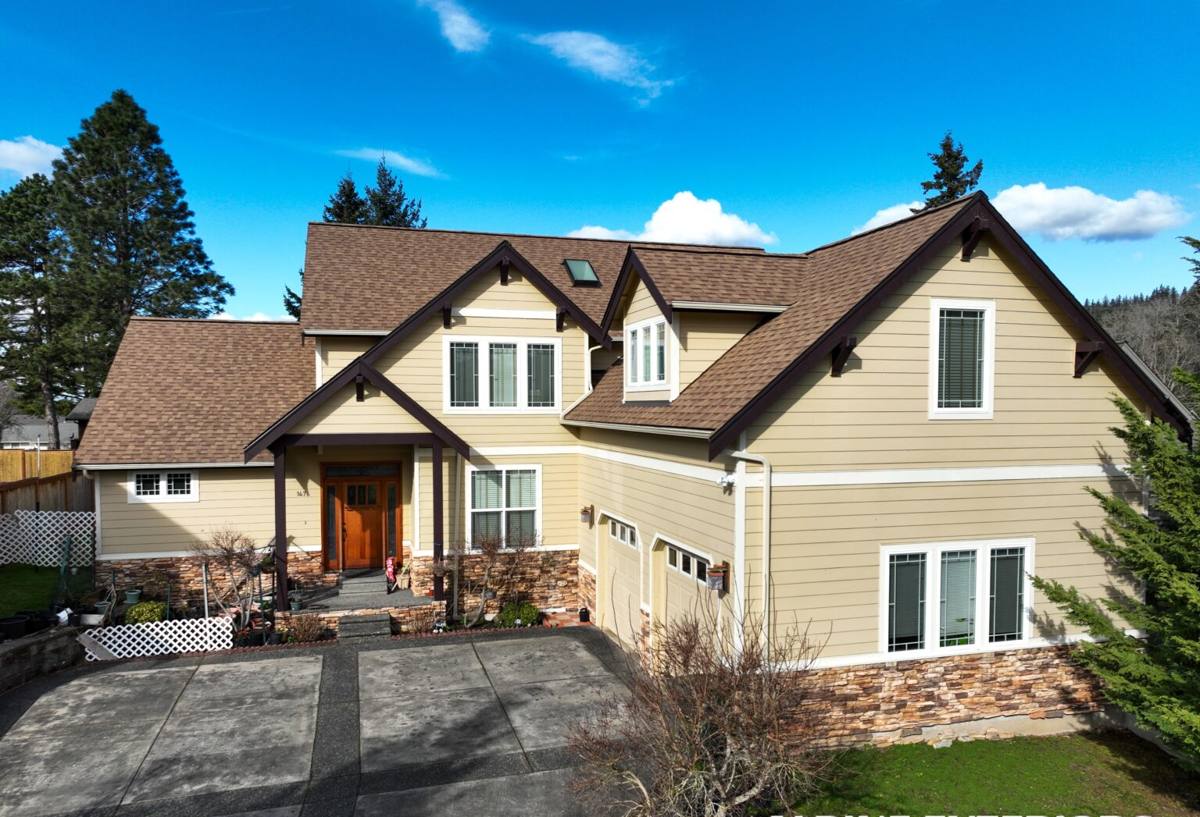
What This Climate Does to a Nooksack Window
Wind-Driven Rain Across Open Farmland
Open, flat agricultural land doesn't slow wind down the way a forested or built-up neighborhood does, so storms moving through the valley push rain sideways into window openings, head trim, and sill flashing with real force. That matters more for windows than almost any other part of the house, because a window opening is where the wall assembly has the most seams and the most potential paths for water to get behind the siding. A window that performs fine in a sheltered spot can still leak here if the flashing wasn't built to handle sideways-driven water.
Marine Air That Reaches Further Than You'd Think
Nooksack isn't waterfront, but salt-carrying air off the Sound moves inland on winter storms and settles into the valley more than most homeowners realize. Over years, that steady low-level salt exposure accelerates corrosion on window hardware, screen frames, and lower-grade fasteners, especially on windows facing the prevailing weather. It's a slower process than what a shoreline property sees, but it's not nothing, and it's often overlooked when window products are chosen for this area.
A Long Moss and Mildew Season on Shaded Walls
Mild temperatures and consistent moisture give moss and mildew a long season across this whole region, and shaded or north-facing walls in Nooksack hold that dampness even longer because there's less direct sun and airflow to dry things out between storms. On windows, that shows up as mildew staining around frames, slow paint failure on wood sills, and — if it goes unaddressed — soft or rotting wood at the lowest point of the frame, where water collects and lingers.
What "Custom" Actually Means on a Window Project
Non-Standard and Out-of-Square Openings
A lot of homes and outbuildings in the Nooksack valley were built or added onto over several decades, and that history shows up in the framing. Openings settle out of square, additions don't always match the original construction, and older farmhouses in particular often have window rough openings that simply don't match anything sold as a stock size. Trying to force a standard off-the-shelf window into an opening like that usually means shimming gaps, compromising the flashing, or cutting the opening bigger than it should be — any of which creates a weak point in a climate that doesn't forgive weak points. A window built to the actual measured dimensions of the opening avoids all of that.
Custom Shapes, Sizes, and Sightlines
"Custom" also covers window shapes and configurations that don't exist in a standard catalog: arched tops, transoms, larger picture windows for a view across open farmland, or a specific grille pattern to match an older home's original style. These choices are about how the house looks and functions, not just filling a hole in the wall, and they usually need more planning up front — confirming that a wall can structurally support a larger opening, for instance, or that a custom shape can still be flashed correctly with standard materials.
Choosing Frame Material and Glass for This Climate
There's no single right answer for every home in Nooksack — budget, how exposed a given wall is, and how long you plan to stay in the house all factor into the decision. What matters is understanding the real trade-offs for a climate with this much sustained moisture before committing to a material.
| Frame Material | Moisture & Corrosion Behavior | Typical Maintenance | Realistic Lifespan Here |
|---|---|---|---|
| Vinyl | Won't rot; weld quality and installation determine how well seams hold up over time | Low; occasional track and weep-hole cleaning | 20-30 years |
| Fiberglass | Dimensionally stable, resists moisture and corrosion well, holds paint or finish longer | Low | 30-40+ years |
| Wood, painted or clad | Classic look for older farmhouses but vulnerable at joints and sills without regular upkeep | Higher; periodic paint or finish maintenance | 15-30 years depending on upkeep |
| Aluminum | Conducts cold and can corrode over time in salt-influenced air unless well-finished | Moderate | 20-30 years |
Glass matters as much as the frame. Double-pane windows with a Low-E coating and argon fill are the standard for most homes in this climate and perform well. Triple-pane adds extra insulating value and can reduce condensation on cold surfaces, but it also adds weight and cost, which matters more on a custom-sized or larger picture window. We'll walk through which combination fits your specific openings and budget rather than defaulting to whichever option is easiest to sell.
Full-Frame vs. Insert Replacement on a Custom Opening
One of the first decisions on any window project is whether to do a full-frame replacement, which removes the old window down to the rough opening and rebuilds the flashing from scratch, or an insert replacement, which fits a new window into the existing frame. On a custom project, that decision is often made for you: if the opening needs to change size or shape, or if the existing frame is out of square or already water-damaged, full-frame is the only honest option, because an insert depends on a sound existing frame to work correctly. If the opening is staying the same size and the existing frame is solid, an insert can be a faster, less invasive way to upgrade an older window without disturbing the surrounding siding and trim. We'll tell you which situation you're actually in before we quote the job, not after.
Our Process for a Nooksack Custom Window Project
- On-site measurement of every opening, noting square, plumb, and any existing damage or settling.
- A written scope covering frame material, glass package, shape, and full-frame vs. insert for each window.
- Custom units ordered to the confirmed measurements, with lead times discussed up front so there are no surprises.
- Careful removal of the old window, checking the framing and sheathing underneath for hidden rot or moisture damage.
- Installation with a properly pitched sill pan and flashing that laps correctly with the surrounding siding, sequenced to shed wind-driven rain rather than trap it.
- Interior and exterior trim work, final sealing, and a walkthrough so you know how to operate and maintain the new windows.
Signs Your Nooksack Home's Windows Need a Closer Look
- Visible condensation or fogging between the panes of a double- or triple-pane window, which usually means a failed seal.
- Drafts you can feel around the frame even when the window is fully latched.
- Windows that are hard to open, close, or lock, especially after a wet stretch of weather.
- Soft, discolored, or spongy wood at the sill or lower corners of the frame.
- Peeling or bubbling paint on interior trim near a window, which often points to moisture getting in from outside.
- Visible daylight or gaps around an older or out-of-square opening.
Any one of these is worth a professional look. Caught early, most point to a repair or a straightforward replacement. Left through another wet season, several of them point to water damage working its way into the surrounding wall framing.
Why a Local Whatcom County Crew Matters for Custom Work
Custom window work rewards experience in a way stock replacements don't. A crew that measures and installs windows across this county through every season learns which older Nooksack-area farmhouses tend to have out-of-square openings, how much wind exposure a given orientation actually sees on open valley land, and which flashing details are worth the extra time on install day so you're not dealing with a leak two winters later. That kind of judgment doesn't come from a spec sheet — it comes from doing the work here, repeatedly, and paying attention to what actually happens to a window five and ten years after installation.
Windows are also never fully separate from the rest of the exterior. We handle siding, roofing, and decks as well, and on siding specifically we install James Hardie fiber cement as our standard for this climate. If a window project turns up moisture damage in the surrounding siding or trim, or a roofline detail that's letting water in above a window, we can address it as part of the same conversation instead of sending you to find a second contractor.
Get a Free, No-Pressure Estimate
If your Nooksack-area home has windows that don't fit the standard sizes, show signs of drafts or moisture, or you're simply ready to plan a custom window project the right way, we're glad to take a measurement and give you a straightforward, honest read on what it actually needs. Reach out using the form below to schedule a free estimate — no pressure, no upsell script.