 Ferndale Siding
 Roofs in the Nooksack Area Take a Different Kind of Beating
Homes along the Nooksack River corridor near Ferndale sit where three things stack up against a roof at once: salt-laden air drifting in off the bay and the strait, long stretches of driving rain that comes in sideways more often than straight down, and a moss season that can run eight months or longer on shaded, north-facing slopes. None of these is unusual on its own for Whatcom County. Together, on the same roof, year after year, they shorten the useful life of a roofing system faster than most homeowners expect.
We work on Nooksack-area homes regularly, and the pattern is consistent: shingles that would still have years left in a drier inland climate are already showing granule loss, moss colonization, and soft decking by the time they hit fifteen to eighteen years here. A roof replacement done right for this stretch of Ferndale looks different from a generic reroof — the underlayment, ventilation, and flashing details all need to account for what this climate actually does, not just what a shingle warranty assumes.
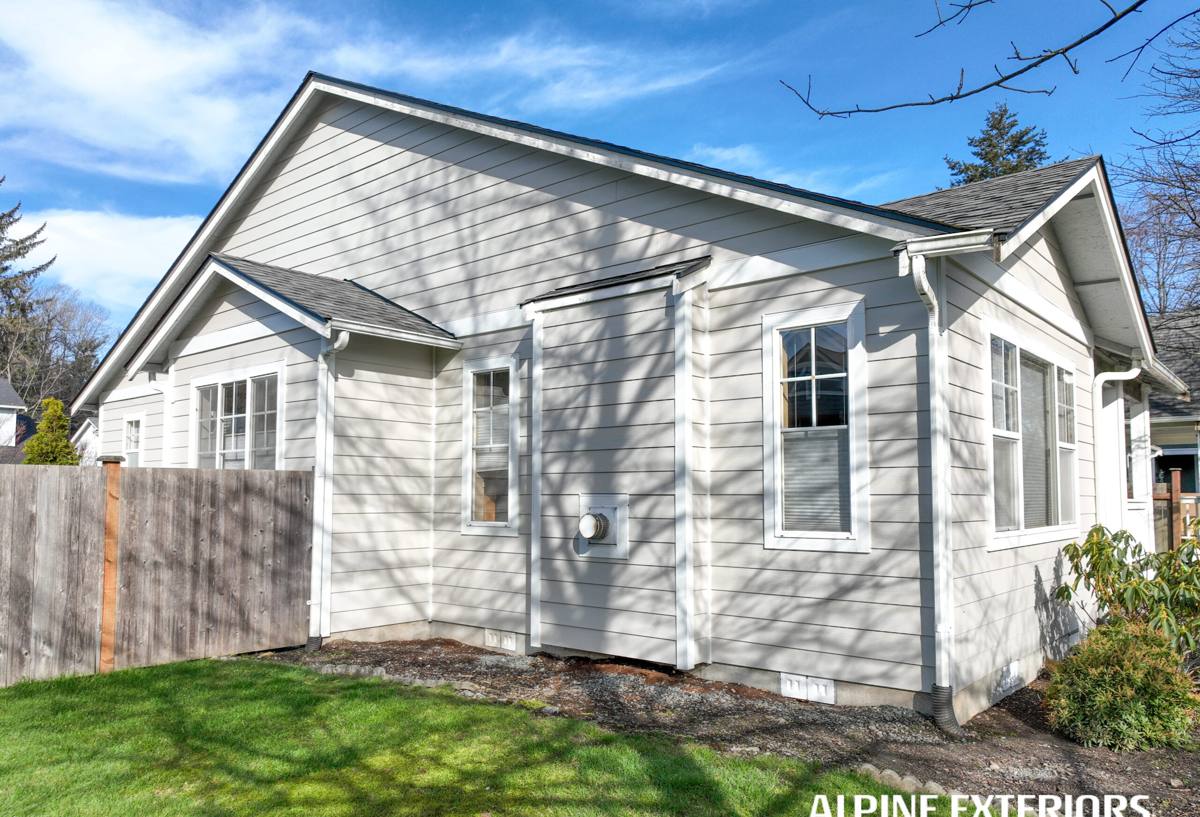
What Salt Air, Rain, and Moss Actually Do to a Roof
Each of these three factors attacks a roof in a different way, and a replacement that only accounts for one of them tends to fail where the others were ignored.
Salt Air and Fastener Corrosion
Airborne salt doesn't just sit on the surface — it works into exposed fasteners, flashing seams, and any metal component that isn't rated for coastal exposure. Standard fasteners and clips can show rust streaks and early corrosion well before the shingles themselves fail. Once a fastener corrodes, it loses holding power, and that's often the real cause behind a "wind-damaged" roof that lost shingles in a storm that wasn't even that severe.
Driving Rain and Wind-Driven Water
Rain that arrives at an angle finds every gap that straight-down rain would miss — under shingle tabs, around vent boots, along step flashing where a roof meets a wall. On a Nooksack-area roof, water intrusion risk isn't limited to the open field of the roof; valleys, flashing, and penetrations do most of the work keeping a home dry, and they're also where a rushed replacement fails first.
Moss, Algae, and Trapped Moisture
Moss doesn't just look bad — it holds moisture against the roof surface long after the rain stops, keeping shingles wetter for more of the year than they were designed for. On shaded slopes and roofs under mature tree cover, moss can lift shingle edges enough to let wind and water underneath, and its roots work into the shingle mat itself. Left untreated for years, a mossy roof often has more decking damage underneath than the surface appearance suggests.
Signs a Nooksack-Area Roof Needs Replacement, Not Just Repair
Not every problem roof needs a full tear-off. But there's a point where patching becomes a temporary fix on a roof that's already failing structurally, and repeated repairs end up costing more than one correct replacement. Signs worth taking seriously:
- Granule loss heavy enough to see bare asphalt in multiple spots, not just one worn patch
- Moss that returns within a year of cleaning, especially on north-facing or shaded slopes
- Soft or spongy decking felt when walking the roof, or sagging visible from the ground
- Daylight visible through the roof deck from inside the attic
- Rusted, lifted, or missing flashing at valleys, chimneys, or wall intersections
- Interior ceiling or attic staining that shows up specifically after wind-driven rain
- Shingles curling, cracking, or losing their seal along multiple courses
- A roof already past twenty years old with no documented ventilation upgrade
If a roof is showing two or more of these at once, it's usually past the point where another round of spot repairs makes financial sense.
What a Correct Replacement Involves Here
A roof replacement built for this climate isn't just old shingles off and new ones on. The parts that actually determine how long it lasts are mostly invisible once the job is finished.
Tear-Off and Deck Inspection
A full tear-off lets us see the decking condition directly instead of guessing. Any soft, delaminated, or moisture-damaged sheathing gets replaced before anything new goes down — covering over bad decking is one of the most common shortcuts that leads to early failure.
Underlayment Built for Wind-Driven Rain
Given how often rain here arrives at an angle, we use synthetic underlayment with ice-and-water shield at the vulnerable zones — eaves, valleys, and around penetrations — rather than treating underlayment as a formality. This layer is what saves a roof when wind pushes water past the shingles themselves.
Flashing Done as Metalwork, Not an Afterthought
Step flashing, valley metal, and counter-flashing get fabricated and installed as their own trade step, not bent into place from stock pieces. In a salt-air environment, we also pay attention to flashing material and fastener compatibility so dissimilar metals aren't corroding against each other for the next twenty years.
Ventilation Sized to the Attic, Not the Average
Balanced intake and exhaust ventilation keeps the underside of the roof deck dry and reduces the moisture that feeds moss and algae from below. We size ventilation to the specific attic rather than a rule-of-thumb number, since undersized ventilation is a major contributor to premature shingle failure in wet climates.
Material Options for This Climate
There's no single correct material for every Nooksack-area home — it depends on roof pitch, budget, tree cover, and how the home is exposed to wind and salt air. Here's how the common options actually compare in this specific environment:
| Material | Typical Lifespan Here | Moss Resistance | Key Trade-Off |
|---|---|---|---|
| Standard asphalt composition shingle | 15-20 years | Low without algae-resistant granules | Lowest upfront cost, most moss-prone without added protection |
| Algae-resistant composition shingle | 20-25 years | Moderate to good | Modest cost increase for meaningfully better moss and algae performance |
| Standing seam metal | 40-50+ years | Very good; sheds surface growth well | Higher upfront cost, needs an installer experienced with coastal fastening details |
| Cedar shake or shingle | 20-30 years with upkeep | Poor without regular treatment | Natural appearance, highest ongoing maintenance burden in this climate |
We don't push one material as the automatic right answer. We walk the roof, talk through the home's specific exposure, and lay out honest trade-offs so the decision is based on real information rather than a sales pitch.
What Affects the Cost of a Roof Replacement Here
Every roof is priced individually, but the same handful of factors move the number up or down on nearly every Nooksack-area job we quote:
| Factor | Why It Matters Here |
|---|---|
| Roof pitch and complexity | Steeper roofs and multiple valleys or dormers take longer to tear off and flash correctly, and steep-slope work adds labor |
| Number of existing layers | Some older homes in this area carry a layer or two of old roofing already; removing extra layers adds disposal cost and tear-off time |
| Decking condition | Years of moisture and moss exposure mean some homes need more sheathing replacement than others — often the biggest variable in the final number |
| Material choice | Standard shingle, algae-resistant shingle, and metal carry different material costs and different long-term value in this climate |
| Ventilation upgrades | Adding or correcting intake and exhaust ventilation is inexpensive during a tear-off and far more costly to retrofit later |
| Access and site conditions | Tree cover, driveway access, and proximity to the river or steep terrain affect staging, safety setup, and cleanup |
We walk through these line by line in the written estimate, so the homeowner knows exactly what's driving the number instead of receiving a single lump figure with no explanation.
Our Process for a Nooksack-Area Roof Replacement
- On-site inspection. We walk the roof and the attic, check decking condition, ventilation, and flashing, and document anything that affects the scope of work.
- Written estimate with real options. Material choices, the ventilation plan, and any decking repair allowance are spelled out before work starts — no surprise change orders for things we could have caught up front.
- Scheduling around the weather. We plan tear-off in sections and keep the home dried-in at the end of every work day, since a half-finished roof and an afternoon squall don't mix in this climate.
- Tear-off and deck repair. Old roofing comes off down to the deck, damaged sheathing is replaced, and the deck is inspected before anything new is installed.
- Underlayment, flashing, and ventilation installed as planned. These are the layers that determine how the roof performs in year ten, not just year one.
- Final walkthrough. We review the finished roof with the homeowner, including gutter and downspout tie-ins, before calling the job complete.
Why a Crew That Already Works This Area Matters
A roof replacement is only as good as the details most homeowners never see, and a lot of those details are climate-specific. A crew that already works Nooksack-area homes near Ferndale knows which slopes hold moss the longest, how much wind exposure a given property actually gets, and which flashing and fastener choices hold up against salt air instead of just looking fine on installation day. That kind of pattern recognition is the difference between a roof specified correctly the first time and one that gets built the same way a crew would build it three counties inland.
Local familiarity also matters when it comes to timing and permitting. Knowing the realistic weather windows for this part of Whatcom County, and what the local building department actually requires for a residential reroof, keeps a project from stalling partway through or getting caught out by a change in the forecast.
After the Replacement: Keeping It Performing
A correct installation does most of the work, but a small amount of upkeep protects the investment over time:
- Keep gutters and downspouts clear so water isn't backing up under the eave line
- Have moss growth treated at the first sign of return, rather than waiting for full coverage
- Trim back overhanging branches that keep sections of the roof shaded and damp
- Schedule a visual inspection every couple of years, especially after major windstorms
None of this replaces a correctly built roof, but it extends the life of one, and it's a lot cheaper than another premature replacement.
If your roof in the Nooksack area near Ferndale is showing its age — or you'd just like an honest read on how many years it has left — we're glad to come take a look. The estimate is free, there's no pressure, and you'll get a straight answer either way. Use the form below to get started.