 Ferndale Siding
 Board & Batten Siding Built for Point Roberts' Exposure
Point Roberts sits in a spot most siding never has to deal with: a small peninsula surrounded on three sides by water, catching wind and salt spray that inland Whatcom County homes simply don't see. Add the region's long wet season and the moss and mildew pressure that comes with it, and you've got a climate that will find every weak point in a siding installation within a few years — not a few decades. Board and batten is one of the most popular looks for homes out here, and for good reason: the vertical lines read as modern farmhouse or coastal without looking out of place next to older Point Roberts cottages. But the look only holds up if the material and the installation are matched to the environment it's going on.
We install board and batten using James Hardie fiber cement exclusively. This page covers what that actually means for a Point Roberts home — the climate factors driving the decision, what correct installation looks like, and why a crew that already works this specific stretch of coastline is worth seeking out over a general contractor passing through.
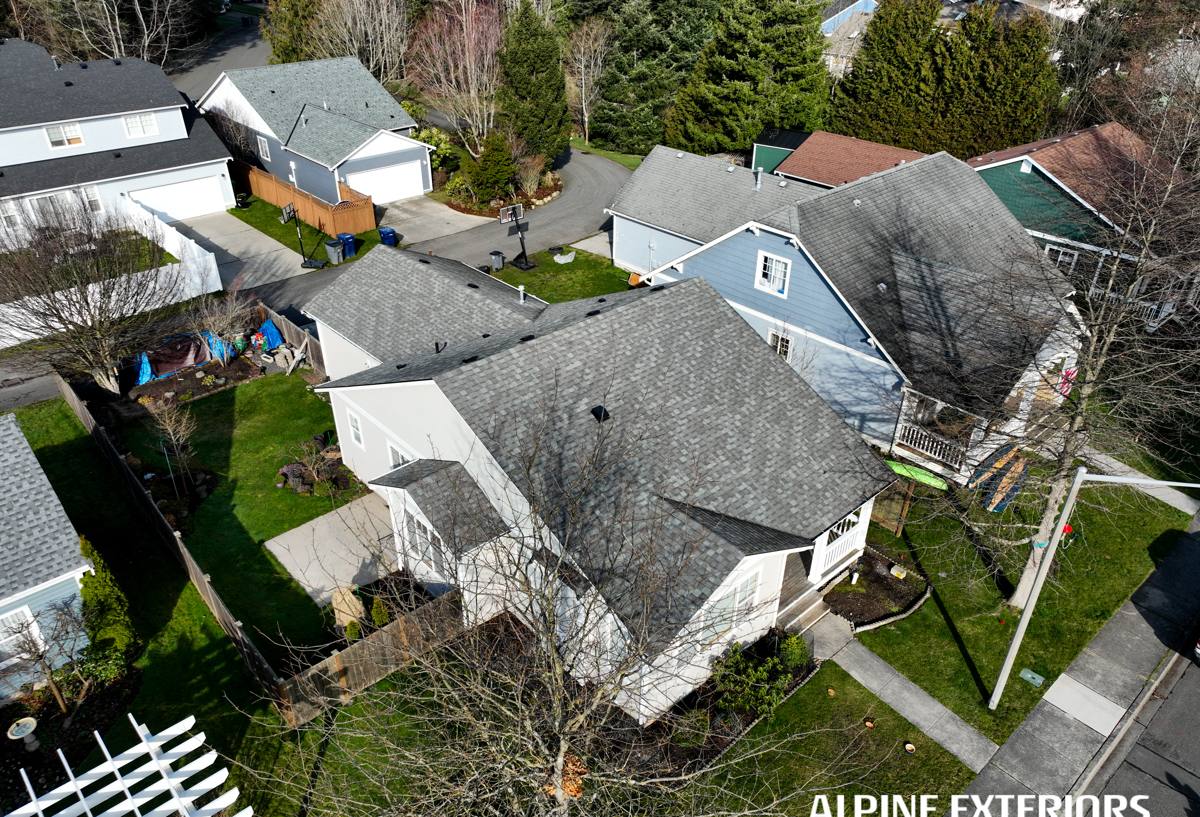
What Point Roberts' Climate Actually Does to Siding
Salt Air
Airborne salt is corrosive to fasteners and finishes, and it accelerates the breakdown of anything that isn't rated for coastal exposure. On a board and batten installation, the battens and their fastener lines are the most exposed part of the assembly — every batten seam is a potential entry point if the wrong fastener or the wrong caulk is used. Salt exposure doesn't just affect metal; it also degrades cheaper paint films faster than inland exposure would, which is part of why factory-applied, baked-on finishes hold up so much better here than field-painted siding.
Driving Rain
Wind-driven rain doesn't just fall on a wall — it pushes water sideways and upward, working its way behind trim and into seams that would stay dry in a calmer climate. Board and batten has more vertical seams per square foot than lap siding, which means more places for wind-driven rain to test the installation. Correct flashing and a properly detailed water-resistive barrier behind the siding matter more here than almost anywhere else in Whatcom County.
Long Moss Season
Western Washington's wet months stretch long, and shaded, north-facing walls in particular stay damp for extended stretches. Moss and algae don't just look bad — they hold moisture against the siding surface and, on wood-based products, can contribute to rot over time. Fiber cement doesn't feed mold and mildew the way wood-based siding does, and Hardie's factory finish resists the buildup that turns siding green within a couple of seasons.
Why Board and Batten Specifically Needs to Be Done Right Here
Board and batten is a two-layer siding system — a base layer of panels or boards, with narrow battens installed over the seams. That extra layer of battens means extra seams, extra fastener penetrations, and extra opportunities for a rushed installation to leave gaps that salt-laden, wind-driven rain will eventually find. On a calm inland site, a small installation error might go unnoticed for years. On a Point Roberts exterior wall facing open water, the same error tends to show up much sooner — as a stain, a soft spot, or a paint failure at the seam line.
None of this means board and batten is a bad choice for this area. It means the installation details that get glossed over on an easier job are the details that decide whether this siding looks good in year fifteen or needs rework in year five.
What Correct Installation Involves
Water-Resistive Barrier and Flashing First
Before a single board goes up, the wall needs a continuous water-resistive barrier with properly lapped and sealed seams, plus flashing at every window, door, and horizontal transition. This layer is what actually keeps water out of the wall assembly — the siding itself is the second line of defense, not the first.
Fastener Selection
In a salt-air environment, fastener choice isn't a minor spec — it's the difference between a batten line that holds for decades and one that starts bleeding rust streaks within a few years. Corrosion-resistant fasteners rated for coastal or high-moisture exposure are non-negotiable on this kind of installation.
Batten Spacing and Fastening
James Hardie publishes specific fastening patterns and batten spacing requirements for their board and batten systems, and following them isn't optional if the manufacturer's warranty is going to mean anything. Battens need to land on framing or blocking, with fasteners set at the correct spacing and depth — overdriven or underdriven fasteners are one of the most common causes of early siding failure.
Caulking and Sealant Joints
Every batten-to-trim and batten-to-corner joint needs a sealant rated for exterior, coastal-adjacent use, applied to manufacturer spec. Cheap or improperly applied caulk is often the first thing to fail in a driving-rain environment, and once it fails, water gets behind the siding long before any visible damage shows up.
Factory Finish, Not Field Paint
We install Hardie's ColorPlus factory-finished boards and battens wherever possible. A factory-baked finish is more consistent and more resistant to fading and moisture than a field-applied coat, which matters in a spot that gets this much sun-and-salt-and-rain rotation over a year.
Board and Batten vs. Other Siding Profiles for This Site
| Factor | Board & Batten (Hardie) | Lap Siding (Hardie) | Wood-Based Board & Batten |
|---|---|---|---|
| Seams exposed to wind-driven rain | More seams, requires precise flashing/caulking | Fewer vertical seams, more horizontal laps | Same seam count as Hardie version, less moisture-resistant material |
| Moss/mildew resistance | High — non-organic material, factory finish | High — same material system | Lower — wood is an organic substrate |
| Salt air durability | Strong with correct fasteners and finish | Strong with correct fasteners and finish | Weaker — wood and standard fasteners degrade faster |
| Maintenance over 10 years | Periodic wash, repaint only if not ColorPlus | Periodic wash, repaint only if not ColorPlus | Regular refinishing, sealant renewal, rot inspection |
| Look on coastal/farmhouse-style homes | Strong vertical lines, modern-coastal fit | Traditional, classic | Same look as Hardie version, shorter lifespan |
Why We Only Install James Hardie for This Application
We've made board and batten with James Hardie fiber cement our standard, full stop — not vinyl, not wood, not engineered wood products. In a salt-air, high-moisture environment like Point Roberts, that decision comes down to a few specific things: fiber cement doesn't rot, doesn't feed mold, and holds a factory finish far longer than field-applied paint on wood-based alternatives. Hardie's HZ5 product line is specifically engineered for climates with extended moisture exposure, which describes this part of Whatcom County well. The transferable warranty backing the material also only holds up if the installation follows Hardie's own specifications — another reason installation quality and product choice have to go hand in hand.
This isn't a claim that other materials can't be installed correctly by someone — it's that we've chosen to specialize in one system, learn its details thoroughly for this exact climate, and stand behind that work rather than spreading across multiple product lines with different failure modes.
Our Process for a Point Roberts Board & Batten Project
- On-site assessment of wall exposure — which elevations take the most wind-driven rain and direct salt exposure, and which stay shaded and moss-prone.
- Inspection of existing sheathing and water-resistive barrier condition before any new siding goes up.
- Detailed flashing plan for windows, doors, and horizontal transitions specific to the home's exposure.
- Installation following James Hardie's published fastening and spacing specs for board and batten, using corrosion-resistant fasteners.
- Sealant application at all batten and trim joints, rated for coastal exterior use.
- Final walkthrough covering care and what to watch for in year one.
What to Check Before Hiring Anyone for This Job
- Do they have documented experience installing siding specifically in exposed, salt-air coastal conditions — not just general residential siding?
- Will they specify corrosion-resistant fasteners in writing, not just "standard" fasteners?
- Do they inspect and address the water-resistive barrier before installing new siding, rather than covering over an unknown condition?
- Are they installing to the manufacturer's published fastening and spacing specifications, so the product warranty stays valid?
- Can they explain their flashing and caulking approach at seams and transitions in specific terms, not vague reassurances?
Local Knowledge Matters More on This Peninsula
Point Roberts' geography is unusual even within Whatcom County — it's more exposed to open water than most of the surrounding mainland, and its access situation means a contractor unfamiliar with the area may not plan a project efficiently. A crew that already works this part of the county understands which elevations of a typical home take the worst of the weather, plans material and scheduling around that, and isn't guessing at conditions it's never encountered before. That familiarity shows up in the small decisions — fastener choice, flashing details, sealant selection — that determine whether board and batten siding holds up here for decades or needs attention within a few years.
If you're weighing board and batten siding for a Point Roberts home, we're happy to walk the property, look at each elevation's exposure, and put together a straightforward, no-pressure estimate — just fill out the form below to get started.