 Ferndale Siding
 Roofing in a Salt Air Neighborhood
Sandy Point sits close enough to the water that homes here take a different kind of beating than roofs a few miles inland in Ferndale. Salt-laden air corrodes exposed metal faster, driving rain off the Strait finds every weak seam and nail pop, and the shade from the trees combined with our long wet stretch of the year keeps moss and moisture sitting on shingles far longer than it should. A roof that would hold up fine in a drier, more sheltered part of Whatcom County can wear out early out here if it wasn't built with those conditions in mind.
We work on homes in Sandy Point regularly, and the patterns repeat: fasteners and flashing that corrode before the shingles themselves are worn out, moss lines building up on the north-facing slopes, and soffit or fascia damage from water that never quite dries out between storms. None of that means Sandy Point is a bad place to own a roof. It means the roof and the details around it — flashing, fasteners, ventilation, underlayment — need to be chosen and installed for this specific environment, not just whatever's standard everywhere else.
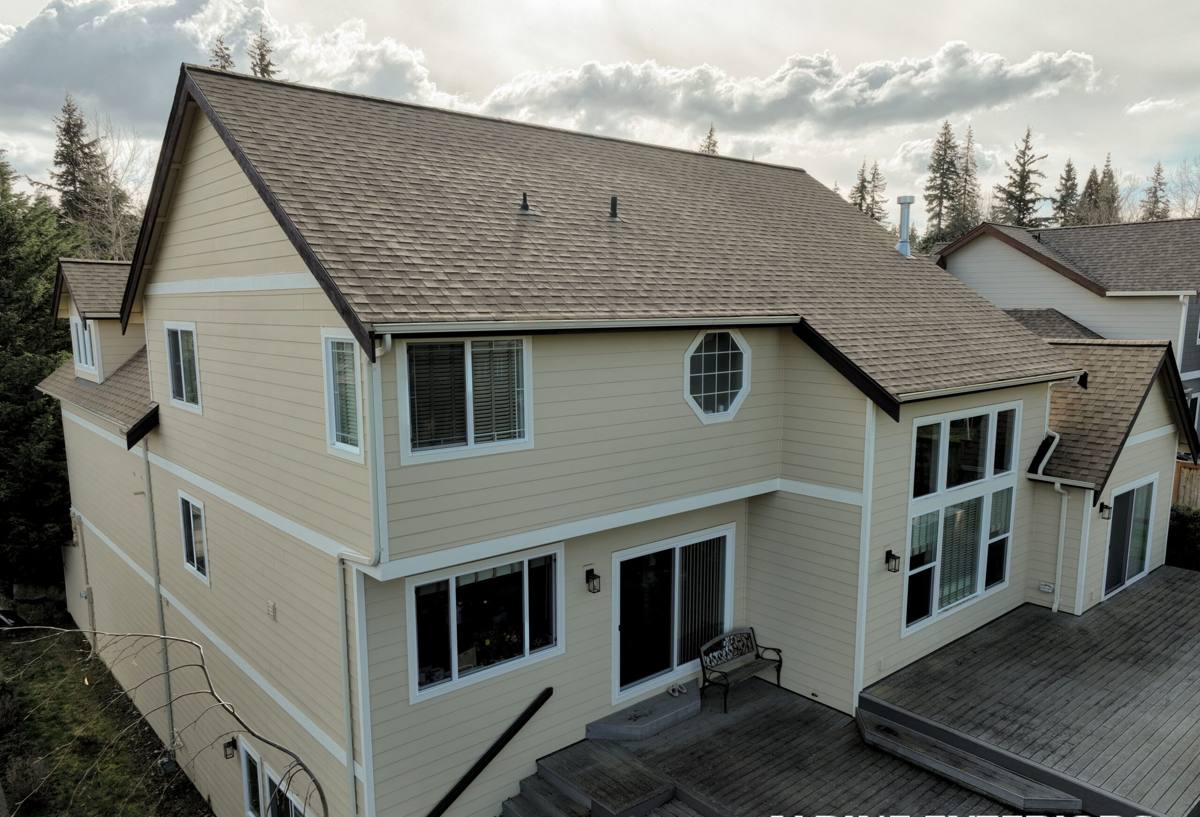
What Salt Air and Driving Rain Actually Do to a Roof
Corrosion of Metal Components
Standard electro-galvanized nails and exposed steel flashing corrode noticeably faster within a mile or two of saltwater. Once a fastener starts rusting, it loses grip strength and can back out or streak the roof with rust stains. This is one of the most common early-failure points we find on roofs near the water that were built with inland-grade materials.
Wind-Driven Rain Intrusion
Rain that comes in sideways off open water behaves differently than rain falling straight down. It gets pushed up under shingle laps, around vent boots, and into any gap in flashing that would otherwise never see water. Roofs in more sheltered spots can sometimes get away with looser detailing at valleys and penetrations. Roofs exposed to driving rain off Sandy Point generally can't.
Extended Moss and Moisture Season
Whatcom County's wet season runs long, and shaded or north-facing roof sections in Sandy Point often stay damp for weeks at a time. Moss doesn't just sit on the surface — its roots work into the shingle mat, lift tabs, and hold water against the roof deck. Left alone through a few wet seasons, moss growth shortens the life of an otherwise sound roof.
Signs a Sandy Point Roof Needs Replacing, Not Patching
- Granules collecting in gutters or downspouts in noticeable amounts, not just a light dusting
- Shingles that are curling, cupping, or have gone brittle and crack when lifted
- Moss established across multiple slopes, not just a spot or two you can brush off
- Rust streaking below flashing, vent boots, or exposed nail heads
- Soft spots, sagging, or visible daylight in the attic where there shouldn't be any
- Repeated leaks around the same penetration or valley despite past patch repairs
- A roof at or past its expected service life for its material, especially if it's never been re-flashed
A roof with one or two of these can often still be repaired. A roof with several of them, especially widespread moss and multiple leak points, is usually past the point where patching makes financial sense — the cost of chasing individual failures starts to rival the cost of doing it right once.
What a Correct Roof Replacement Involves Out Here
Tear-Off and Deck Inspection
We remove the old roofing down to the deck rather than layering over it. That's the only way to actually see what's underneath — soft or delaminated sheathing, rot around penetrations, or ventilation problems that have been hidden for years. Any damaged decking gets replaced before new roofing goes down; installing new shingles over a compromised deck just resets the clock on the same failure.
Underlayment Built for Wet Climates
We use a synthetic or self-adhered underlayment appropriate for a marine, high-moisture climate rather than the bare minimum. In valleys and along eaves, that means ice-and-water shield style membrane in the areas most exposed to driving rain and standing moisture, not just where code technically requires it.
Corrosion-Resistant Fasteners and Flashing
Given Sandy Point's proximity to saltwater, we lean toward stainless steel or other corrosion-resistant fasteners and flashing rather than standard galvanized components. It costs a little more up front and holds up considerably longer in an environment that eats regular hardware. Flashing at chimneys, walls, and valleys gets formed and lapped correctly rather than relying on caulk or sealant to do the job flashing should be doing.
Ventilation That Matches the Climate
Balanced intake and exhaust ventilation matters everywhere, but it matters more where humidity and moss pressure are already working against the roof. Proper ventilation helps the deck dry out between wet spells and reduces the conditions moss and mold need to take hold in the first place.
Material Selection for Salt Exposure
We'll walk through the honest trade-offs of asphalt composition shingles, metal roofing, and other options for a home this close to the water — how each handles salt exposure, moss resistance, wind-driven rain, and long-term maintenance. There's no single right answer for every house; it depends on your roof's exposure, slope, and how much upkeep you want to do down the road.
Comparing Roofing Options for a Sandy Point Home
| Factor | Asphalt Composition Shingle | Metal Roofing |
|---|---|---|
| Upfront Cost | Lower | Higher |
| Salt Air Durability | Good with proper flashing and fasteners | Very good with coated, marine-rated panels |
| Moss Resistance | Moderate; benefits from algae-resistant granules and periodic cleaning | High; harder surface discourages moss establishment |
| Maintenance | Periodic moss/debris removal recommended | Lower ongoing maintenance |
| Typical Lifespan | 20-30 years depending on product and exposure | 40-plus years with proper installation |
| Repair Complexity | Straightforward, widely available materials | Requires metal-specific skill and matching panels |
Neither option is "wrong" for Sandy Point — plenty of well-installed asphalt roofs perform well here for decades. The table is a starting point for the conversation, not a verdict; your roof's slope, sun and shade exposure, and your budget all factor into what actually makes sense for your house.
Our Process for Sandy Point Roof Replacement Projects
1. On-Site Assessment
We inspect the existing roof, attic ventilation, and any problem areas you've noticed, and take note of the home's specific exposure to wind and salt air.
2. Written Estimate and Material Walkthrough
You get a clear, itemized estimate and an honest conversation about material options for your situation — no pressure toward the most expensive option if it's not what your house needs.
3. Scheduling Around Weather
Roof replacement needs a dry work window. We plan around Whatcom County's weather patterns and communicate proactively if conditions push a start date.
4. Tear-Off, Deck Repair, and Installation
Full tear-off, deck inspection and repair as needed, correct underlayment and flashing, and installation to manufacturer specifications so warranties stay valid.
5. Cleanup and Final Walkthrough
We clear debris and nails from the property and walk the finished roof with you before calling the job done.
Why Local Experience in Sandy Point Matters
A crew that only occasionally works this close to the water can miss the details that matter most here — under-specifying fasteners, skipping the extra underlayment in exposed valleys, or not accounting for how long moss has to establish on shaded slopes. We work throughout Ferndale and the surrounding Whatcom County waterfront communities, and Sandy Point's combination of salt exposure, driving rain, and heavy shade is a condition we plan for from the first estimate, not something we discover partway through the job.
That also means knowing which corners genuinely can't be cut on a home like yours. A roof that looks finished from the driveway but has undersized flashing or standard-grade fasteners in a salt air environment will show its problems within a few years, usually in the form of leaks or premature corrosion that a homeowner has no way of seeing from the ground.
Cost Factors for a Sandy Point Roof Replacement
- Roof size and complexity — more valleys, dormers, and penetrations mean more labor and flashing detail
- Deck condition — hidden rot or soft sheathing found during tear-off adds material and labor
- Material choice — asphalt versus metal versus upgraded underlayment packages
- Fastener and flashing grade — corrosion-resistant hardware costs more but lasts longer in this environment
- Ventilation upgrades — adding or correcting intake/exhaust balance if the current system is inadequate
- Access and site conditions — steep slopes, tree cover, or limited staging area on the lot
We don't quote flat per-square prices without seeing the roof first, because the factors above genuinely change the number. What we can promise is a written estimate that breaks down what you're paying for and why, before any work starts.
Get a Straight Answer About Your Roof
If your Sandy Point home is showing moss buildup, granule loss, or recurring leaks, it's worth getting an honest look before another wet season adds to the damage. Reach out for a free, no-pressure estimate using the form below — we'll assess the roof, explain what we find, and give you options that actually fit your house.