 Ferndale Siding
 Siding Replacement Built for Sandy Point's Coastal Exposure
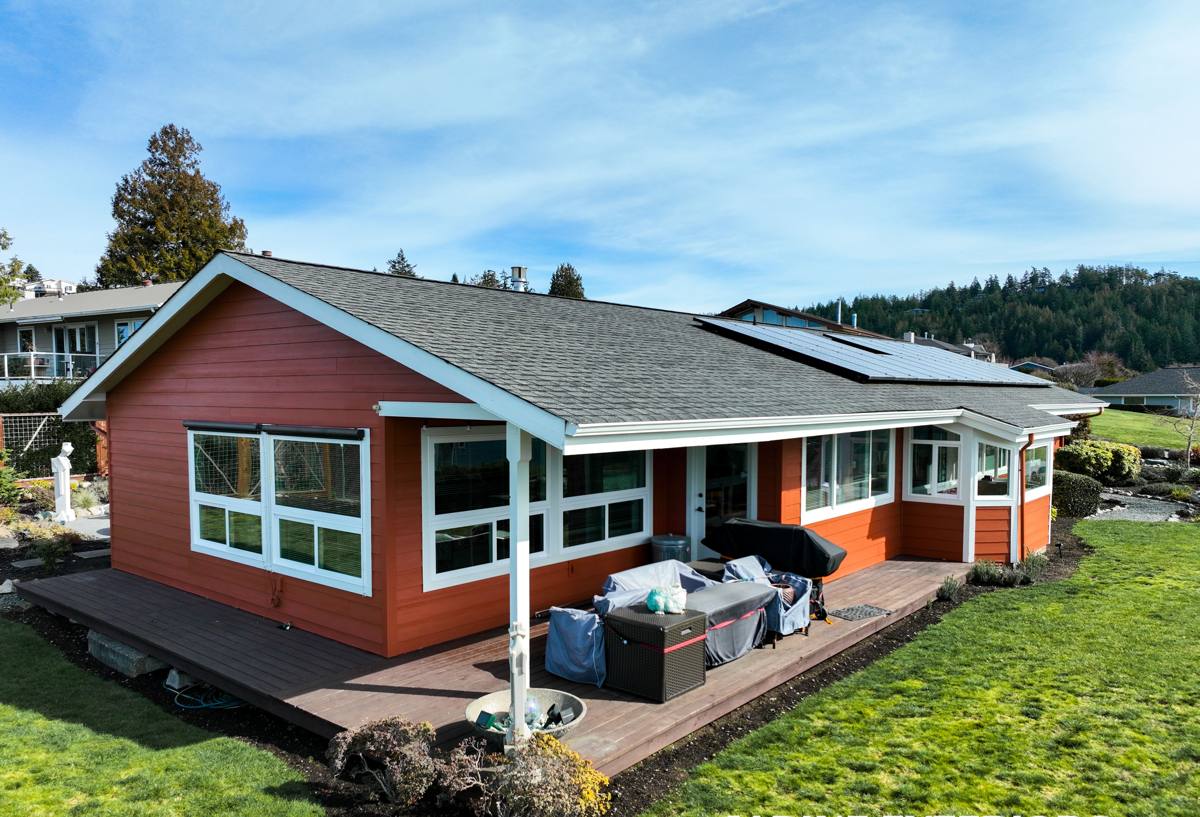
Sandy Point sits right on the water in Whatcom County, close enough to the Strait of Georgia that homes here take a different kind of beating than houses a few miles inland in Ferndale or Bellingham. Salt-laden air, wind-driven rain coming straight off the water, and a moss season that can run most of the year all work on exterior siding at a faster pace than the average Pacific Northwest home ever sees. If your siding is cracking, bubbling, staining, or just looking tired, replacing it correctly — with a material and installation method suited to this specific exposure — is worth doing right the first time.
This page covers what siding replacement actually involves for a Sandy Point property, what local conditions do to different siding materials over time, and why we install only James Hardie fiber cement on every home we work on, including this one.
What Salt Air, Driving Rain, and Moss Actually Do to Siding
Salt Air
Airborne salt from waterfront exposure settles on exterior surfaces and accelerates corrosion of fasteners, trim metal, and any siding component that isn't built to resist it. Over years, that corrosion shows up as rust streaking, loosened panels, and premature failure of caulking and sealant joints — problems that show up faster on a waterfront lot than they would a mile or two inland.
Driving Rain
Wind off the water doesn't just wet a wall — it drives rain sideways and forces water into every seam, lap joint, and penetration that isn't properly flashed and sealed. Siding that relies on face-sealed joints or tight-tolerance lap fits struggles here. Water finds the gaps, and once it's behind the siding, the sheathing and framing underneath are what actually pays the price.
Moss and Sustained Moisture
Whatcom County's long wet season keeps north- and shade-facing walls damp for extended stretches, and moss takes hold anywhere moisture sits. Moss holds water against the siding surface longer than open air would, which is exactly the wrong condition for materials that swell, delaminate, or rot when kept consistently wet.
Signs a Sandy Point Home Needs Siding Replacement, Not Just Repair
- Panels that are soft, spongy, or crumbling at the bottom edge — a sign of moisture already inside the wall assembly
- Persistent moss or algae staining that returns within a season of cleaning
- Paint that's failing broadly rather than in isolated spots, especially peeling at seams and butt joints
- Visible warping, cupping, or separation at panel edges
- Rust streaking below fasteners or trim metal
- Rising energy bills alongside drafts near exterior walls, which can point to a compromised weather barrier behind the siding
- Siding that's simply reached the end of its rated service life, even if it still looks acceptable from the street
A few of these issues can sometimes be patched. Widespread staining, soft spots in multiple locations, or failure at the underlying weather barrier usually means the whole assembly has reached the point where replacement costs less over time than continuing to chase repairs.
What a Correct Siding Replacement Involves
Replacing siding on a coastal Whatcom County home isn't just swapping old panels for new ones. Done right, it's a full building envelope job:
- Tear-off and inspection. Old siding comes off and the sheathing underneath gets inspected for rot, soft spots, or existing moisture damage before anything new goes up.
- Sheathing repair. Any compromised sheathing is replaced — covering over damaged wood with new siding just traps the problem.
- Weather-resistant barrier. A new house wrap or weather barrier is installed, lapped and taped correctly so water sheds outward instead of finding its way behind the wall.
- Flashing at every penetration. Windows, doors, vents, and any wall penetration get properly flashed — this is the detail that matters most in a driving-rain environment, and it's the detail most often shortcut on a rushed job.
- Correct fastening and clearances. Manufacturer-specified fastener patterns, spacing, and ground clearance keep the new siding performing the way it's designed to.
- Trim, caulking, and finish work. Final trim and sealant are installed at joints and transitions to close out the water management system.
Skip any one of these steps and the new siding may look right for a season or two while the same underlying moisture problems continue.
Why We Install Only James Hardie Fiber Cement
We install one siding system: James Hardie fiber cement. Not vinyl, not LP SmartSide, not primed spruce or cedar, not other fiber cement brands. That's a deliberate standard, not a lack of options.
Fiber cement is non-combustible and dimensionally stable, meaning it doesn't expand and contract with moisture and temperature the way wood-based or engineered-wood products can — a real advantage in a climate that cycles between soaking wet winters and dry summers. James Hardie's HZ product lines are engineered specifically around regional climate zones, and Hardie's ColorPlus factory-applied finish is baked on under controlled conditions, which holds up better against UV and salt exposure than field-applied paint. James Hardie also backs its products with a strong, transferable warranty when the installation follows their specifications — which is exactly why correct installation, not just material choice, is the other half of getting this right.
Vinyl siding can crack and become brittle over time and its seams rely on face-sealing rather than true water management, which is a harder combination on a wind-driven-rain site. LP SmartSide and other engineered wood products perform well in many settings but remain wood-based, meaning long-term moisture exposure is the one condition they're most sensitive to — not ideal for a property that sits in a persistently damp, salt-air microclimate. Primed spruce and untreated cedar require more ongoing maintenance to keep ahead of moisture and moss than most homeowners want to sign up for on a waterfront lot. None of these are bad products in the right application. We simply decided, after years of doing this work across Whatcom County, that fiber cement is the material that holds up best where homes face direct exposure to the elements — and we'd rather stand behind one system we trust completely than offer several and hedge.
How Common Siding Materials Hold Up in a Salt Air, Driving Rain Climate
| Material | Moisture Behavior | Maintenance Demand | Typical Concern Near the Water |
|---|---|---|---|
| James Hardie Fiber Cement | Dimensionally stable, doesn't swell or rot | Low — factory finish resists fading and chalking | Requires correct flashing and fastening to perform to spec |
| Vinyl | Doesn't absorb water, but seams rely on face-sealing | Low, but can become brittle over time | Wind-driven rain can find its way behind poorly lapped seams |
| LP SmartSide / Engineered Wood | Wood-based; sensitive to sustained moisture | Moderate — finish needs upkeep | Long-term damp exposure is its weak point |
| Primed Spruce / Cedar | Absorbs moisture, prone to swelling | High — regular repainting and moss treatment | Moss and sustained dampness accelerate wear |
Our Process for a Sandy Point Siding Replacement
- On-site assessment. We look at the current siding, the wall assembly underneath where accessible, and the specific exposure your lot has to wind and water.
- Straightforward estimate. You get a clear scope and cost breakdown before any work starts — no vague allowances.
- Tear-off and envelope inspection. We find and address any hidden moisture damage before it gets covered up again.
- Installation to Hardie's specifications. Correct fastening, clearances, and flashing at every penetration — the details that determine whether the warranty actually applies.
- Final walkthrough. We go over the finished work with you before we consider the job done.
Why Hiring a Crew That Already Works Sandy Point Matters
Siding installation isn't one-size-fits-all across Whatcom County. A crew that mainly works drier, more sheltered inland lots may not adjust their flashing details or fastener spacing for a property that takes wind-driven rain straight off the water. A crew that's already worked waterfront and near-waterfront homes in and around Ferndale knows to treat every penetration and joint as a place water will actively try to get through, not just a place it might eventually seep in.
That local experience also means fewer surprises during tear-off. We generally know what condition to expect from sheathing and framing on a coastal property of a given age, which makes for a more accurate estimate up front and fewer change orders once the old siding comes off.
What to Ask Before Hiring a Siding Contractor for a Waterfront or Near-Waterfront Home
- Do you have experience with homes specifically exposed to salt air and wind-driven rain, not just general siding work?
- What weather-resistant barrier and flashing details do you use at windows, doors, and penetrations?
- Will you inspect and repair sheathing before installing new siding, or just cover what's there?
- What siding material do you install, and why — can you explain the trade-offs, not just recite a sales pitch?
- Is your installation certified or specified to the manufacturer's requirements so the warranty actually holds?
- Can you walk me through your process from tear-off to final trim before I sign anything?
Ready When You Are
If your siding is showing wear from Sandy Point's salt air, driving rain, or moss, we're happy to take a look and give you a straightforward assessment — no pressure, no obligation. Fill out the form below for a free estimate on your siding replacement.