 Ferndale Siding
 Why Semiahmoo Roofs Take a Different Kind of Beating
Semiahmoo sits out on the water, which means the same wind and rain events that pass through the rest of Whatcom County hit harder and longer here. Roofs on this stretch of coastline deal with three things at once: salt-laden air pushed in off the water, wind-driven rain that gets forced up under shingle edges and flashing instead of just running off, and a moss season that in Western Washington can run nine or ten months out of the year. Any one of those is manageable on its own. Together, they shorten the life of a roof that wasn't built or repaired with all three in mind.
When we get called out to Semiahmoo after a storm, we're rarely looking at a single obvious problem. It's usually a combination — a little wind lift here, a little moss-driven rot there, some corrosion on fasteners that's been building for years — and the storm just tipped it over into an active leak. A repair that only addresses the visible damage and ignores the conditions that caused it tends to fail again within a season or two.
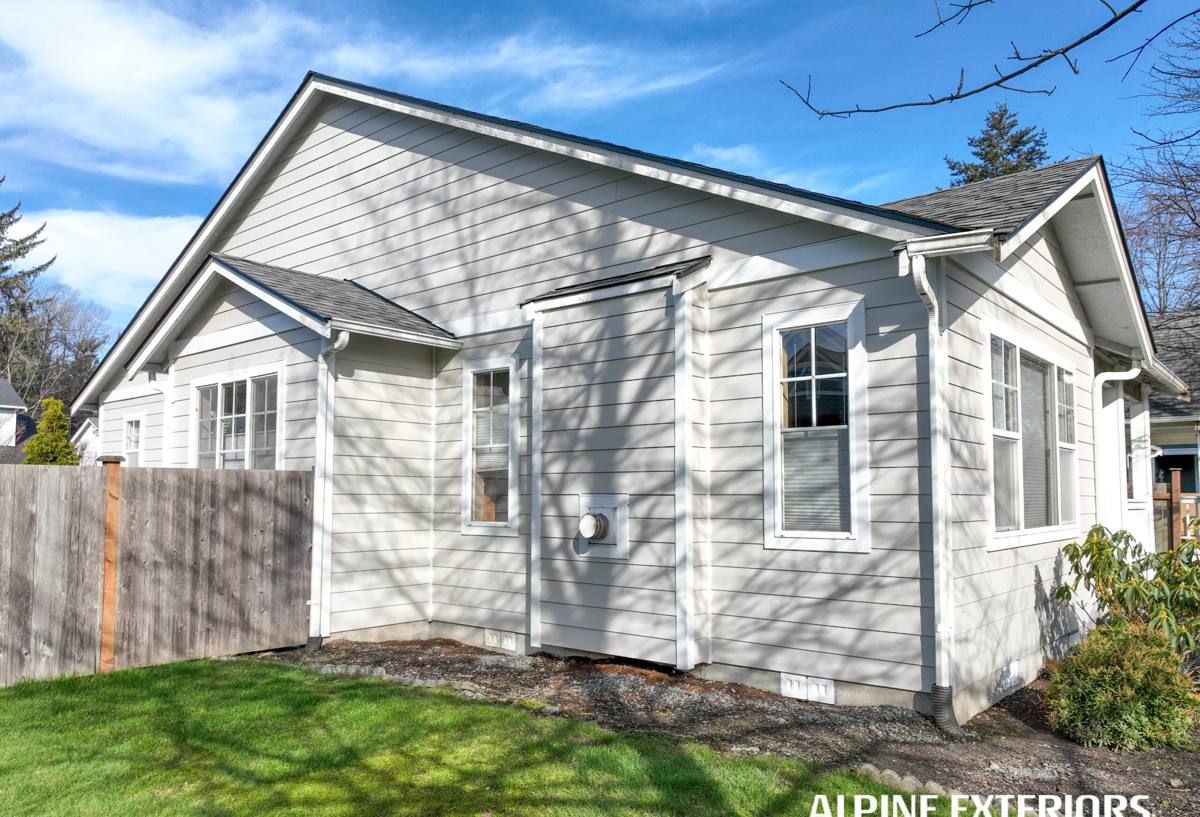
What Storm Damage Actually Looks Like on a Whatcom County Roof
Homeowners often expect storm damage to be dramatic — missing shingles scattered across the yard, a tree branch through the decking. Sometimes it is. More often, especially with the wind and rain patterns typical here, the damage is quieter and easier to miss:
- Shingles that lifted and re-sealed slightly out of place, breaking the wind seal without visibly moving
- Flashing around chimneys, vents, and skylights pushed loose by wind pressure, creating a gap that only leaks during driving rain
- Granule loss from wind abrasion, which shows up as bald patches and accelerates UV and moisture damage underneath
- Fastener backing-out from repeated wind flex, which loosens shingles without removing them
- Debris impact — branches, cones, and grit — that bruises or punctures shingles without an obvious hole
- Gutter and edge damage that redirects water back under the roofline instead of away from the house
Because a lot of this damage doesn't announce itself, the honest answer to "do I need a roof inspection after a storm" is almost always yes, even if nothing looks wrong from the ground.
Where Salt Air Changes the Picture
Metal components — flashing, fasteners, vent caps, gutter hardware — corrode faster this close to salt water than they would further inland in the county. A storm that loosens a fastener that's already partially corroded fails faster than the same event would on a roof set back from the water. We inspect fastener and flashing condition specifically with that in mind on every Semiahmoo call, not just on roofs that look old.
Moss Season and Why It Matters After a Storm
Moss doesn't cause storm damage directly, but it sets the roof up to take more of it. Moss holds moisture against the shingle surface long after rain has stopped, which softens shingles and speeds up granule loss. It also grows into the gaps between shingle tabs, which physically lifts them — meaning wind has more edge to grab onto during the next storm. A roof with heavy moss going into a windstorm is simply more vulnerable than a clean one, and it's common for us to find moss-softened decking underneath what looked like a straightforward wind-lifted shingle.
This is why a proper storm damage repair on a Semiahmoo home usually includes moss and organic growth removal in the repair area, not just patching the storm damage and leaving moss in place to cause the next round of problems.
What a Correct Storm Damage Repair Actually Involves
A rushed storm repair replaces what's obviously broken and moves on. A correct one treats the storm as a diagnostic event — it tells you where the roof was already weak — and repairs accordingly.
- Full-roof inspection, not just the reported problem area, since wind and rain rarely damage only one spot
- Decking check underneath affected shingles for soft spots, rot, or moisture staining before anything gets covered back up
- Flashing and fastener condition at chimneys, vents, valleys, and roof edges, with attention to corrosion given the coastal exposure
- Matching materials — shingle color, profile, and weight — so the repair doesn't stand out or create a mismatched wear pattern down the road
- Proper sealing and fastening rated for wind exposure, since a repair done to inland wind standards can underperform out here
- Moss and debris clearing in and around the repair area so the fix isn't undermined within a year
Skipping the decking check is the most common shortcut we see from repairs done elsewhere. If the plywood underneath is soft, a new shingle over it is a short-term cosmetic fix, not a repair.
Our Process for Semiahmoo Storm Calls
1. Fast, Honest Assessment
We walk the roof (or use a camera where the pitch or condition makes that unsafe) and document what we find — damage caused by the storm, and any pre-existing wear that contributed to it. You get a straight answer about what's urgent versus what can be scheduled.
2. Temporary Protection When Needed
If there's an active leak or exposed decking, our first priority is stopping water intrusion — tarping or sealing the area so the interior of the home isn't at further risk while a full repair is scheduled.
3. Scoped Repair, Not a Guess
We tell you specifically what's being replaced, what's being resealed, and why — including whether the moss and organic growth nearby needs to be cleared as part of the job. No vague line items.
4. Repair With the Climate in Mind
Materials and fastening methods are chosen for coastal wind and moisture exposure, not just whatever's fastest. That's the difference between a repair that holds through the next storm season and one that reopens the same leak in a year.
Repair or Replace: How We Help You Decide
Not every storm-damaged roof needs full replacement, and not every roof is worth repairing indefinitely. The honest answer depends on a few factors we walk through with you directly:
| Factor | Favors Repair | Favors Replacement |
|---|---|---|
| Extent of damage | Isolated to one area or slope | Spread across multiple areas or slopes |
| Roof age | Under roughly two-thirds of expected lifespan | Nearing or past expected lifespan |
| Decking condition | Solid, dry decking under damaged shingles | Soft, stained, or rotted decking found |
| Moss/organic history | Light, surface-level growth | Long-term moss growth affecting multiple areas |
| Prior repairs | Roof otherwise in good condition | Multiple past patches stacking up |
We'll always tell you plainly if a repair is the right call, even when a replacement would be the bigger job for us — a repair that's done right and doesn't need revisiting is a better outcome for everyone than a replacement you didn't need yet.
Working With Insurance on Storm Claims
Many storm repairs in Whatcom County are covered in part by homeowners insurance, depending on the policy and the cause of damage. We provide clear documentation — photos, a written scope, and material specifications — that you can hand to your adjuster. We don't handle the claim for you or promise a specific outcome, since that's between you and your insurer, but we make sure the paperwork on our end doesn't slow the process down or leave gaps an adjuster will question.
Keeping a Semiahmoo Roof Ready for the Next Storm
Between storm seasons, a short list of maintenance habits does more to prevent damage than almost anything else:
- Clear moss and debris from the roof surface at least once a year, more often on shaded or north-facing slopes
- Keep gutters and downspouts clear so wind-driven rain has somewhere to go besides back under the roof edge
- Trim back tree limbs that overhang the roof, which reduces both debris impact and shade that feeds moss
- Have flashing and fasteners checked periodically for salt-air corrosion, especially on homes with direct water exposure
- Address small leaks or lifted shingles promptly rather than waiting for the next storm to make them worse
Why Local Storm Experience Matters
A crew that mainly works inland roofs will still fix a shingle correctly, but they may not think to check fastener corrosion the way a crew that works this coastline regularly does automatically. Knowing which slopes on Semiahmoo homes tend to hold moss longest, how wind typically moves off the water during a storm, and which flashing details fail first out here isn't something you get from a single job — it comes from doing this work in this specific area, season after season. That familiarity is what keeps a "quick fix" from turning into a callback.
If you've had a recent storm come through and want an honest look at your roof, or you just want peace of mind before the next one hits, we're happy to come take a look. Reach out for a free, no-pressure estimate using the form below.