 Ferndale Siding
 Siding Built for Life on Lummi Island
Lummi Island sits out in Whatcom County waters, reachable only by a short ferry crossing, and that isolation shapes everything about how a home should be built and maintained out there. Homes on the island face a tougher combination of weather than most of the mainland around Ferndale and Bellingham: salt-laden air off the water, driving rain that comes in sideways during fall and winter storms, and a long, damp moss season that keeps north-facing walls and shaded lots wet for months at a time. Siding that would hold up fine in a drier inland neighborhood can fail early out here if it isn't matched to the exposure and installed correctly the first time.
We install siding on Lummi Island regularly, and this page is about that one job — siding installation for island homes — not a general overview of what we do everywhere else in Whatcom County.
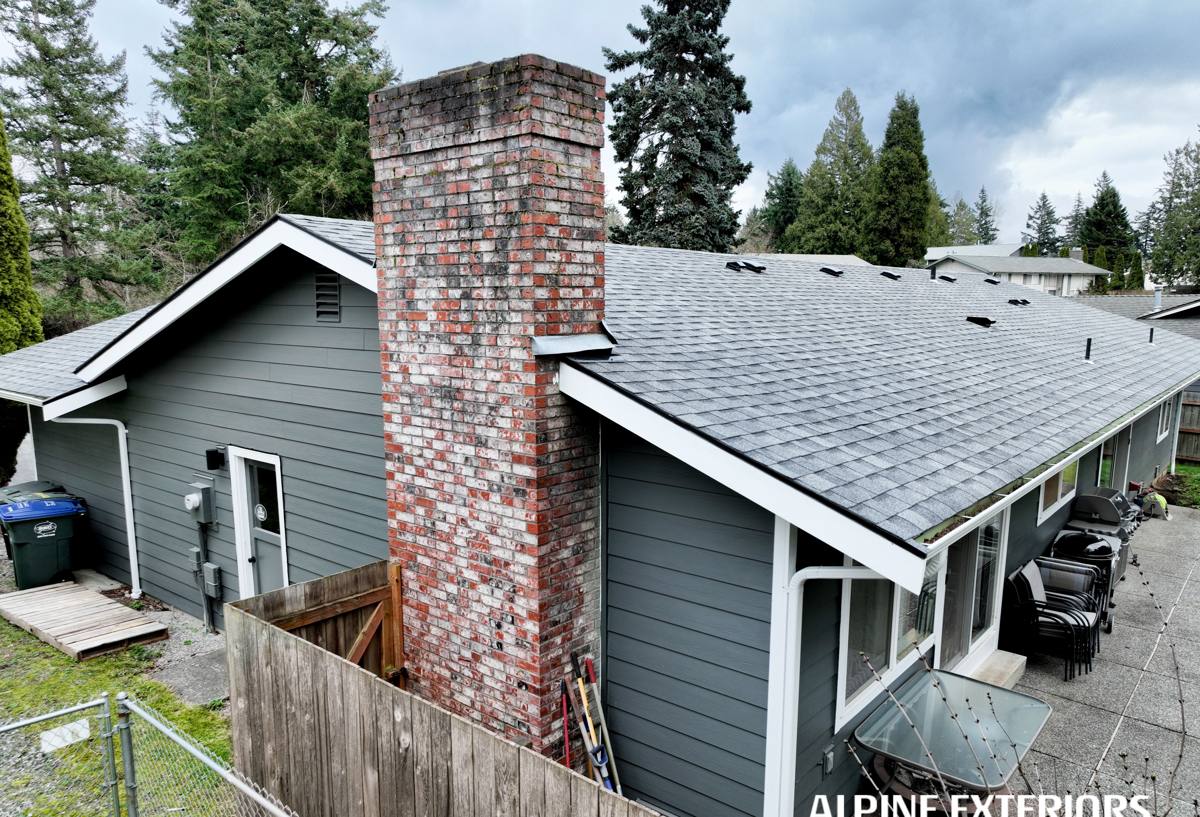
Why Lummi Island's Climate Is Harder on Siding
Salt Air and Corrosion
Waterfront and near-waterfront homes on the island are exposed to salt spray carried on the wind off the Sound. Salt air accelerates corrosion of exposed metal fasteners, trim flashing, and hardware, and it can degrade the surface finish on siding materials that aren't formulated to resist it. This isn't unique to Lummi Island, but the island's exposure is more consistent than most mainland sites in the area because there's less tree cover and terrain to break the wind before it reaches a house.
Driving Rain
Storms coming off the water hit island homes with more force and more direct wind-driven rain than comparable homes set back from the shoreline. Wind-driven rain doesn't just fall on a wall, it gets pushed sideways and upward, which means it finds every gap in a poorly lapped joint, an under-flashed window, or a caulked seam that should have been flashed instead. Siding systems and installation details that work fine in calm rain can leak under driving rain if they weren't detailed for it.
Moss Season
Whatcom County's wet season runs long, and on a wooded, shaded island lot that dampness lingers even longer. Moss and algae take hold on siding that stays damp, especially on north and east walls, under eaves with poor airflow, and near tree lines. Moss isn't just cosmetic — it holds moisture against the siding surface, and on materials that aren't dimensionally stable or properly finished, that sustained moisture contact is where problems start.
What Correct Siding Installation Actually Involves
A siding job that looks right when it's finished and a siding job that's actually installed correctly are not always the same thing. The differences show up years later, usually around flashing, fastening, and clearances — the parts nobody sees once the job is done. On an island property exposed to salt air and driving rain, these details matter more than they would on a sheltered inland lot.
- Proper weather-resistive barrier installed and lapped correctly behind the siding, not just stapled up as an afterthought
- Flashing at every window, door, and roof-wall intersection, installed so water sheds outward and never behind the siding plane
- Correct fastener type, spacing, and penetration depth — under-driven or over-driven fasteners are a leading cause of early siding failure
- Minimum clearance maintained between the bottom of the siding and grade, decks, roofs, and paved surfaces, so splashback and standing moisture can't wick into the material
- Caulking used only where it belongs — as a supplement to flashing, never as a substitute for it
- Panel and joint layout planned to shed water downward at every lap, especially on walls that take direct wind-driven rain
- Corrosion-resistant fasteners and trim hardware appropriate for salt air exposure
Skipping or rushing any one of these on a sheltered lot might not cause a visible problem for years. On Lummi Island's exposure, the same shortcuts tend to show up much sooner — as staining, soft spots, or paint failure at the joints and edges first.
Why We Install Only James Hardie Fiber Cement
We standardized on James Hardie fiber cement siding for every home we work on, including Lummi Island, and we don't install vinyl, LP SmartSide, or the other engineered wood and fiber cement competitors on the market. That's not a marketing position — it's a decision based on how these products actually perform under the kind of exposure island and coastal Whatcom County homes see.
Fiber cement is dimensionally stable and doesn't expand and contract with moisture the way wood-based products can, which matters directly for a long, damp moss season where siding stays wet for extended stretches. It's non-combustible, which is a real consideration for properties with wooded lots and limited emergency access. And James Hardie's ColorPlus factory-applied finish is baked on and warranted against fading and peeling in a way that field-applied paint systems aren't, which matters when driving rain and salt air are working against the finish year-round.
James Hardie also engineers specific product lines (HardiePlank, HardiePanel, and others) for different climate zones, including higher-moisture, higher-wind coastal zones. That climate-specific engineering, paired with a correct installation, is what gives island homes siding that's built for the exposure rather than siding that's just tolerating it.
How Common Siding Options Hold Up to Island Exposure
| Material | Salt Air / Corrosion | Moisture & Moss Resistance | Finish Durability |
|---|---|---|---|
| James Hardie fiber cement | Non-combustible, stable under salt exposure; use corrosion-resistant fasteners and trim | Dimensionally stable, doesn't rot or swell with sustained dampness | Factory-baked ColorPlus finish, warranted against fading and peeling |
| Vinyl siding | Doesn't corrode, but can become brittle and fade unevenly with UV and salt exposure over time | Doesn't absorb moisture, but poor installation traps water behind panels where it can't be seen | Color is through-body but fades with sun exposure; can't be repainted easily if it does |
| LP SmartSide / engineered wood | Wood-based core is more sensitive to sustained salt-air moisture at cut edges and joints | Requires diligent sealing at every cut edge; more vulnerable in a long moss season if maintenance lapses | Field or factory finish, but wood substrate underneath is the long-term risk factor |
| Cedar / primed wood siding | Natural material, but requires the most ongoing maintenance to resist salt and moisture damage | Most susceptible to moss, rot, and moisture absorption without regular upkeep | Needs periodic refinishing; highest long-term maintenance burden |
Every one of these materials can be installed on a coastal or island home. The question is how much ongoing maintenance the homeowner is signing up for, and how forgiving the material is if a flashing detail or fastener isn't perfect. We've made our call based on that trade-off.
Our Process for Lummi Island Jobs
Logistics Come First
Working on the island means planning around the ferry, not around a normal mainland job site. We consolidate material deliveries so we're not making unnecessary crossings, stage tools and equipment efficiently, and build the crew schedule around ferry timing rather than treating it as an afterthought. A crew that hasn't worked the island before often underestimates this, and it shows up as delays or rushed work at the end of a job to make a ferry window.
Assessment and Prep
We start by evaluating the existing siding, sheathing, and any moisture damage already present, particularly on north-facing and shaded walls where moss and trapped moisture are most likely to have caused hidden problems. Any compromised sheathing or framing gets addressed before new siding goes up — covering over an existing moisture problem just hides it for a while.
Installation
We install the weather-resistive barrier, flashing, and James Hardie siding to manufacturer specification, with fastening and clearances set for the island's wind and rain exposure specifically. Trim and fastener hardware is selected for salt-air corrosion resistance, not just whatever is standard elsewhere.
Final Walkthrough
Before we leave, we walk the exterior with the homeowner, review the work, and go over basic care so the siding performs the way it's designed to for the long run.
After Installation: Keeping Island Siding Performing
Correctly installed James Hardie siding is low-maintenance, but "low-maintenance" doesn't mean "no attention needed," especially with a moss season this long. A few habits go a long way:
- Rinse siding periodically, especially on shaded or north-facing walls, to keep moss and algae from establishing
- Keep gutters clear so overflow isn't running down the siding face during storms
- Trim back vegetation and tree limbs that keep a wall shaded and damp longer than it needs to be
- Inspect caulking and trim joints annually, since caulk is a wear item even when the underlying flashing is doing its job
- Address any paint or finish irregularities early rather than waiting, since catching an issue while it's small is always cheaper than catching it late
Why It Matters That We Already Work Lummi Island
A contractor who's never worked on the island will price in guesswork for the ferry logistics, may not plan deliveries efficiently, and won't have a feel for how the island's exposure differs from a sheltered mainland lot in the same county. We've done the crossing, staged the material, and built the schedule around ferry timing before, which means less wasted time and fewer surprises on your job. It also means the crew installing your siding already understands why the flashing and fastening details matter more out here than they would on a wooded inland lot back toward Ferndale.
If you're planning a siding project on Lummi Island, we're glad to come take a look, walk the exterior with you, and put together a straightforward, no-pressure estimate using the form below.