 Ferndale Siding
 Siding Installation for Lynden Homes
Lynden sits inland from the coast but still lives inside the same weather system that shapes every home in Whatcom County: long stretches of driving rain off the Pacific, salt-laden air pushing in from the Strait of Georgia and Bellingham Bay, and a moss season that can run from October clear through April. For homeowners in and around Lynden looking at new siding, the question isn't just what looks good — it's what will actually hold up through another twenty or thirty years of that cycle. This page walks through what a correct siding installation looks like for this specific area, what our process involves, and why the product choice matters as much as the labor.
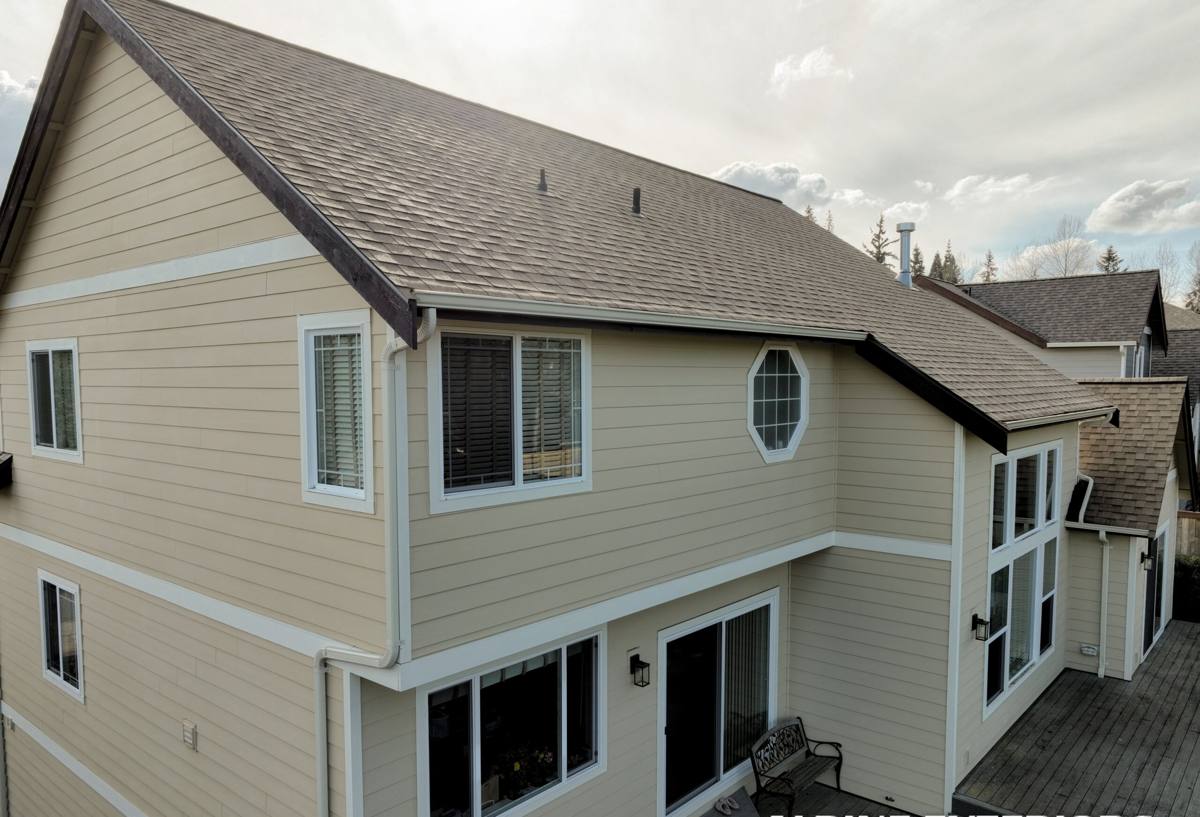
What Lynden's Climate Actually Does to Siding
It's easy to think of Lynden as simply "rainy," but the more useful way to think about it is sustained moisture exposure. Whatcom County doesn't get short, hard downpours followed by dry stretches the way some regions do — it gets weeks of low-intensity rain, fog, and dew that keep exterior surfaces damp for days at a time. That has a few specific effects on siding:
- Wood-based products absorb and hold moisture longer than they would in a drier climate, accelerating rot at seams, butt joints, and anywhere caulk has failed.
- Moss and algae get a long growing window. North-facing walls, areas under eaves with poor airflow, and shaded sides of a house near trees are especially prone to green staining and moss colonization on porous or textured surfaces.
- Salt-influenced air from the nearby marine environment accelerates corrosion on fasteners, trim flashing, and any metal components that aren't properly rated or protected.
- Freeze-thaw cycling, while less extreme here than east of the Cascades, still happens enough in winter to stress any siding material that has already absorbed water — trapped moisture that freezes expands, which is where cracking and delamination start.
None of this means siding fails quickly in Lynden. It means the margin for error is smaller. Materials, fasteners, flashing details, and installation sequencing all have to account for sustained dampness rather than assuming a quick dry-out period between weather events.
Why We Install Only James Hardie Fiber Cement
We install James Hardie fiber cement siding exclusively — not vinyl, not LP SmartSide, not Cemplank or Allura, not primed wood. That's a deliberate standard, not a sales preference, and it comes directly from what we see holding up (and what doesn't) in this climate.
The core reasons
- Non-combustible material. Fiber cement doesn't feed a fire the way wood-based products can, which matters for insurance considerations and general home safety.
- Moisture-resistant by composition. Fiber cement is engineered to resist swelling, warping, and rot in ways that wood-based composite sidings can't fully match, especially at cut edges and joints where moisture intrusion typically starts.
- Factory-applied ColorPlus finish. Rather than field-painting after installation, Hardie's ColorPlus finish is baked on at the factory under controlled conditions, giving better adhesion and color consistency than most job-site paint applications, and it's backed by its own finish warranty.
- Climate-engineered product lines. Hardie makes HZ10 (harsher, colder climates) and HZ5 (milder, wetter climates) formulations. That distinction exists precisely because a single fiber cement formula doesn't perform identically in Arizona and in the Pacific Northwest — and we install the product matched to this region.
- A strong, transferable warranty that reflects genuine confidence in long-term performance, which matters if you sell the home down the road.
To be fair to the alternatives: LP SmartSide and primed wood products can look good and cost less upfront, and vinyl is low-maintenance in dry climates. Our issue isn't that these products are junk — it's that in a climate defined by sustained moisture, we've made installation sensitivity, long-term maintenance burden, and moisture behavior our filter, and fiber cement is what consistently comes out ahead for the homes we put our name on.
What a Correct Installation Actually Involves
Siding installation is often sold as a straightforward swap — old material off, new material on. In a climate like Lynden's, the parts nobody sees are what determine whether the job lasts 10 years or 40.
Water management comes first
Before a single piece of siding goes up, the wall needs a correctly lapped weather-resistant barrier, properly integrated flashing at every window, door, and penetration, and a drainage plane that lets any incidental moisture escape rather than pool behind the cladding. This is the step that gets skipped or rushed on cut-rate jobs, and it's the step that matters most in a wet climate.
Fastening and clearances
Hardie panels and lap siding have specific nailing patterns, fastener types, and minimum clearances from grade, decks, and roof lines that are part of the manufacturer's installation instructions — not optional guidelines. Getting these wrong voids warranty coverage and creates the exact wick points where moisture gets in.
Joint and seam treatment
Butt joints, corners, and trim intersections need to be treated correctly — some sealed, some deliberately left to drain — following Hardie's specifications rather than generic caulk-everything habits. Improper sealing is one of the most common causes of trapped moisture behind fiber cement.
Ventilation and rainscreen considerations
Where wall assemblies allow for it, a rainscreen gap behind the siding gives any moisture that does get past the cladding a path to dry out, and it reduces the surface dampness that feeds moss and algae growth. This detail matters more in Whatcom County than in drier climates, given how many consecutive damp days the siding faces each year.
Our Process for a Lynden Installation
| Step | What Happens |
|---|---|
| 1. On-site assessment | We look at existing siding condition, wall assembly, moisture history, sun/shade exposure, and any trouble spots specific to your home's orientation and lot. |
| 2. Product and color selection | Choosing the correct Hardie line (HZ5 for this region), profile, and ColorPlus finish based on your home's style and exposure. |
| 3. Tear-off and inspection | Removing old siding and inspecting sheathing underneath for hidden rot or damage before anything new goes up — this step often reveals issues invisible from outside. |
| 4. Water barrier and flashing | Installing or verifying the weather-resistant barrier and flashing at every penetration before cladding begins. |
| 5. Siding installation | Installing panels or lap siding to Hardie's fastening, clearance, and joint specifications. |
| 6. Trim, caulking, and final detailing | Finishing corners, trim boards, and touch-up painting where factory finish was cut or fastened. |
| 7. Final walkthrough | Reviewing the completed job with you and covering warranty registration and basic care. |
Why Local Experience in Lynden Matters
A crew that already works in and around Ferndale and Lynden has seen how specific lots and orientations behave over multiple wet seasons — which walls tend to stay damp longest, where moss takes hold first, and how wind-driven rain behaves differently on an exposed rural property than on a sheltered in-town lot. That's not something a crew unfamiliar with Whatcom County picks up on the first job. It shows up in small decisions: where to add extra flashing attention, which side of the house needs a rainscreen detail more than another, and how to sequence work around the region's rain patterns so the wall isn't left exposed longer than necessary.
It also matters for permitting and code familiarity specific to Whatcom County jurisdictions, and for knowing which suppliers stock the right HZ5 product and ColorPlus colors without long delays — relevant when weather windows for exterior work can be tighter here than in drier parts of the state.
Signs Your Lynden Home May Need New Siding
- Visible moss or persistent green staining that returns quickly after cleaning, especially on north-facing or shaded walls.
- Soft spots, bubbling, or visible warping in existing wood-based or composite siding.
- Paint that's failing or peeling faster than expected, which often signals moisture getting underneath the surface.
- Gaps opening at seams, corners, or trim joints where caulking has separated.
- Noticeably higher heating bills, which can point to compromised siding no longer supporting the wall assembly's insulation performance.
- Visible rot at the bottom edges of siding near grade, decks, or downspouts — common trouble spots in a high-moisture climate.
Maintenance After Installation
One advantage of fiber cement in this climate is how little ongoing maintenance it demands compared to wood-based alternatives — but "low-maintenance" isn't "no-maintenance." A simple annual routine keeps a Hardie installation performing at its best through Lynden's long wet season:
- Rinse siding annually to remove pollen, dust, and early moss or algae growth before it establishes.
- Inspect caulking at trim and joints each year, since UV and moisture cycling can degrade sealant faster here than in drier climates.
- Keep gutters and downspouts clear so water is directed away from siding rather than running down the wall face.
- Trim back vegetation and tree limbs that keep any wall section shaded and damp longer than the rest of the house.
- Address any visible fastener corrosion or trim damage promptly rather than waiting for it to spread.
Cost Factors to Expect
Every home is different, but a few factors consistently move the price on a Lynden siding installation:
| Factor | Why It Matters |
|---|---|
| Home size and wall complexity | More corners, dormers, and trim detail mean more cutting, fitting, and labor time. |
| Existing wall condition | Hidden sheathing rot discovered during tear-off adds repair scope before new siding can go up. |
| Product line and profile | Lap siding, panel systems, and specialty trim carry different material costs. |
| Access and site conditions | Steep lots, limited access, or extensive scaffolding needs affect labor time. |
| Water management upgrades | Adding or improving rainscreen detailing and flashing where the existing assembly is inadequate. |
We provide a written, itemized estimate after the on-site assessment so you know exactly what you're paying for and why, rather than a vague lump-sum number.
If you're weighing a siding replacement for your Lynden home, we're happy to walk the property with you, point out anything the climate has already started working on, and put together a straightforward, no-pressure estimate — just fill out the form below to get started.