 Ferndale Siding
 Siding Installation in Marietta: Built for Where You Actually Live
Marietta sits close to the water on the edge of Ferndale, and that proximity changes what a house needs from its exterior. Homes here take on a different kind of weathering than houses ten miles inland — salt-laden air moves in off the bay, wind-driven rain hits walls at an angle instead of straight down, and shaded, damp sites hold moisture long after a storm has passed. Siding that would hold up fine in a drier part of Whatcom County can fail early here if it wasn't chosen and installed with this specific exposure in mind.
This page is about one job, done right, for this one area: installing siding on a Marietta home. Not a general overview of siding types, not a sales pitch — a straight explanation of what the climate does to a house here, what correct installation actually involves, and why the crew doing the work matters as much as the product going on the wall.
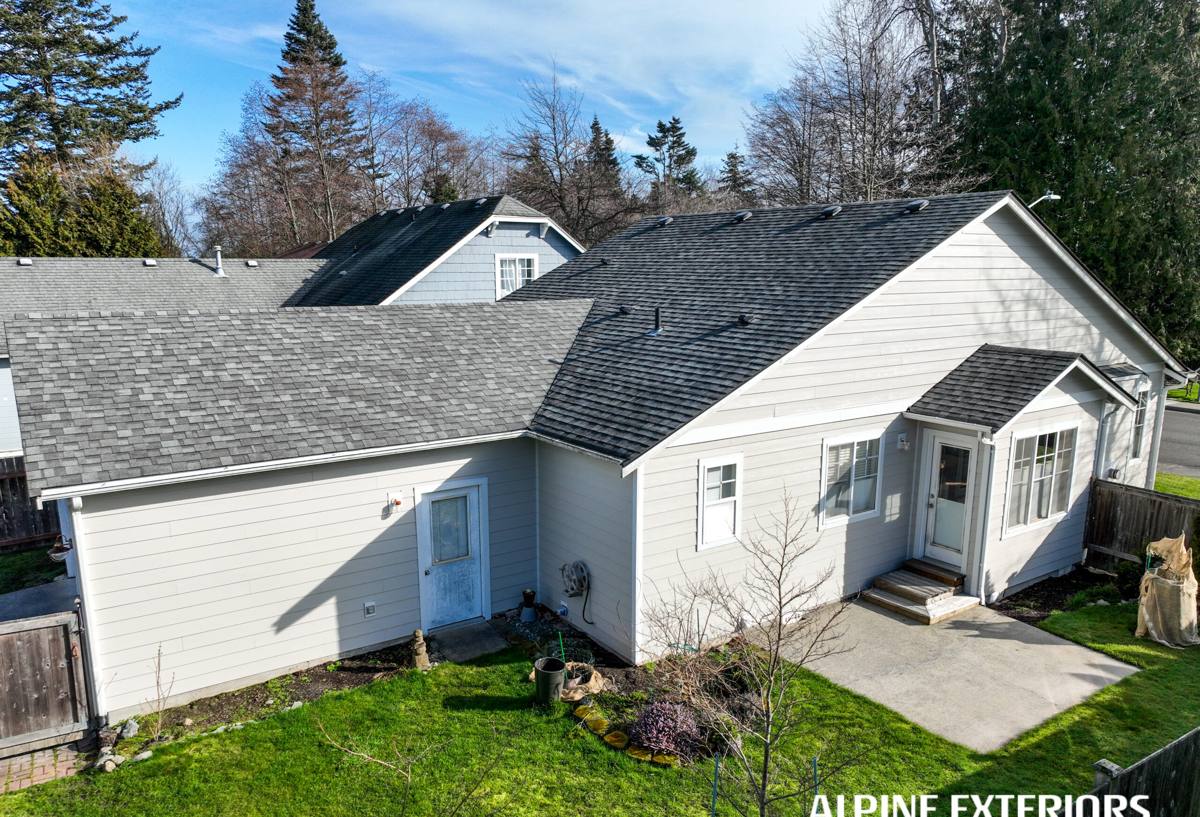
What Salt Air, Driving Rain, and Moss Actually Do to Siding
Salt air and corrosion
Airborne salt from nearby tidal water doesn't just sit on the surface of a house — it works into fastener heads, trim joints, and any place metal is exposed. Over years, that accelerates corrosion on nails, staples, and flashing that weren't rated for a marine-influenced environment. Once fasteners start failing, siding panels loosen, gaps open, and water gets a path behind the cladding.
Driving rain and wind exposure
Storms coming off the water often push rain sideways rather than straight down, which means water is testing every seam, joint, and butt edge on a wall — not just the top of a wall or an exposed roofline. Siding systems and installation details that rely on gravity alone to shed water get overwhelmed in this kind of weather. Lap overlaps, caulking choices, and flashing at windows and doors all matter more here than they would on a more sheltered lot.
Moss, algae, and prolonged dampness
Whatcom County's long wet season is well known, but Marietta's tree cover and proximity to water can extend the number of months a north-facing or shaded wall stays damp. That extended dampness is exactly what moss and algae need to take hold. Once organic growth establishes itself on a wall, it holds moisture against the siding surface even longer, which is a problem for any product that isn't fully resistant to moisture absorption.
Why We Install Only James Hardie Fiber Cement in Marietta
We don't install vinyl, LP SmartSide, Cemplank, Allura, primed spruce, or cedar. That's not a marketing angle — it's a standard we hold because of what we've seen these products do (and not do) in exactly this kind of coastal-influenced, wet, mossy environment.
- Vinyl expands and contracts with temperature swings and can warp or crack under wind-driven impact; it also doesn't hold paint if a homeowner ever wants to change color.
- LP SmartSide and other wood-strand products are engineered wood — meaning moisture is still their primary vulnerability, and a marine-humid climate with a long wet season is a tough test for any wood-based product.
- Cedar and primed spruce are real wood, full stop. They need ongoing refinishing, they're attractive to moisture and pests, and salt air accelerates the breakdown of the finish that protects them.
- Cemplank and Allura are also fiber cement, and reasonable products — but we've standardized on one manufacturer, one installation method, and one warranty structure so every job we do meets the same bar, and James Hardie is the one we trust to back that up.
James Hardie fiber cement is non-combustible, dimensionally stable across temperature and moisture swings, and finished at the factory with ColorPlus technology rather than site-applied paint — which matters directly here, since a factory-cured finish resists the fading and moisture intrusion that a field-applied coat is more prone to in a wet coastal climate.
What a Correct Siding Installation Actually Involves
Product choice is half the equation. The other half is installation, and this is where a lot of siding jobs — regardless of brand — go wrong. A correct install in an area like Marietta means:
Water management behind the siding
A weather-resistant barrier and rainscreen or properly furred-out cavity that lets any moisture that does get behind the siding drain and dry out, rather than sitting against the wall sheathing.
Flashing at every penetration
Windows, doors, hose bibs, vents, and light fixtures are all places water can find a way in. Each one needs flashing detailed correctly, not just caulked over.
Correct fastening
James Hardie specifies fastener type, placement, and spacing for a reason — in a corrosive, salt-influenced air environment, using the wrong fastener material or missing the specified nailing pattern is exactly the kind of shortcut that leads to early failure.
Proper clearances
Siding installed too close to grade, roof lines, or decks holds moisture against the bottom edge of the panel. Manufacturer-specified clearances aren't a suggestion — they're the difference between siding that sheds water and siding that wicks it up from below.
Joint and seam treatment
Butt joints, corners, and trim intersections need to be treated as water-shedding details, not just visual transitions. This is especially important on walls that take driving rain at an angle.
Our Installation Process
- On-site assessment: we look at your home's specific exposure — which walls take the worst weather, where existing moisture or moss damage shows up, and what's happening behind the current siding if it's coming off.
- Detailed proposal: product line, color, trim details, and a clear scope so you know exactly what's being done and why.
- Tear-off and inspection: removing old siding gives us a look at the sheathing and framing underneath — this is often where hidden moisture damage from a prior installation shows up.
- Water barrier and drainage plane: installed correctly before a single piece of siding goes up.
- Flashing and trim: windows, doors, and penetrations detailed first.
- Siding installation: to manufacturer fastening and clearance specifications, not shortcuts.
- Final walkthrough: so you understand what was done and what, if anything, needs simple ongoing care.
Choosing Color and Style for a Marietta Home
James Hardie's HZ product lines are engineered for specific climate zones, and this part of Washington falls into a category where moisture resistance and finish durability matter more than in a drier region. ColorPlus finishes are baked on and warranted against fading and chipping in a way that field-applied paint isn't, which is a real practical advantage on a house that's going to spend a lot of the year damp. Color choice is personal, but on homes with heavier tree cover or shaded exposure, we'll often talk through how a given color and sheen shows dirt, pollen, or the early stages of moss growth — it's a small thing that affects how much maintenance a homeowner ends up wanting to do.
What Affects the Cost of a Siding Installation
| Factor | Why It Matters in Marietta |
|---|---|
| Home size and wall complexity | More corners, dormers, and trim details mean more flashing and cutting labor |
| Existing wall condition | Hidden moisture or rot behind old siding may need repair before new siding goes on |
| Siding profile and accessories | Lap width, trim boards, and soffit/fascia work all add to material and labor |
| Exposure and orientation | Walls facing prevailing wind and rain often need extra flashing and joint detailing |
| Access and site conditions | Tree cover, tight lot lines, or sloped ground affect staging and labor time |
| Color and finish selection | ColorPlus factory finishes vary slightly by color and product line |
We give a firm, itemized quote after seeing the actual house — broad estimate ranges without an on-site look aren't useful to you and we'd rather not guess.
Signs a Marietta Home May Need New Siding
- Visible moss or algae growth that keeps returning after cleaning, especially on shaded or north-facing walls
- Soft spots, bubbling, or discoloration near the bottom edge of siding panels
- Rust streaks running down from nail heads or fastener points
- Warping, cupping, or gaps opening up at seams and corners
- Paint that's peeling or failing faster than it used to, especially on walls facing the water
- Higher heating bills that suggest the wall assembly isn't performing the way it should
- Visible rot or soft wood when you press on siding near ground level or under windows
Why Hiring a Crew That Already Works in Marietta Matters
Siding installation isn't a one-size-fits-all trade. A crew that mostly works drier, inland sites may not think twice about a detail that's critical two miles from the water — the right fastener, the extra flashing course, the drainage gap that lets a wall dry out between storms. Working regularly in Ferndale and the surrounding Whatcom County coastline means we're not guessing at what this specific exposure requires; it's the baseline we build every job around.
If you're weighing a siding replacement or new installation on a Marietta home, we're happy to take a look and walk you through what we're seeing and why. There's no pressure and no cost to get a straight answer — just fill out the form below for a free estimate.