 Ferndale Siding
 Sumas Siding Takes a Specific Kind of Beating
Homes in and around Sumas deal with a climate that is harder on exterior cladding than most homeowners realize until something starts to fail. Whatcom County sits under a long wet season, and the combination of salt-tinged marine air drifting in off the Sound, driving wind-blown rain that hits siding at an angle instead of straight down, and a moss season that can stretch from late fall through spring all work on siding at the same time, year after year. It's rarely one dramatic event that causes damage. It's the cumulative effect of moisture finding the same weak points every winter.
That matters for repair work specifically, because a patch that looks fine in July can fail by January if it wasn't built to handle the way water actually moves across a wall in this region. Repair work here has to account for the climate, not just cover a hole.
Why Repair Calls Look Different in Sumas Than Elsewhere
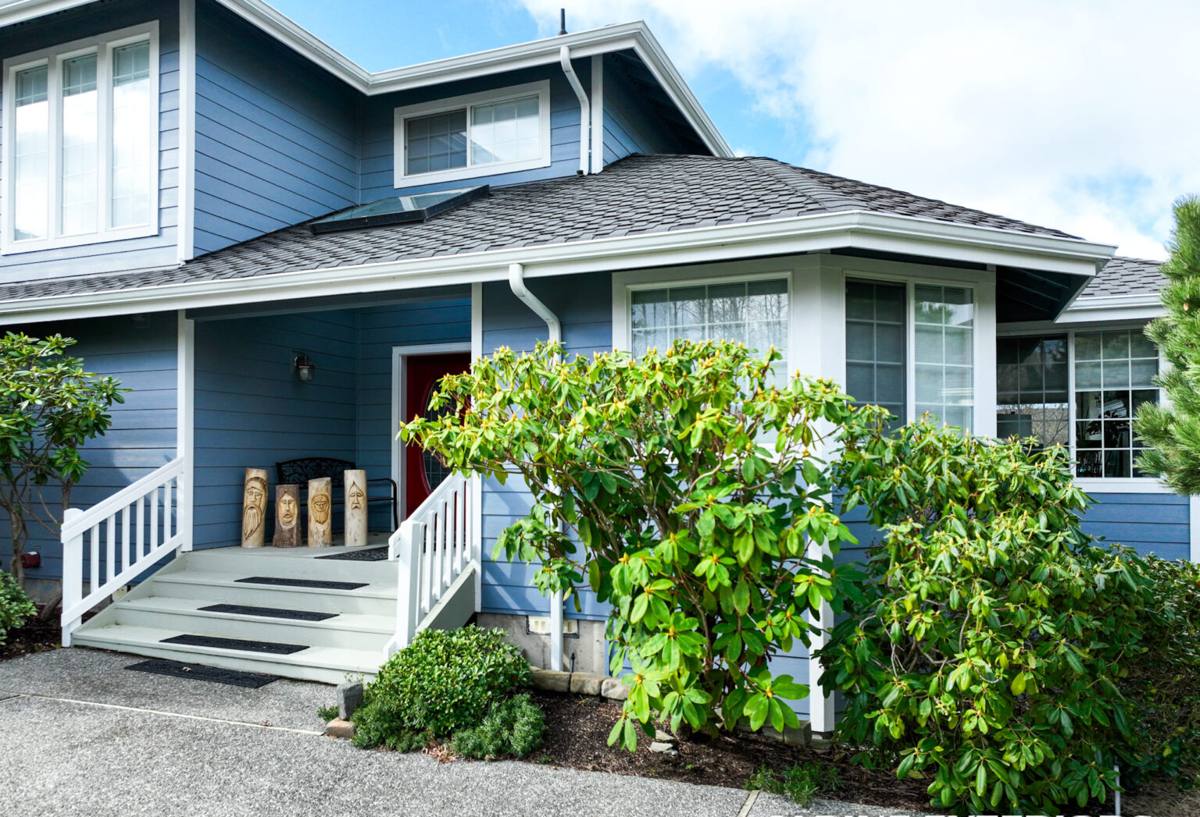
We see a recurring pattern on homes in this area: damage clusters on the north and west-facing walls, around ground-level trim, and near anywhere moss or organic debris has been allowed to sit against the siding. Moss holds moisture against the surface far longer than open air would, and once it establishes itself on a wall, it accelerates whatever damage is already happening underneath. Driving rain compounds this by pushing water sideways into seams, corner boards, and butt joints that were never designed to be submerged, only shed water downward.
Salt-laden air adds a slower but steady problem: it accelerates corrosion of fasteners, flashing, and any exposed metal trim, which in turn creates small failure points that let water behind the siding long before the siding itself shows visible damage.
The Most Common Damage We Find
- Soft or delaminating panels near the bottom courses, where splashback and standing moisture concentrate
- Cracked or open caulk joints at corner boards, window trim, and butt seams
- Rust-streaked or failing fasteners that have let panels loosen or shift
- Moss and algae buildup holding moisture against panel faces, especially on shaded or north-facing walls
- Water staining or soft sheathing behind siding near old, poorly-flashed penetrations (vents, hose bibs, light fixtures)
What a Correct Siding Repair Actually Involves
A repair that's done right is not just "replace the damaged piece." It requires figuring out why that piece failed in the first place, because if the underlying cause isn't addressed, the same spot fails again in a year or two. That means checking the water-resistive barrier and flashing behind the removed section, confirming fasteners are seated correctly and not over-driven, and making sure new material integrates with the existing siding's drainage plane rather than just sitting on top of it.
On a home with fiber cement siding, a correct repair also respects the manufacturer's installation specs — proper clearances from grade and roof lines, correct fastener type and spacing, and factory-matched or properly finished cut edges so the repair doesn't become the next weak point.
Steps We Follow on a Repair Call
- Inspect the damaged area and the surrounding wall section, not just the obvious spot
- Check for moisture intrusion behind the siding, including probing sheathing where staining or softness suggests a deeper problem
- Identify the root cause — flashing failure, caulk failure, fastener failure, moss retention, or grading/drainage issue
- Remove only what's compromised, preserving sound material around it
- Repair or replace flashing and the water-resistive barrier as needed before any new siding goes on
- Install matching material to spec, with correct fasteners, gaps, and sealant
- Address the contributing condition — trim back vegetation, correct a drainage path, or clean and treat moss growth nearby
Repair or Replace? How We Make That Call
Not every damaged section means the whole wall needs new siding, and not every "small patch" request is actually a small job once the wall is opened up. We look at the extent of moisture damage, the age and condition of the surrounding siding, and whether the underlying sheathing is still sound.
| Situation | Repair usually makes sense | Replacement usually makes sense |
|---|---|---|
| Damage extent | Isolated panels or a single wall section | Multiple walls, widespread cracking or soft panels |
| Sheathing condition | Dry, sound wood behind the damaged area | Rot, softness, or staining across a broad area |
| Siding material | Fiber cement or other durable material still structurally sound | Original material was already failure-prone (e.g., old untreated wood, degraded composite) |
| Age of siding | Mid-life siding with a clear, fixable cause | Siding near or past its expected service life |
| Root cause | A single fixable issue (flashing, caulk, fasteners) | Systemic issues across multiple details on the home |
We'll tell you honestly which category your home falls into. If a repair will genuinely hold up through another wet season, that's what we recommend — there's no reason to sell a full replacement when a targeted fix solves the actual problem.
Why We Use James Hardie for Repairs, Too
We install James Hardie fiber cement exclusively, and that includes repair and patch work. When we're matching into or extending an existing wall, Hardie's ColorPlus factory finish and consistent product lines make it far easier to get a repair that blends in rather than standing out as an obvious patch. Just as important, Hardie's fiber cement doesn't absorb and hold moisture the way wood or some composite products do, which matters directly for the moss and driving-rain conditions common in this area — a repaired section made of a moisture-stable material is less likely to become the next spot that fails.
If a wall was originally sided in a different product — vinyl, LP SmartSide, cedar, or another fiber cement brand — we'll be straightforward with you about what a mixed-material repair can and can't achieve, and when it's worth transitioning that section (or eventually the whole home) to Hardie rather than continuing to patch a system with known weak points.
Why Hiring a Crew That Already Works This Area Matters
Siding repair is one of those jobs where local familiarity actually changes the outcome. A crew that regularly works Whatcom County homes already knows which wall orientations take the worst weather, how moss tends to establish itself on shaded siding here, and what flashing details tend to fail first on homes of a certain age. That's the difference between a repair that treats a symptom and one that fixes the actual cause.
It also means faster, more accurate estimates. We're not guessing at what a Sumas-area home might be dealing with — we've opened up walls just like it before and know where to look first.
Questions Worth Asking Any Contractor Before You Hire Them for Repair Work
- Will you inspect behind the damaged siding, or just replace what's visible?
- What's your plan if you find moisture damage to the sheathing once the panel is off?
- Can you match my existing siding's profile, exposure, and finish?
- Do you carry manufacturer training or certification for the siding material on my home?
- What's included in your warranty on the repaired section versus the rest of the wall?
- How do you handle disposal of old material, especially if it contains hidden rot or mold?
What Repair Costs Typically Depend On
Every home is different, so we won't quote a number sight unseen, but the main cost drivers for a siding repair in this area are consistent:
| Cost factor | Why it matters |
|---|---|
| Size of the damaged area | More linear footage of panels and trim means more material and labor |
| Sheathing condition | Rotted sheathing behind the siding adds carpentry work before new siding can go on |
| Wall accessibility | Height, landscaping, or tight clearances affect staging and time on site |
| Material match | Matching an older profile or discontinued color may require more custom work |
| Root-cause fixes | Flashing, drainage, or vegetation issues add scope but prevent repeat failures |
Protecting the Repair After We Leave
A repair holds up longer with a little basic upkeep, and this is worth doing regardless of who did the work. Keep gutters clear so water isn't overflowing directly onto walls below. Trim back shrubs and trees that keep siding shaded and damp, since that's exactly the condition that lets moss take hold. Rinse visible moss or algae growth off siding before it spreads, and have caulk joints around trim and penetrations checked every couple of years, since sealant is usually the first thing to give out in this climate.
Get an Honest Look at What Your Siding Actually Needs
If you've got a soft spot, a cracked panel, or a section that just doesn't look right anymore, we're happy to come take a look and tell you plainly what's going on and what it will take to fix it correctly. We offer free, no-pressure estimates for Sumas-area homes, whether that ends up being a targeted repair or a bigger conversation about your siding's overall condition.