 Ferndale Siding
 Birch Bay's Climate Is Harder on Siding Than Most Homeowners Realize
Birch Bay sits right on the water in northern Whatcom County, and that waterfront location cuts both ways. The same exposure that makes it a great place to live also means homes there take a beating that inland houses simply don't. Salt-laden air off the Strait of Georgia works its way into seams, fasteners, and any siding product that isn't built to handle it. Wind-driven rain off the water hits walls at an angle, not straight down, which means it finds every gap in flashing and every weak seam a standard installation might leave behind. And because so many Birch Bay lots have mature trees and shaded north- and west-facing walls, moss and algae get a long growing season with little sun exposure to dry things out between storms.
None of this is unique to any one house — it's the baseline condition for anything built along this stretch of coastline. The siding on a Birch Bay home isn't just cosmetic. It's the thing standing between that salt air and moisture cycle and the framing underneath. When it fails, it tends to fail quietly, behind the surface, long before there's an obvious visual sign.
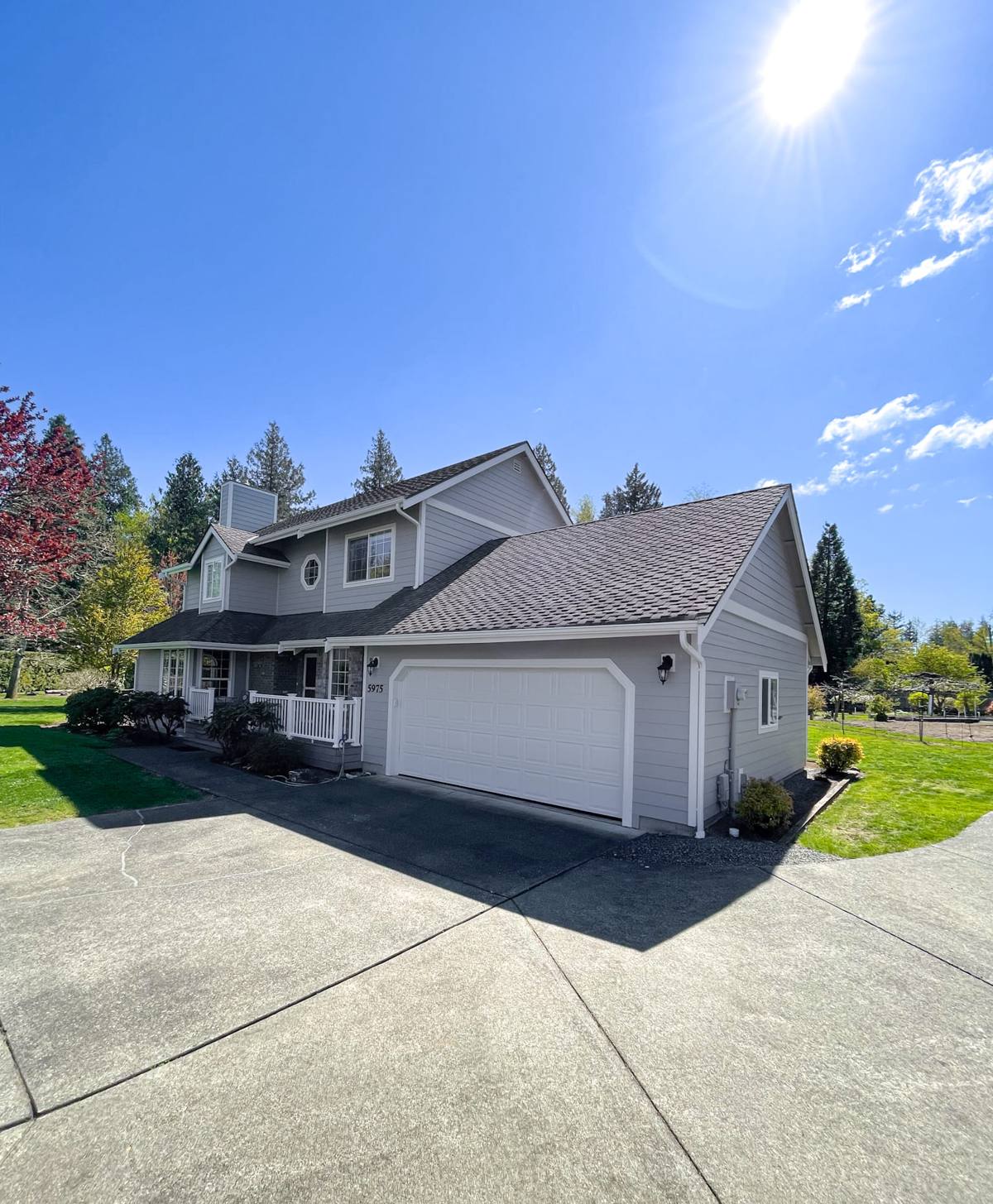
How Salt Air, Rain, and Moss Actually Damage Siding
It helps to understand the mechanism, not just the symptom. Coastal exposure causes problems in a few specific ways:
- Salt air accelerates corrosion of exposed fasteners, trim flashing, and any metal components — which loosens siding and opens paths for water.
- Driving rain pushes water sideways into laps, joints, and butt seams that would stay dry in a calmer inland climate.
- Shaded, damp walls grow moss and algae that hold moisture against the siding surface far longer than a wall that gets regular sun.
- Wood-based and wood-adjacent products absorb this moisture cycle over years, leading to swelling, delamination, or rot at edges and fastener points.
- Freeze-thaw swings, while milder here than east of the Cascades, still stress any material that's already saturated from the wet season.
Individually, none of these is dramatic. Together, over a decade or two, they're exactly why siding in a community like Birch Bay wears out faster than the same product would twenty miles inland — and why the product choice and installation quality matter more here than almost anywhere else in the county.
Signs a Birch Bay Home Needs Siding Replacement
Siding failure on the coast is often gradual and easy to miss until it's advanced. Homeowners should watch for:
- Soft or spongy spots when you press on the siding, especially near the bottom courses and around windows
- Visible swelling, bubbling, or delamination at seams and butt joints
- Paint that's failing unevenly — peeling faster on the shaded, moss-prone sides of the house
- Persistent moss or algae growth that comes back within a season of cleaning
- Warping, cupping, or boards that no longer sit flat against the wall
- Rust streaks running down from fasteners or trim
- Rot or soft framing discovered around window and door trim
- A noticeable rise in heating bills, which can point to moisture-compromised insulation behind failing siding
Any one of these on its own might be a minor repair. Several at once, especially on a home that's had the same siding for fifteen-plus years in this climate, usually means it's time to talk about full replacement rather than patching.
What a Correct Siding Replacement Actually Involves
Replacing siding on a coastal Birch Bay home is not just pulling off old boards and nailing up new ones. Done right, it's a system, and skipping any layer of that system is where most siding failures — regardless of brand — actually start.
The Layers Behind the Siding
A correct installation starts with inspecting and repairing the sheathing underneath the old siding, since that's often where hidden rot lives. Next comes a weather-resistive barrier installed with proper overlap and sealed penetrations, followed by correctly integrated flashing at every window, door, and roofline intersection — the single most common place we find water intrusion on older coastal homes. Only after that foundation is right does the actual siding go on, with attention to fastener spacing, caulking at joints, and proper clearance at the ground line so water can't wick up into the material.
Why Flashing Detail Matters More Here
Because Birch Bay gets wind-driven rain rather than straight-down rain, flashing that would be adequate inland can still let water in here. We pay particular attention to head flashing above windows and doors, kick-out flashing where rooflines meet walls, and butt joint placement so seams aren't lined up with the prevailing wind direction off the water.
Why We Install Only James Hardie Fiber Cement Siding
We've made a deliberate decision to install James Hardie fiber cement exclusively — not vinyl, not LP SmartSide, not primed wood products. That's not a marketing position; it's a standard we hold because of what we consistently see happen to other materials in exactly this kind of coastal, wet, shaded climate.
| Material | How It Handles Birch Bay's Climate |
|---|---|
| Vinyl siding | Lightweight and low-cost, but it can warp or distort under sustained wind loads off the water and doesn't hold paint if you ever want to change the color; seams also give wind-driven rain an easier path. |
| Wood-based composite (LP SmartSide) / primed wood | Engineered wood products still rely on their surface coating to keep moisture out; once that coating is compromised at a cut edge or fastener hole, the wood substrate absorbs water and swells — a real risk in a climate with this much sustained moisture. |
| James Hardie fiber cement | Non-combustible, dimensionally stable material that doesn't absorb and swell the way wood-based products can, and its factory-applied ColorPlus finish is engineered to hold up to UV and moisture cycling without repainting on the same schedule as field-painted products. |
Hardie's HZ5 product formulation is engineered specifically for climates like ours — wet, moderate, with real freeze-thaw swings in winter — rather than being a one-size-fits-all product. Combined with a factory finish that's cured under controlled conditions rather than applied on-site in variable weather, it holds color and resists the kind of edge deterioration that salt air and moss accelerate in other materials. It's also backed by a strong transferable warranty, which matters on a coastal home where the siding is doing more work than it would inland.
We're not going to tell you other products don't have a place somewhere — they do. But for what Birch Bay's climate actually does to a house over twenty or thirty years, fiber cement is the material we're willing to put our name behind.
Our Siding Replacement Process
- On-site inspection — we walk the exterior, check for soft spots and hidden moisture, and look at flashing and trim condition before quoting anything.
- Written estimate — a clear scope covering removal, any sheathing repair anticipated, materials, and installation, with no vague allowances.
- Old siding removal and sheathing assessment — this is when hidden rot or moisture damage from years of coastal exposure actually gets found and addressed.
- Weather barrier and flashing installation — done to current best practice, not just to match what was there before.
- Hardie siding installation — installed to manufacturer fastening and clearance specifications, which is also what keeps the warranty valid.
- Final walkthrough — trim, caulking, and touch-up checked before we consider the job done.
What Siding Replacement Costs Depend On
We don't publish fixed prices because every Birch Bay home is different, but the real cost drivers are consistent:
| Factor | Why It Affects Cost |
|---|---|
| Home size and wall complexity | More square footage and more corners, gables, and trim details mean more material and labor. |
| Sheathing condition | Rot discovered once old siding comes off adds repair scope — this is more common on long-neglected coastal walls. |
| Siding profile chosen | Lap width, shingle-style panels, and trim board selections carry different material costs within the Hardie lineup. |
| Access and site conditions | Steep lots, limited staging area, or difficult access near the water can affect labor time. |
| Existing trim and flashing work needed | Full flashing replacement at windows and rooflines adds scope but is often necessary on older homes. |
The only way to get real numbers is a walkthrough of your specific house — we'd rather give you an honest, itemized estimate than a ballpark that doesn't hold up once we're on the roof.
Why a Crew That Already Works Birch Bay Matters
Siding installation isn't just about the product — it's about judgment calls made on site, and those calls are better when a crew already understands the conditions they're building for. A contractor who works Birch Bay and the surrounding Ferndale area regularly knows to pay closer attention to flashing on west-facing walls, to expect moss and staining on shaded elevations, and to plan installation timing around the wetter stretches of the year rather than fighting them. That local pattern recognition is the difference between a crew that installs siding correctly on paper and one that installs it correctly for this specific coastline.
Maintenance After Replacement
New Hardie siding significantly reduces the maintenance burden compared to what most Birch Bay homeowners are used to, but it isn't zero-maintenance in this climate. A yearly rinse-down to keep moss and algae from taking hold, prompt caulk touch-ups at any joint that shows gapping, and keeping gutters clear so water isn't sheeting down the wall will keep a correctly installed Hardie exterior performing the way it's designed to for decades.
If you're seeing signs of wear on your Birch Bay home's siding, or you'd rather replace it proactively before another wet season and moss cycle takes their toll, we're happy to walk your property and give you a straightforward, no-pressure estimate. Use the form below to get started.