 Ferndale Siding
 Custer's Climate Is Harder on Siding Than Most Homeowners Realize
Custer sits in the northwest corner of Whatcom County, close enough to the water that salt-laden air is a constant factor in how exterior materials age. Combine that with the long, wet Pacific Northwest winter and the moss and algae growth that comes with months of shade and moisture, and you have a climate that is genuinely tough on siding. Homes here don't fail because of one dramatic storm — they fail slowly, from years of moisture finding its way behind panels, fasteners corroding, and paint film breaking down faster than it would fifty miles inland.
Driving rain is the other piece of the puzzle. Wind off the water pushes rain sideways into wall assemblies, which means siding here needs to shed water outward, not just downward. A siding system that works fine in a dry climate can underperform badly in Custer if it wasn't designed and installed with wind-driven rain in mind.
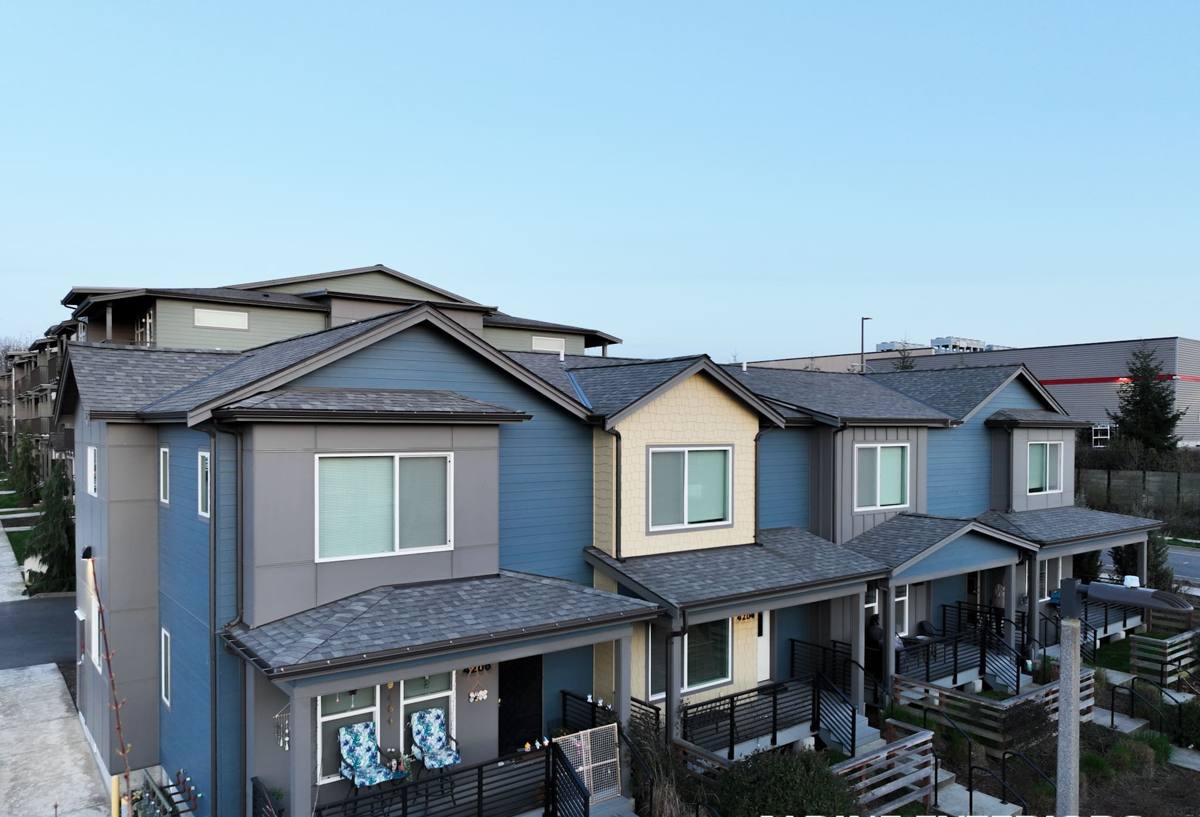
Signs a Custer Home Needs Replacement, Not Just Repair
Not every siding problem calls for a full tear-off. But in this climate, certain signs point to a system that has reached the end of its useful life rather than a spot that needs patching.
- Soft, spongy spots when you press on siding, especially near the bottom courses or below windows
- Paint that keeps failing within a year or two of repainting, no matter how good the paint job
- Persistent moss or algae staining that returns within weeks of cleaning
- Visible warping, cupping, or delamination on wood-based or engineered wood siding
- Gaps opening up at seams, corners, or trim that weren't there a few years ago
- Musty smell or visible staining on interior walls that back up to exterior siding
Any one of these can be a localized fix. Several of them together, especially on a home more than 20-25 years old, usually mean the whole system — siding, house wrap, and flashing — has degraded past the point where patching makes sense.
What a Correct Siding Replacement Actually Involves
It's Not Just Swapping Panels
A proper siding replacement in this climate starts underneath the siding, not at the siding itself. That means inspecting and, where needed, replacing the weather-resistive barrier (house wrap), correcting flashing at windows, doors, and roof-to-wall intersections, and confirming that water has a clear path down and out rather than trapped behind the cladding.
Fastening and Clearances Matter More Here
In a low-moisture climate, sloppy fastening or tight clearances at the ground and trim might go unnoticed for years. In Custer's wet, salty conditions, those same shortcuts show up fast — as rust streaks, soft wood, or paint failure. Correct installation means proper fastener spacing and type, gaps left at butt joints for expansion, and clearance kept between the bottom of the siding and grade, decks, or roofing.
Ventilation Behind the Cladding
A rainscreen gap — a small air space between the siding and the wall — gives any moisture that does get past the cladding a way to drain and dry out instead of sitting against the wall sheathing. It's a detail that costs little at installation time and pays off every wet winter afterward.
Why We Only Install James Hardie Fiber Cement
We get asked regularly why we don't offer vinyl, LP SmartSide, cedar, or other fiber cement brands. It's not that these products have no merit — each has a place in the market. It's that after years of working on homes in this exact climate, we standardized on one product line because it holds up the way we need it to, consistently, without asking the homeowner to gamble on installation quality or long-term maintenance.
| Material | How It Handles Salt Air & Driving Rain | Long-Term Trade-Off |
|---|---|---|
| Vinyl siding | Doesn't rot, but can warp or crack in temperature swings and doesn't stop moisture from tracking behind it | Limited color life, brittle with age, seams are a weak point |
| Cedar / primed spruce | Natural material, but wood is directly vulnerable to the moisture and moss this climate produces | Ongoing repainting and sealing, rot risk if maintenance lapses |
| LP SmartSide (engineered wood) | Better moisture resistance than raw wood, but still wood-based at its core | Edge swelling and warranty limits if cut edges aren't sealed and maintained correctly |
| James Hardie fiber cement | Non-combustible, dimensionally stable, engineered moisture resistance built into the HZ product line | Higher upfront installed cost than vinyl; requires correct installation to perform to spec |
James Hardie's HZ product lines are engineered specifically for regional climate zones, which matters in a place like Custer where humidity, rain volume, and freeze-thaw cycles all play a role. The ColorPlus factory finish is baked on under controlled conditions rather than field-painted, which gives it better fade and moisture resistance than most job-site paint jobs can match. It's a non-combustible material, it doesn't feed moss and mildew the way wood-based products can, and the manufacturer backs it with a strong transferable warranty — one that stays meaningful because the product has a long track record when installed to spec.
Our Process, Start to Finish
1. On-Site Assessment
We walk the exterior with you, look at the current siding condition, check for moisture damage at trim, corners, and penetrations, and talk through what we're seeing before we talk about product.
2. Scope and Estimate
You get a written estimate that spells out what's included — tear-off, house wrap, flashing repair or replacement, the Hardie product line and profile, trim, and paint or color selection. No vague allowances.
3. Tear-Off and Substrate Check
Once old siding comes off, we inspect the sheathing underneath. If there's rot or water damage, we address it before anything new goes back up — covering a damaged wall with new siding just hides the problem.
4. Weather Barrier, Flashing, and Rainscreen
New house wrap goes on correctly lapped, flashing is installed or corrected at every penetration, and a rainscreen gap is built in so the wall can drain and breathe.
5. Hardie Installation to Manufacturer Spec
Panels or lap siding go up with correct fastener type, spacing, and clearances, following James Hardie's published installation requirements — which is also what keeps the manufacturer's warranty intact.
6. Final Walkthrough
We walk the finished job with you, check trim and caulking, and make sure everything matches what was in the estimate.
What Affects Cost for a Custer Siding Replacement
| Factor | Why It Matters |
|---|---|
| Home size and wall complexity | More corners, gables, and dormers mean more cutting, trim, and labor time |
| Extent of substrate repair | Rot or moisture damage found under old siding adds material and labor before new siding can go up |
| Siding profile and finish | Lap siding, panel siding, and shingle-style profiles carry different material and labor costs |
| Trim and accessory scope | Full trim replacement costs more than reusing sound existing trim |
| Access and site conditions | Steep lots, mature landscaping, or limited equipment access can add time |
We don't publish blanket prices because these variables swing the total meaningfully from one house to the next — but we'll give you a clear, itemized number after we've actually looked at your home, not a phone-quote guess.
Keeping New Siding Performing in This Climate
Correctly installed Hardie siding is low-maintenance, but "low" isn't "none." A little seasonal attention keeps it performing the way it's designed to for the long haul.
- Rinse off salt residue and grime with a garden hose once or twice a year, more often if the home is closer to open water
- Keep gutters clear so overflow doesn't run down the wall face
- Trim back vegetation and tree cover that keeps siding shaded and damp, which encourages moss
- Check caulking at trim joints and penetrations annually and touch up as needed
- Address any impact damage or chips promptly so moisture can't get behind the panel
Why Hiring a Crew That Already Works Custer Matters
Siding installation isn't just about the product — it's about whether the crew understands how this specific climate stresses a building envelope. A contractor who mostly works drier inland markets may not think twice about clearances, flashing details, or rainscreen gaps that are optional elsewhere but functionally necessary in a place that gets pushed by wind-driven rain and lives with salt air part of the year. We work this part of Whatcom County regularly, which means we're not guessing at how Custer homes need to be built — we're applying what we've already seen hold up, and what we've seen fail.
If your siding is showing its age or you're just trying to figure out whether repair or full replacement makes sense for your home, we're glad to take a look. Reach out for a free, no-pressure estimate — we'll walk the exterior with you, tell you honestly what we see, and lay out your options in plain terms.