 Ferndale Siding
 Siding Built for an Exclave on the Water
Point Roberts sits in a category by itself. It's a slice of Washington State cut off from the rest of the country by the Canadian border, surrounded on three sides by the Strait of Georgia and Boundary Bay. That geography means Point Roberts homes take a harder hit from the weather than most houses even a few miles inland in Whatcom County. Salt-laden wind comes off the water constantly, driving rain arrives with almost nothing to slow it down, and the shaded, damp stretches of the peninsula stay wet long after town has dried out. Siding here isn't just a cosmetic decision — it's the difference between a wall assembly that holds up for decades and one that's rotting behind the paint by year twelve.
This page is about one thing: replacing siding on a Point Roberts home the right way, with a product and installation approach that's actually suited to this specific stretch of coastline.
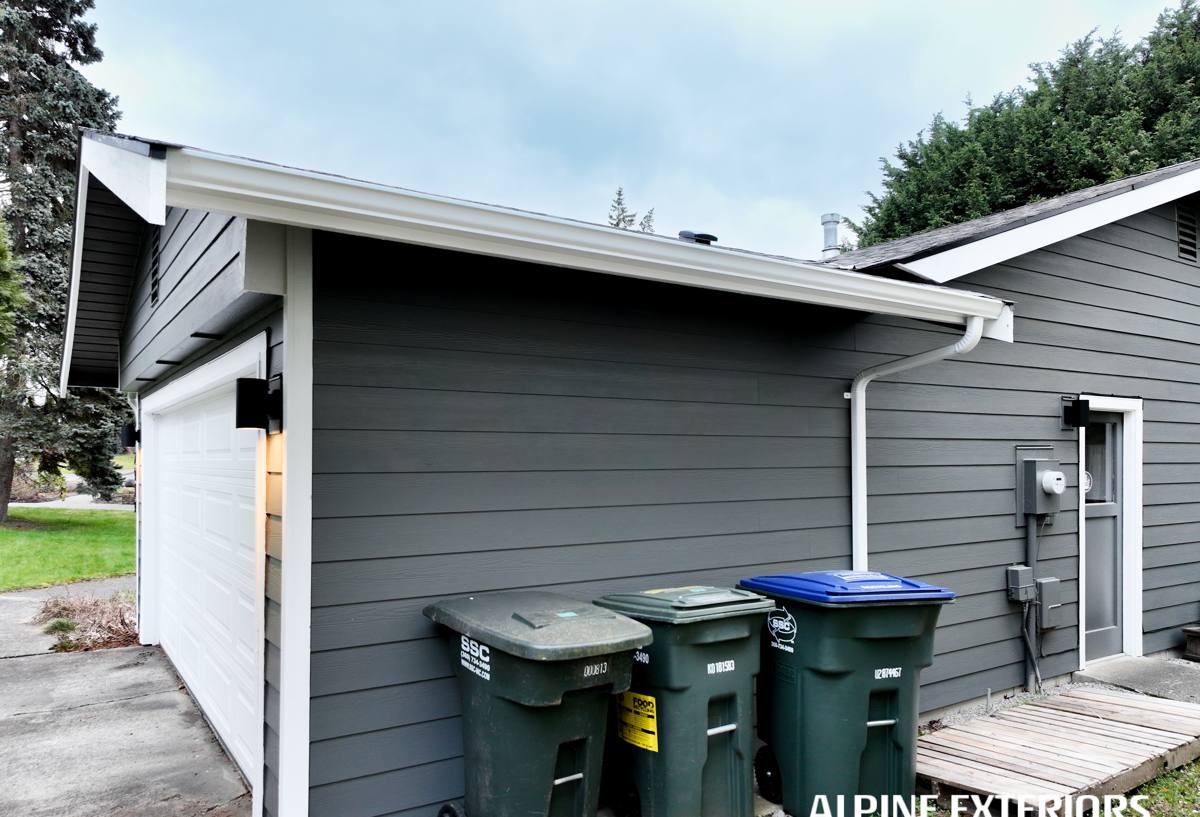
What Salt Air, Driving Rain, and Moss Do to Siding in Point Roberts
Salt Air and Corrosion
Airborne salt doesn't just sit on the surface of a wall — it works into fasteners, trim joints, and any exposed cut edge. Over years, that accelerates corrosion of steel fasteners and eats away at coatings that weren't engineered to handle a marine-influenced climate. Products that perform fine forty miles inland can start showing chalking, fading, or edge deterioration years earlier on a property exposed to open water on multiple sides.
Driving Rain and Wind-Driven Moisture
Point Roberts gets weather off the water with very little to break it up before it reaches a house. Wind-driven rain doesn't just fall on siding, it gets pushed sideways and upward into laps, seams, and butt joints. A siding system with weak water-shedding details or a poorly lapped installation will let moisture track behind the cladding, where it soaks sheathing and framing that nobody sees until the damage is already extensive.
Moss Season
Like the rest of the Pacific Northwest, Point Roberts has a long stretch of the year where surfaces stay damp, shaded, and cool enough for moss and algae to take hold. On siding, that growth holds moisture directly against the material, keeps the surface from drying between rain events, and — on products that aren't dimensionally stable or properly coated — can accelerate softening, staining, and paint failure. A north-facing wall under tree cover can carry visible moss for months at a time.
Signs Your Point Roberts Home's Siding Is Failing
- Soft spots or a "give" when you press on the siding, especially near the bottom courses or around window trim
- Paint that's bubbling, peeling, or that needs repainting far more often than it used to
- Persistent moss or algae staining that comes back within a season of cleaning
- Visible warping, cupping, or buckling of panels or boards
- Gaps opening up at butt joints, corners, or trim intersections
- A musty smell near exterior walls, or moisture showing up on interior drywall near an exterior corner
- Fastener heads rusting through or "bleeding" rust streaks down the face of the siding
Any one of these on its own might just mean a repair. Several at once, especially on the water-facing side of the house, usually means the siding system itself has reached the end of its useful life and a full replacement is the more honest recommendation.
What a Correct Siding Replacement Involves
Replacing siding is not a cosmetic swap. The visible material is the last layer of a system, and in a climate like Point Roberts', the layers underneath matter as much as what you see.
Tear-Off and Sheathing Inspection
Once the old siding comes off, the sheathing gets inspected for rot, soft spots, and hidden moisture damage — which is common on older Whatcom County homes that have taken decades of coastal weather. Any compromised sheathing gets replaced before anything new goes up. Skipping this step is the single most common shortcut that leads to problems five or ten years down the road.
Water-Resistive Barrier and Flashing
A correctly installed water-resistive barrier, properly lapped and taped, plus flashing at every window, door, and horizontal trim transition, is what actually keeps wind-driven rain out of the wall assembly. This detailing matters more in Point Roberts than almost anywhere else in the county, given how directly the property lines face open water.
Fastening and Clearances
Correct fastener type, spacing, and embedment, along with proper clearance from grade, decks, and roof lines, prevents the wicking and trapped moisture that leads to premature rot. Manufacturer installation specs exist for a reason, and following them is what actually earns a warranty — not just having the product on the wall.
Factory-Applied Finish
A factory-cured finish resists fading, chalking, and moisture intrusion far better than a coating applied on site in variable weather. In a salt-air environment, finish quality is one of the biggest factors in how long a home looks good before it needs repainting.
Why We Install Only James Hardie Fiber Cement Siding Here
We don't install vinyl, LP SmartSide, primed wood, or other fiber cement brands. That's a deliberate standard, not a limitation of what we're capable of installing. In a climate like Point Roberts', the trade-offs of those other products — vinyl's tendency to warp and grow brittle in temperature swings and wind, engineered wood's greater sensitivity to sustained moisture exposure at cut edges and seams, cedar and primed wood's ongoing maintenance demands — line up poorly against what this specific coastline throws at a house year after year.
James Hardie fiber cement is non-combustible, dimensionally stable in wet-dry cycling, and available in HZ product lines engineered for different climate zones. The ColorPlus factory finish is baked on and backed by its own finish warranty, which matters directly here — it's the layer standing between salt air and the substrate underneath. It's also backed by a strong, transferable product warranty, which carries real value on a property that may change hands someday. We put it on homes because, installed to spec, it's the product we're most confident will still be performing well in twenty or thirty years on a lot with this much salt and rain exposure.
The Point Roberts Logistics Problem — And Why It Matters When Hiring
Point Roberts is only reachable by land through Canada, or by boat or small plane. That's not a minor detail when you're hiring a siding crew. A contractor without established experience working there has to figure out border crossing logistics for crew and equipment, plan material deliveries around crossing times, and account for the fact that a forgotten tool or an extra material run isn't a quick trip back to the shop.
A crew that already works Point Roberts regularly has that logistics problem solved. Material orders get planned and staged in advance, crossings are scheduled efficiently, and the job doesn't stall out because someone's waiting on a piece of trim that's sitting on the wrong side of the border. That operational experience translates directly into fewer delays and a tighter, more predictable install for the homeowner.
Our Process, Start to Finish
- On-site assessment — we look at your current siding, sheathing condition where accessible, and the specific exposure your home faces (water side, tree cover, prevailing wind direction)
- Product and color selection — choosing the right James Hardie line and finish for your home's exposure and style
- Written estimate — clear scope, materials, and pricing before any work begins
- Material staging — ordering and coordinating delivery logistics ahead of the crossing, so the job isn't waiting on materials once it starts
- Tear-off and sheathing repair — removing old siding and addressing any hidden damage found underneath
- Water-resistive barrier, flashing, and installation — done to manufacturer spec, not shortcuts
- Final walkthrough — reviewing the finished job with you before we call it done
Cost Factors for Point Roberts Siding Replacement
Every home is different, but the factors that tend to move the price on a Point Roberts project are fairly consistent:
| Factor | Why It Matters |
|---|---|
| Extent of sheathing damage found at tear-off | Salt air and driving rain accelerate hidden rot; repair scope isn't known until old siding is off |
| Home size and wall complexity | More corners, trim details, and window/door openings mean more labor and material |
| Siding profile and Hardie product line chosen | Lap, shingle, and panel styles vary in material and install cost; HZ line selection affects pricing |
| Exposure and orientation | Water-facing and wind-exposed walls may need additional flashing and detailing |
| Access and logistics | Material staging and crossing logistics factor into scheduling and delivery costs |
| Existing paint or coating removal | Some older siding systems require extra prep or disposal steps |
Choosing a Siding Contractor for Point Roberts
- Ask directly whether they have current experience working on Point Roberts, not just Ferndale or Bellingham
- Ask how they handle material delivery and crossing logistics for the job
- Confirm what siding product they install and why — and whether they stand behind it with a real warranty
- Ask how they handle sheathing repair if damage is found during tear-off
- Get a written, itemized estimate before work starts
- Ask about their approach to flashing and water-resistive barrier detailing — this is where most siding failures actually start
Point Roberts homeowners deserve a contractor who treats the location as routine, not a hassle, and who installs a product actually built for this kind of exposure. If your siding is showing its age or you're planning ahead for a replacement, we're happy to take a look and put together a straightforward, no-pressure estimate — just fill out the form below.