 Ferndale Siding
 Storm Season Takes a Real Toll on Bellingham-Area Roofs
Homes in and around Bellingham don't usually get hit by one dramatic storm and then have calm weather for the rest of the year. What they get is a long stretch of wind, driving rain, and salt-tinged air rolling in off the water, one system after another, for months at a time. That pattern matters more than people expect when it comes to roof damage. A roof here isn't just tested by a single windstorm; it's tested by repetition — the same shingles flexing in the wind, the same laps taking on wind-driven rain, the same shaded slopes staying damp long enough to grow moss, over and over through the fall and winter.
That's why storm damage repair in this part of Whatcom County has to be approached differently than it would in a drier, calmer climate. A patch that would hold up fine somewhere with four dry months a year can fail here in a single season if it doesn't account for how our storms actually behave.
Not Just the Big Storms
Most of the roof damage we get called out for isn't from one catastrophic event. It's cumulative — a run of windstorms that gradually work a shingle loose, followed by weeks of rain that finds the gap. By the time a homeowner notices a stain on the ceiling, the damage has usually been building for a while. Treating storm damage repair as a one-time event, rather than an ongoing part of owning a roof in this climate, is where a lot of avoidable failures start.
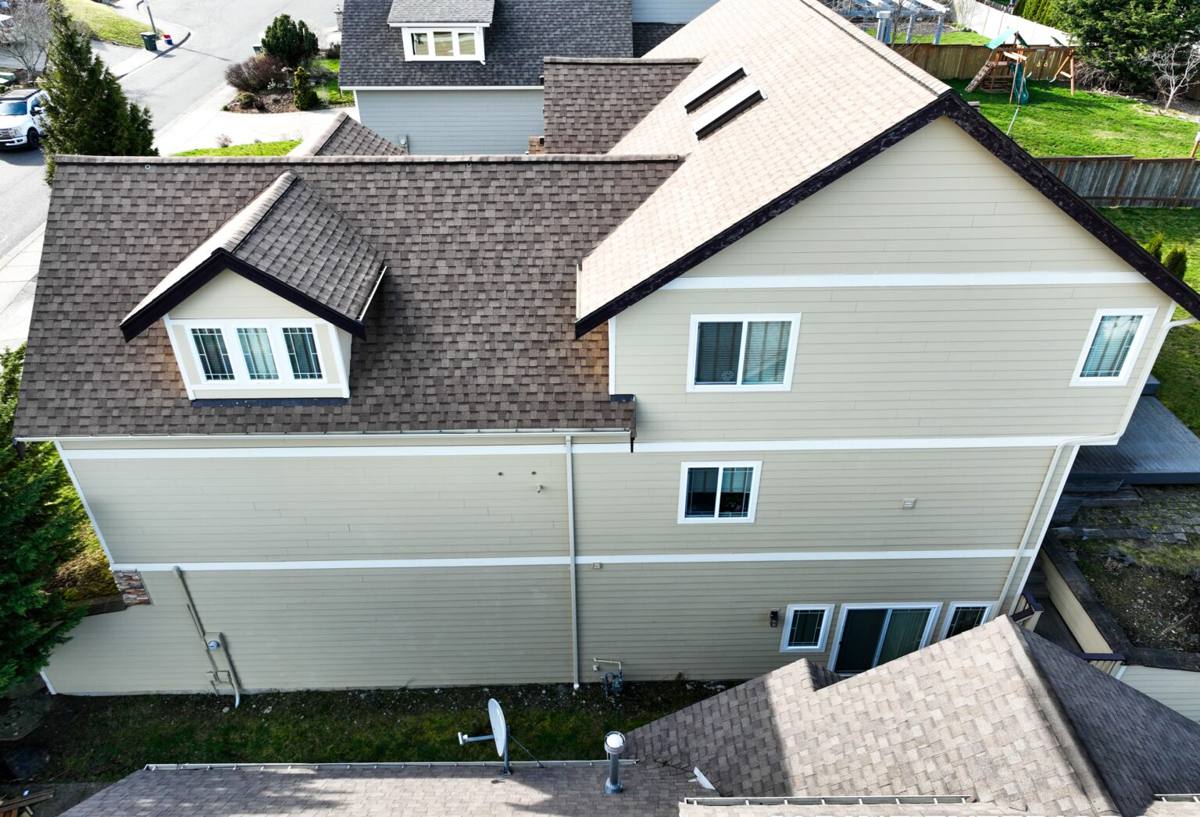
What Storm Damage Actually Looks Like on a Bellingham-Area Roof
Storm damage doesn't always look dramatic. It's rarely a hole you can see from the ground. More often it shows up as smaller, easy-to-miss issues that add up:
- Shingles lifted, cracked, or missing along ridge lines and edges, where wind uplift hits hardest
- Fasteners that have backed out after repeated flexing in high winds
- Flashing pulled away or separated at chimneys, skylights, and roof valleys
- Granule loss from years of wind-driven rain wearing at the shingle surface
- Impact damage from falling branches or debris during windstorms
- Soft or rotted decking discovered once storm-lifted shingles are pulled back, often tied to long-term moss and moisture exposure rather than the storm itself
That last point matters. A storm frequently doesn't create the underlying problem — it just exposes damage that moss and moisture have been causing quietly for a year or more. That's an important distinction when we're inspecting a roof, because fixing only what the storm visibly disturbed and ignoring the moisture damage underneath is how the same repair ends up needed again.
Salt Air, Driving Rain, and Moss: Why the Repair Approach Has to Account for All Three
Whatcom County's coastal position means a storm repair here is dealing with three separate stresses at once, not just wind. Each one changes how a repair should be done.
Salt Air and Corrosion
Homes closer to the water deal with a steady, low-level exposure to salt-laden air. Over time that accelerates corrosion on exposed fasteners, flashing, and any unprotected metal on the roof. A repair that uses standard fasteners or basic flashing may look fine for a season or two, then start failing early from corrosion that a drier or inland climate wouldn't cause. We factor that exposure into material choices on every repair, not just as an upsell, but because a corroded fastener is a future leak.
Driving, Wind-Pushed Rain
A lot of our storms don't just drop rain straight down — they push it sideways and even upward under shingle laps and around flashing edges. A repair that would be watertight in calm, vertical rain can still leak here if the underlayment and flashing details weren't built to handle wind-driven moisture working its way in from an angle. This is one of the most common reasons a "repaired" roof leaks again during the next storm: the visible shingle got fixed, but the water path underneath it didn't.
A Long Moss Season
Between the mild temperatures and the amount of moisture Whatcom County sees, moss can establish itself on shaded or north-facing slopes for most of the year, not just a short window in spring. Moss holds water against the roof surface far longer than bare shingles would, which softens shingles and can lead to decking rot underneath. When we're repairing storm damage on a slope with moss present, treating the moss and addressing the moisture it's held in place is part of doing the repair correctly — patching around it just sets up the same failure again.
What a Correct Storm Damage Repair Actually Involves
A proper storm repair is more than replacing the shingles that are obviously missing. It should include:
- A full inspection of the affected slope, not just the spot that's visibly damaged — wind and moisture damage often extends past what's easy to see from the ground
- Checking the decking underneath for soft spots or rot before new shingles go down over it
- Inspecting flashing at every penetration on or near the damaged area — chimneys, vents, skylights, and valleys
- Removing and treating any moss present, rather than repairing around it
- Matching shingle profile and color as closely as possible, with an honest conversation up front if an exact match isn't realistic on an older roof
- Photo documentation of the damage and the repair, useful for both your records and any insurance claim
One thing we won't do is caulk over a flashing failure and call it fixed. Caulk has its place as a finishing detail, but it's not a substitute for properly seated, correctly lapped flashing — used as the primary fix, it tends to fail again within a season or two, especially with the wind-driven rain this area gets.
Our Process for Bellingham-Area Storm Repairs
- Emergency response — if there's an active leak, we get a temporary tarp or seal in place first to stop water intrusion while we plan the permanent repair
- Full inspection — the whole affected slope, decking, flashing, and, where accessible, the attic for signs of moisture that haven't reached the ceiling yet
- Written scope and photos — a clear explanation of what's damaged, what caused it, and what the repair involves, documented before work starts
- The repair itself — matched materials, corrosion-resistant fasteners where exposure calls for it, and flashing rebuilt rather than patched
- Cleanup — old materials, debris, and any removed moss hauled away, not left in gutters or on the ground
- Follow-up — a check-in after the next significant rain to confirm the repair is holding as expected
Working With Insurance on Storm Claims
Most storm damage claims come down to documentation. We take dated photos of the damage before we touch anything, provide a written scope that separates storm-caused damage from any pre-existing wear, and are available to talk directly with your adjuster if that's helpful. We'd also rather tell you upfront if damage looks more like gradual wear than storm-related — inflating a claim to get coverage isn't something we do, and being straightforward about what's actually storm damage versus what isn't tends to make the claims process smoother, not harder.
What Affects the Cost of a Storm Damage Roof Repair
Every roof and every storm event is different, but these are the factors that most often move a repair estimate up or down:
| Factor | Why It Matters |
|---|---|
| Extent of decking damage | Rotted decking has to be cut out and replaced before new shingles go on — this is usually the biggest swing factor |
| Roof pitch and access | Steeper or harder-to-access roofs take longer and require more safety setup |
| Flashing complexity | Repairs near chimneys, valleys, or multiple penetrations take more time than a simple field patch |
| Material matching | Older or discontinued shingle lines may require a wider repair area to blend in visually |
| Moss and organic buildup | Removal and treatment add time but prevent the same section from failing again soon after |
| Number of stories | Multi-story homes need additional equipment and safety measures that add to labor time |
Because of that range, we walk every roof in person before giving a number — a phone estimate on storm damage is really just a guess.
Why It Matters That a Crew Already Works in the Bellingham Area
Storm damage repair isn't a generic skill you apply the same way everywhere. A crew that regularly works roofs in this part of Whatcom County has already seen how local weather patterns tend to hit — which slope orientations take the worst of the wind-driven rain, how quickly moss re-establishes on shaded roofs here compared to drier climates, and how salt air exposure plays out on fasteners and flashing over a few winters. That familiarity means less guesswork and fewer surprises during the repair, and it's part of why we focus on doing this work well in the communities we're already established in rather than treating every job as a first encounter with the local climate.
After the Repair: Keeping the Roof Ahead of the Next Storm
A good repair sets the roof up to handle the next storm cycle better, not just this one. A few habits make a real difference in this climate:
- Clear gutters and downspouts before the fall storm season starts so water has somewhere to go
- Trim back tree limbs that overhang the roof to reduce impact risk during high winds
- Schedule moss treatment on shaded or north-facing slopes before it has a chance to establish, rather than after
- Have flashing and pipe boots checked annually — these fail well before shingles usually do
- Check attic ventilation, since trapped moisture accelerates decking damage from the inside
- Take a few photos of your roof's condition each fall as a simple reference point if a claim comes up later
If a recent storm has left you with a leak, missing shingles, or just some uncertainty about what shape your roof is really in, we're happy to come take a look. The estimate is free, there's no pressure to move forward, and you'll get a straight answer about what's actually storm damage versus what's just wear — either way, you'll know where you stand.