 Ferndale Siding
 Storm Damage Roof Repair Built for Nooksack Homes
Nooksack sits inland along the Nooksack River valley, which changes what "storm damage" usually means here compared to homes right on Bellingham Bay. You get less direct salt air, but you make up for it with driving rain funneled through the valley, gusty winter windstorms coming off the foothills, and shaded, damp lots that grow moss faster than almost anywhere else in Whatcom County. A roof that looks fine from the ground can already have lifted shingles, soaked underlayment, or a cracked flashing seam that's been letting water in for months. Our job is to find that damage honestly, explain what it actually needs, and fix it in a way that holds up through the next storm season, not just the next inspection.
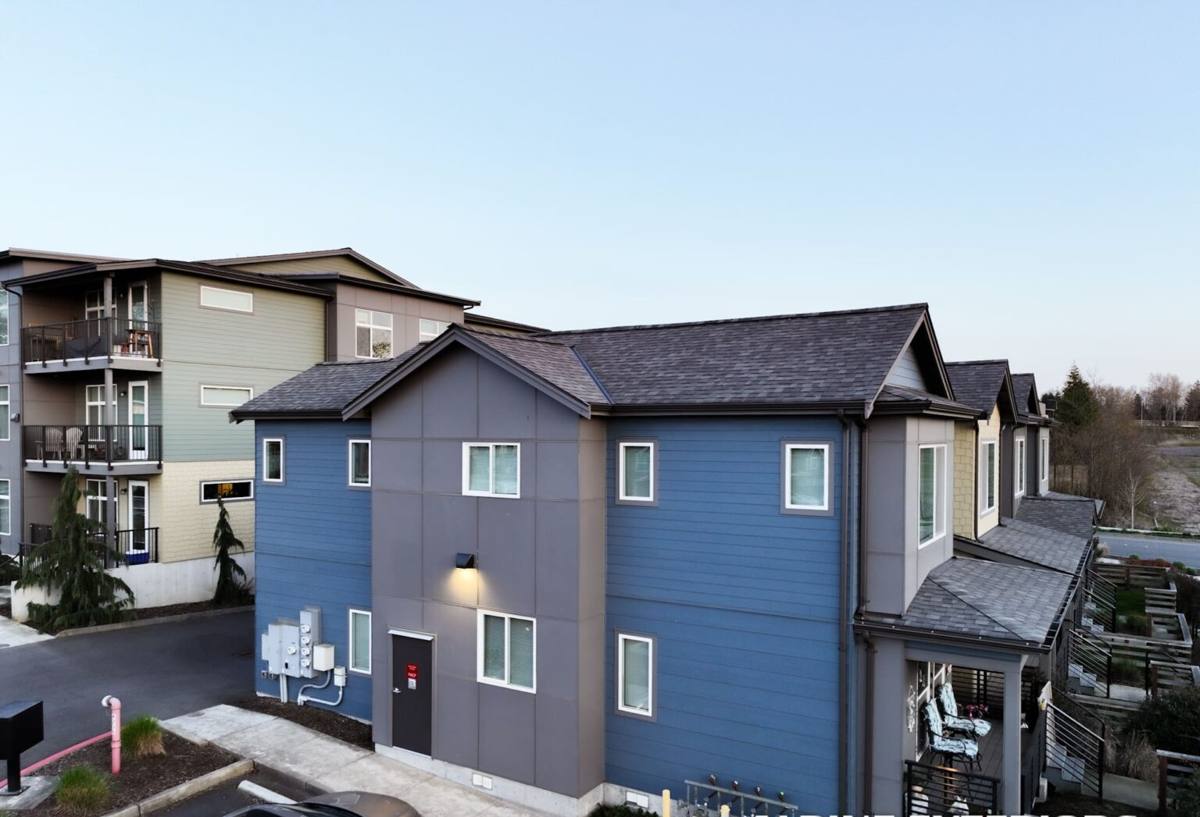
What Whatcom County Storms Do to a Roof
Most storm damage in this area doesn't come from one dramatic event. It builds up over a string of ordinary Pacific Northwest storms — heavy, sustained rain paired with gusty wind that catches shingle edges and works them loose a little at a time. A few patterns we see consistently around Nooksack:
- Wind-lifted or creased shingle tabs along roof edges and ridgelines, where uplift is strongest
- Torn or missing shingles after a hard gust, often on the side of the roof facing open fields or valley wind corridors
- Flashing pulled loose around chimneys, skylights, and roof-to-wall transitions from repeated freeze-thaw and wind movement
- Granule loss from wind-driven rain, which thins the shingle's UV and weather protection over time
- Moss and algae colonies on north-facing and shaded slopes that hold moisture against the roof deck
- Clogged gutters and valleys from storm debris, causing water to back up under shingles instead of running off
Any one of these on its own might not be urgent. Several at once, especially after a windstorm, usually means active water intrusion has already started somewhere you can't see from the yard.
Why Moss Season Makes Storm Damage Worse Here
Whatcom County's long, wet moss season isn't just a cosmetic problem. Moss holds water against the shingle surface long after a storm has passed, which softens the mat underneath, keeps nails and fasteners wet, and accelerates granule loss. A roof carrying a heavy moss load going into a windstorm is more likely to lose shingles than a clean one, because the moss adds weight and traps moisture that weakens the shingle's grip. If your roof hasn't been cleaned in a couple of years, storm damage repair and moss removal usually need to happen together, not as separate visits.
Signs Your Nooksack Roof May Have Storm Damage
Some damage is obvious. A lot of it isn't, especially from ground level. Walk your property after any significant windstorm and look for:
- Shingle pieces or granules collecting in gutters, downspouts, or on the ground near the foundation
- Visible gaps, curling, or discoloration on roof slopes, particularly at edges and ridges
- Water stains on interior ceilings or upper walls, even faint ones
- A musty smell in the attic or upper floor closets
- Daylight visible through the attic roof deck
- Sagging or soft spots when walking the attic (do not walk the roof itself after a storm — wet, damaged decking is not safe to stand on)
- Loose, bent, or missing flashing around chimneys, vents, and skylights
If you see any of these, the safest move is a professional inspection before the next storm system rolls through, not after.
What an Honest Storm Damage Repair Actually Involves
A real storm damage repair is more than swapping a few shingles and calling it done. Done right, it follows a sequence:
1. Full Inspection, Not a Quick Look
We check the whole roof system, not just the obvious damage — decking, underlayment, flashing, ventilation, and the condition of shingles that weren't directly hit. Storm damage often has a secondary story: the wind tore three shingles, but the surrounding fasteners are also loosened and due to fail in the next storm.
2. Emergency Protection, When Needed
If there's active water entry, we tarp and secure the affected area first. This is a temporary measure to stop further interior damage while the full repair is planned — it's not a substitute for the permanent fix.
3. Decking and Underlayment Check
Shingles are the visible layer, but water damage usually starts underneath. If the underlayment is saturated or the plywood decking has softened, replacing shingles over compromised decking just hides a problem that will resurface, often as a soft spot or leak in a different location next season.
4. Flashing Repair or Replacement
Flashing failures — around chimneys, skylights, vents, and roof-to-wall joints — cause a disproportionate share of storm-related leaks. We reseat or replace flashing rather than just re-caulking over a gap, since caulk alone is a short-term patch, not a repair.
5. Matching Materials Honestly
When we're replacing a section rather than the whole roof, we match shingle type, color, and exposure as closely as the manufacturer's current line allows. We'll tell you upfront if an exact match isn't possible due to weathering or discontinued colors — better to know that before the work starts than be surprised after.
Our Process, Start to Finish
| Step | What Happens |
|---|---|
| 1. Contact & Scheduling | We schedule an inspection, usually within a few days, sooner if there's active leaking |
| 2. On-Site Inspection | Full roof and attic assessment, with photos documenting the damage |
| 3. Written Estimate | Clear scope of work and pricing, explained in plain terms — no vague line items |
| 4. Insurance Coordination | If you're filing a claim, we provide documentation your adjuster can use directly |
| 5. Repair Work | Decking, underlayment, flashing, and shingle work completed per the agreed scope |
| 6. Cleanup & Walkthrough | Site cleared of debris and nails; we walk the finished work with you before we leave |
Repair vs. Replace: Making the Right Call
Not every storm-damaged roof needs full replacement, and not every roof can be safely patched. The right call depends on the roof's age, how widespread the damage is, and what condition the decking is in underneath.
| Factor | Favors Repair | Favors Replacement |
|---|---|---|
| Roof age | Under 10-12 years, otherwise healthy | Near or past expected shingle lifespan |
| Damage extent | Isolated to one or two slopes | Widespread across most of the roof |
| Decking condition | Dry, solid, no soft spots | Multiple areas of rot or saturation |
| Moss/algae history | Light, recently cleaned | Heavy, long-term buildup weakening the mat |
| Insurance scope | Adjuster approves targeted repair | Adjuster or inspection supports full replacement |
We'll always tell you honestly which side of that table your roof falls on. A repair that's likely to need another repair in a year isn't a good use of your money, and we'd rather say that upfront than sell a patch job twice.
Working With Your Insurance Claim
Most storm damage claims in this part of Whatcom County follow the same basic path: document the damage, get it to the adjuster, and make sure the scope of approved work actually matches what the roof needs. Where we can help most is the documentation step — clear photos, a written description of the damage tied to a specific storm event, and a scope of work that holds up to adjuster review. We're not your insurance company and we won't promise a claim outcome, but we'll give you the paperwork to make your case accurately.
Preventing the Next Round of Storm Damage
Once repairs are done, a few habits keep Nooksack roofs from taking the same hit twice:
- Clean gutters and valleys before the fall storm season, not after the first big rain
- Keep an eye on moss growth on shaded slopes and address it before it spreads across the whole roof
- Trim back tree limbs that overhang the roofline, which cause both debris buildup and physical impact damage in wind
- Check attic ventilation — poor airflow speeds up moisture problems that make storm damage worse when it happens
- Have the roof looked at after any storm with sustained high wind, even if nothing looks obviously wrong
Why Local Experience With Nooksack Roofs Matters
A crew that already works this part of Whatcom County knows the difference between damage typical of a valley windstorm and damage from long-term moss and moisture buildup — and that distinction matters for both the repair plan and the insurance conversation. We know which roof slopes in this area tend to take the worst wind exposure, how fast moss reestablishes on shaded river-bottom lots, and what underlayment and flashing details actually hold up through a full Pacific Northwest wet season here, not just on paper. That's the kind of judgment that only comes from doing this work locally, storm after storm.
If your roof has been through a recent windstorm, is carrying a heavy moss load, or you're just not sure whether what you're seeing is normal wear or real storm damage, we'll come take an honest look. The estimate is free, there's no pressure to book anything on the spot, and you'll get a straight answer about what your roof actually needs.