 Ferndale Siding
 Why Sandy Point Roofs Take a Different Kind of Beating
Sandy Point sits close enough to the water that its roofs live under conditions most inland Whatcom County homes never deal with. The combination of salt-laden air off the Strait, wind that comes through with almost nothing to slow it down, and a wet season that stretches for months means a roof out here ages differently than one ten miles inland. When a windstorm rolls through, the damage is rarely limited to one obvious spot — it's usually spread across the whole field of the roof, and some of it won't show itself for weeks.
That's the backdrop for any storm damage repair job we take on in this neighborhood. We're not just patching what blew off. We're accounting for what the salt air and moisture have already been doing to the roof before the storm ever hit.
Salt Air and Metal Fasteners
Airborne salt accelerates corrosion on exposed metal — nail heads, flashing edges, gutter fasteners, and the metal components in ridge vents and boots. A roof that's been fine for years can have fasteners that are quietly weaker than they look. During a storm, those are exactly the points that fail first, whether it's a nail that pulls loose or flashing that lifts because the metal underneath it has thinned. When we're repairing storm damage in Sandy Point, we check fastener condition well beyond the immediate damage area, not just at the spot where shingles are missing.
Wind-Driven Rain and Uplift
Sandy Point's exposure means wind often hits the roof at an angle rather than straight down, which drives rain up and under roofing materials rather than just over them. This is what causes damage that isn't visible from the ground — water finds its way under a lifted shingle or around a compromised flashing seam and travels along the underlayment before it ever shows up as a ceiling stain. Straight-line wind gusts can also create uplift pressure strong enough to loosen shingles that look intact but no longer have a solid seal.
What Actually Counts as Storm Damage
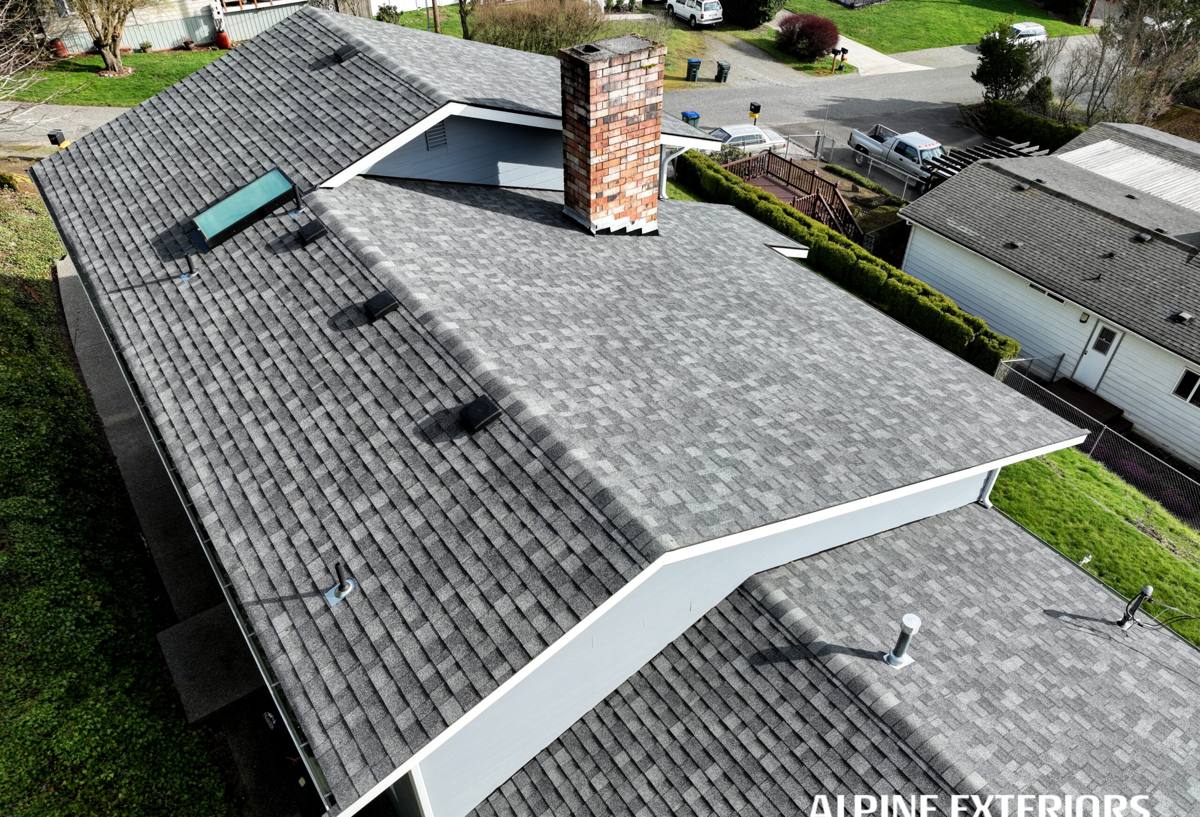
Not every roof problem after a windstorm is storm damage, and that distinction matters both for repair scope and for insurance. Storm damage is sudden and traceable to a specific weather event — wind, hail, or a falling branch. Ongoing moss growth, gradual granule loss, or flashing that's been failing slowly for years is wear and tear, even if a storm is what finally makes it obvious.
- Shingles that are cracked, creased, or torn along one edge from wind flex
- Shingles missing outright, especially along ridges, edges, and valleys where wind pressure concentrates
- Flashing lifted or bent around chimneys, skylights, and roof-to-wall transitions
- Granule buildup in gutters and downspouts after the storm, signaling accelerated wear on remaining shingles
- Water staining on interior ceilings or in the attic that appeared shortly after a storm
- Debris impact marks — bruising or punctures from branches or wind-carried debris
Part of our job on the initial visit is telling you plainly which of these is storm-related and which is pre-existing, so you're not paying out of pocket for something that could be a claim, and you're not filing a claim for something that isn't storm damage.
Our Storm Damage Assessment Process
Ground and Roof-Level Inspection
We start by walking the property and then get on the roof itself. Aerial photos and drone footage are useful, but wind and salt damage in this area often needs a hands-on check — lifting a shingle edge, checking fastener grip, and pressing on flashing to see if it's still sealed. We also check the attic from the inside where accessible, since that's often the first place wind-driven water shows up before it reaches the ceiling.
Documenting the Damage
Everything gets photographed and logged with enough detail to support an insurance claim if you decide to file one — location, extent, and how it ties to the storm date. We keep this documentation organized so it's ready to hand to an adjuster rather than something you have to piece together later.
Scoping the Repair
Once we know what's damaged, we give you a clear scope: what needs to be repaired now, what's a smaller fix that can wait, and what we'd flag as a concern for the future given the exposure out here. We don't pad scopes with unnecessary work, and we don't shrink them to win a lower bid — the goal is a roof that's actually sound when we're done, not one that looks fixed until the next storm.
Repair vs. Replacement — How We Decide
Storm damage doesn't automatically mean a full re-roof, and it doesn't automatically mean a simple patch either. The right call depends on the roof's age, how much of it is affected, and what condition the surrounding material is in.
| Factor | Favors Repair | Favors Replacement |
|---|---|---|
| Roof age | Under half its expected lifespan | Near or past expected lifespan |
| Damage spread | Isolated to one section or slope | Scattered across multiple slopes |
| Underlying condition | Deck and underlayment sound | Existing moss, rot, or granule loss found during inspection |
| Matching materials | Current shingles still available/close match | Discontinued or badly weathered, so patches would stand out |
| Insurance scope | Adjuster approves a repair-only claim | Adjuster approves full slope or full roof replacement |
We'll walk you through where your roof falls on each of these before recommending a direction, and we're upfront when a repair is the honest answer even if a replacement would be a bigger job for us.
Materials That Hold Up to This Exposure
For repair work in Sandy Point, we favor materials and details that specifically address salt exposure and driving rain, not just whatever matches the existing roof on paper.
- Corrosion-resistant fasteners and flashing — standard galvanized components corrode faster this close to the water; we use fastener and flashing grades built for coastal exposure wherever the repair allows it.
- Proper underlayment at repair seams — any time we open up a section of roof, we treat the underlayment as part of the repair, not just the shingles on top, since wind-driven rain damage often starts underneath.
- Ice-and-water shield at vulnerable transitions — valleys, eaves, and roof-to-wall junctions get extra membrane protection, because these are the spots where angled rain finds a way in.
We're candid about trade-offs here rather than upselling. A higher-grade fastener or membrane costs more up front, but on a roof exposed to salt air and wind the way Sandy Point roofs are, cutting corners on these details is usually what leads to a repeat call two winters later.
Insurance Claims and Documentation
Most storm damage repairs out here involve a homeowner's insurance claim. We're not a public adjuster and we don't represent your insurance company, but we do provide the kind of documentation that makes the claims process smoother: dated photos, a written scope tied to the specific storm event, and a repair estimate broken down in the way most carriers expect to see it. If an adjuster wants to meet on-site, we're glad to walk the roof with them and point out what we found.
One honest note: insurance covers storm damage, not deferred maintenance. If our inspection turns up moss damage or wear that predates the storm, we'll tell you which is which rather than letting a claim get denied over a mismatch between what's filed and what's actually there.
Timeline: What to Expect
After a significant windstorm, response times across Whatcom County roofers stretch out because demand spikes all at once. A few things affect how fast your repair actually happens:
- Whether the damage is actively leaking (we prioritize active leaks and get a temporary cover on before anything else)
- How quickly an insurance claim is approved, if you're filing one
- Material availability, especially for less common shingle profiles or colors on an older roof
- Weather windows — roofing work in Whatcom County's wet season depends on stretches of dry enough weather to do it right
If your roof is actively leaking, say so up front — that changes our scheduling, and we'll get a tarp or temporary seal on quickly even if the full repair has to wait for materials or a dry window.
Why a Crew That Already Works Sandy Point Matters
A roofer unfamiliar with this stretch of coastline can misread what they're looking at. They might treat corroded fasteners as a one-off, recommend standard-grade replacement flashing that will start failing again in a few seasons, or miss the moss buildup in shaded, salt-damp valleys that's setting up the next leak. Working this area regularly means we already know which details matter for how Sandy Point roofs actually fail — long before the storm, not just after it.
It also means we're not learning the neighborhood's access, common roof styles, and typical wind exposure patterns on your job. We show up already knowing what questions to ask and what to check first.
After a Storm: What to Check and Do
- Check ceilings and attic spaces for new staining or dampness, even if nothing looks wrong from outside
- Look at gutters and the ground below the roofline for shingle pieces or unusual granule buildup
- Photograph any visible damage from the ground before doing anything else — don't get on the roof yourself
- Cover any active leak from the inside with a tarp or bucket to limit interior damage while you wait for inspection
- Avoid walking a wind-damaged roof — loosened shingles and weakened decking can give way without warning
- Call for an inspection promptly; delayed reporting can complicate an insurance claim and let minor leaks turn into bigger ones
If a recent storm has left your Sandy Point roof damaged — or you're just not sure whether what you're seeing is storm-related — we're happy to take a look. Estimates are free, there's no pressure to commit to anything on the spot, and you'll get a straight answer about what's actually needed. The form below is the easiest way to get on our schedule.