 Ferndale Siding
 Sudden Valley's Climate Puts Real Demands on Your Siding
Homes in Sudden Valley deal with a specific combination of weather stress that doesn't let up for long. Whatcom County sits in a marine climate zone, which means moisture is the default condition for a good chunk of the year — not an occasional problem. Add in salt-laden air moving through the corridor and a moss season that can stretch from fall through spring, and you have three separate mechanisms working against whatever material is on your exterior walls.
Moss, Moisture, and the Long Wet Season
Moss doesn't just grow on roofs. Given shade, humidity, and a surface with any texture or porosity, it colonizes siding too, especially on north-facing walls and anywhere tree cover keeps a section of the house from drying out between rain events. Untreated wood-based products absorb moisture into the substrate itself, which is what lets moss and mildew take hold below the surface, not just on top of it. Once that happens, cosmetic cleaning only buys time.
Salt Air and Coastal Exposure
Salt air is corrosive to fasteners, trim, and any metal flashing that isn't properly rated or protected. It also accelerates the breakdown of lower-grade coatings and finishes, which is part of why paint on wood or composite siding in this area tends to fail faster than the same product would inland. A siding system for this neighborhood needs to hold up to airborne salt for decades, not just survive the first few winters looking good.
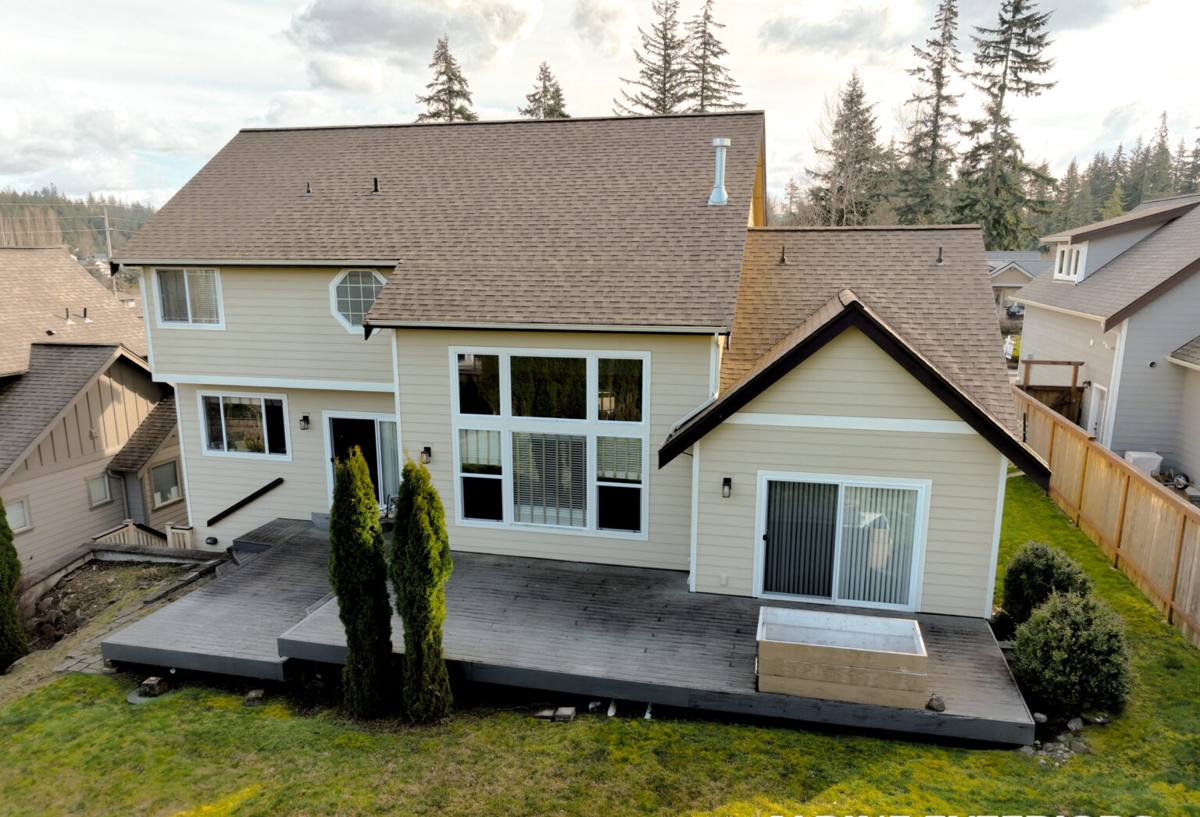
Why We Only Install James Hardie Here
We made a decision as a company to install James Hardie fiber cement exclusively — no vinyl, no LP SmartSide, no Cemplank or Allura, no primed spruce or cedar. That's not a marketing position, it's a practical one built around what actually survives conditions like Sudden Valley sees. Fiber cement is non-combustible, dimensionally stable in wet-dry cycling, and doesn't rely on a surface paint job alone to keep water out of the substrate the way wood products do.
James Hardie also builds region-specific formulations through its HZ5 product engineering, which is calibrated for Pacific Northwest moisture exposure rather than a one-size-fits-all national spec. Combined with the factory-applied ColorPlus finish — baked on under controlled conditions rather than field-painted — you get a finish layer that's more consistent and considerably more resistant to fading and moisture intrusion at the coating level than anything applied on-site.
Choosing the Right Hardie Product Line for This Property
Not every Hardie product is interchangeable, and the right choice depends on the home's exposure, architectural style, and how much of the wall area faces prevailing wind and rain.
- HardiePlank lap siding — the most common choice for full re-sides, available in several exposure widths and profiles; performs well across most elevations in this climate.
- HardieShingle — used for accent gables or full shingle-style homes where a textured, traditional look is wanted without the moisture vulnerability of real cedar shingles.
- HardiePanel — a vertical option often paired with board-and-batten trim for modern or craftsman-style exteriors.
- HardieTrim — used around windows, corners, and fascia so the entire envelope — not just the field siding — is fiber cement rather than a mix of materials with different expansion rates.
On homes with heavier tree cover or shaded north walls, we'll often recommend a smoother ColorPlus finish over a heavily textured one, simply because smoother surfaces shed moss spores more easily and are easier to keep clean.
What Correct Installation Looks Like
James Hardie siding is only as good as the installation behind it. The product is engineered to perform in wet climates, but that engineering assumes the crew follows manufacturer specifications exactly — and in our experience, a large share of the siding failures we get called out to inspect trace back to installation shortcuts, not the material itself.
Clearances and Drainage
Hardie siding needs proper clearance from grade, roof lines, decks, and any horizontal surface where water can pool or splash back. It also needs a functioning drainage plane behind it — a weather-resistive barrier and, in most cases, a rainscreen gap that lets any moisture that does get behind the siding drain and dry out instead of sitting against the sheathing.
Flashing and Fastening
Every window, door, and penetration needs flashing detailed to shed water down and out, not trap it. Fasteners have to be corrosion-resistant and driven to Hardie's specified pattern and depth — over-driven or under-driven nails are one of the most common causes of premature panel damage. Panel gaps at butt joints and trim also need to be set correctly and caulked with a product rated for the application, not just whatever's on the truck.
Caulk and Paint Touch-Up
ColorPlus finished siding comes with factory-matched touch-up product for field-cut edges and any minor scuffs from installation. Skipping this step leaves raw cut edges exposed to moisture, which is a small detail that causes outsized problems years later.
Siding Materials in a Marine Climate: A Comparison
| Factor | James Hardie Fiber Cement | Vinyl | Wood / Cedar |
|---|---|---|---|
| Moisture absorption | Very low; won't rot or swell | None, but seams and gaps allow water behind panels | High; primary failure point in wet climates |
| Moss and mildew resistance | Strong, especially with smooth ColorPlus finishes | Moderate; mildew grows on the surface film | Weak; moisture retention feeds growth |
| Fire resistance | Non-combustible | Can melt or deform | Combustible |
| Finish durability | Factory-baked ColorPlus, long fade resistance | Color molded in but can chalk over time | Requires repainting or restaining every few years |
| Typical lifespan when installed correctly | Multiple decades | Decades, but seams and fasteners degrade sooner | Shorter without aggressive, ongoing maintenance |
Our Sudden Valley Installation Process
- On-site assessment — we walk the exterior, check current siding and sheathing condition, and note shaded or moss-prone areas that affect product and finish choice.
- Product and color selection — matched to the home's exposure, architectural style, and the specific Hardie line best suited to each elevation.
- Tear-off and substrate check — old siding comes off and any water-damaged sheathing is identified and addressed before anything new goes up.
- Weather barrier and drainage plane installation — set up correctly the first time, since this layer is what actually protects the wall assembly long-term.
- Hardie installation to manufacturer spec — proper clearances, fastening, flashing, and panel gaps throughout.
- Trim, caulking, and finish touch-up — sealing every cut edge and joint before we call the job done.
- Final walkthrough — reviewed with the homeowner before we consider the project complete.
Maintaining Hardie Siding in This Climate
James Hardie siding is low-maintenance compared to wood, but "low-maintenance" isn't "no-maintenance" in a climate this wet. A little seasonal attention keeps it performing the way it's designed to.
- Rinse siding annually to remove pollen, salt residue, and early moss growth before it establishes.
- Keep gutters clear so overflow doesn't run down the wall face repeatedly in the same spot.
- Trim back vegetation and tree limbs that shade walls and keep them from drying out between rain events.
- Inspect caulk lines at trim and penetrations every year or two and re-seal if it's cracked or pulling away.
- Watch for any hairline cracking at butt joints, which usually signals a fastening or gap issue worth having checked early.
Why a Crew That Already Works This Area Matters
Installation quality is the single biggest variable in how long siding actually lasts, and that's especially true in Whatcom County's marine climate where mistakes get exposed fast. A crew that regularly works Ferndale and the surrounding area already knows which elevations take the worst weather, how much drainage detail a given roofline needs, and where moss tends to establish first. That familiarity shows up in fewer callbacks and siding that's still performing well long after the crew has moved on to the next job.
It also matters for accountability. A local, established contractor has a reputation in the community to protect and is easy to reach if a warranty question comes up years down the road — which is worth more than it sounds like when you're trusting a product to protect your home for decades.
What Affects the Cost of a Sudden Valley Hardie Project
Every home is different, but a few factors consistently move the price on a James Hardie installation in this area:
| Cost Factor | Why It Matters |
|---|---|
| Home size and wall complexity | More corners, gables, and dormers mean more cutting, trim, and labor time |
| Substrate condition | Water-damaged sheathing found during tear-off adds repair scope before new siding goes on |
| Product line and profile | Shingle and panel styles generally cost more in labor than standard lap siding |
| Site access | Steep lots, limited driveway access, or tight setbacks affect staging and labor time |
| Trim and detail work | Full HardieTrim packages around windows and corners add cost but protect the whole envelope consistently |
We don't quote a job without seeing it — every Sudden Valley property has its own mix of exposure, shade, and existing condition, and that's what actually drives an accurate number.
If you're weighing your options for a re-side in Sudden Valley, we're glad to walk the property, look at what your home's specific exposure is dealing with, and put together a straightforward, no-pressure estimate. Use the form below to get started.