 Ferndale Siding
 Siding That Has to Work in Two Different Microclimates
Homeowners between Ferndale and Sumas deal with a wider range of weather than the map distance suggests. Closer to Ferndale and the water, siding takes on salt-tinged marine air and wind-driven rain off Bellingham Bay. Move east toward Sumas and the Nooksack lowlands, and the story shifts to valley humidity, fog that sits for days, and long stretches where surfaces simply don't dry out. Both conditions add up to the same result for exterior siding: near-constant moisture exposure for eight or nine months of the year, with a moss and algae season that can run from fall through spring.
Siding in Whatcom County isn't just a weather barrier — it's fighting a slow, ongoing battle against water intrusion and organic growth. Materials that hold water, trap moisture behind their surface, or rely on paint film alone to stay sealed tend to fail here faster than they would in a drier climate. That's the lens we use on every Sumas and Ferndale project: does this material and this installation method actually hold up to years of driving rain and prolonged dampness, or is it just holding up in the showroom.
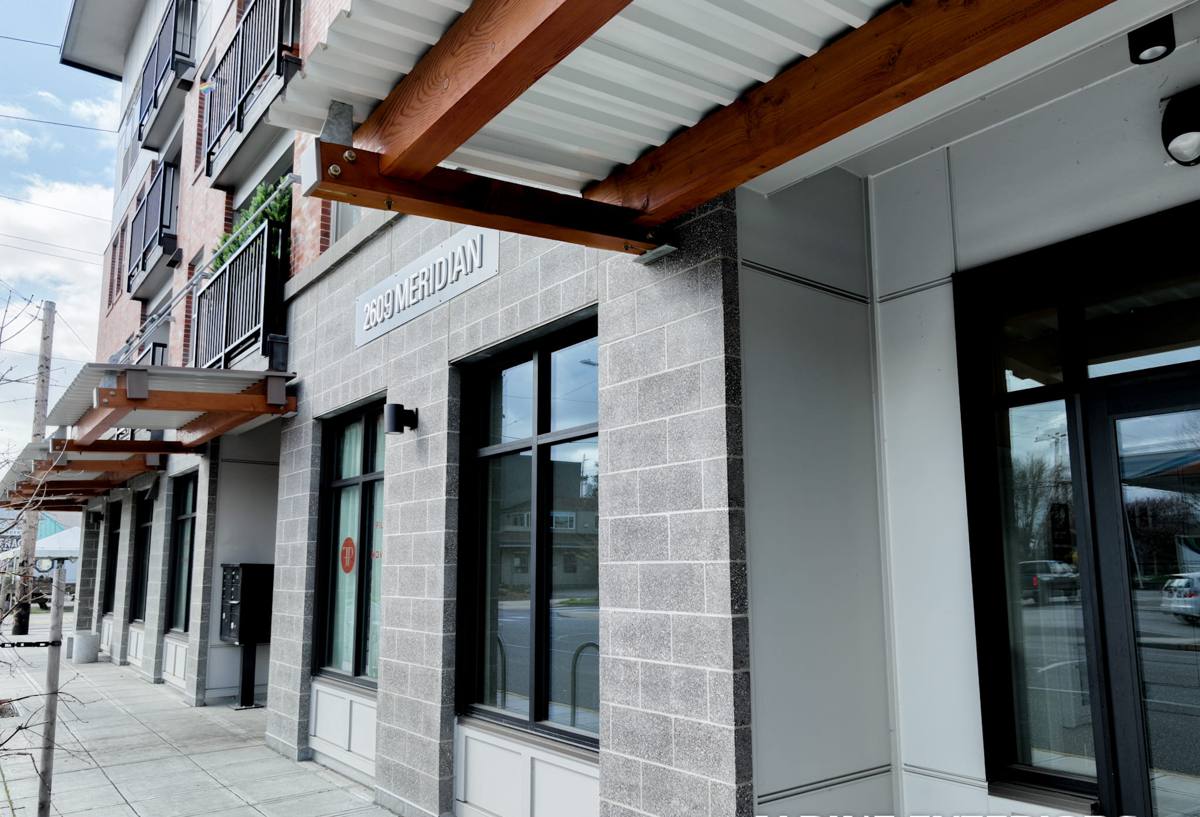
Why Fiber Cement Fits This Climate
Fiber cement siding is a mix of cement, sand, and cellulose fibers pressed into dense, stable boards. Unlike wood-based products, it doesn't swell, rot, or delaminate when it stays wet for extended periods — and in this region, "extended periods" is the normal condition for six months of the year, not the exception. It also doesn't feed moss and mildew growth the way untreated wood or some composite products can, which matters directly for homes shaded by trees or set close to the tree line, common throughout both Ferndale and the Sumas area.
Fiber cement is also dimensionally stable, meaning it doesn't expand and contract with humidity swings the way wood siding does. That stability is what keeps caulk joints, paint film, and trim connections intact over time instead of cracking and opening pathways for water. In a climate where a single season of poor sealing can lead to hidden moisture damage behind the siding, that stability is not a minor feature — it's the reason the product holds its warranty period in practice, not just on paper.
Why We Only Install James Hardie
Not all fiber cement is built the same, and we don't install every brand on the market. We standardized on James Hardie because of its HZ5 formulation, engineered specifically for climates with heavy moisture cycling like the Pacific Northwest, and its factory-applied ColorPlus finish, which is baked on under controlled conditions rather than field-painted. Field-applied paint is only as good as the weather conditions on install day and the number of coats actually applied — a factory finish removes that variable entirely. Hardie also backs its product with a transferable warranty that holds up if the home changes hands, which matters to homeowners thinking about resale.
What Correct Installation Actually Involves
Fiber cement siding fails in this climate almost exclusively for one reason: bad installation, not bad material. The board itself is engineered to handle moisture — the vulnerability is always at the seams, fasteners, and transitions where water can get behind it. A correct install means:
- Proper weather-resistive barrier and flashing at every window, door, and penetration before a single board goes up
- Correct clearance gaps at the bottom of the siding, at grade, at roof lines, and at decks so water has somewhere to drain instead of wicking upward
- Fastener placement and spacing that follows Hardie's published specs — not "close enough," since over- or under-driven nails void warranty coverage and create entry points for moisture
- Butt joints and seams sealed with a flexible, paintable sealant rated for the product, not general-purpose caulk that hardens and cracks within a couple of seasons
- Careful cuts and treated edges at every field cut, since exposed raw edges are the single most common place fiber cement starts to absorb water it wasn't designed to
None of this is unusual or exotic — it's the manufacturer's documented installation standard. But it's also the exact set of steps that get rushed on crews that install a little of everything and don't specialize. Skipping any one of these steps won't show up as a problem on install day. It shows up two, five, or ten years later as a soft spot, a stain, or a section that needs to be pulled off and redone — usually after moisture has already reached the sheathing.
Choosing the Right Hardie Line for a Sumas or Ferndale Home
| Hardie Product | Best Use | Why It Fits This Climate |
|---|---|---|
| HardiePlank Lap Siding | Most single-family homes, full exterior | Standard horizontal profile, HZ5 moisture engineering, wide ColorPlus color range |
| HardiePanel Vertical Siding | Accent walls, gables, modern/farmhouse styles | Clean vertical lines, same moisture and impact resistance as lap |
| HardieShingle | Craftsman-style accents, gable ends | Textured look without the maintenance burden of real wood shingle |
| HardieTrim | Corners, window and door surrounds, fascia | Matches siding durability so trim doesn't become the weak point |
Most homes end up using a combination — lap siding as the field material with trim boards and possibly a shingle or panel accent. Color and texture come down to the home's style and the homeowner's preference; what doesn't change is the underlying moisture engineering, which is the same across the HZ5 lineup regardless of which profile is chosen.
Our Process for Sumas and Ferndale Projects
Every project starts with an in-person look at the home, not a generic estimate. We assess the current siding condition, check for any signs of moisture damage already present in the sheathing, and identify problem areas specific to the property — shaded north-facing walls prone to moss, low clearance points near grade or decking, or trim details that need extra attention. From there:
- On-site evaluation and a written, itemized estimate — no surprise line items later
- Removal of old siding and inspection of the sheathing underneath for hidden rot or moisture damage before anything new goes up
- Repair of any damaged sheathing found during tear-off, documented and discussed before proceeding
- Installation of weather-resistive barrier and flashing at all penetrations
- Hardie siding installed to manufacturer spec, including fastener pattern, clearances, and sealed joints
- Final walkthrough with the homeowner to review the completed work
We don't add pressure-sales upgrades mid-project or push add-ons that weren't part of the original scope. If we find something during tear-off — a soft spot, a leak that's been hidden for years — we show it to the homeowner and explain the options before doing any additional work.
Signs Your Current Siding May Already Be Failing
Given how much moisture this region deals with, it's worth knowing what to look for before a small problem becomes a sheathing replacement. Homeowners in Sumas and Ferndale should check for:
- Persistent dark streaking, green tint, or moss growth that returns shortly after cleaning
- Soft or spongy spots when pressed, especially near the bottom of walls or below windows
- Visible warping, bowing, or gaps opening up between boards
- Paint that's peeling or bubbling rather than just fading — often a sign moisture is trapped underneath
- Cracked or missing caulk at trim, corners, and window edges
- A musty smell near exterior walls inside the home, which can indicate moisture has already reached the wall cavity
Any one of these on its own isn't necessarily an emergency, but they're worth having looked at before another wet season passes.
Why Local Experience in This Corridor Matters
A crew that regularly works between Ferndale and Sumas has already seen how differently siding performs depending on where a home sits — right up against tree cover, exposed on an open lot, close to the water, or set back in the valley. That experience shapes decisions that don't show up on a spec sheet: which walls need extra attention to flashing, where moss is going to be a recurring issue regardless of material, and which install details matter most given how this specific climate behaves over a full year, not just on a dry install day. A crew unfamiliar with the region can install fiber cement correctly by the book and still miss the local conditions that determine how it performs five years down the road.
Maintenance in a Wet, Mossy Climate
Fiber cement is low-maintenance compared to wood, but "low-maintenance" doesn't mean "no maintenance" in a climate like this. A yearly rinse to keep moss and algae from taking hold, prompt attention to any cracked caulk joints, and keeping gutters clear so water isn't sheeting down the siding all go a long way toward getting the full lifespan out of the material. Correct installation removes most of the risk; basic upkeep protects the rest.
If your home is due for new siding, or you're not sure whether what's currently on the walls is holding up the way it should, we're happy to take a look. We offer free, no-pressure estimates for homeowners throughout Ferndale and Sumas — just fill out the form below to get started.