 Ferndale Siding
 Why Roofs in the Sumas Area Wear Out Faster Than People Expect
Homeowners in the Sumas area often call us because a roof "just started leaking" — but a roof rarely fails all at once. It fails a little bit every year, for years, until the damage finally shows up on a ceiling. In this part of Whatcom County, the culprits are consistent: long stretches of driving rain, wind that pushes water sideways under poorly lapped materials, and a moss season that can run most of the year in shaded, north-facing sections of a roof. Add in the coastal-influenced air common to this corner of Washington, and you get a slow, steady breakdown of granules, fasteners, and flashing that a drier climate would never produce.
None of that means every roof needs to be replaced early. It means the roofs that fail early are usually the ones that were installed without accounting for how this climate actually behaves — thin underlayment, undersized ventilation, or flashing details that were "close enough" instead of correct.
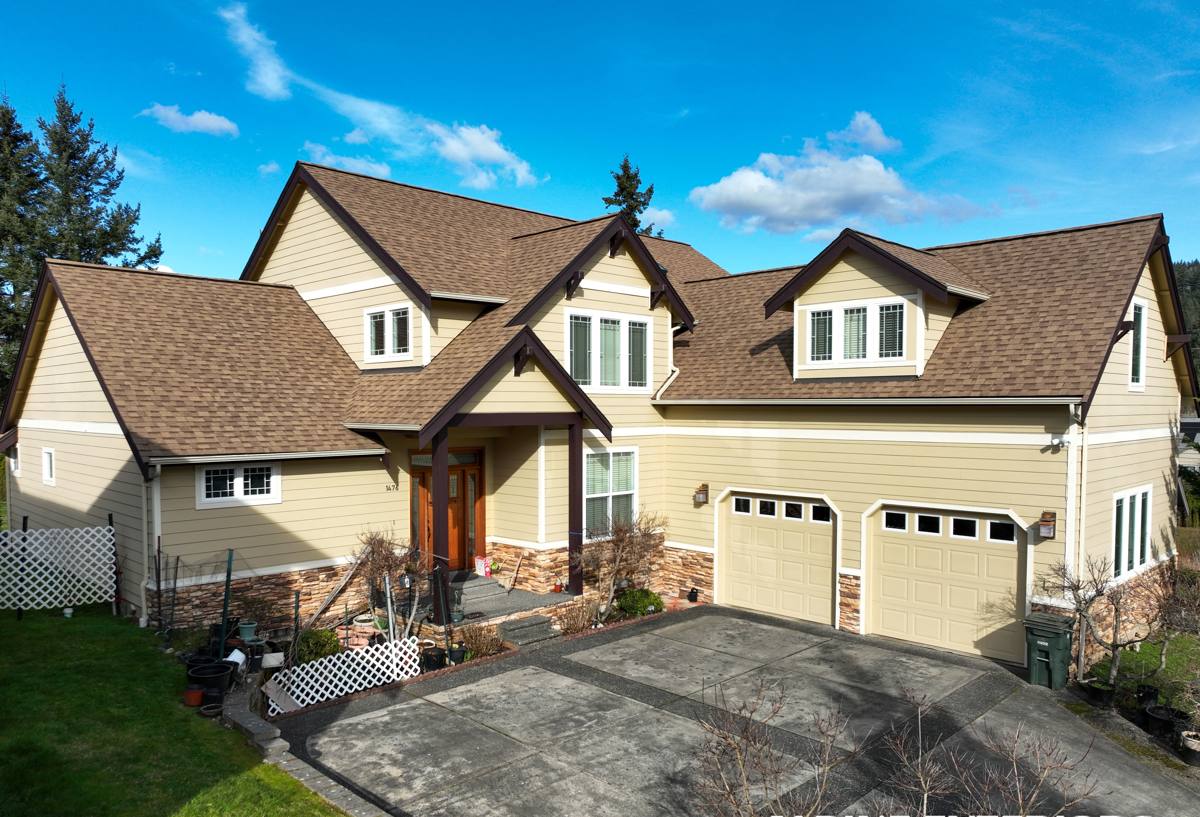
Signs a Sumas Home Needs a Roof Replacement, Not Another Repair
Repairs make sense when a roof has years of life left and the damage is isolated. Replacement makes sense when the roof's overall condition means repairs are just delaying the inevitable — and costing money along the way. Here's what we actually look for during an inspection:
- Granule loss heavy enough that you can see bare asphalt on multiple slopes, not just one worn spot
- Shingles that are cupping, curling, or cracking across large sections rather than a few isolated spots
- Moss or algae growth that keeps coming back within a year of cleaning, especially on shaded north- and west-facing slopes
- Soft or spongy decking felt underfoot during inspection, which signals moisture has already gotten past the surface layer
- Daylight visible through the attic roof deck, or water staining on rafters and sheathing
- Flashing around chimneys, skylights, or valleys that's rusted, lifted, or was never properly stepped in the first place
- A roof that's 20+ years old on standard asphalt shingle, regardless of how it looks from the ground
If a roof shows two or more of these, patch repairs are usually a short-term fix at best. We'll tell you honestly if a repair will hold — we don't sell replacements to homeowners who don't need one.
What a Correct Roof Replacement Actually Involves
Full Tear-Off, Not a Layover
We remove the existing roofing down to the deck on every replacement. Installing new shingles over old ones traps moisture, hides rot, and voids most manufacturer warranties. A tear-off also gives us a chance to actually see the deck's condition instead of guessing.
Deck Inspection and Repair
Once the old roofing is off, we inspect the sheathing for soft spots, delamination, or rot — common in this climate wherever ventilation or flashing has failed over the years. Any bad sections get replaced before anything new goes down. Skipping this step is the single most common shortcut that leads to premature failures.
Underlayment Built for Wind-Driven Rain
Standard felt underlayment is a minimum, not a standard we rely on for a driving-rain climate. We use synthetic or self-adhering underlayment in valleys, eaves, and other high-exposure areas where wind can push water backward under shingles.
Flashing, Done Properly the First Time
Chimneys, skylights, sidewalls, and valleys fail more often from bad flashing than from bad shingles. Step flashing, counterflashing, and valley metal all get installed (or replaced) as part of the job — not caulked over and called good.
Ventilation That Matches the Home
A roof deck that can't breathe traps heat and moisture, which accelerates shingle aging from underneath and feeds moss growth from above. We calculate intake and exhaust ventilation for the specific attic, rather than assuming whatever vents were already there are sufficient.
Choosing the Right Roofing Material for This Climate
There's no single "best" roofing material — there's a best fit for your roof's exposure, your budget, and how much long-term maintenance you're willing to do. Here's how the common options actually compare for a Sumas-area home:
| Material | Typical Lifespan | Moss/Moisture Behavior | Maintenance Burden |
|---|---|---|---|
| Architectural asphalt shingle | 25–30 years | Good with proper ventilation; needs periodic moss treatment on shaded slopes | Low to moderate |
| 3-tab asphalt shingle | 15–20 years | Wears faster under sustained moisture; more prone to early granule loss | Moderate |
| Standing seam metal | 40–50+ years | Sheds water and moss growth very well; minimal organic buildup | Low |
| Cedar shake | 20–30 years with upkeep | Most sensitive to moisture and moss without diligent maintenance | High |
We install architectural asphalt shingle and metal roofing as our standard offerings because both hold up well under sustained regional rain and moss pressure when installed with proper ventilation and flashing. Cedar shake can still look great here, but it demands a maintenance schedule most homeowners underestimate — that's a trade-off we'll walk you through honestly rather than talk you out of a look you want.
Our Roof Replacement Process, Start to Finish
- On-site inspection: We walk the roof and attic, not just the ground view, and photograph problem areas.
- Written estimate: A clear scope of work and materials — no vague "as needed" line items.
- Material selection: We help you weigh cost, lifespan, and appearance against your home's actual exposure.
- Scheduling around the weather: Roof replacements need a dry work window; we plan around forecasts rather than rushing a job into the rain.
- Tear-off and deck repair: Old roofing removed, deck inspected, damaged sheathing replaced.
- Underlayment, flashing, and ventilation installed: The parts of the job that determine whether it lasts.
- Final shingle or metal installation: To manufacturer specifications, not shortcuts.
- Cleanup and magnetic sweep: Yard and driveway cleared of debris and stray fasteners.
- Final walkthrough: We review the finished roof with you before calling the job done.
Moss and Algae: Managing the Long Game
Even a well-installed roof will get moss pressure in this part of Washington — shaded slopes, overhanging trees, and long wet stretches make it close to unavoidable somewhere on most properties. The goal isn't to pretend moss won't happen; it's to install a roof and ventilation system that resists it as much as possible, and to give homeowners a realistic maintenance rhythm afterward: periodic soft washing (never pressure washing shingles), keeping gutters and valleys clear of debris that holds moisture, and trimming back branches that keep a slope shaded and damp. A roof replacement is the best point to correct chronic moss problems, because we can address the ventilation and drainage issues that caused it in the first place — not just the symptom on top.
Why It Matters to Hire a Crew That Already Works in This Area
Roofing technique that works in a dry climate isn't automatically correct here. A crew that mainly works inland or in drier regions may not default to upgraded underlayment in valleys, may under-vent an attic, or may not think twice about flashing details that matter more when wind-driven rain is a regular event rather than a rare storm. Working across Ferndale and the surrounding Whatcom County communities regularly, including the Sumas area, means we size ventilation, underlayment, and flashing for what actually happens here — not for a textbook average.
Local experience also means knowing the practical side: permitting expectations, how steep or exposed roofs in this area tend to be, and what kind of access and staging works on the area's typical lots.
What Drives the Cost of a Roof Replacement
Every estimate is specific to the home, but the same handful of factors move the price up or down on most jobs:
| Cost Factor | Why It Matters |
|---|---|
| Roof size and number of slopes | More material and more labor hours, plus more valleys and hips to flash correctly |
| Roof pitch and accessibility | Steep or hard-to-access roofs require more safety setup and slow the work down |
| Deck condition | Rotted or soft sheathing found during tear-off adds material and labor to replace it properly |
| Material choice | Asphalt, metal, and cedar carry different material and installation costs |
| Layers being removed | Tearing off multiple existing layers takes more time and disposal cost than one |
| Ventilation and flashing upgrades | Bringing an older roof's ventilation or flashing up to a proper standard adds some cost but pays off in lifespan |
We don't quote a number without seeing the roof and attic first — anyone who does is guessing, and guesses turn into change orders mid-project.
Ready for a Straight Answer on Your Roof
If your roof is showing granule loss, chronic moss, or you just want an honest read on how many years it has left, we're glad to take a look. Every estimate includes a full inspection, a clear explanation of what we find, and a written scope — no pressure, no scare tactics. Reach out through the form below to schedule a free roof evaluation for your Sumas-area home.