 Ferndale Siding
 Windows Built for Sumas Weather, Not Just Sumas Style
Sumas sits at the northern edge of Whatcom County, close enough to the Nooksack Valley and the Canadian border that its weather pattern is a close cousin to the rest of the county's: long stretches of low cloud, steady rain that doesn't let up for days at a time, and the kind of persistent dampness that settles into wood, caulk, and old weatherstripping and never fully leaves. The same marine weather systems that push salt-tinged air and driving rain across Whatcom County reach inland here too, and over a few decades that moisture cycle is hard on window assemblies that weren't built or installed with it in mind.
A window that works fine in a drier climate can still fail here — not because the glass or vinyl is bad, but because the installation didn't account for how water actually moves around a window opening in this region. Flashing, sealant choice, and drainage details matter more here than in most parts of the country. That's the difference between a window that lasts fifteen years and one that lasts forty.
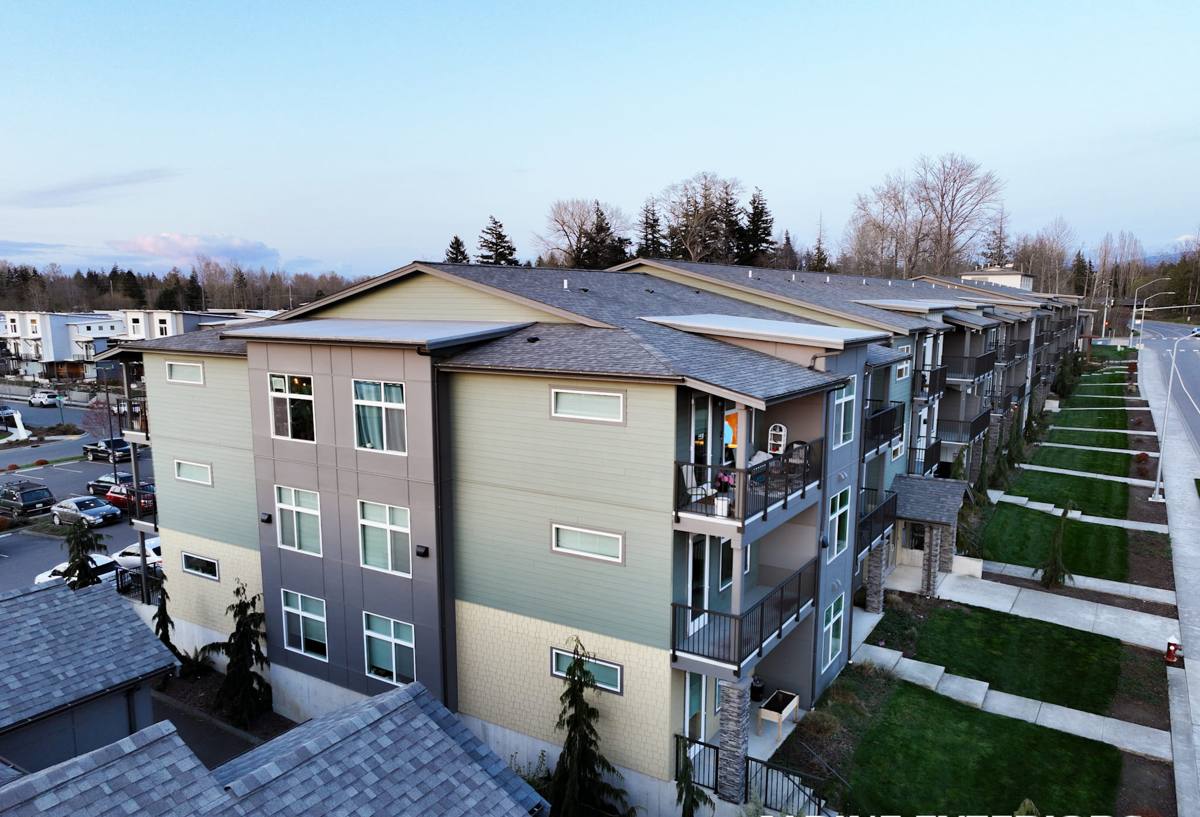
What Sumas Homes Ask Us to Fix
Most of the calls we get from Sumas homeowners aren't about wanting new windows for looks — they're about a specific problem they've noticed:
- Fogging or moisture between the panes, meaning the seal has failed
- Windows that are hard to open, or that stick during humid stretches
- Visible rot or soft wood at the sill or corners of the frame
- A cold draft near the window even when it's fully latched
- Condensation forming on the inside of the glass regularly through fall and winter
- Moss or dark staining building up on the exterior trim around the window
Any one of these is worth a look. Together, or if they've been going on for more than a season, they usually mean the window or its surrounding flashing has already let moisture into the wall assembly — and that's a bigger repair than the window itself if it sits unaddressed through another wet season.
What a Correct Installation Actually Involves
The window unit itself is maybe a third of the job. The other two-thirds is everything around it — the part that decides whether water gets managed or trapped.
Removal and opening inspection
We pull the old window out carefully and inspect the rough opening before anything new goes in. This is where hidden problems show up: soft framing, old flashing that was never sealed correctly, or signs that water has been getting behind the siding for years without anyone knowing. If the sheathing or framing needs repair, that gets addressed before a new window ever goes in — installing a good window into a compromised opening just delays the same failure.
Flashing and drainage
This is the step that separates a durable installation from one that fails in five years. Every window needs a drainage path so any water that gets past the exterior trim can escape instead of pooling at the sill. In a climate that sees as much driving rain as Whatcom County does, this detail isn't optional — it's the single biggest factor in how long the installation actually lasts.
Sealing and insulation
Low-expansion foam or backer rod and sealant around the frame closes air gaps without bowing the frame out of square — a common mistake with full-expansion foam. The exterior gets sealed with a sealant rated for sustained moisture exposure, not a general-purpose caulk that hardens and cracks after a couple of wet winters.
Trim and finish
Exterior trim gets reinstalled or replaced with attention to the same drainage principle — trim that traps water against the frame undoes the good work underneath it. Interior trim and paint or stain finish out the job so it looks right from both sides.
Our Process, Start to Finish
- On-site assessment — we look at the actual windows, not just take your word for the problem, and check for signs of water intrusion in the surrounding wall
- Honest recommendation — replacement where it's warranted, repair where it's not; we're not incentivized to upsell a job you don't need
- Written estimate — clear pricing and a realistic timeline before any work is scheduled
- Removal and opening prep — old unit out, opening inspected and repaired if needed
- Installation — window set, shimmed level and square, flashed and sealed for proper drainage
- Trim and finish — interior and exterior finished to match the rest of the house
- Final walkthrough — we test operation and check the seal with you before we call it done
Choosing a Window Type for a Whatcom County Home
Frame material matters more here than in a dry climate, because moisture exposure is a bigger factor over the life of the window. Here's how the common options compare for a home in this region:
| Frame Material | Moisture Performance | Maintenance | Typical Lifespan Here |
|---|---|---|---|
| Vinyl | Won't rot; handles sustained moisture well | Low — occasional cleaning | 20–30 years |
| Fiberglass | Excellent; very stable in temperature and moisture swings | Low | 30+ years |
| Wood (clad exterior) | Good on the exterior face if the cladding stays intact; interior wood needs protection from condensation | Moderate to high | 20–25 years with upkeep |
| Aluminum | Prone to condensation and thermal transfer in a wet, cool climate unless thermally broken | Low, but performance issues are harder to fix after install | Varies widely |
We install what fits the house and the budget, but for most Sumas homes, vinyl or fiberglass frames make the most sense given how much moisture the exterior deals with over a typical year. Solid wood frames can look great and work fine, but they ask for more upkeep than a lot of homeowners want to sign up for.
A note on why we're selective about certain products
Not every window on the market gets our recommendation for this region. Some low-end vinyl units use thin, flexible frames that don't hold their seal well once the sun and cold cycle them repeatedly, and some composite products have moisture-sensitive cores that need a near-perfect installation to avoid problems down the line. We're not saying any of these products are junk across the board — we're saying that for the moisture load a Whatcom County home deals with, we'd rather install something with a track record of holding up here than something that looks good on a spec sheet but asks for a level of installation precision that's hard to guarantee on every job.
What Drives Cost
Every job is different, but the same handful of factors move the price up or down:
| Factor | Why It Matters |
|---|---|
| Window count and size | More or larger openings means more material and labor |
| Frame material | Vinyl is typically the most affordable; fiberglass and clad wood cost more upfront |
| Opening condition | Rot or damage found during removal adds repair time before the new window can go in |
| Access and story height | Second-story or hard-to-reach windows take longer and may need staging |
| Trim scope | Full trim replacement costs more than reusing sound existing trim |
We'd rather give you a number after seeing the actual windows than a vague range that doesn't hold up once we're on site. The estimate is free either way.
Why a Crew That Already Works in Sumas Makes a Difference
Window installation isn't a complicated trade to learn the basics of, but doing it right in this specific climate takes local judgment — knowing how much drainage margin to build in, which sealants actually hold up through a full wet season here, and what a rough opening in an older Whatcom County home is likely to look like once the old window comes out. A crew that installs windows across a range of climates might do a technically fine job, but a crew that works this region regularly has already seen what fails here and builds around it as a matter of habit, not guesswork.
There's also a practical side to it: a local crew is easy to reach if a question comes up after the job, and we're not driving in from out of the area to handle a callback. That accountability matters on a job where most of what determines long-term success is buried behind trim and siding within a few days of the install.
Before You Hire — A Quick Checklist
- Do they inspect the rough opening, not just swap the window unit?
- Can they explain their flashing and drainage approach in plain language?
- Do they give a written estimate before work starts?
- Are they licensed and insured for work in Washington?
- Will they walk you through the finished install and test operation with you?
- Do they have experience with homes in this specific climate, not just windows in general?
If a contractor can't answer the flashing and drainage question clearly, that's worth noting — it's usually the difference between an installation that lasts and one that doesn't.
If your Sumas home has windows that are fogging, sticking, drafty, or just old enough that you're wondering, we're happy to take a look. The estimate is free, there's no pressure to move forward, and you'll get a straight answer about whether replacement makes sense or a repair will do. Use the form below to get started.