 Ferndale Siding
 Why Roofs in the Bellingham Area Wear Differently
Bellingham sits close enough to salt water, and gets enough sustained wet weather off the Georgia Strait and Bellingham Bay, that roofs here age on a different timeline than roofs fifty miles inland. It's not one dramatic event that wears a roof out — it's the accumulation of a long wet season, a persistent moss and moisture load on north-facing slopes, and a steady drift of salt-laden air that speeds up corrosion on fasteners, flashing, and vents. Add the driving rain that comes sideways off the water during winter storms, and you get a roofing environment that punishes shortcuts most manufacturers never designed for.
None of this means asphalt shingle roofing is a poor fit for Whatcom County — it's still the most practical, cost-effective roofing material for the vast majority of homes here. It means the installation details matter more in this climate than they do somewhere dry. A roof that would perform fine in eastern Washington can fail early here if the underlayment, ventilation, and flashing aren't handled correctly for a marine climate.
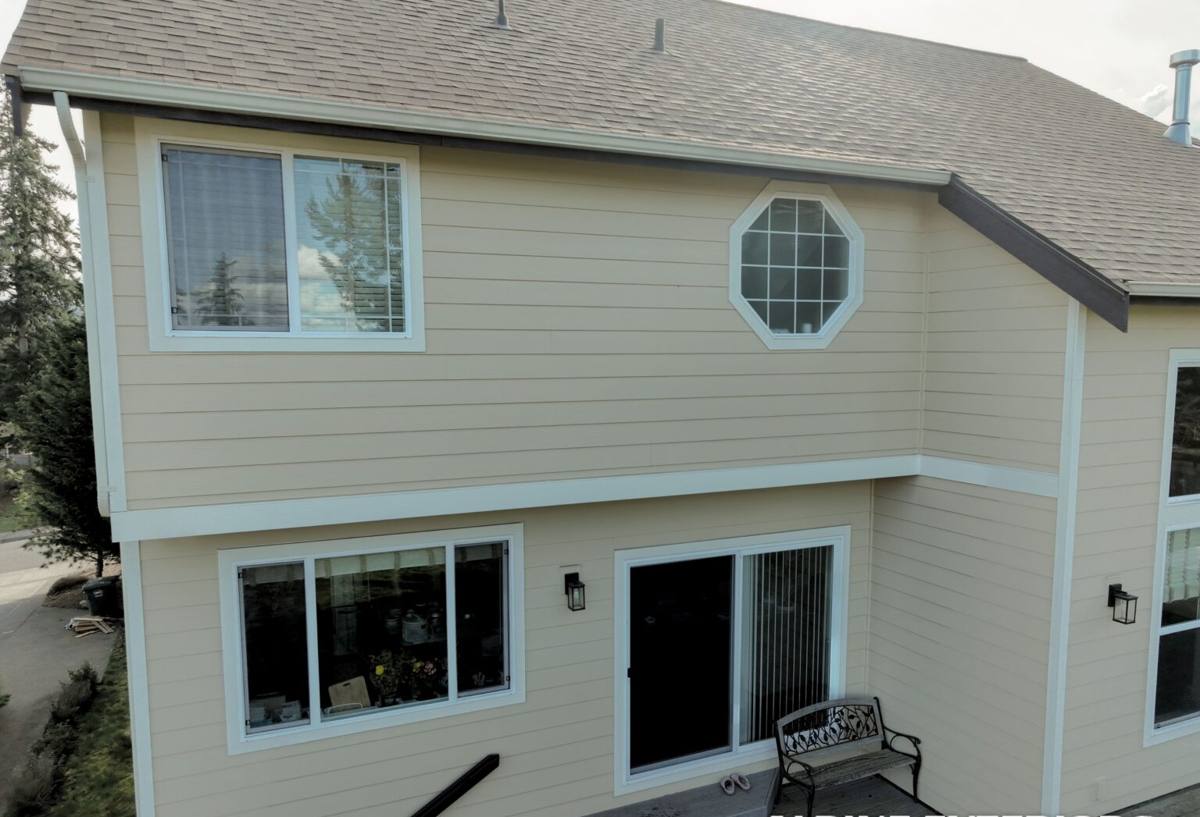
What a Correct Asphalt Shingle Roof Involves Here
A shingle roof is a system, not a single product. In a wet coastal climate, every layer underneath the shingles has to pull its weight, because the shingles themselves are only the first line of defense against the amount of water this area sees every winter.
Underlayment and Water Protection
We install synthetic underlayment across the full roof deck as a secondary water barrier, and we pay particular attention to self-adhered ice-and-water membrane at eaves, valleys, and any low-slope transitions — the spots where wind-driven rain and ponding are most likely to find a way in. This isn't optional upgrade material in Whatcom County; it's a baseline expectation for a roof that's going to face decades of Pacific Northwest winters.
Flashing
Flashing around chimneys, skylights, wall step-throughs, and roof-to-wall transitions is where the majority of leaks we get called out to investigate actually originate — not from the shingle field itself. Salt air accelerates corrosion on cheap or improperly lapped flashing, so we use properly sized, correctly lapped metal flashing tied into the underlayment, not just caulk and hope.
Ventilation
A roof that can't breathe traps moisture in the attic, which shortens the life of the decking and the shingles from underneath. Balanced intake and exhaust ventilation matters everywhere, but it matters more here because of how much humidity this region carries for so much of the year.
Choosing the Right Shingle for This Climate
Not every asphalt shingle product is built the same way, and the differences matter more once salt air and moss pressure are part of the equation. We walk homeowners through the realistic trade-offs rather than pushing the most expensive option by default.
| Shingle Type | Typical Lifespan | Best Fit For | Coastal Climate Notes |
|---|---|---|---|
| 3-Tab Standard | Shorter end of the range | Budget-driven re-roofs, rental properties | Lowest algae resistance without an upgraded cap sheet; fine when budget is the priority |
| Architectural / Laminate | Longer, more durable | Most owner-occupied homes | Heavier profile sheds wind-driven rain better; the standard we recommend for most Bellingham-area homes |
| Impact-Rated / Algae-Resistant | Longer, with added protection | North-facing roofs, heavy tree cover, moss-prone lots | Copper or zinc-infused granules slow algae and moss growth on shaded slopes |
For most homes near Bellingham, we lean toward a laminate architectural shingle with algae-resistant granules, especially on any slope that stays shaded through the winter. It costs more up front than a basic 3-tab, but on a moss-prone roof the difference in how long it stays clean and watertight is significant.
Our Process for a Bellingham-Area Roof
1. On-Site Inspection
We walk the roof, not just look at it from the ground. That means checking the decking for soft spots, evaluating existing ventilation, looking at flashing condition around every penetration, and noting moss or algae patterns that tell us which slopes are staying wet longest.
2. Tear-Off and Deck Prep
We remove old roofing down to the deck rather than layering over it. This lets us actually see and fix any damaged sheathing before it's covered up again — something that's especially important on a roof that's had years of moisture exposure.
3. Installation
Ice-and-water membrane at vulnerable areas, synthetic underlayment across the field, correctly lapped flashing, proper nailing pattern per manufacturer specification, and balanced ventilation. Every one of those steps affects how the roof performs in wind-driven rain, not just how it looks the day it's finished.
4. Cleanup and Final Walkthrough
Magnetic sweep for stray fasteners, full site cleanup, and a walkthrough where we point out what we did and answer questions before we consider the job done.
Signs Your Roof Needs Attention
Homeowners in the Bellingham area often live with early warning signs longer than they should, mostly because moss and staining can look cosmetic when they're actually a sign of ongoing moisture retention. Worth checking for:
- Moss buildup on north-facing or shaded slopes, especially where it's thick enough to hold water against the shingle surface
- Granules collecting in gutters or at downspout outlets, a sign the shingle surface is wearing down
- Shingles that are curling, cupping, or lifting at the edges
- Dark streaking that doesn't wash off, which is usually algae rather than dirt
- Soft or spongy spots when walking the roof, indicating deck moisture underneath
- Visible daylight or water staining in the attic, particularly around chimneys and vents
- Flashing that looks corroded, lifted, or gapped from the surrounding roofing material
Any one of these on its own isn't necessarily an emergency, but a roof showing two or three of them at once is telling you it's past due for a professional look.
Moss, Algae, and Ongoing Maintenance in a Marine Climate
Moss is close to unavoidable on shaded roofs in this part of Whatcom County, but it's manageable with the right approach. We don't recommend pressure washing shingles — it strips granules and shortens the roof's life faster than the moss itself would. A gentler approach, combined with zinc or copper strips at the ridge on new installs, does a better job of slowing regrowth without damaging the shingle surface.
Keeping gutters and valleys clear matters more here than in a drier climate, since trapped debris holds moisture against the roofing material through a long wet season and gives moss an easy foothold. A roof that's checked and cleared once or twice a year will consistently outlast one that's left alone until something visibly goes wrong.
What Affects the Cost of a Bellingham Re-Roof
Every roof is different, so we don't publish blanket pricing, but the same factors come up on almost every estimate in this area:
| Factor | Why It Matters |
|---|---|
| Roof size and number of slopes | More squares and more complex geometry means more material and labor |
| Existing layers and tear-off scope | Removing multiple old layers takes longer than a single-layer tear-off |
| Deck condition | Sections of rotted or soft sheathing need to be replaced before new roofing goes on |
| Shingle grade selected | Basic 3-tab versus architectural or algae-resistant products carry different material costs |
| Roof pitch and access | Steeper or harder-to-access roofs take more time and safety setup |
| Ventilation and flashing upgrades | Bringing older ventilation or flashing up to current standards adds scope but reduces future problems |
We walk through these factors on-site so a homeowner understands exactly what's driving their estimate, rather than handing over a number with no explanation behind it.
Why a Crew That Already Works the Bellingham Area Matters
A roofing crew that regularly works in and around Bellingham already knows which details can't be skipped here — how much ice-and-water membrane a coastal roof actually needs, which flashing details hold up against driving rain, and how aggressive the moss pressure is on a given slope orientation. That's different knowledge than a crew that mostly works drier inland areas and treats every roof the same way.
As a Ferndale-based crew serving Whatcom County, we're not commuting in from out of the region for a one-time job. We're available for the follow-up questions, the warranty conversation, and the maintenance check a few years down the road — not just the installation day.
Ready for an Honest Look at Your Roof?
If your roof is showing moss, granule loss, or you're just not sure how much life it has left, we're happy to take a look and give you a straight answer. Use the form below to request a free, no-pressure estimate, and we'll walk the roof with you and explain exactly what we see.