 Ferndale Siding
 New-Construction Windows in Blaine — Getting It Right the First Time
New-construction windows are a different job than swapping out an old window in a house that's already standing. On a new build or an addition, the window goes in before the siding closes up the wall, which means the flashing, the water-resistive barrier, and the window itself all have to work together as one system. There's no going back to fix a mistake once the siding is on. For homes going up in Blaine, right on the water and exposed to wind off the Strait and Semiahmoo Bay, that first installation has to be correct — not close, not "should be fine" — because the wall assembly behind the siding is what actually keeps water out for the next thirty or forty years.
We work on new-construction projects throughout Ferndale and out to Blaine, and the framing, flashing, and window-setting steps are the same discipline every time. What changes is how much margin for error the climate gives you, and along the Whatcom County coastline that margin is thin.
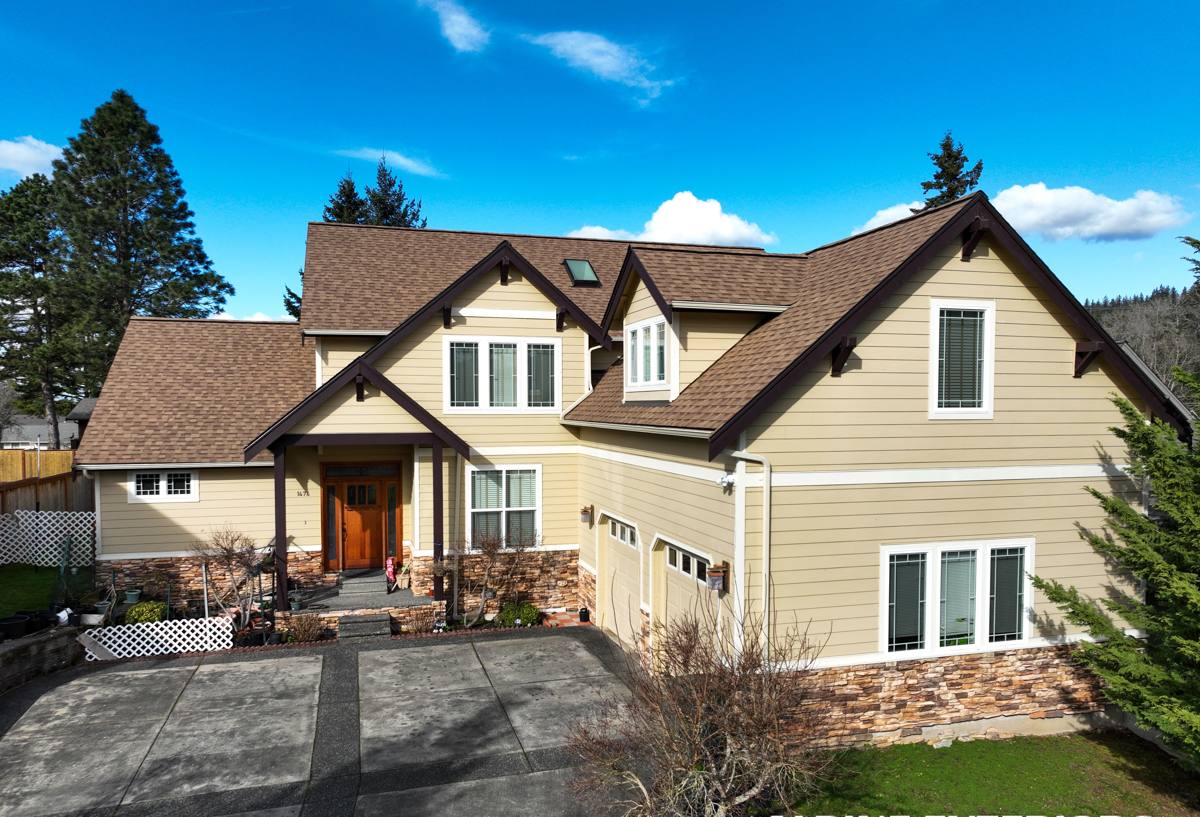
Why New-Construction Windows Are a Different Product Than Replacements
A new-construction window has a nailing fin (also called a flange) around the perimeter of the frame. That fin gets fastened directly to the framed rough opening and integrated into the wall's weather-resistive barrier before any siding or trim goes on. A replacement or retrofit window, by contrast, is built to fit inside an existing frame with no fin, because the original flashing and siding are staying put.
Using the wrong product for the situation — or installing the right product with the wrong flashing sequence — is one of the most common ways new builds end up with hidden water intrusion. On a new build, you get one shot to do this correctly before the wall is closed up, so the flange type and the flashing order both matter from the very first window set.
What Blaine's Climate Asks of a Window Installation
Salt Air and Coastal Exposure
Blaine sits close to the water, and homes out that way take on salt-laden air that inland Ferndale properties don't deal with nearly as much. Salt air accelerates corrosion on exposed metal — fasteners, hardware, and certain cladding finishes — over years of exposure. It doesn't ruin a window overnight, but it shortens the life of the wrong materials and hardware finishes if they weren't chosen with that exposure in mind.
Driving Rain
Whatcom County gets its share of wind-driven rain off the water, and a window opening under wind pressure behaves differently than one on a calm day — water gets pushed sideways and upward, not just straight down. That's why the flashing sequence around a new-construction window (sill first, then the sides, then the head, each lapped over the one before it like shingles) isn't optional detailing. It's the actual mechanism that keeps wind-driven rain from tracking behind the siding.
Long Moss Season
The extended wet season across this part of Washington keeps moss and algae active on north-facing and shaded surfaces for much of the year. It's mostly a roofing and siding concern, but it affects window trim and sills too — flat horizontal surfaces that hold moisture stay damp longer and are more likely to grow moss or soften trim over time. Sill design and drainage matter as much as the window unit itself.
Choosing a Frame Material for This Exposure
There's no single "best" window material for every home — it depends on budget, the look you want, and how close the home sits to salt air and direct weather. Here's how the common options hold up for new construction in a Blaine-area setting:
| Frame Material | Salt Air / Coastal Behavior | Maintenance | Notes |
|---|---|---|---|
| Vinyl | Doesn't corrode; performs consistently near salt air | Low — no painting or finish to maintain | Good value, wide color and performance range |
| Fiberglass | Very stable in coastal exposure; low expansion/contraction | Low to moderate | Higher upfront cost, strong long-term performance |
| Aluminum-clad wood | Cladding resists weather, but exposed fasteners and cladding seams need attention near salt air | Higher — wood interior needs monitoring, clad exterior needs inspection | Best suited to homes with some buffer from direct salt spray |
| Bare aluminum | More prone to pitting and corrosion in salt air over time | Moderate to high | We generally steer new-construction clients away from bare aluminum this close to the water |
We'll talk through your specific lot — how exposed it is to wind and water versus tucked behind other structures or tree cover — before recommending a material, rather than defaulting to one option for every job.
What a Correct Installation Actually Involves
The window unit itself is only part of the job. The flashing and integration work around it is what determines whether the opening stays dry. On every new-construction window we set, that work follows the same order regardless of how big or small the opening is:
- Rough opening checked for square, level, and correct dimensions before the window ever gets set
- Sill pan flashing installed first, sloped to drain water back out and away from the framing
- Window set into the opening, shimmed plumb, level, and square — not just fastened and hoped for
- Nailing fin fastened per the manufacturer's schedule (spacing and fastener type matter for warranty and performance)
- Side flashing and head flashing installed in the correct shingle-lap order over the water-resistive barrier
- Sealant used at the right joints only — over-sealing can trap water instead of letting it drain
- Interior and exterior gaps insulated and sealed for air control, separate from the water management layer
Skipping or reordering any one of these steps is how a window that looks fine on move-in day ends up with rot or staining behind the siding five or ten years later. It's slower work than just screwing a window into an opening, but it's the difference between a window that lasts the life of the house and one that becomes a callback.
How Our Process Works on a New Build
On new construction, we're usually working alongside a builder or general contractor rather than being the only trade on site, so coordination matters as much as the installation itself.
Timing
Windows go in after the structure is framed and the water-resistive barrier is on the walls, and before siding starts. We coordinate directly with the builder's schedule so the opening is ready and dry when we show up — installing into a wet or out-of-square opening is where problems start.
On-Site Checks
Before we set a single window, we verify rough opening sizes against the window order, confirm the WRB is properly lapped, and check that sill pans and flashing materials on site match what the wall assembly actually needs for the exposure.
Documentation
For new builds, especially where a building inspector will be checking the water-resistive barrier and flashing before siding covers it, we install in a way that's straightforward to inspect and sign off on — nothing hidden, nothing done out of sequence.
Energy Performance in a Marine Climate
Western Washington's marine climate means moderate temperatures but a lot of moisture and wind, so the window performance ratings that matter here aren't the same ones that matter in a hot, dry climate. U-factor (how much heat the window loses) and air leakage ratings carry more weight than solar heat gain in this region. For new construction, we help clients pick NFRC-rated windows that fit the Pacific Northwest climate zone rather than a generic national default, so the home performs the way it's supposed to through Whatcom County winters and the long wet shoulder seasons.
Why Hire a Crew That Already Works in Blaine
Anyone can install a window on a calm, dry day. The value of a crew that already works this stretch of Whatcom County coastline is knowing how the wind and rain actually behave here, which openings need extra flashing attention because of their exposure, and which materials hold up versus which ones create maintenance headaches five years down the road. We're not learning the local conditions on your project — we've already flashed openings against this same driving rain and salt air on other homes nearby.
We also know how to work alongside builders and general contractors without slowing down a new-construction schedule, and we're familiar with the inspection expectations for this area. That coordination matters just as much as the installation technique when a house is mid-build and multiple trades are moving through it.
Common Mistakes We See on New Builds
A few issues show up repeatedly on new-construction windows that weren't flashed for this climate:
- Sealant used in place of proper flashing, rather than alongside it
- Flashing installed in the wrong order, so water gets directed behind a layer instead of over it
- Fasteners or hardware not rated for coastal salt exposure
- Sill pans skipped entirely on the assumption that the window's own flange is enough
- Trim details that create flat, moisture-holding ledges right where moss and mildew take hold fastest
Every one of these is preventable with the right sequence and the right materials chosen up front — which is the whole point of getting new-construction windows installed correctly the first time, before siding covers the evidence either way.
If you're building or adding on in Blaine or elsewhere around Ferndale and want windows installed with this area's rain and salt air actually accounted for, we're happy to walk the plans or the framed opening with you and give you a straightforward, no-pressure estimate. Use the form below to get started.