 Ferndale Siding
 Building a Deck That Actually Holds Up in Cordata
Cordata sits on the edge of Ferndale, close enough to the water and the lowland fog belt that its decks take a beating most homeowners don't expect until a few winters in. A deck built the way it would be built in a dry climate starts failing here in ways that are entirely predictable: soft spots where water pools, black streaking on the boards, corroded fasteners bleeding rust stains, and railings that wobble because the posts were never properly isolated from ground moisture. None of that is bad luck. It's the result of building to a generic spec instead of building for Whatcom County.
This page is about deck building specifically for Cordata — what the local climate does to a deck over time, what a correctly built deck looks like underneath the surface, and how we approach the job so it's still solid a decade or two out instead of two or three years out.
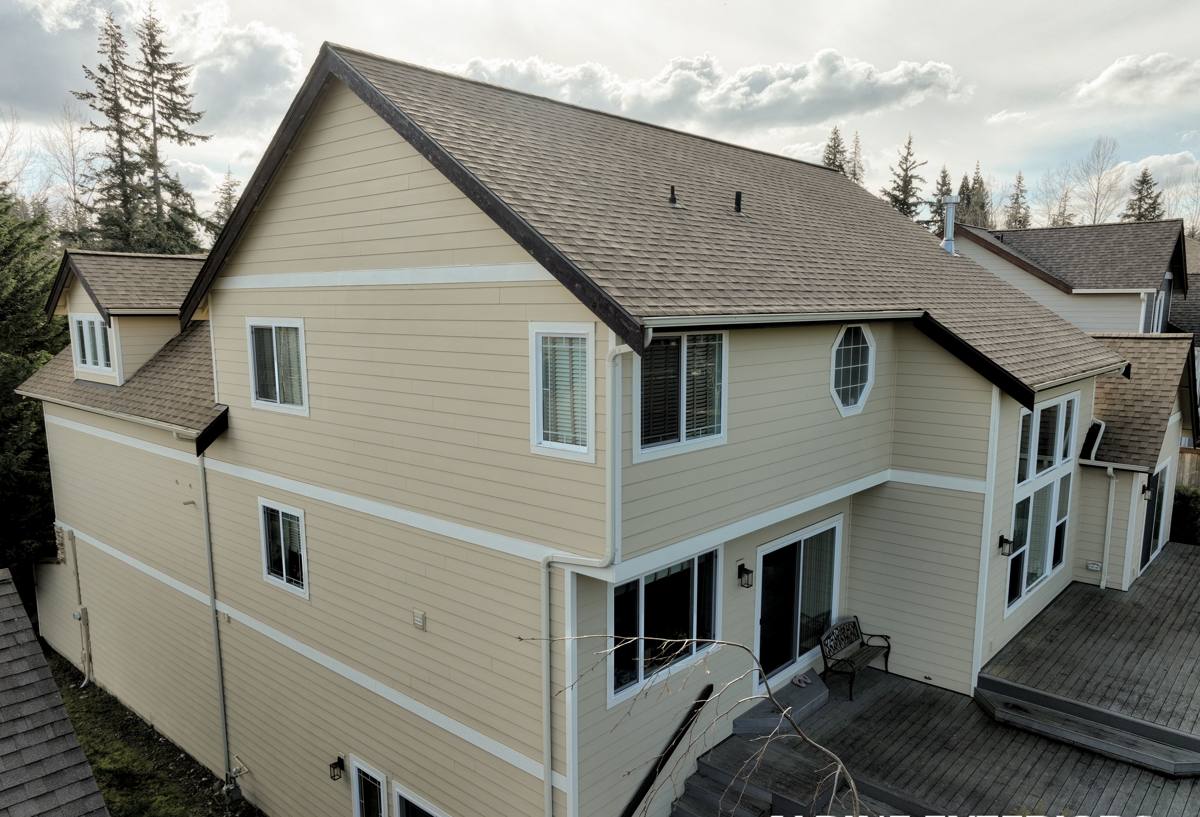
What Cordata's Climate Does to a Deck
Cordata gets the same weather pattern as the rest of Ferndale and the surrounding Whatcom County lowlands: long stretches of driving rain from fall through spring, salt-tinged air rolling in off the Strait of Georgia and Bellingham Bay, and short winter days that keep surfaces damp for weeks at a time. That combination is hard on wood and hard on metal, and it's the reason a deck built for, say, eastern Washington won't survive here the same way.
Moss and Constant Dampness
The long moss season here isn't just a cosmetic issue. Moss holds moisture against decking boards, joists, and ledger connections far longer than open air would, which accelerates rot in untreated or poorly sealed wood and keeps composite surfaces slick and green if they aren't detailed with drainage in mind. A deck with tight board spacing, poor airflow underneath, or shade from overhanging trees will grow moss faster than one built with drainage and ventilation as part of the design, not an afterthought.
Driving Rain and Wind-Driven Water
Rain here doesn't fall straight down — wind pushes it sideways into ledger boards, stair stringers, and any gap where flashing was skipped. Over time, wind-driven rain finds every shortcut in a deck's construction. That's usually where we find the worst hidden rot: not on the visible decking, but behind rim joists and around ledger attachments where water has been getting in unnoticed for years.
Salt Air and Metal Fasteners
Being close to the water means a steady low-level exposure to salt air, which speeds up corrosion on any fastener, bracket, or hanger that isn't rated for it. Standard interior-grade screws and hangers will rust, stain the wood around them, and eventually lose holding strength. It's a detail that's invisible on install day and very visible five years later.
Choosing the Right Decking Material for This Neighborhood
There's no single "best" decking material — there's a best material for this climate and this budget. Here's how the common options actually perform in Cordata's conditions, based on how each material behaves under sustained moisture and salt air.
| Material | Moisture Behavior | Moss Resistance | Maintenance | Typical Lifespan Here |
|---|---|---|---|---|
| Pressure-treated pine | Absorbs and releases moisture; prone to cupping if not sealed | Low — needs regular cleaning | Annual cleaning, re-sealing every 2-3 years | 15-20 years with upkeep |
| Western red cedar | Naturally moisture-resistant, breathes well | Moderate — still needs cleaning | Cleaning and oil/stain every 2-3 years | 20-25 years with upkeep |
| Composite decking | Doesn't absorb water like wood, but surface can trap film if not cleaned | Moderate to high, depends on brand/texture | Periodic washing, no sealing needed | 25-30+ years, warranty-backed |
| PVC decking | Fully moisture-resistant, no wood fiber to rot | High | Occasional washing | 25-30+ years, warranty-backed |
Composite and PVC decking have become common choices in this area precisely because they take moss and moisture out of the maintenance equation, but they're not automatically the right call for every project — a well-built and properly maintained cedar deck still has a place, especially where a homeowner wants a natural look and is willing to keep up with periodic cleaning and finishing. We'll walk through the honest trade-offs for your project rather than defaulting to whatever's easiest to install.
Structural Fundamentals That Matter More Here Than Elsewhere
The decking surface is what you see, but the framing underneath is what determines whether the deck is still safe in fifteen years. In a climate like Cordata's, a few structural details matter more than they would somewhere drier.
Ledger Board Flashing
The ledger board — where the deck attaches to the house — is the single most common point of hidden water damage on any deck in this region. Correct flashing (and the right flashing tape or membrane behind it) keeps water from tracking down between the ledger and the house's siding or sheathing. Skipping or shortcutting this step is invisible at handoff and expensive to fix later, since it usually means opening up the wall.
Joist Protection
Joist tops take standing water from rain that gets past the decking boards. Capping joists with a protective tape barrier keeps water off the end grain and top face of the framing lumber, which is where rot typically starts. It's a relatively small material cost for a meaningful increase in how long the frame lasts.
Footings Below the Frost and Saturation Line
Whatcom County's building code sets minimum footing depth requirements for good reason — ground here stays saturated for long stretches, and footings that are too shallow or under-sized can shift over time as the soil around them cycles wet and dry. Correct footing depth and sizing is not an area to cut corners on, even though it's completely invisible once the deck is finished.
Fasteners and Hardware Rated for Coastal Exposure
Given the salt air across this part of Whatcom County, we use fasteners, joist hangers, and structural screws rated for coastal or ACQ-treated lumber exposure rather than standard-grade hardware. It costs more up front and makes zero visible difference on install day — the difference shows up in year eight or ten, when the hardware hasn't rusted through.
How Our Deck Building Process Works
Every deck we build in Cordata follows the same sequence, adjusted for the specific lot, sun exposure, and how the yard drains.
- Site walk and drainage assessment — we look at how water currently moves across the yard, where the deck will sit relative to grade, and whether existing drainage needs to be addressed before we build rather than after.
- Design and material selection — square footage, layout, railing style, and decking material, weighed against your budget and how much upkeep you want to take on long-term.
- Permit filing — we handle the permit application through the appropriate local building department so the structure is inspected and code-compliant, not just built to look right.
- Footings and framing — footings poured to the required depth, ledger flashed properly, joists capped, and hardware rated for this climate throughout.
- Decking and railing installation — boards or planks installed with the spacing and fastening method appropriate to the material, railings set plumb and solidly anchored.
- Final walkthrough — we go over the finished deck with you, including what maintenance (if any) the material requires going forward.
Railings, Stairs, and the Details That Get Overlooked
Railings and stairs are where a lot of deck problems start, mainly because post connections are a common weak point if they're not anchored correctly below the deck surface. A railing that feels solid on install day but wasn't through-bolted into blocking or framing will start to loosen within a couple of seasons of freeze-thaw and constant dampness working at the connection. Stair stringers need the same moisture consideration as the rest of the frame — end grain exposed at the base of a stringer sitting near or in contact with soil is a fast track to rot if it isn't detailed correctly.
Permits and Code in Whatcom County
Most deck construction in and around Ferndale requires a building permit, particularly for any deck attached to the house or built more than a couple feet off the ground. Permitted work means an inspector checks footing depth, ledger attachment, and structural framing before it gets covered up — which is exactly the work that's impossible to verify once the decking boards go down. We handle the permit process as part of the job rather than treating it as optional paperwork, because it's the only real third-party check that the structural details were done correctly.
Maintenance: What You'll Actually Need to Do
Whatever material you choose, a little seasonal upkeep goes a long way in this climate. Here's the realistic list for a Cordata deck:
- Sweep debris and standing leaves off the deck surface regularly, especially in fall when they trap moisture against boards
- Wash the surface at least once a year to clear moss and algae before it takes hold, more often on shaded sections
- Check railing posts and stair connections annually for any looseness
- Re-seal or re-stain wood decking on the manufacturer or product's recommended schedule, typically every 2-3 years
- Keep gutters and downspouts clear so roof runoff isn't dumping extra water onto or near the deck
- Trim back overhanging vegetation that keeps sections of the deck shaded and damp
Why a Crew That Already Works Cordata Makes a Difference
Deck building isn't a one-size-fits-all trade, and Cordata's specific mix of coastal humidity, moss pressure, and driving rain rewards a crew that's already seen how decks in this neighborhood age. That means knowing which flashing details actually hold up here, which fastener grades are worth the extra cost, and which framing shortcuts show up as callbacks two winters later. It also means being familiar with the local permitting process so the job moves without avoidable delays. A deck is a long-term structural investment sitting outside in Ferndale's weather year-round — it's worth having it built by people who understand exactly what that weather does to it.
If you're planning a new deck or replacing one that's showing its age, we're happy to come out, take a look at your yard, and put together a straightforward, no-pressure estimate using the form below.