 Ferndale Siding
 Why Bellingham Homes Need Windows Built for This Climate
Bellingham sits close enough to the Salish Sea that salt-laden air is a real factor in how exterior materials age, and Whatcom County's weather pattern adds its own pressure: long stretches of driving rain in the fall and winter, a moss season that can run for months on shaded or north-facing walls, and enough temperature swing across the year to expose any window with a weak seal or a tired frame. Windows are one of the largest single sources of energy loss in a home, and in this climate a poorly performing window doesn't just cost you on the heating bill — it lets in moisture, fogs between the panes, and can start rotting the surrounding trim before the problem is even visible from inside.
An energy-efficient window replacement isn't just about comfort. Done right, it's a moisture-management upgrade as much as an insulation upgrade, which matters more here than it does in a drier part of the country.
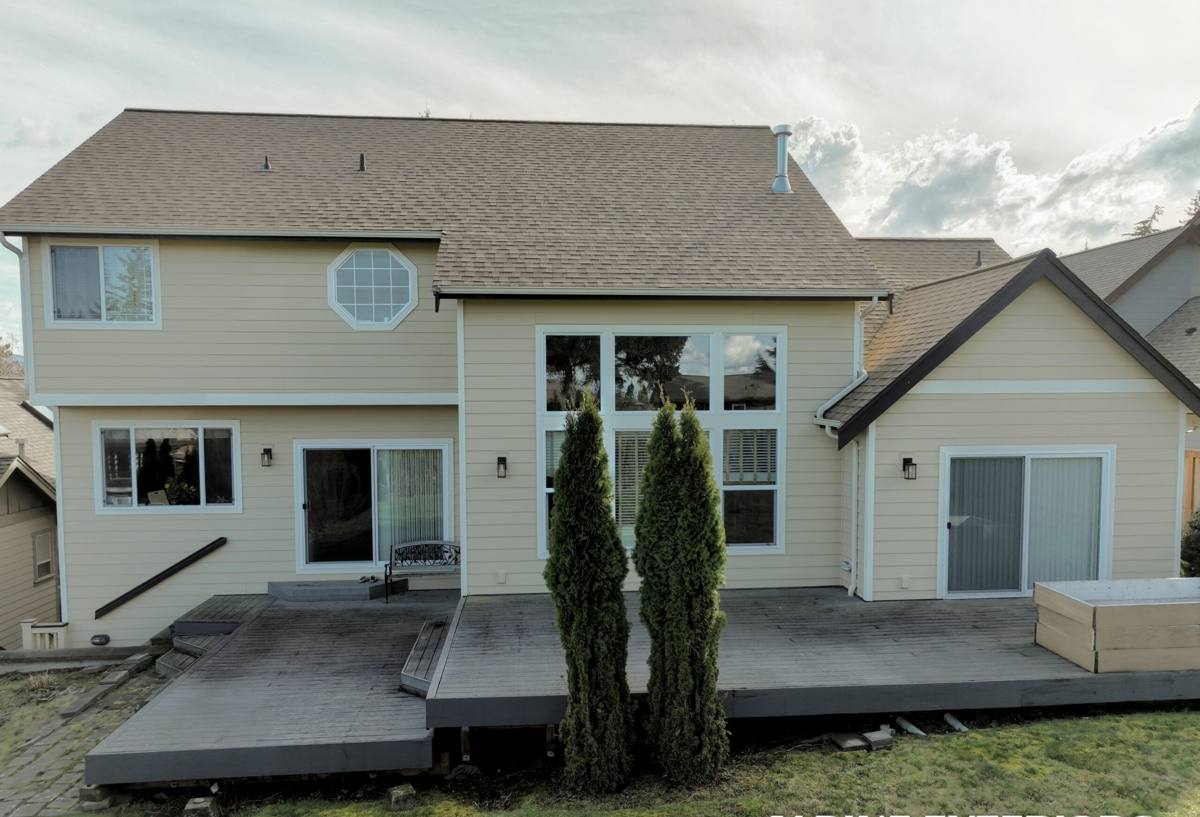
What "Energy-Efficient" Actually Means for a Window
The term gets used loosely in the window trade, so it helps to know what's actually being measured. Three numbers do most of the work:
- U-factor — how well the window resists heat loss. Lower is better, and it's the number that matters most for our winters.
- SHGC (Solar Heat Gain Coefficient) — how much solar heat passes through the glass. In our mild, often overcast climate this matters less than it would in a sunnier region, but it still affects rooms with west or south exposure.
- Air leakage rating — how much outside air sneaks past the frame and sash under wind pressure, which is directly relevant when your home is taking driving rain and gusts off the water.
Glass Packages
Most energy-efficient windows today use dual-pane glass with a low-emissivity (Low-E) coating and an inert gas fill, usually argon, sealed between the panes. The Low-E coating reflects radiant heat while still letting visible light through, and the gas fill slows heat transfer compared to plain air. Triple-pane glass exists and performs better on paper, but for most Bellingham homes the added cost doesn't pencil out against a good dual-pane, Low-E, argon-filled unit — we'll tell you honestly when triple-pane is worth it and when it isn't.
Frame Material
The frame matters as much as the glass, especially in a marine climate. A frame that flexes, absorbs moisture, or doesn't seal consistently against the wall assembly will undercut even the best glass package. We'll walk through the tradeoffs by material further down.
Common Window Problems We See on Homes in This Area
Working exterior projects around Bellingham and the rest of Whatcom County, a few failure patterns show up over and over:
- Fogging or a hazy film between the panes — the seal has failed and the gas fill is gone, so the insulating value is gone with it.
- Soft or discolored trim and sill framing around older wood windows, usually from years of driving rain finding a gap and never fully drying between storms.
- Visible moss or algae staining on frames and sills in shaded areas, which holds moisture against the material longer than direct sun exposure would.
- Noticeable drafts or a cold zone near the window even when it's visibly "closed," which usually points to a worn weatherstrip or a frame that's no longer square.
- Condensation on the inside of the glass in winter, which can be a sign of a failed seal, a poorly performing single-pane unit, or sometimes just a ventilation issue unrelated to the window itself — worth diagnosing correctly before assuming you need a full replacement.
Choosing the Right Frame Material for a Coastal Whatcom County Home
There's no single "best" window material — the right call depends on your home's exposure, your budget, and how much upkeep you want to take on. Here's how the common options compare for a home dealing with salt air and sustained wet weather:
| Frame Material | Moisture & Salt-Air Behavior | Maintenance | General Cost Position |
|---|---|---|---|
| Vinyl | Doesn't rot or corrode; performs well in salt air with no coating to maintain | Low — occasional cleaning | Most affordable |
| Fiberglass | Very stable in wet, temperature-swinging climates; strong resistance to warping | Low | Mid to upper range |
| Wood-clad | Attractive interior wood look, but the cladding's seams and any exposed wood need attention over time in a wet climate | Moderate to high | Upper range |
| Aluminum | Conducts heat and cold readily; can corrode near salt air without a quality finish | Low to moderate | Varies widely |
For most full-exposure or salt-air-adjacent homes in this area, we steer clients toward vinyl or fiberglass first — not because other materials are bad products, but because they hold up with the least ongoing maintenance in exactly the conditions this region produces. Where the look of real wood interior trim matters to a homeowner, wood-clad is still a legitimate option; it just comes with a maintenance conversation we make sure happens before installation, not after a problem shows up.
What a Correct Installation Actually Involves
The window unit itself is only part of the performance equation. A high-efficiency window installed with a poor moisture management plan will underperform a mid-grade window installed correctly — and in a climate with this much driving rain, installation detail is where jobs actually succeed or fail.
- Assessment — we check each opening for existing rot, framing condition, and whether it's a good candidate for an insert (new window into the existing frame) or a full-frame replacement down to the rough opening.
- Flashing and water management — proper sill pan flashing and a shingled, lapped integration with your home's weather-resistive barrier so any water that reaches the opening drains out and down, not into the wall.
- Air sealing — a continuous seal around the frame using appropriate sealants and backer rod, not just foam sprayed in and trimmed off.
- Setting and shimming — the window is set plumb, level, and square, and shimmed correctly so the sash operates smoothly and the seal performs as designed for the long haul.
- Interior and exterior finish — trim, caulking, and touch-up done to match the surrounding siding and interior casing.
- Final check — operation, locking, and seal check on every unit before we call the job done.
Signs It's Time to Replace Your Windows
Not every window problem means a full replacement — sometimes a reseal, new weatherstripping, or repaired flashing solves it. These are the signs that usually point to replacement rather than repair:
- Fogging or moisture trapped between the panes on a dual-pane window
- Frames that are soft, cracked, or visibly rotting when pressed
- Windows that won't stay open, lock securely, or seal tight when closed
- A persistent draft you can feel with your hand along the frame on a windy day
- Single-pane glass in a room you use year-round
- Visible daylight or gaps around the frame from outside
What to Realistically Expect on Energy Savings
Replacing old, leaky, or single-pane windows with a modern energy-efficient unit does reduce heating and cooling costs — that part is well established in the building science. What it saves in dollars varies a lot by home: how many windows you're replacing, their orientation, your current insulation and air sealing elsewhere, and your heating system. We won't hand you an invented percentage or a specific dollar figure before we've actually looked at your home, because anyone who does is guessing. What we can tell you honestly is that the comfort difference — fewer drafts, less cold radiating off the glass in winter, a quieter house during a windstorm — is usually noticeable well before the first full heating season passes, alongside the gradual energy savings.
Pricing on a per-window basis ranges widely depending on size, frame material, and whether the job is a straightforward insert or a full-frame replacement with repair work involved. We'll always give you a clear, itemized number for your specific home rather than a generic average that may not apply to your situation.
Why Hire a Crew That Already Works in Bellingham
Window installation is detail work, and the details that matter shift depending on where you live. A crew that mainly installs in a dry inland climate isn't necessarily thinking about sill pan drainage, salt-air-appropriate hardware finishes, or how long moss-holding moisture sits against a north-facing frame the way a crew that works Bellingham and the rest of Whatcom County every week does. We see the same siding types, the same framing-era homes, and the same weather exposure patterns repeatedly in this area, which means fewer surprises once a wall is opened up and a more accurate assessment before work even starts.
We also handle the coordination that a homeowner shouldn't have to manage alone — matching new window trim to existing siding, sequencing work around weather windows so openings aren't sitting exposed during a rain system, and making sure the finished product looks like it belongs on the house rather than like a patch job.
Get a Straightforward Estimate
If your windows are drafty, fogged, or just past their working life, we're happy to take a look and give you an honest read on repair versus replacement — no pressure, no inflated quote to "close the deal." Fill out the form below and we'll set up a free estimate for your Bellingham-area home.