 Ferndale Siding
 Decks in Everson Face a Different Set of Problems Than Decks Inland
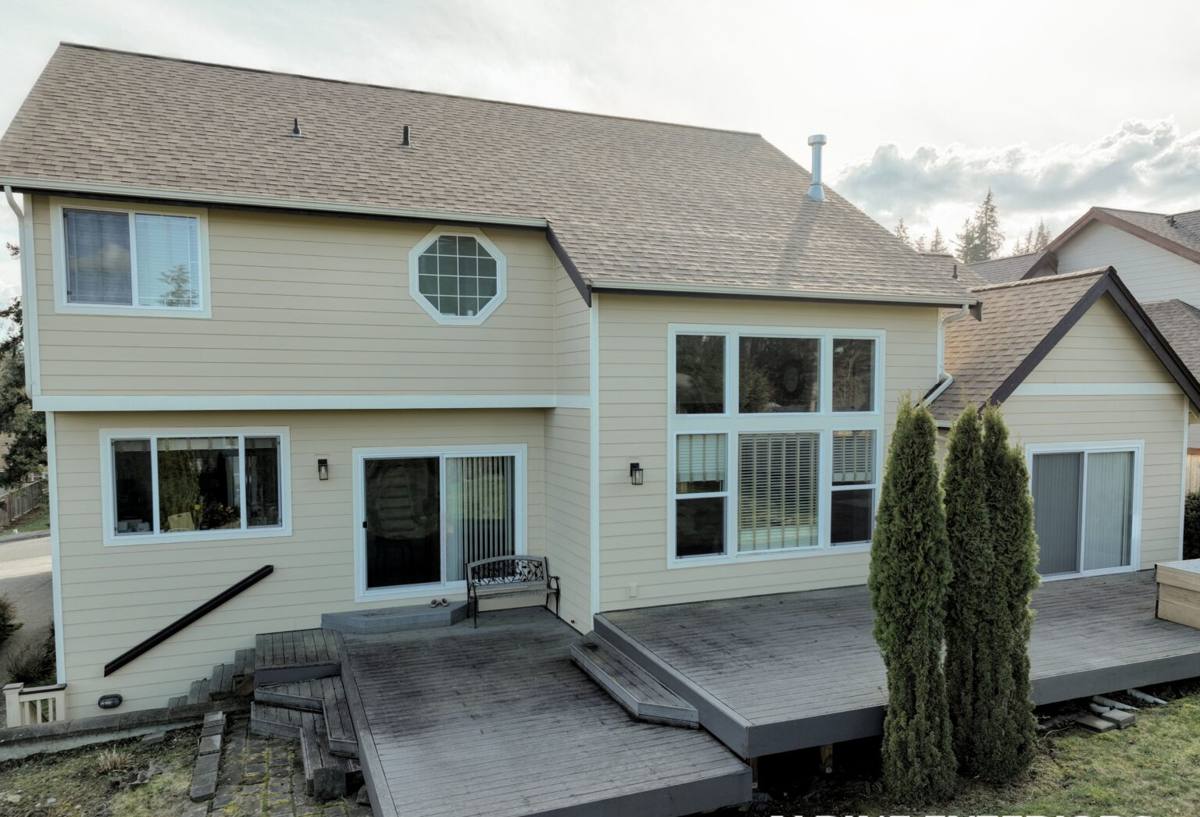
Everson sits in the Nooksack lowlands of Whatcom County, close enough to the coast to catch salt-laden air on windy days and far enough into the valley to hold onto fog and damp ground long after the rain stops. A deck built here doesn't fail the way a deck fails in a dry climate. It doesn't crack from sun exposure or warp from heat. It fails from the inside out — moisture that gets trapped where it can't dry, hardware that corrodes quietly under the boards, and moss that takes hold in the shaded, north-facing corners most homeowners never think to check.
We build and repair decks in Everson as part of our regular service area out of Ferndale, and the pattern is consistent. The decks that last twenty-plus years are the ones built with drainage, ventilation, and corrosion-resistant hardware as the starting point, not an upgrade. The decks that fail in under ten are usually structurally fine on top but rotting underneath, where nobody looks until a board gives way.
What Whatcom County's Climate Actually Does to a Deck
Driving Rain and Standing Moisture
Rain here doesn't fall straight down for months at a time — it comes sideways, driven by wind off the Sound and the Strait. That means water gets pushed into joints, under fascia boards, and behind ledger connections that a dry-climate deck would never have to deal with. If the framing underneath doesn't have a way to shed that water and dry out between storms, rot starts in places you can't see from the surface.
A Long Moss Season
Between the shorter winter daylight hours and the near-constant damp, moss and algae get a long runway to establish themselves on any horizontal wood surface that doesn't get direct sun. On a deck, that's usually the shaded side of the house, under overhangs, and anywhere leaves and debris collect against the boards. Moss holds moisture directly against the wood, which accelerates rot underneath it even while the surface still looks intact.
Salt Air, Even Inland
Everson isn't waterfront, but Whatcom County's proximity to the Sound means salt-bearing air still reaches inland properties, especially on windy days. Salt exposure speeds up corrosion on fasteners, joist hangers, and any exposed metal hardware. Once a fastener starts rusting, it loses holding strength long before it looks bad enough to notice on a casual walkthrough.
What a Correctly Built Deck Involves Here
Footings and Framing
Footings need to sit below the frost line and bear on undisturbed, well-draining soil — a real concern in low-lying parts of Whatcom County where the water table sits close to the surface for much of the year. Framing lumber should be rated for ground contact where it's within a few inches of soil or in a damp, low-airflow crawlspace, not just standard pressure-treated stock used everywhere out of habit.
Ledger Connections
The ledger board — where the deck attaches to the house — is the single most common failure point we find on older decks in this area. It has to be properly flashed so water sheds away from the house wall instead of running behind the ledger and rotting both the deck framing and the house's rim joist. This is also a structural safety issue, not just a maintenance one, since the ledger typically carries a large share of the deck's total load.
Decking Material
Whatever material sits on top, it needs consistent airflow underneath. Boards installed tight against each other or over blocked, poorly vented framing will hold moisture and grow moss regardless of how good the material itself is. Gapping, joist spacing, and any under-deck drainage system all affect how well the surface handles a wet Whatcom County winter.
Fasteners and Hardware
Given the salt exposure and moisture load, we use stainless steel or heavy hot-dip galvanized fasteners and connectors rated for coastal or treated-lumber contact, not the cheapest coated screws available. It costs more up front and makes a real difference in how long the connections hold before they start to loosen or stain the wood around them.
Decking Material Comparison for This Climate
| Material | Moisture Behavior | Moss Resistance | Maintenance | General Cost Range |
|---|---|---|---|---|
| Pressure-treated pine | Absorbs and releases moisture readily; needs to dry fully between rain events | Low without regular cleaning | Annual cleaning, periodic sealing | Lowest upfront cost |
| Cedar | Naturally moisture- and rot-resistant, but still absorbs water over time | Moderate; still needs cleaning in shaded areas | Periodic sealing or staining to hold its color and resistance | Mid-range |
| Capped composite | Doesn't absorb moisture into the core; surface sheds water | Higher, but still grows algae film if never cleaned | Occasional washing, no sealing or staining | Higher upfront, lower long-term upkeep |
| PVC decking | Fully moisture-resistant; won't swell or rot | Highest, though surface film can still form in deep shade | Washing only | Highest upfront cost |
There's no single right answer here — a lot depends on how much shade the deck sits in, how much upkeep the homeowner wants to do, and the budget. What matters more than the material choice itself is that whatever's installed gets proper airflow underneath and fasteners that won't corrode before the decking wears out.
What We Commonly Find on Older Everson Decks
- Ledger boards with little or no flashing, allowing water to run behind them into the house framing
- Joist hangers and fasteners showing rust bleed, especially on the shaded or north-facing side
- Moss buildup between boards holding moisture directly against the wood
- Blocked or minimal airflow under low-clearance decks, keeping the framing damp for weeks after rain
- Footings that have shifted or settled in poorly draining soil, throwing the frame slightly out of level
None of these are unusual for a deck's age — they're the predictable result of a wet climate working on a structure for years. The fix depends on how far it's gone: some of this is addressed with cleaning, better drainage, and hardware upgrades, and some means rebuilding the framing before it becomes a safety issue.
How We Approach a Deck Build or Rebuild
Assessment First
On a rebuild or repair, we start by getting under the deck and checking the framing, ledger connection, and footings before talking about surface material. A new deck board layer over compromised framing is a cosmetic fix, not a real one.
Framing to Local Conditions
We frame with ground-contact-rated lumber where it's called for, set footings to proper depth for this area's soil and frost conditions, and flash the ledger connection correctly the first time.
Material Selection With You
We'll walk through the trade-offs between wood and composite options honestly, based on how much sun and shade the deck actually gets and how much maintenance you want to take on, rather than pushing whatever has the best margin.
Finish Details That Matter Long-Term
Proper board gapping, stainless or galvanized fasteners rated for the application, and attention to airflow underneath — these are the details that separate a deck that needs major work in eight years from one that's still solid in twenty-five.
Permits and Whatcom County Requirements
Most new deck construction and many significant deck rebuilds in Whatcom County require a building permit, particularly when the deck is attached to the house or elevated above a certain height. Permit requirements can also depend on whether the property is inside Ferndale city limits or unincorporated Whatcom County, since inspection and application processes differ. We handle the permit process as part of the job so you're not left figuring out county requirements on your own, and so the finished deck is documented as built to code — which matters when you sell the house later.
What to Ask Before Hiring a Deck Contractor in Everson
- Are you licensed and insured to do structural exterior work in Washington State?
- Will you pull the required permit, or is that left to me?
- What fastener and hardware grade do you use, and is it rated for treated lumber and coastal-adjacent exposure?
- How do you handle the ledger board flashing where the deck meets the house?
- Do you inspect and address the existing framing on a rebuild, or just replace the surface boards?
- What does your warranty cover, and for how long?
A contractor who answers these questions specifically, without hedging, is generally one who's done this enough times in this climate to know what actually matters.
Why a Crew That Already Works in This Area Matters
Deck framing details that work fine in a dry climate — minimal flashing, standard fasteners, tight board spacing — cause real problems in Whatcom County within a handful of years. A crew that works Ferndale, Everson, and the surrounding county regularly has already seen which shortcuts fail here and builds around them by default, not as an upcoming lesson learned on your project. That's the difference between a deck that needs attention every couple of years and one that quietly does its job through another wet Pacific Northwest winter.
If you're planning a new deck in Everson or dealing with an older one that's showing its age, we're happy to take a look and give you a straightforward, no-pressure estimate — just fill out the form below.