 Ferndale Siding
 Roof Repair in Fairhaven: A Different Kind of Wear
Fairhaven sits close to Bellingham Bay, and that stretch of shoreline puts a specific kind of stress on a roof that homes further inland in Whatcom County don't deal with in quite the same way. Salt-tinged marine air, rain that comes in sideways more often than it falls straight down, and a moss season that can run most of the year on shaded, tree-covered lots all work on a roof at the same time, and they work slowly enough that a homeowner often doesn't notice until a leak shows up inside the house. By then, the damage has usually been building for a while.
We work roofs throughout the Ferndale and greater Whatcom County area, and Fairhaven is one of the places where we see that climate stress show up earliest and most consistently. This page is specifically about roof repair in Fairhaven: what actually goes wrong here, what a correct repair looks like, and how we approach it differently than we would a roof forty miles inland.
Older Roofs, Newer Infill
Fairhaven's housing stock is a mix, ranging from early-century homes to newer infill built into the same hillside terrain leading up from the water. Older roofs in the neighborhood often have layers of past repairs, mismatched materials, or flashing details that were correct for their time but haven't aged well against decades of marine exposure. Newer roofs aren't immune either. Even a well-installed roof can develop trouble spots faster here than it would in a drier, calmer part of the county, simply because of what the location throws at it.
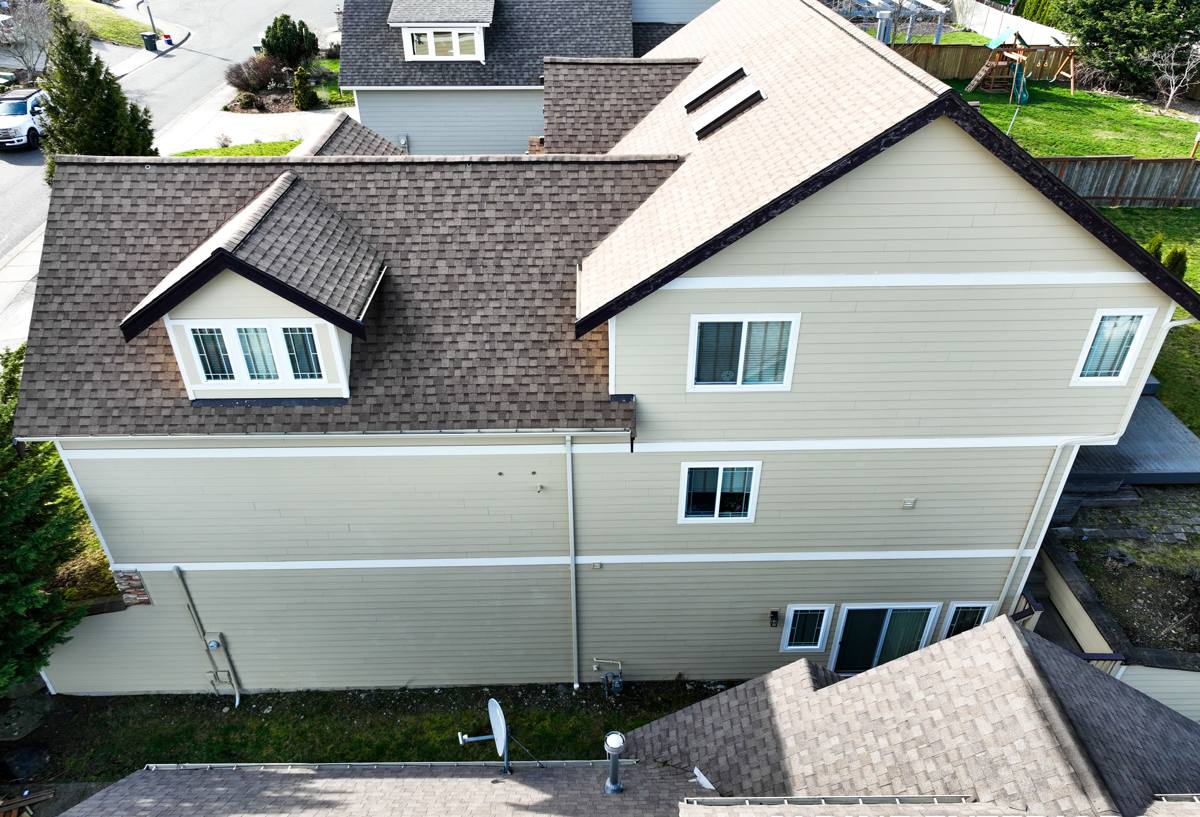
What Salt Air, Driving Rain, and Moss Actually Do to a Roof
None of these three factors are dramatic on their own. The problem is that they're constant, and they compound each other over the years in ways that are easy to miss from the ground.
Salt Air and Metal Fatigue
Homes near Bellingham Bay sit in a steady drift of mildly corrosive, moisture-laden air for most of the year, not just during storms. That kind of exposure works on the metal components of a roof, flashing, fasteners, vent boots, and gutter hardware, faster than it would inland. It rarely fails all at once. Instead, a nail head starts to bleed rust, a flashing seam loses its seal, or a vent boot goes brittle a few years ahead of schedule, and none of it is visible unless someone is actually up there looking.
Wind-Driven Rain and Uphill Water
Fairhaven's exposure to open water means rain doesn't just fall on a roof, it gets pushed into it. Wind-driven rain can work its way up under shingle tabs, into valleys, and around penetrations from angles a roof built for calmer conditions was never really tested against. This is also where hillside lots common in Fairhaven add a wrinkle: water that would simply run off a flat roof plane can behave differently on a sloped site, and drainage at the eaves and around the foundation affects how much water a roof edge has to shed in a short amount of time.
Moss: More Than Cosmetic
Mild temperatures, consistent dampness, and Fairhaven's mature tree canopy add up to a moss season that can run nearly year-round on shaded, north-facing roof planes. Moss isn't just an appearance issue. It holds moisture directly against the shingle surface, works its way under tabs and around granules as it grows, and can lift shingle edges enough to let wind-driven rain in underneath. Left alone long enough, a mossy roof plane retains water in a way a clean one simply doesn't, and that shortens the service life of the roofing material underneath it.
Signs Your Fairhaven Roof Needs Repair, Not Just a Wash
A lot of roof problems in this climate get mistaken for a cosmetic issue that a cleaning will solve. Some of these signs mean there's already an active problem underneath.
- Moss or dark streaking that returns quickly after cleaning, especially on shaded or north-facing slopes
- Curling, cracked, or missing shingles, particularly after a windy stretch of weather
- Rust staining around vent boots, flashing, or exposed fasteners
- Granules collecting in gutters or at downspout outlets in larger amounts than usual
- Soft or discolored ceiling spots, especially near chimneys, skylights, or roof valleys
- Daylight visible through the roof deck from inside an attic or crawlspace
- A noticeable jump in heating bills that may point to moisture affecting attic insulation
Any one of these can be an isolated issue. Several at once, especially combined with an older roof, usually means it's worth having someone look before the next heavy rain.
What a Correct Roof Repair Actually Involves
A roof repair that actually holds up in this climate is not the same thing as swapping out a few visibly damaged shingles and calling it done. The visible damage is often just the spot where an underlying problem finally became obvious.
Diagnosing the Real Source
Water rarely leaks in exactly where it enters the roof. It tends to travel along the underlayment or roof deck before finding a gap to drip through, which means a stain on a ceiling can be several feet away from the actual failure point on the roof surface. A repair that doesn't trace the water back to its real source usually just moves the visible symptom without fixing the cause, and the leak comes back, sometimes in a new spot that makes it look like a different problem.
Matching Materials and Fastening Correctly
Shingles, underlayment, and flashing all need to match or be compatible with what's already on the roof, both in material type and in how they're fastened. A patch that uses the wrong nailing pattern, the wrong shingle profile, or incompatible flashing metal can look fine for a season and then fail exactly where it was tied into the existing roof.
Flashing: Where Most Repairs Actually Live or Die
Chimneys, skylights, roof-to-wall transitions, and valleys are where the large majority of roof leaks in this area actually originate, not the open field of shingles. Flashing at these points has to be layered correctly with the surrounding shingles and sealed in a way that sheds water rather than just blocking it, since a seal that simply blocks water can trap it against the roof deck instead. Given how much wind-driven rain and sustained moisture Fairhaven roofs deal with, we treat flashing detail as the most important part of any repair, not an afterthought once the shingles are down.
Repair vs. Replacement: How We Make the Call
Not every roof problem in Fairhaven means a full tear-off, and we don't default to recommending replacement just because a roof is showing its age. The honest answer depends on a handful of specific factors.
| Factor | Favors Repair | Favors Replacement |
|---|---|---|
| Extent of damage | Isolated to one section, valley, or penetration | Widespread across multiple roof planes |
| Roof age | Well within its expected service life | At or past the age where the material is generally due for replacement |
| Underlying deck condition | Solid, dry sheathing under the damaged area | Soft, rotted, or delaminated decking found during inspection |
| Number of past repairs | First or second repair in that area | A history of repeated patches in the same spots |
| Moss and moisture history | Recently addressed, limited retained moisture | Long-term untreated moss with signs of trapped moisture |
We'll walk the roof, check the attic side where it's accessible, and give a straight answer about which category your roof actually falls into, rather than steering every call toward the bigger job.
Our Process for a Fairhaven Roof Repair
Inspection
We start on the roof surface itself, checking shingle condition, flashing points, vent boots, and any moss or moisture patterns, then look from the attic side where access allows to see whether water has already reached the deck or insulation. Because of how often the true source of a leak sits away from where it shows up inside, we treat this inspection as the most important step, not a formality before writing an estimate.
Honest Diagnosis and Scope
Once we know what's actually happening, we explain it in plain terms: what's damaged, what's causing it, and what it will take to fix correctly. If the issue is contained and the roof still has useful life left, we'll say so. If we find deck damage or a pattern that suggests the roof is closer to the end of its service life, we'll say that too.
The Repair Itself
Repair work is done with matched materials, correct fastening, and flashing that's integrated with the surrounding roof rather than caulked over the top of it. Any moss present in the work area gets cleared as part of the job, since leaving growth against new material undermines the repair almost immediately.
Moss and Moisture Follow-Up
Because moss regrowth is close to a certainty on shaded Fairhaven roof planes without some ongoing attention, we'll point out which areas of your roof are most exposed and talk through realistic maintenance steps, so the repair isn't undone by the same conditions that caused it within a couple of seasons.
Roof Repair Cost Factors in Fairhaven
| Factor | What It Affects | Why It Matters Here |
|---|---|---|
| Extent and location of damage | Labor time and material quantity | Valleys, chimney flashing, and roof-to-wall transitions take more time to do correctly than open shingle field |
| Roof pitch and access | Setup, staging, and safety equipment | Fairhaven's hillside lots and steeper roof pitches on some homes can add setup time |
| Deck condition underneath | Whether sheathing repair is needed first | Sustained moisture near the bay can rot decking before it's visible from the surface |
| Moss removal scope | Prep time before repair work begins | Heavier, long-established moss growth takes more careful removal to avoid damaging shingles underneath |
| Material matching | Whether stock materials match existing roof | Older roofs with discontinued shingle profiles sometimes need a broader repair area to blend properly |
Real numbers depend on getting eyes on the actual roof, which is why we inspect in person before quoting rather than pricing over the phone.
Why a Crew That Already Works in Fairhaven Matters
A roofing crew that regularly works this stretch of Whatcom County has already seen how salt air, wind-driven rain, and moss behave on real roofs over a full year, not just how a shingle performs on a spec sheet. That experience shows up in practical decisions on repair day: which flashing details need extra attention on a home this close to the bay, which roof orientations hold moss the longest, and where a slightly more thorough repair now saves a callback two winters from now. Fairhaven's proximity to the water, its mix of older and newer roofs, and its hillside terrain aren't identical to conditions elsewhere in Ferndale or inland Whatcom County, and a crew with real local experience accounts for that instead of applying the same generic approach everywhere.
If your Fairhaven home has a leak, storm damage, persistent moss, or you just want an honest opinion on what a roof actually needs versus what it doesn't, we're glad to take a look. Reach out using the form below to schedule a free, no-pressure estimate.